

A sleeping Continental Bulldog may occasionally make a surprising amount of noise. Soft snorts, gentle snores, little grunts, and changes in breathing sounds can be part of life with a short-muzzled dog. For many owners, these sounds are simply part of the breed’s personality. The important question, however, is whether the noise is happening only during relaxed sleep or whether it reflects a problem with the dog’s ability to move air normally.
Continental Bulldogs were developed with the goal of creating a healthier and more functional bulldog type, and their conformation is generally less extreme than that of some traditional brachycephalic breeds. However, individual dogs can still have airway characteristics that affect breathing. A dog’s body condition, age, facial structure, airway anatomy, fitness, environmental temperature, and overall health can all influence respiratory function.
That makes it important for owners to learn the difference between an occasional snore and breathing that is noisy, difficult, or abnormal while the dog is awake.
Snoring by itself does not automatically mean that a Continental Bulldog has a serious health condition. At the same time, owners should not automatically assume that every breathing noise is harmless simply because their dog is a bulldog. The American College of Veterinary Surgeons explains that brachycephalic dogs can develop obstructive airway problems involving structures such as the nostrils, soft palate, larynx, and trachea.
The goal is not to make owners worried about every sound their dog makes. Instead, it is to help them recognize patterns that deserve closer attention and know when a veterinarian should evaluate the dog.
Why Continental Bulldogs Can Make Breathing Sounds
The shape of a dog’s head and upper airway has a major influence on how air moves. Continental Bulldogs have a shorter muzzle than many non-brachycephalic breeds, which means the anatomy of the nose, throat, soft palate, and surrounding tissues deserves particular consideration.
Brachycephalic airway problems are not necessarily caused by one single abnormality. The American College of Veterinary Surgeons describes several possible contributing factors, including narrow nostrils, an elongated soft palate, everted laryngeal saccules, a narrowed trachea, and other changes affecting the upper airway.
When air has to pass through a narrowed or partially obstructed passage, turbulence can occur. That turbulence can create audible sounds. Depending on where the restriction occurs and how significant it is, a dog may produce sounds ranging from mild snoring to louder breathing noises while awake.
This is one reason owners should pay attention to the circumstances surrounding the noise rather than judging the sound by itself.
A dog that makes a quiet snoring sound while sleeping deeply but wakes up normally, exercises comfortably, eats normally, and breathes quietly while awake may present a very different situation from a dog that makes harsh breathing sounds while standing still.
Your existing article on understanding brachycephalic syndrome in Bulldogs can provide additional background for readers who want to understand the anatomy and general risks associated with restricted airways.
Is Snoring Normal for a Continental Bulldog?
Occasional snoring can occur in dogs for relatively simple reasons. Sleeping position is one example. A dog may breathe differently when lying on its back, curled into a particular position, or resting with its head and neck angled in a way that changes airflow through the upper airway.
Temporary congestion can also make breathing noisier. Environmental irritants, dust, seasonal allergens, or nasal inflammation may affect how comfortably a dog breathes through its nose.
The important point is that normal sleep snoring should generally be considered in context.
If your Continental Bulldog snores quietly from time to time but otherwise appears comfortable, wakes normally, has normal energy, and breathes without obvious effort while awake, the sound may not indicate an emergency. Nevertheless, any new or progressively louder breathing noise is worth discussing with your veterinarian, especially if it is accompanied by other changes.
Owners should also pay attention to whether snoring occurs every night or only occasionally. A dog that has always made a small amount of noise during sleep may have a different baseline from a dog whose breathing suddenly becomes much louder.
Changes from your dog’s normal pattern can be particularly useful information for your veterinarian.

When Snoring Becomes More Concerning
The distinction between ordinary snoring and potentially problematic breathing is not based solely on volume.
A loud snore does not automatically mean that a dog has severe airway disease, just as a relatively quiet sound does not guarantee that breathing is normal. Instead, owners should look at the entire picture.
One of the most important questions is whether the noise occurs only during sleep or also when the dog is awake.
Breathing that becomes noisy while your Continental Bulldog is standing, walking slowly, eating, drinking, or simply resting may deserve more attention than occasional sleep snoring.
The current Continental Bulldog breed-standard information published on your site also notes that noisy breathing is not considered a desirable characteristic and discusses breathing noise during movement or while standing.
This is particularly relevant for owners who have become accustomed to their dog’s breathing sounds and may assume that persistent noise is simply part of having a Bulldog.
Watch for Breathing Effort, Not Just Breathing Noise
One of the most useful things an owner can observe is how hard the dog appears to be working to breathe.
A dog that is breathing normally should not appear to struggle with every breath. Owners may notice excessive movement of the chest or abdomen, an extended neck, unusual posture, repeated swallowing, or an obvious effort to pull air through the nose.
The American College of Veterinary Surgeons identifies signs such as noisy breathing, exercise intolerance, gagging or retching, cyanosis, and collapse among possible signs associated with brachycephalic airway problems.
A dog does not need to display every possible symptom before veterinary attention becomes appropriate.
If your Continental Bulldog appears to be working harder than usual to breathe, particularly while resting, contact your veterinarian for guidance.
Breathing Noise During Exercise Deserves Attention
Exercise can make breathing naturally faster. That is expected.
The concern is when exercise produces excessive or abnormal respiratory noise, especially when the activity is relatively mild.
A healthy Continental Bulldog should be able to participate in appropriate activity without repeatedly appearing distressed. Individual exercise tolerance varies, so owners should learn their dog’s normal response to walking and play.
For example, if your dog can comfortably take a moderate walk in cool weather but suddenly begins stopping frequently, extending its neck, breathing harshly, or struggling to recover afterward, that change deserves attention.
Exercise intolerance can have several possible causes. Respiratory disease is one possibility, but heart problems, obesity, pain, poor conditioning, heat, and other medical conditions can also affect exercise tolerance.
That is why owners should avoid diagnosing the cause themselves.
Instead, document what happens and share the information with your veterinarian.
Your article about common health issues in Continental Bulldogs can also be linked from this section because respiratory concerns are among the health topics Continental Bulldog owners should understand.
Heat Can Make Breathing Problems Worse
Temperature is particularly important for bulldog owners.
Dogs rely heavily on panting to help regulate body temperature. When airflow is restricted, cooling can become more difficult. Hot and humid conditions can therefore place additional stress on dogs that already have airway limitations.
This is especially relevant in parts of the United States where summer temperatures can become extreme. A Continental Bulldog living in Texas, Arizona, Florida, Nevada, Georgia, or another hot region may face very different environmental challenges from a dog living in a cooler northern state.
However, warm-weather respiratory risk is not limited to the hottest states. Humidity can also affect how effectively a dog cools itself.
Your existing guide on heat and breathing safety for Continental Bulldogs provides a useful companion resource for owners who want more information about managing warm-weather conditions.
A dog that becomes excessively noisy, distressed, weak, or unable to recover normally after activity in warm weather should be taken seriously.
Why Body Weight Matters
Body condition can influence respiratory comfort.
Excess body weight can place additional physical demands on a dog’s respiratory system. The American College of Veterinary Surgeons specifically notes that obesity can aggravate brachycephalic airway problems.
This does not mean that every heavier Continental Bulldog will develop respiratory disease, nor does it mean that weight is the only factor involved. Airway anatomy, genetics, age, fitness, and environmental conditions all matter.
However, maintaining an appropriate body condition is one practical part of responsible respiratory health management.
Owners should work with their veterinarian to determine an appropriate weight rather than relying only on a number from a generic breed chart. Dogs have different frames and muscle mass, so body condition scoring can be more useful than simply looking at pounds.
If your Continental Bulldog is gaining weight, losing weight unexpectedly, or becoming less active, discuss the change with your veterinary team.
Snoring Can Change With Age
A dog’s breathing pattern can change over time.
A young Continental Bulldog may have relatively quiet breathing but develop louder respiratory sounds later. Conversely, an older dog may become quieter in some situations or develop different symptoms related to aging.
Changes in breathing should not automatically be dismissed as normal aging.
Older dogs can develop conditions affecting the respiratory system, heart, muscles, or other organs. Dental and nasal problems may also influence breathing sounds.
For this reason, a significant change in the character of your dog’s snoring is worth mentioning during a veterinary appointment.
A useful approach is to keep track of when the noise occurs, whether it happens during sleep or wakefulness, how long it lasts, and whether it is associated with activity, excitement, eating, drinking, or heat.
Sleeping Position Can Change Snoring
Some owners notice that their Continental Bulldog snores more when sleeping in certain positions.
This can happen because the position of the tongue, soft tissues, and throat can influence the airway. A dog lying on its back may produce different sounds from a dog sleeping on its side.
If the snoring disappears when your dog changes position and there are no other signs of respiratory difficulty, the pattern may be less concerning than persistent breathing noise while awake.
However, owners should never force a dog into a particular sleeping position or assume that positional snoring rules out an airway problem.
If your dog frequently wakes up gasping, repeatedly changes position because it appears uncomfortable, cannot settle, or shows obvious breathing difficulty during sleep, speak with your veterinarian.
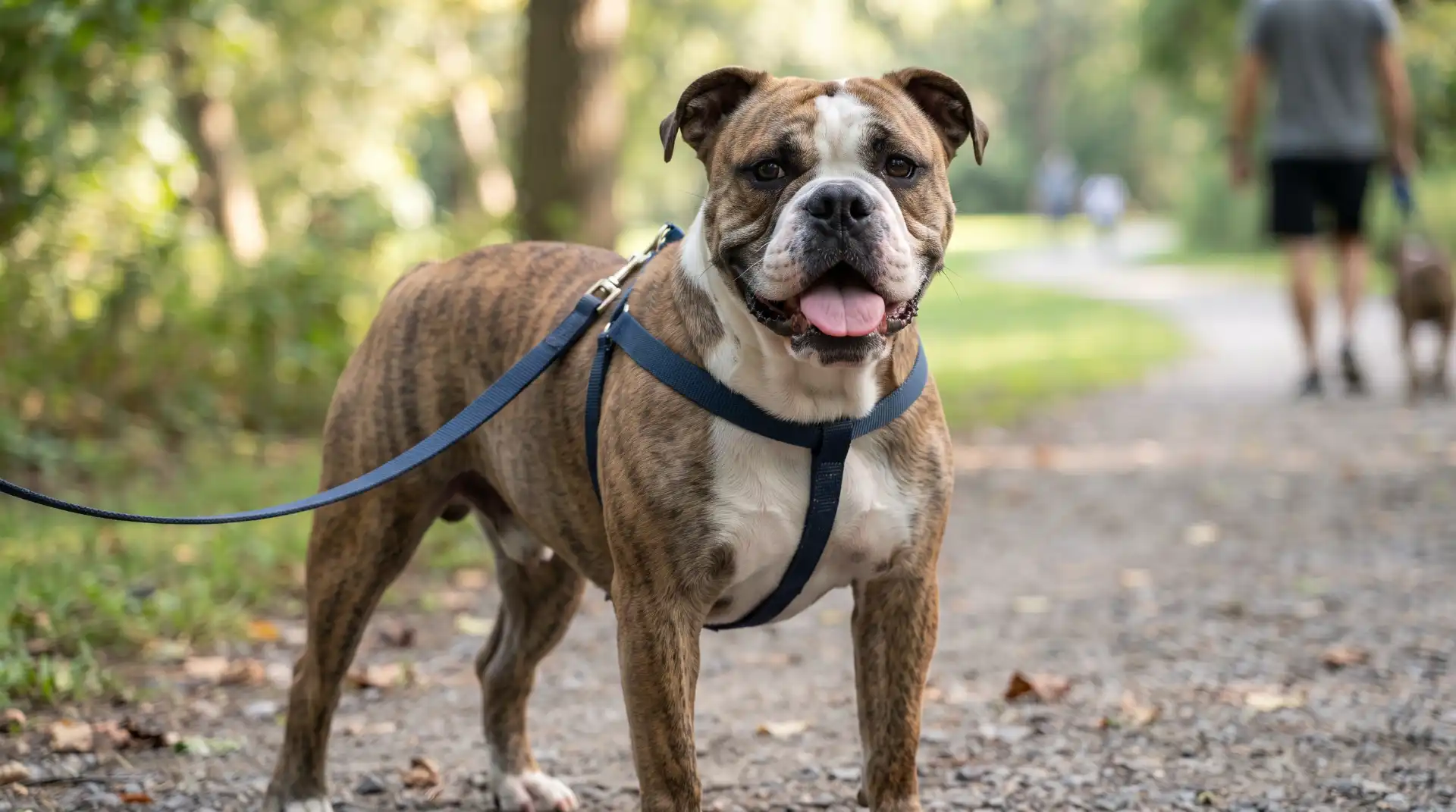
What Does Labored Breathing Look Like?
Labored breathing can be difficult for inexperienced owners to recognize, particularly if they are accustomed to a bulldog’s naturally distinctive breathing sounds.
The key is to look for effort.
A dog experiencing respiratory difficulty may appear restless rather than comfortably asleep. It may repeatedly extend its head and neck, widen its nostrils, use its abdominal muscles noticeably, or repeatedly change position.
Some dogs may also avoid lying down because a particular position makes breathing more difficult.
Another concern is a change in gum or tongue color. Bluish or grayish coloration can indicate inadequate oxygenation and should be treated as an emergency.
Collapse is another serious warning sign.
If your Continental Bulldog is struggling to breathe, has blue or gray gums or tongue, collapses, or appears severely distressed, seek emergency veterinary care immediately rather than waiting for a routine appointment.
Noisy Breathing After Mild Activity
A Continental Bulldog may naturally breathe more quickly after playing.
The important question is whether the response is proportional to the activity and whether the dog recovers normally.
For example, a short period of faster breathing after a controlled walk may be expected. However, persistent loud breathing, repeated gagging, severe panting, weakness, or prolonged recovery after mild activity should not simply be considered normal Bulldog behavior.
Owners should especially pay attention when the dog’s response is different from what they have previously observed.
A change from the individual dog’s baseline can be an important clue.
Snoring, Reverse Sneezing, and Coughing Are Different
Owners sometimes use the word “snoring” to describe several different respiratory sounds.
Snoring generally occurs when airflow causes vibration of tissues in the upper airway, particularly during sleep or relaxation.
Reverse sneezing is different. During a reverse sneeze, a dog may make rapid, repeated inhaling sounds while extending its neck or appearing startled. Episodes can be dramatic but may be brief.
Coughing is another separate symptom and can have many potential causes.
Because owners may have difficulty identifying the exact sound, recording a short video can be extremely helpful. A veterinarian may be able to learn more from seeing and hearing the episode than from a verbal description alone.
If the breathing sound is new, recurrent, or difficult to describe, a video recorded safely from a distance can become useful information for the veterinary team.
When Should a Continental Bulldog See a Veterinarian?
A routine veterinary appointment is appropriate when snoring becomes more frequent, louder, or different from your dog’s normal pattern.
It is also reasonable to schedule an evaluation if your dog has noisy breathing while awake, appears to tire unusually quickly, frequently gags or retches, struggles during mild exercise, or has difficulty recovering after activity.
Other changes should also be discussed, including repeated nighttime breathing disturbances, reduced activity, unexplained weight changes, or a noticeable decline in exercise tolerance.
A veterinarian can perform a physical examination and determine whether additional testing is appropriate.
Depending on the situation, the evaluation may involve listening to the heart and lungs, examining the mouth and upper airway, assessing body condition, reviewing exercise tolerance, or recommending additional diagnostic procedures.
The goal is to identify the cause rather than simply label the noise as “snoring.”
When Is It an Emergency?
Some breathing problems require immediate veterinary attention.
A Continental Bulldog that is visibly struggling to breathe should not be monitored at home for an extended period in the hope that the problem will disappear.
Emergency warning signs can include severe respiratory distress, blue or gray gums or tongue, collapse, extreme weakness, inability to settle because of breathing difficulty, or rapidly worsening breathing.
Heat-related respiratory distress is also particularly important for bulldog owners.
If a dog becomes severely overheated and begins showing signs of respiratory distress, emergency veterinary care should be sought immediately.
Do not assume that placing the dog in front of a fan or giving it water is sufficient treatment for serious heat-related illness. Cooling and emergency veterinary assessment may both be necessary.
How Veterinarians Evaluate Breathing Problems
Veterinary evaluation begins with understanding the dog’s history.
Your veterinarian may ask when the breathing noise started, whether it occurs during sleep or wakefulness, whether exercise triggers it, whether hot weather makes it worse, and whether your dog has experienced gagging, coughing, collapse, or reduced stamina.
This is one reason an owner should observe patterns rather than simply report that the dog “snores.”
The veterinarian may also assess the dog’s body condition, respiratory rate, heart rate, airway sounds, gums, and overall physical condition.
Some airway abnormalities cannot be fully evaluated while a dog is awake and relaxed. Depending on the suspected problem, a veterinarian may recommend additional procedures or referral to a veterinary specialist.
The American College of Veterinary Surgeons provides detailed information about brachycephalic airway abnormalities and their diagnosis and treatment options.
For readers who want an authoritative veterinary reference, the American College of Veterinary Surgeons’ brachycephalic syndrome resource is a useful source for additional information.
Can Owners Reduce Breathing Stress at Home?
Owners cannot change every aspect of their dog’s airway anatomy, but everyday management can help reduce unnecessary respiratory stress.
Keeping your Continental Bulldog at an appropriate body condition is one important step. Providing a cool indoor environment during hot weather is another.
Exercise should also be adjusted to the individual dog and environmental conditions. Instead of assuming that every dog needs the same amount of activity, owners should observe how their Continental Bulldog responds and follow veterinary recommendations when a respiratory concern exists.
Mental enrichment can be particularly valuable because it provides ways for dogs to remain engaged without requiring intense physical activity.
For example, scent games, food puzzles, obedience training, and supervised indoor activities can provide mental engagement on days when outdoor exercise is limited.
Your existing article on mental stimulation for Continental Bulldogs fits naturally here because owners can use enrichment to provide activity while avoiding unnecessary physical strain.
Choosing Safer Exercise for a Continental Bulldog
Exercise remains an important part of a dog’s quality of life, but respiratory health should influence how that exercise is structured.
Shorter walks, controlled play, sniffing activities, and training exercises can be useful alternatives to prolonged high-intensity activity.
Weather should always be considered.
A walk that is comfortable early in the morning may become inappropriate later in the day when temperatures and humidity increase. Pavement can also become extremely hot during summer, creating another reason to adjust outdoor routines.
Owners should never encourage a dog to continue exercising when it is showing signs of respiratory distress.
Stopping the activity is not a failure. It is an important part of responsible dog ownership.
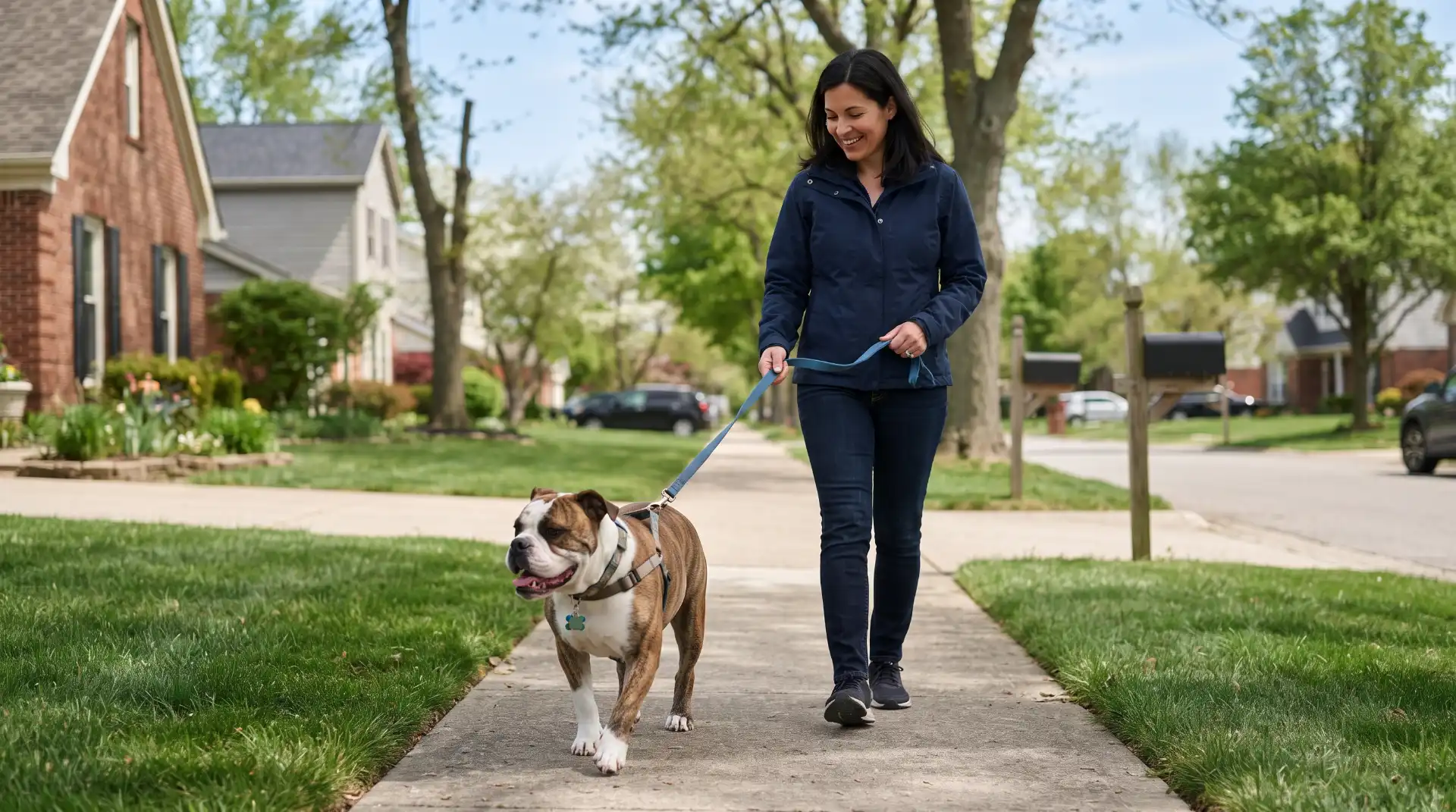
Why Owners Should Know Their Dog’s Normal Breathing
Perhaps the most valuable respiratory-health habit is learning what normal looks like for your individual Continental Bulldog.
Spend time observing your dog while it is asleep, awake, relaxed, walking, and playing appropriately.
Notice the normal sound of its breathing.
Notice how quickly it settles after activity.
Notice whether it sleeps comfortably.
This gives you a baseline.
Once you know the normal pattern, changes become easier to identify.
For example, a dog that has always produced a quiet snoring sound during deep sleep may not be showing the same warning sign as a dog that suddenly develops loud breathing while awake.
Likewise, a dog that has always taken a few minutes to recover after exercise may have a different baseline from a dog whose recovery suddenly becomes much longer.
Your observations do not replace veterinary diagnosis, but they can provide valuable information.
How to Keep a Useful Breathing Log
If you are concerned about your Continental Bulldog’s breathing, consider keeping a simple record for several days.
Instead of writing long notes, record the time of day, activity, temperature or weather conditions, the type of breathing noise, and how your dog behaved afterward.
A short video can be even more useful.
For example, if the dog snores loudly every night, record a short clip when it is safely resting. If the breathing becomes noisy during a walk, record the sound only if doing so does not interfere with safely controlling your dog.
Do not intentionally exercise or excite your dog to reproduce a concerning symptom.
The purpose of the record is to document naturally occurring behavior, not provoke a breathing episode.
Common Mistakes Owners Should Avoid
One common mistake is assuming that all bulldog breathing noises are normal.
Breed characteristics can explain why some dogs make certain sounds, but they should not be used to dismiss significant changes or obvious respiratory distress.
Another mistake is waiting until symptoms become severe before contacting a veterinarian.
Early evaluation can give owners more information about what is normal for their individual dog and whether management changes are appropriate.
Owners should also avoid attempting to diagnose airway problems based solely on online photographs or videos. Two dogs can make similar sounds for very different reasons.
Likewise, owners should not give medications intended for humans unless a veterinarian specifically instructs them to do so.
Respiratory symptoms can have many possible causes, and treatment depends on the underlying problem.
Continental Bulldogs and Responsible Breeding
Breeding decisions can also influence respiratory health.
Because airway structure is connected to physical conformation, responsible breeders should pay attention to functional health rather than focusing exclusively on appearance.
A Continental Bulldog should be valued for sound structure, movement, temperament, and overall health rather than exaggerated physical characteristics.
Your site’s information about the current Continental Bulldog breed standard can help readers understand why functional characteristics matter when evaluating the breed.
For prospective owners, asking breeders about health testing, veterinary records, breeding goals, and the respiratory history of parent dogs can provide useful information.
However, no breeder can guarantee that an individual puppy will never develop a respiratory problem.
Genetics are only one part of a dog’s eventual health.
The Difference Between a Quiet Snore and a Warning Sign
The simplest way to think about Continental Bulldog snoring is to look beyond the sound.
A quiet snore that occurs occasionally during sleep, with normal behavior and comfortable breathing while awake, may be relatively minor.
A new, persistent, or increasingly loud breathing pattern deserves more attention.
Breathing noise while awake, exercise intolerance, obvious breathing effort, gagging, repeated respiratory episodes, changes in gum or tongue color, collapse, and severe heat intolerance are all reasons to involve a veterinarian.
The distinction is not always obvious, which is why owners should focus on changes and accompanying symptoms rather than trying to make a diagnosis at home.
Frequently Asked Questions About Continental Bulldog Snoring
Is it normal for a Continental Bulldog to snore?
Some Continental Bulldogs may snore occasionally, particularly while deeply asleep or in certain sleeping positions. However, persistent or worsening snoring should be discussed with a veterinarian, especially when accompanied by noisy breathing while awake, reduced exercise tolerance, or obvious breathing effort.
When is Continental Bulldog snoring a problem?
Snoring becomes more concerning when it is new, progressively louder, occurs while the dog is awake, or appears alongside other symptoms. Breathing difficulty, collapse, blue or gray gums, or severe respiratory distress requires urgent veterinary attention.
Can a Continental Bulldog have brachycephalic airway problems?
Yes. Although Continental Bulldogs were developed with a more moderate and functional conformation than some traditional bulldog types, individual dogs can still experience airway restrictions. The American College of Veterinary Surgeons describes several anatomical factors that can contribute to brachycephalic airway syndrome.
Does obesity make breathing problems worse?
Excess body weight can aggravate respiratory problems in brachycephalic dogs. Maintaining an appropriate body condition is therefore an important part of overall health management, although weight is only one of several factors affecting breathing.
Should I exercise my Continental Bulldog if it snores?
Snoring during sleep does not automatically mean exercise must be restricted. However, if your dog develops abnormal breathing during exercise, struggles to recover, becomes weak, or shows other respiratory symptoms, stop the activity and seek veterinary guidance.
Can hot weather make Bulldog breathing worse?
Yes. Heat and humidity can increase the demands placed on a dog’s cooling system. Dogs with airway limitations may have more difficulty coping with hot conditions, which makes temperature management particularly important for Continental Bulldog owners.
Should I record my dog’s breathing?
A short video can be useful when discussing unusual breathing with your veterinarian. Record naturally occurring symptoms without intentionally making your dog exercise or become distressed.
Final Thoughts
Continental Bulldog snoring is not automatically a reason for alarm, but it is something responsible owners should learn to observe.
The most important distinction is between an occasional sleep sound and a pattern suggesting that the dog is struggling to move air comfortably. Owners should consider when the sound occurs, whether the dog is awake or asleep, how the dog responds to exercise, whether heat makes the problem worse, and whether other symptoms are present.
Continental Bulldogs have been developed with an emphasis on more functional structure, but individual dogs can still have respiratory concerns. That makes routine observation and preventive veterinary care important.
If your dog’s breathing changes, do not assume that the change is simply part of being a Bulldog. A veterinarian can determine whether the sound is harmless, related to anatomy, caused by another condition, or something that requires treatment.
For American Continental Bulldog owners, especially those living in hot or humid regions, paying attention to breathing can be an important part of everyday responsible care. Knowing your dog’s normal pattern allows you to recognize changes earlier and communicate more effectively with your veterinary team.
A quiet snore may simply be a sleeping dog.
A change in breathing, however, is worth paying attention to.