
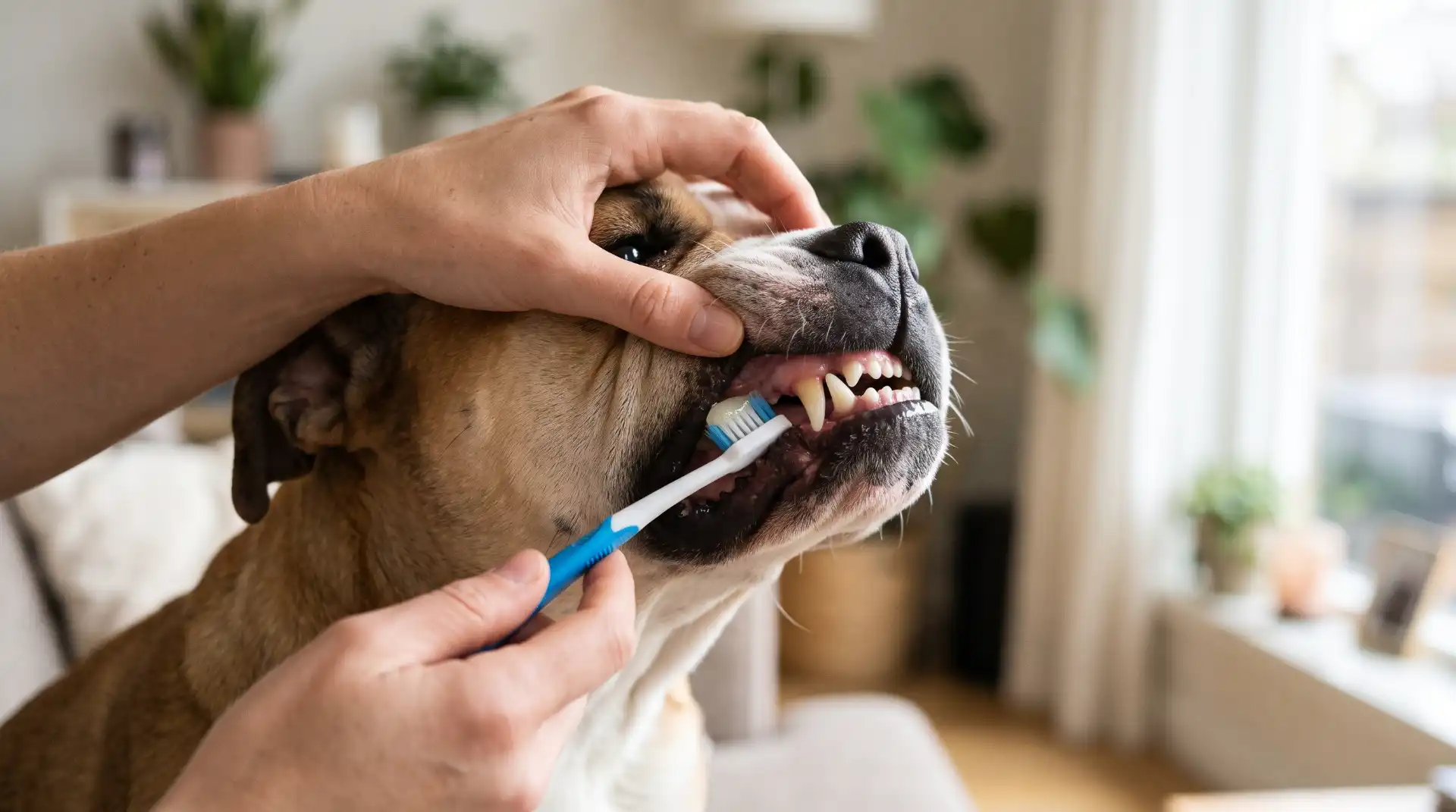
Dental health is an essential part of maintaining the overall well-being of a Continental Bulldog, yet it is one of the areas of dog care that owners sometimes overlook. While many people regularly monitor their dog’s weight, exercise routine, skin condition, and nutrition, they may pay less attention to what is happening inside the mouth. Unfortunately, dental problems can develop gradually, often without obvious warning signs during their early stages. By the time a dog begins showing discomfort, periodontal disease may already have affected the gums and supporting structures around its teeth.
Continental Bulldogs are affectionate, muscular companions that benefit from consistent preventive healthcare throughout their lives. Like other breeds, they can develop plaque buildup, tartar accumulation, gingivitis, periodontal disease, broken teeth, and other oral health problems. These conditions can affect eating habits, comfort, behavior, and quality of life. A dog that previously enjoyed chewing toys or eating meals may become reluctant to use certain parts of its mouth when dental discomfort develops.
Preventing these problems requires more than occasionally checking a dog’s teeth. Effective dental care involves a combination of regular tooth brushing, appropriate dental products, professional veterinary examinations, suitable nutrition, and early attention to warning signs. Owners also need to understand the difference between cosmetic improvements and genuine oral health protection. A product that makes a dog’s breath smell fresher does not necessarily prevent periodontal disease.
For Continental Bulldog owners in the United States, establishing a practical dental care routine can help reduce the risk of preventable oral health problems and make veterinary treatment more manageable. This guide explains how periodontal disease develops, how to recognize early symptoms, which home care methods are useful, when professional dental cleanings are necessary, and how nutrition can contribute to healthier teeth and gums.
The most important principle is consistency. A few minutes of appropriate dental care each day, combined with regular veterinary attention, can make a meaningful difference in a Continental Bulldog’s long-term oral health.
Understanding Dental Disease in Continental Bulldogs
Dental disease develops through a gradual process involving bacteria, plaque, inflammation, and changes to the tissues surrounding the teeth. Understanding how this process works helps owners recognize why routine dental care is necessary even when their dogs appear healthy.
The mouth contains naturally occurring bacteria. These microorganisms combine with saliva, food particles, and other substances to form a sticky layer known as dental plaque. Plaque begins accumulating on tooth surfaces after eating and continues developing throughout the day.
When plaque is not removed regularly, minerals in saliva can harden it into dental calculus, commonly called tartar. Unlike soft plaque, hardened tartar cannot be effectively removed through ordinary brushing. It generally requires professional scaling by a veterinary dental team.
The problem becomes more serious when bacteria and the body’s inflammatory response begin affecting the gum tissue surrounding the teeth.
What Is Periodontal Disease?
Periodontal disease is an inflammatory condition affecting the structures that support the teeth. These structures include the gums, periodontal ligament, cementum, and alveolar bone.
The condition generally develops in stages, beginning with inflammation of the gums and potentially progressing to permanent damage to the tissues supporting the teeth.
Gingivitis is the earliest stage. It occurs when plaque accumulation triggers inflammation along the gumline. The gums may become red, swollen, or sensitive, and they may bleed during brushing.
At this stage, the damage can often be reversed with appropriate professional treatment and consistent home dental care.
If the condition progresses, it can develop into periodontitis. This more advanced condition involves damage to the supporting structures around the teeth. Gum attachment can deteriorate, pockets can develop around affected teeth, and the underlying bone may gradually be lost.
Once this structural damage occurs, it cannot simply be reversed by brushing or using dental treats. Veterinary treatment is necessary to manage the disease and protect the remaining healthy tissues.
Advanced periodontal disease can eventually cause loose teeth, tooth loss, chronic oral pain, and infections.
The Merck Veterinary Manual’s guide to periodontal disease explains that plaque control is central to preventing gingivitis and reducing the progression of periodontal disease.
Why Continental Bulldog Owners Should Pay Attention to Tooth Alignment
Continental Bulldogs have a distinctive head shape and muscular build, but individual dogs can differ in facial proportions, jaw structure, and tooth alignment.
Owners should pay attention to how their dog’s teeth meet and whether there are areas where food and plaque accumulate easily.
Crowded teeth, abnormal tooth positioning, retained baby teeth, and other dental abnormalities can make cleaning more difficult. Certain tooth positions may also create areas where plaque accumulates more readily.
It is important not to assume that every Continental Bulldog has the same dental structure or automatically experiences the same risks.
During routine examinations, a veterinarian can evaluate the bite, tooth alignment, gum condition, and presence of abnormalities that may require attention.
If a tooth appears unusually positioned or seems to contact the surrounding gums or other soft tissues, ask for a veterinary dental assessment.
Early identification is particularly valuable because some dental abnormalities can be managed more effectively before they cause substantial inflammation or damage.
How Age Influences Dental Health
Dental health needs change as a Continental Bulldog grows.
Puppies develop temporary baby teeth before gradually replacing them with permanent adult teeth. During this transition, owners should watch for retained baby teeth, unusual tooth positioning, and signs of discomfort.
Adult dogs need consistent plaque control and professional dental monitoring.
Senior Continental Bulldogs may have accumulated years of plaque and tartar exposure, and they may have existing dental problems that require more attention.
However, age alone does not determine whether a dog needs a dental cleaning. The veterinarian should evaluate the mouth, medical history, and individual risk factors.
Even a senior dog with apparently clean teeth may have problems beneath the gumline that cannot be identified through a quick visual inspection.
Recognizing the Warning Signs of Dental Problems
Dogs do not always show obvious signs when they have dental disease. Some continue eating normally even when their gums are inflamed or individual teeth are painful.
This is one reason owners should not rely exclusively on appetite to determine whether their Continental Bulldog has healthy teeth.
Regularly observing the mouth and paying attention to changes in everyday behavior can help identify problems earlier.
Persistent Bad Breath
One of the most recognizable signs of dental disease is unpleasant breath.
A dog’s breath does not need to smell minty, but persistent strong or unusually foul odors deserve attention.
Bad breath can result from bacterial activity, infected gum tissue, accumulated plaque, or other oral health problems.
It may also be associated with conditions outside the mouth, so owners should not automatically assume that dental disease is the only possible explanation.
If your Continental Bulldog develops persistent bad breath despite regular dental care, schedule a veterinary examination.
Red, Swollen, or Bleeding Gums
Healthy gums are generally pink, although normal pigmentation varies between individual dogs.
Inflamed gums may appear red, swollen, or irritated around the base of the teeth.
You may also notice bleeding during gentle brushing or when your dog chews on toys.
Bleeding should never be considered a normal consequence of routine dental care. It can indicate inflammation, injury, or another oral health problem that requires veterinary evaluation.
Excessive Drooling
Some dogs naturally produce more saliva than others, but a noticeable increase in drooling may indicate oral discomfort.
A Continental Bulldog that suddenly leaves wet spots on bedding, produces unusually thick saliva, or repeatedly swallows may be experiencing a problem involving the mouth.
Dental pain, foreign material, oral injuries, and other conditions can contribute to excessive drooling.
If drooling develops suddenly or occurs alongside difficulty swallowing, swelling, or significant distress, seek veterinary attention promptly.
Changes in Eating and Chewing Behavior
Changes in eating habits can provide important clues about dental discomfort.
A dog that previously ate quickly may begin taking longer to finish meals. It might chew on one side of the mouth, drop food, avoid hard treats, or become reluctant to eat.
Some dogs continue eating but change the way they position their heads or hold food.
These changes are particularly important because owners may initially mistake them for pickiness.
Do not assume that a Continental Bulldog refusing its usual food simply needs a different flavor. Dental pain and other medical conditions should be considered.
Loose, Broken, or Discolored Teeth
Teeth that appear loose, cracked, chipped, unusually dark, or covered in heavy tartar should be evaluated by a veterinarian.
A broken tooth can expose sensitive internal structures and cause significant pain.
Discoloration may also indicate previous trauma or damage to the tooth.
Owners should not attempt to pull loose teeth or remove hardened deposits with household tools.
Veterinary professionals can determine whether a tooth needs monitoring, treatment, or extraction.
Facial Swelling and Unusual Behavior
Swelling around the jaw, muzzle, or face can sometimes indicate an infected tooth or another serious dental problem.
Other possible signs include pawing at the mouth, rubbing the face against furniture, withdrawing from family interactions, and becoming unusually irritable when the head is touched.
A dog that normally enjoys being petted may suddenly avoid contact around the face.
These changes deserve prompt attention, especially when accompanied by bleeding, reduced appetite, or visible swelling.
For additional guidance on recognizing breed-related health concerns, readers can visit the existing article on common Continental Bulldog health issues and prevention tips.
Daily Tooth Brushing: The Foundation of Home Dental Care
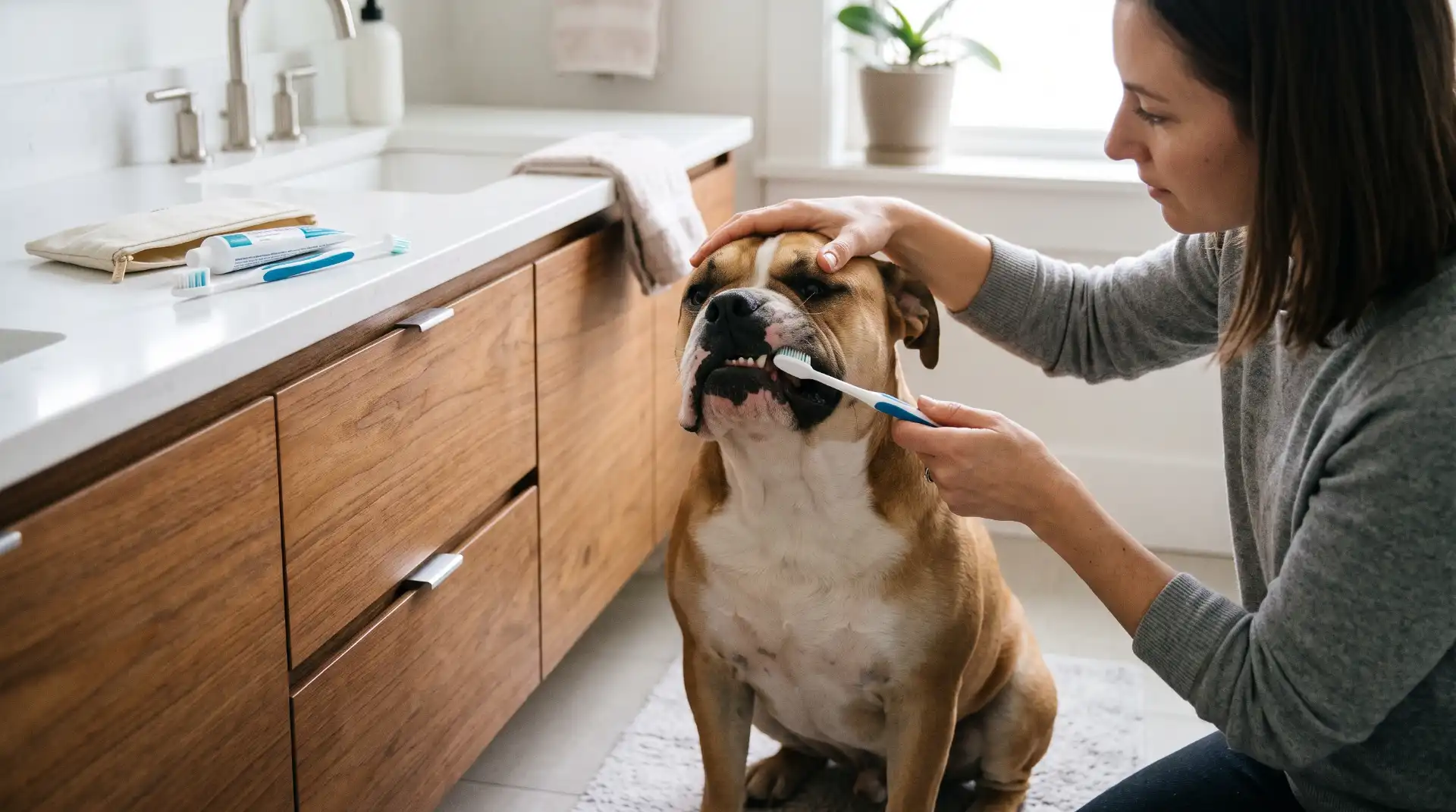
Daily tooth brushing is one of the most effective ways to help maintain a dog’s oral health.
It physically disrupts plaque before it has an opportunity to harden into calculus. Consistent brushing can reduce the accumulation of bacteria and help protect the gums from inflammation.
For Continental Bulldogs, tooth brushing should become a normal part of preventive care rather than an activity performed only when visible tartar appears.
The American Animal Hospital Association and veterinary dental specialists recommend regular home oral hygiene as part of comprehensive dental care.
The key is choosing appropriate equipment, introducing brushing gradually, and maintaining a routine that your dog can comfortably tolerate.
Choosing the Right Toothbrush
A toothbrush designed specifically for dogs is generally the best starting point.
Canine toothbrushes come in several designs, including:
-
Soft-bristled toothbrushes with angled heads.
-
Small toothbrushes designed for easier access to individual teeth.
-
Double-ended brushes with different head sizes.
-
Finger brushes that fit over an owner’s finger.
For many Continental Bulldogs, a soft-bristled brush with a comfortable handle provides sufficient control.
The brush head should fit comfortably inside the dog’s mouth without forcing the jaw open excessively.
Some owners prefer finger brushes because they offer greater control during the early stages of training. However, finger brushes may not reach every tooth as effectively as a properly sized toothbrush.
Choose equipment that allows gentle cleaning along the outside surfaces of the teeth and near the gumline.
Why You Should Use Dog-Specific Toothpaste
Never assume that human toothpaste is suitable for dogs.
Human toothpaste is designed for people who spit it out after brushing. Dogs generally swallow toothpaste during the process.
Some human toothpaste products contain ingredients that are inappropriate or potentially toxic for dogs, including xylitol in certain formulations.
Human toothpaste may also contain detergents and other substances that are not intended to be swallowed regularly by animals.
Instead, choose toothpaste specifically formulated for dogs.
Canine toothpaste is available in flavors such as poultry, beef, and other pet-friendly options. Some dogs may be more willing to accept brushing when the toothpaste has a familiar or appealing taste.
Owners should check the ingredient list and ask their veterinarian if they have questions about a particular product.
How to Introduce Tooth Brushing to a Continental Bulldog
If your Continental Bulldog has never experienced tooth brushing, do not immediately attempt to clean every tooth.
Sudden handling around the mouth can make the experience uncomfortable, particularly for dogs that are sensitive about having their faces touched.
Begin by helping your dog become comfortable with the equipment.
Step 1: Introduce gentle facial handling.
Choose a quiet environment where your dog feels secure. Briefly touch the side of its muzzle, reward calm behavior, and stop. Repeat this exercise over several short sessions.
Step 2: Introduce the toothpaste.
Allow your dog to smell a small amount of canine toothpaste. If appropriate, let it lick a little from your finger so it can become familiar with the flavor.
Step 3: Practice touching the lips.
Gently lift the lip for a moment to expose the outside surfaces of the teeth. Reward your dog and end the exercise before it becomes uncomfortable.
Step 4: Introduce the toothbrush.
Allow your dog to inspect the toothbrush. Apply a small amount of dog toothpaste and gently touch the brush against a few teeth.
Step 5: Gradually increase brushing time.
Begin with a small section of the mouth and gradually work toward the other teeth. Focus on the outer surfaces, especially near the gumline.
Step 6: Establish a consistent routine.
Aim for daily brushing, ideally at approximately the same time each day.
The process may take several days or longer, depending on the dog’s temperament and previous experiences.
Never force a dog to accept brushing when it is showing significant fear or pain. If your Continental Bulldog suddenly resists a previously comfortable routine, arrange a veterinary examination to rule out oral discomfort.
Which Teeth Should Owners Focus On?
Owners should pay particular attention to the outer surfaces of the teeth because these areas commonly accumulate plaque.
The large premolars and molars toward the back of the mouth can be difficult to reach, but they should not be ignored.
Use gentle movements and avoid forcing the brush into areas that your dog cannot comfortably tolerate.
You do not need to scrape the teeth or apply excessive pressure.
A soft toothbrush used consistently is more appropriate than aggressive brushing that irritates the gums.
If you cannot safely reach certain teeth, ask your veterinarian to demonstrate suitable techniques.
What If Your Continental Bulldog Refuses Tooth Brushing?
Some dogs take longer to accept brushing, particularly when they have had little previous experience with mouth handling.
In these cases, return to an easier step.
You might spend several days simply rewarding the dog for allowing you to touch its muzzle. Later, introduce a finger brush or toothpaste before attempting actual brushing.
Another option is to ask your veterinarian about alternative home dental products, including approved dental wipes, gels, and water additives.
These products may provide additional support, although they should not automatically be considered equivalent to brushing.
If resistance appears suddenly, investigate the possibility of a painful tooth, gum inflammation, or another medical condition.
Professional Dental Cleanings: Why Veterinary Treatment Matters
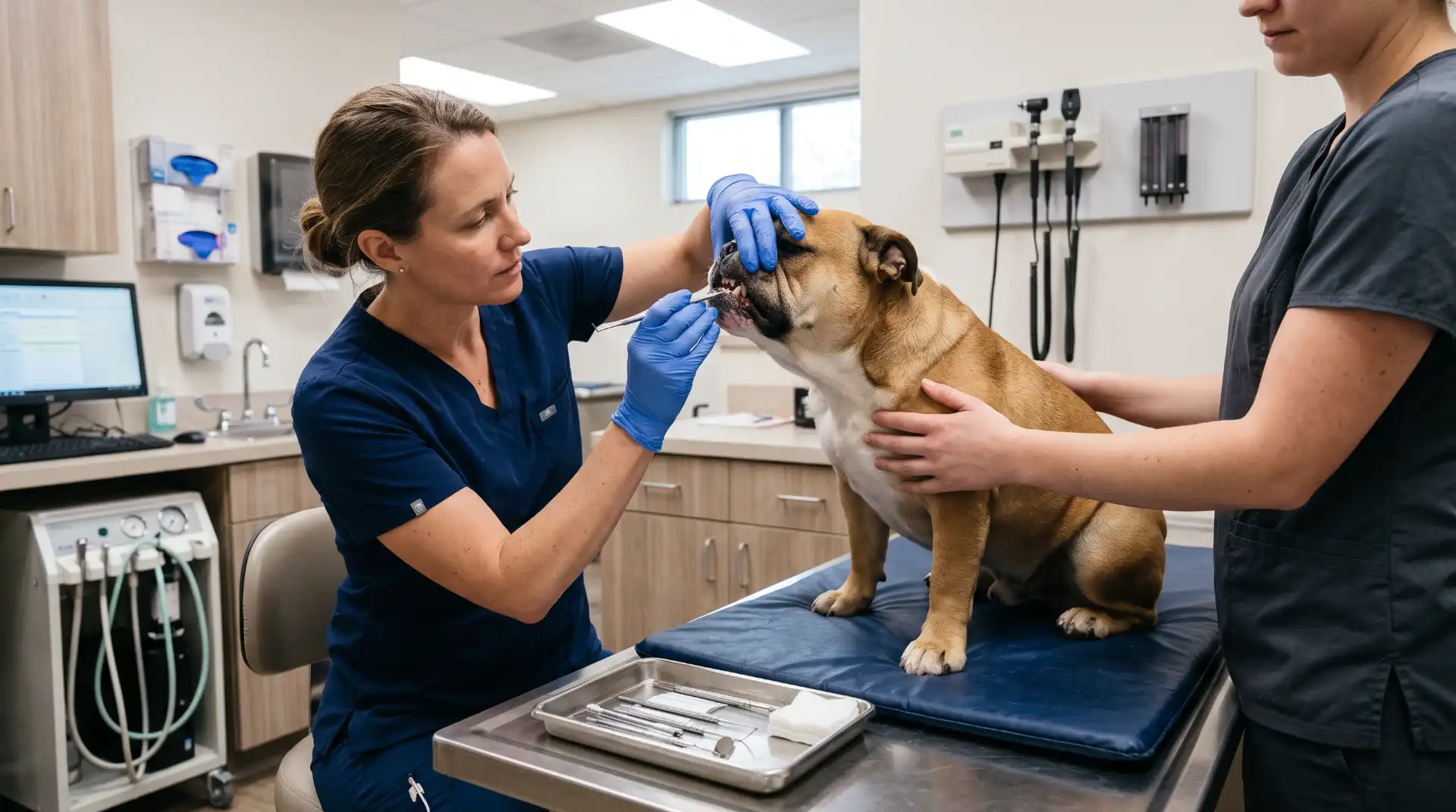
Home dental care is essential, but it cannot replace professional veterinary dental treatment.
Once plaque hardens into tartar, ordinary brushing cannot remove it effectively. Furthermore, dental disease often develops below the gumline, where owners cannot see or safely clean.
Professional veterinary dental procedures allow the clinical team to evaluate the mouth more thoroughly, remove hardened deposits, assess periodontal pockets, and treat affected teeth.
For some Continental Bulldogs, professional cleaning may be recommended periodically. Others may require treatment more frequently because of their individual dental condition.
There is no universal cleaning schedule that applies to every dog.
What Happens During a Professional Dental Cleaning?
A comprehensive veterinary dental cleaning generally involves several stages.
The veterinarian first reviews the dog’s medical history and performs a physical examination. Depending on the dog’s health and the planned procedure, pre-anesthetic testing may be recommended.
Once the dog is prepared, general anesthesia is administered and the patient is monitored throughout the procedure.
The veterinary dental team examines the mouth, removes plaque and calculus, evaluates the gumline, and uses dental instruments to assess the supporting structures around the teeth.
Dental radiographs may be taken to identify disease beneath the gumline or problems involving tooth roots and surrounding bone.
After cleaning and treatment, the teeth are generally polished to create a smooth surface.
If diseased or damaged teeth are discovered, additional treatment may be necessary.
The veterinarian will then provide recovery instructions and recommendations for ongoing home dental care.
Why Professional Dental Cleanings Usually Require Anesthesia
Some owners worry about general anesthesia, particularly when their dogs are otherwise healthy and active.
However, anesthesia is generally considered an essential part of comprehensive veterinary dentistry.
It allows the dental team to clean beneath the gumline, examine the entire mouth, obtain diagnostic radiographs, and perform treatment without causing the animal unnecessary distress.
A dog that is awake cannot reliably remain completely still while instruments are used around sensitive teeth and gums.
Anesthesia also allows the veterinary team to protect the airway during appropriate procedures and perform a more thorough assessment.
Modern veterinary anesthesia involves individualized planning and monitoring, although no anesthetic procedure is completely without risk.
The veterinarian should evaluate the dog’s age, medical history, respiratory function, cardiovascular condition, and other relevant factors before proceeding.
For additional information, the AAHA guide to pet dental care and professional cleanings explains why anesthesia is important for comprehensive oral examinations and treatment.
Understanding Dental Radiographs
A visual examination alone cannot reveal every dental problem.
The visible portion of a tooth is only part of its structure. The roots, surrounding bone, and deeper periodontal tissues may contain abnormalities that cannot be identified by looking at the crown.
Dental radiographs provide valuable information about these hidden structures.
They can help identify root infections, bone loss, retained roots, impacted teeth, and other conditions that may require treatment.
For Continental Bulldogs with suspected periodontal disease, dental radiographs can help the veterinarian determine how extensively the disease has progressed.
This is particularly important when a tooth appears relatively normal from the outside but has underlying damage.
What Is Anesthesia-Free Dental Cleaning?
Anesthesia-free dental cleaning generally involves scraping visible tartar from the surfaces of a dog’s teeth while the animal remains awake.
Although this may improve the appearance of the visible tooth surfaces, it does not provide the same diagnostic or therapeutic benefits as comprehensive veterinary dentistry.
It cannot reliably clean beneath the gumline, assess periodontal pockets, or obtain dental radiographs.
It may also create a misleading impression that dental disease has been treated when infection and inflammation remain below the gumline.
For these reasons, owners should discuss comprehensive veterinary dental treatment rather than relying on cosmetic cleaning services.
How Often Does a Continental Bulldog Need Professional Dental Cleaning?
The appropriate frequency depends on the dog’s oral health, age, dental structure, previous dental treatment, and effectiveness of home care.
Some dogs develop tartar relatively quickly despite consistent brushing. Others maintain healthier mouths for longer periods.
A veterinarian should examine the teeth and gums during routine wellness appointments and recommend professional cleaning when appropriate.
Owners should avoid waiting until their dog has severe bad breath, loose teeth, or difficulty eating before seeking dental attention.
Early intervention can often prevent more complicated treatment later.
Choosing Dental Chews, Treats, and Oral Care Products
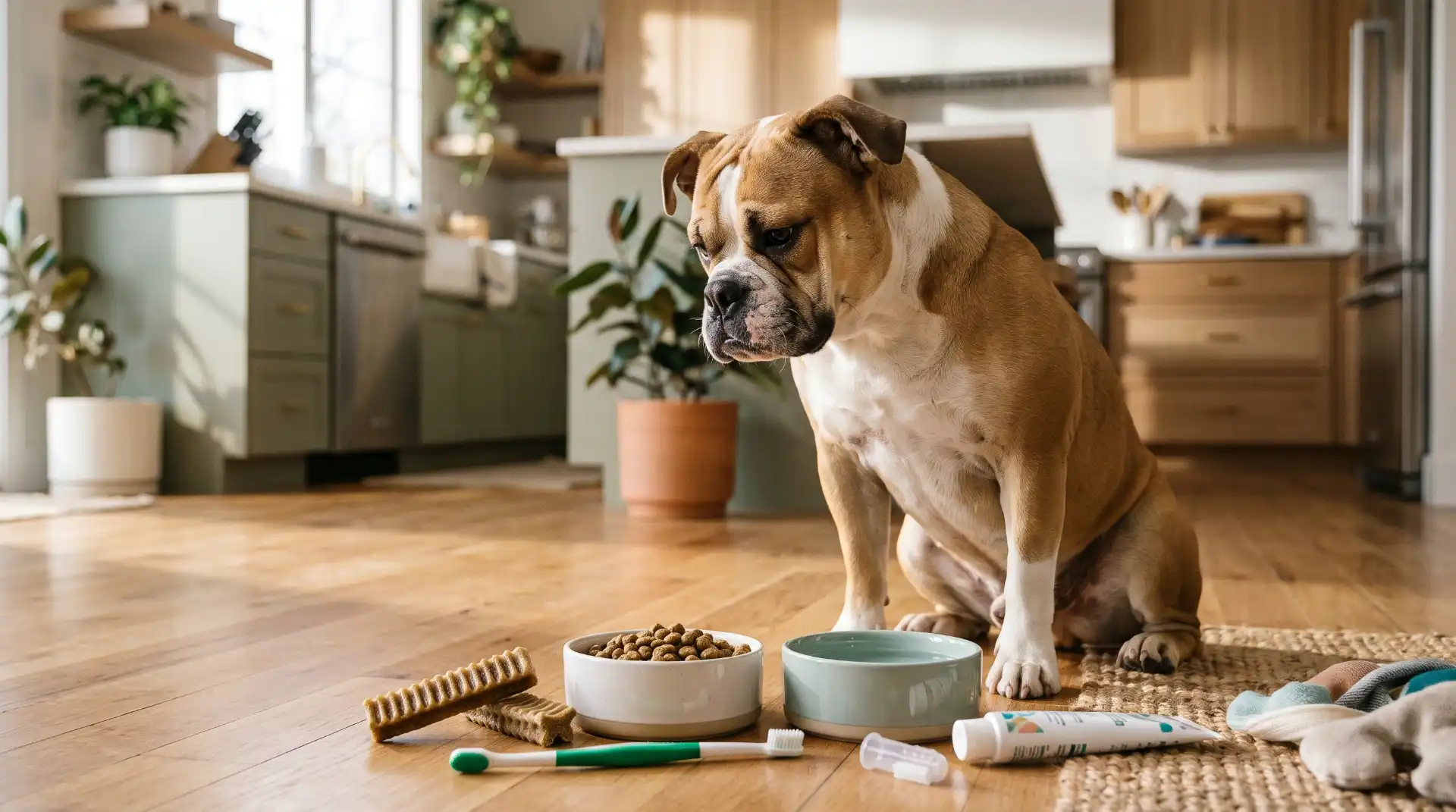
Tooth brushing should remain the foundation of a Continental Bulldog’s home dental routine, but additional products can provide useful support.
Dental chews, specially formulated diets, water additives, oral gels, and dental wipes are widely available in the United States. However, their effectiveness varies, and not every product marketed for fresh breath has demonstrated benefits for preventing plaque or tartar.
Owners should evaluate dental products based on their ingredients, safety, size recommendations, and available scientific evidence.
Understanding the Veterinary Oral Health Council Seal
One useful resource for American dog owners is the Veterinary Oral Health Council (VOHC).
The VOHC evaluates evidence supporting claims that dental products help control plaque or tartar in dogs and cats.
Products that meet its established requirements may receive the VOHC Seal of Acceptance.
The seal does not mean a product replaces professional dental treatment or daily brushing. Instead, it provides an additional way for owners to identify products with supporting evidence for specific oral health benefits.
The official VOHC list of accepted dental products includes different categories, such as dental diets, edible chews, toothpastes, water additives, and oral care products.
Owners should check the current list because product acceptance, availability, and formulations can change.
Dental Chews for Continental Bulldogs
Dental chews are designed to provide mechanical cleaning through chewing.
As the dog works on the chew, its texture may help remove some plaque from accessible tooth surfaces.
Some products also contain ingredients intended to support oral hygiene.
However, not every chew is equally effective, and the wrong product can create additional risks.
Choose a chew that is appropriately sized for your Continental Bulldog and designed for canine dental use.
The chew should not be so hard that it creates a significant risk of tooth fracture.
Avoid giving dogs extremely hard objects such as antlers, hard bones, hooves, and similarly rigid materials. These can damage teeth, particularly when a dog bites down with considerable force.
Owners should supervise chewing sessions and follow the manufacturer’s size and feeding instructions.
If your dog has broken teeth, advanced periodontal disease, digestive sensitivities, or difficulty chewing, consult your veterinarian before introducing dental chews.
Dental Water Additives
Dental water additives are formulated to help control plaque, reduce certain oral bacteria, or support fresher breath.
They are generally added to drinking water according to the manufacturer’s directions.
Some Continental Bulldog owners find these products convenient because they do not require direct handling of the dog’s mouth.
However, water additives should be selected carefully.
Check whether the product has the VOHC Seal of Acceptance and confirm that its ingredients are appropriate for your dog.
Monitor your dog’s water consumption after introducing any additive. If the taste discourages drinking, discontinue it and consult your veterinarian about alternatives.
Maintaining adequate hydration is more important than forcing a dog to use a particular dental product.
Dental Wipes, Gels, and Sprays
Dental wipes and oral gels can provide additional options for dogs that are not yet comfortable with a toothbrush.
Wipes may help remove some plaque from accessible tooth surfaces, while certain gels and sprays are formulated to support oral hygiene.
These products can be useful as part of a broader dental care strategy.
However, they may not clean every tooth surface or reach the gumline as effectively as brushing.
Owners should avoid using human mouthwash, household cleaning products, or homemade chemical mixtures inside a dog’s mouth.
Choose products specifically designed for dogs and ask a veterinarian whether they are appropriate for your Continental Bulldog.
Selecting Safe Dental Products in the United States
The American pet-care market offers a large selection of dental products, but attractive packaging and marketing claims should not determine purchasing decisions.
When comparing products, consider the following:
-
Whether the product has the VOHC Seal of Acceptance.
-
Whether it is designed for your dog’s weight and chewing style.
-
Whether the ingredients are appropriate for your dog’s medical history.
-
Whether the product has clear feeding or application instructions.
-
Whether your dog can use it without excessive chewing force.
-
Whether it provides a specific dental benefit rather than only masking bad breath.
Owners should also remember that dental treats contain calories. They need to be included in the dog’s daily feeding plan to avoid excessive calorie intake.
The Role of Nutrition in Continental Bulldog Dental Health
Nutrition contributes to a dog’s overall health, including the condition of its teeth and gums.
A balanced diet supports normal tissue maintenance, immune function, and general well-being. However, feeding a nutritious diet does not automatically prevent periodontal disease.
Dental health requires specific oral hygiene measures because plaque forms directly on tooth surfaces.
Continental Bulldog owners should understand the difference between ordinary nutrition and diets specifically designed to provide dental benefits.
Does Dry Dog Food Clean Teeth Better Than Wet Food?
One common belief is that dry kibble automatically cleans a dog’s teeth because it requires chewing.
Although some specially formulated dry dental diets have demonstrated benefits, ordinary dry kibble does not necessarily provide meaningful protection against periodontal disease.
Most standard kibble breaks apart relatively easily during chewing. It may not create enough mechanical cleaning action to remove plaque effectively along the gumline.
Wet food is not automatically harmful to dental health either.
The overall nutritional quality of the food, the dog’s medical requirements, and the effectiveness of its dental hygiene routine are more important than simply choosing dry or wet food.
Owners should not change a balanced diet solely because they believe dry food will replace brushing.
What Are Veterinary Dental Diets?
Veterinary dental diets are specially formulated foods designed to help reduce plaque or tartar accumulation.
Some use larger kibble pieces with particular textures that encourage the tooth to penetrate the food before it breaks apart.
Other formulations contain ingredients intended to reduce the mineralization of plaque.
These diets may be recommended for dogs that benefit from additional oral hygiene support.
However, they are not suitable for every dog.
A Continental Bulldog with food sensitivities, digestive problems, weight-management requirements, or another medical condition may need a different nutritional approach.
Ask your veterinarian whether a dental diet is appropriate before replacing your dog’s regular food.
Nutrients That Support Healthy Gums and Oral Tissues
A complete and balanced diet provides nutrients needed for normal tissue maintenance and general health.
Protein supplies amino acids required for maintaining and repairing body tissues. Vitamins and minerals contribute to normal physiological functions, including bone and tissue health.
However, adding individual nutrients or supplements does not automatically treat periodontal disease.
For example, vitamin supplements cannot remove hardened tartar or reverse established damage to the periodontal structures.
The best approach is to select a complete and balanced diet appropriate for your Continental Bulldog’s life stage and medical requirements.
Owners who want to understand feeding requirements in greater detail can also explore the site’s complete Continental Bulldog puppy care guide, which discusses nutrition and the development of healthy daily routines.
Avoiding Excessive Treats and Poor Feeding Habits
Dental treats can support oral hygiene, but excessive snacking can contribute to unnecessary weight gain.
Continental Bulldogs benefit from maintaining an appropriate body condition throughout adulthood.
Owners should account for the calories provided by treats, chews, training rewards, and table scraps.
It is also important to avoid giving dogs unsafe human foods or hard objects simply because they appear suitable for chewing.
A healthy feeding routine should prioritize balanced nutrition, appropriate portions, fresh water, and carefully selected dental products.
Preventing Broken Teeth and Other Dental Injuries
Periodontal disease is not the only oral health concern Continental Bulldog owners should understand.
Tooth fractures and oral injuries can also create significant pain and may require veterinary treatment.
Dogs naturally explore their environments using their mouths, and many enjoy chewing toys, treats, and household objects.
However, some chewing materials are too hard or inappropriate for regular use.
Choosing Appropriate Chew Toys
A suitable chew toy should provide an enjoyable chewing experience without placing excessive pressure on the teeth.
Look for products designed for the dog’s size and chewing strength.
A useful general guideline is to avoid objects that cannot yield slightly under pressure or that are so rigid they could damage a tooth.
Rubber toys designed for dogs may provide a safer alternative to extremely hard chewing materials.
Inspect toys regularly for cracks, broken sections, or loose pieces that could be swallowed.
Why Hard Bones Can Be Dangerous
Some owners believe raw bones are a natural way to clean a dog’s teeth.
However, bones can cause fractured teeth, oral injuries, choking, digestive obstruction, and other complications.
Hard bones may also introduce bacterial contamination.
The potential risks should be considered carefully before giving any bone or chew item.
Owners should not assume that a product is safe simply because it is marketed as natural.
Discuss suitable chewing options with your veterinarian, particularly if your Continental Bulldog has a history of dental disease or tooth fractures.
What to Do If Your Dog Breaks a Tooth
A broken tooth should be evaluated by a veterinarian even if the dog continues eating normally.
Some fractures expose the sensitive inner structures of the tooth, potentially allowing bacteria to enter and cause infection.
Signs may include chewing on one side, dropping food, drooling, avoiding hard treats, or resisting mouth handling.
Do not attempt to file, pull, or repair the tooth at home.
The veterinarian can assess the fracture and determine whether monitoring, root canal treatment, or extraction is appropriate.
Dental Care for Continental Bulldogs at Different Life Stages
A successful dental care routine should evolve as a dog grows.
Puppies, adults, and senior Continental Bulldogs have different dental development and healthcare requirements.
Owners who adjust their routines according to age can make oral hygiene more manageable while helping prevent avoidable problems.
Dental Care During Puppyhood
Continental Bulldog puppies develop temporary baby teeth before gradually replacing them with permanent adult teeth.
During this stage, owners should introduce gentle mouth handling and allow puppies to become familiar with toothbrushes and canine toothpaste.
However, brushing should be comfortable and should not interfere with the normal process of losing baby teeth.
Puppies may experience gum sensitivity during teething. Avoid forceful brushing or hard chewing products that could damage developing teeth.
Regular veterinary examinations are useful for monitoring tooth eruption, jaw development, and the presence of retained baby teeth.
Retained deciduous teeth can sometimes contribute to crowding and abnormal tooth positioning.
If baby teeth remain after permanent teeth begin emerging, ask the veterinarian whether further examination or treatment is needed.
The objective during puppyhood is to establish positive dental habits before the dog becomes an adult.
Dental Care for Adult Continental Bulldogs
Adult dogs require consistent plaque control and routine veterinary dental assessments.
Once permanent teeth have fully developed, owners should aim for daily brushing with dog-specific toothpaste.
Regular examinations allow the veterinarian to monitor tartar, gum inflammation, tooth alignment, and other changes.
Dental chews or specially formulated diets may provide additional support when appropriate.
Adult dogs should also be monitored for changes in chewing habits, breath, drooling, and willingness to accept mouth handling.
Even a dog that has received professional dental cleaning may develop new plaque shortly afterward. Continuing home care is therefore essential.
Dental Care for Senior Continental Bulldogs
Older Continental Bulldogs may have accumulated more plaque and tartar over their lifetimes.
They may also have existing periodontal damage, missing teeth, or other oral conditions that require individualized attention.
Some senior dogs become less tolerant of brushing because of discomfort, arthritis, or age-related behavioral changes.
Owners should adapt their handling techniques and use comfortable positions during home care.
If brushing becomes difficult, discuss alternative products with the veterinarian rather than abandoning dental hygiene entirely.
Age does not automatically mean that a dog cannot undergo professional dental treatment. The veterinarian should evaluate its overall health and anesthetic risks individually.
For senior dogs, preventive examinations can be particularly valuable because oral discomfort may contribute to changes in appetite, activity, and social behavior.
Dental Care and Veterinary Anxiety: Making Oral Examinations Easier
Some Continental Bulldogs dislike having their mouths handled.
They may turn their heads, pull away, lick their lips, or become uncomfortable when someone attempts to lift their lips.
This can make dental examinations and home brushing challenging.
Owners can help by introducing oral care gradually and using positive reinforcement.
Introduce Mouth Handling Gradually
Start with brief contact around the muzzle.
Reward your Continental Bulldog for remaining comfortable and gradually introduce gentle lip lifting.
Once the dog accepts this interaction, introduce the toothpaste and toothbrush separately.
Avoid immediately attempting to brush every tooth.
Short sessions help build familiarity without overwhelming the dog.
Use Positive Reinforcement
Reward calm participation with small treats, praise, or another activity your dog enjoys.
For example, allow your Continental Bulldog to smell the toothbrush before giving it a reward.
Later, reward it for accepting brief contact with the brush.
This creates positive associations with dental equipment and can make future brushing easier.
Never Ignore Signs of Oral Pain
A dog that suddenly refuses brushing may have a painful tooth, inflamed gums, an injury, or another oral condition.
Do not assume that the dog is simply becoming stubborn.
Stop the activity and arrange a veterinary examination if resistance is new, persistent, or accompanied by other symptoms.
For a more detailed discussion of gentle veterinary handling and positive reinforcement, your related article on fear-free veterinary visits can also be linked once its published URL is available.
How Much Does Professional Dog Dental Cleaning Cost in the United States?
Veterinary dental cleaning costs vary considerably throughout the United States.
A basic cleaning may cost several hundred dollars, while more complicated procedures involving dental radiographs, extractions, advanced periodontal treatment, or specialist care can cost considerably more.
Prices may differ according to geographic location, veterinary practice, anesthesia requirements, diagnostic testing, and the complexity of the dog’s dental condition.
For example, a dental procedure in a major metropolitan area may cost more than a comparable service at a rural veterinary practice.
Owners should request an estimate before scheduling treatment.
What Is Usually Included in a Dental Cleaning Estimate?
Depending on the veterinary practice and the dog’s needs, an estimate may include:
-
Pre-anesthetic examination.
-
Recommended laboratory testing.
-
Anesthesia and patient monitoring.
-
Professional scaling and polishing.
-
Dental radiographs.
-
Periodontal assessment.
-
Pain management.
-
Extractions or additional treatment when necessary.
-
Recovery monitoring and follow-up care.
Not every procedure includes all these services in its initial quoted price.
Ask the veterinary practice which services are included and whether additional costs may arise if significant dental disease is discovered.
Does Pet Insurance Cover Dental Treatment?
Pet insurance policies differ in how they cover dental conditions.
Some policies may cover eligible dental injuries or illnesses, while routine cleaning and preventive dental care may require an optional wellness plan or may not be covered.
Pre-existing dental disease can also affect eligibility.
Before purchasing coverage, review the policy’s dental exclusions, waiting periods, annual limits, reimbursement conditions, and preventive care provisions.
Owners should not assume that a policy covering general veterinary treatment automatically pays for routine professional dental cleaning.
Is Preventive Dental Care More Affordable Than Advanced Treatment?
In many cases, early intervention can help avoid more complicated dental procedures.
A dog with mild gingivitis may need a different level of treatment than one with advanced periodontal disease, significant bone loss, and several damaged teeth.
Regular brushing and appropriate veterinary examinations can help identify problems before they become more serious.
Although preventive products and professional cleanings involve expenses, they may help reduce the likelihood of more extensive treatment later.
Owners should consider dental care an ongoing part of responsible pet ownership rather than an unexpected expense that only appears when a dog becomes visibly sick.
Building a Practical Weekly Dental Care Schedule
Consistency is often more important than purchasing numerous dental products.
Continental Bulldog owners can create a manageable routine that fits naturally into daily life.
Daily brushing is the preferred foundation, while additional dental products can be incorporated according to veterinary recommendations.
A practical schedule might look like this:
| Frequency | Dental care activity |
|---|---|
| Daily | Brush teeth using a dog-specific toothbrush and toothpaste |
| Daily | Monitor eating habits and chewing behavior |
| According to product directions | Use approved dental chews or oral care products |
| Weekly | Inspect visible teeth and gums when comfortable |
| During wellness visits | Have the veterinarian assess oral health |
| As recommended by veterinarian | Schedule professional dental cleaning and treatment |
This schedule should be adjusted according to the individual dog’s needs.
For example, a Continental Bulldog with a history of periodontal disease may require more frequent veterinary monitoring than a dog with consistently healthy gums.
Owners should also remember that a visual home inspection cannot replace a professional examination.
Frequently Asked Questions About Dental Health for Continental Bulldogs
1. How Often Should I Brush My Continental Bulldog’s Teeth?
Daily brushing is the preferred routine for maintaining healthy teeth and gums. It helps remove plaque before it hardens into tartar.
If daily brushing is not immediately practical, brushing several times per week is better than doing nothing. However, owners should work toward a consistent daily routine whenever possible.
Use a soft-bristled dog toothbrush and toothpaste specifically formulated for dogs.
2. At What Age Should I Start Brushing My Continental Bulldog’s Teeth?
Owners can introduce gentle mouth handling during puppyhood. This helps puppies become familiar with having their lips and mouths touched.
More structured tooth brushing can be introduced gradually as permanent teeth develop and the puppy becomes comfortable with the process.
Avoid brushing irritated or painful gums during teething. Your veterinarian can recommend an appropriate routine based on your puppy’s dental development.
3. Can Dry Dog Food Prevent Periodontal Disease?
No. Ordinary dry kibble does not automatically prevent periodontal disease.
Although some specially formulated dental diets can help reduce plaque or tartar, standard dry food generally does not provide sufficient cleaning to replace tooth brushing.
A balanced diet is important for overall health, but dental hygiene requires additional attention.
4. Are Dental Chews Enough to Keep My Bulldog’s Teeth Clean?
Dental chews can provide additional plaque and tartar control when appropriately selected.
However, they do not clean every tooth surface and should not replace daily brushing or professional veterinary examinations.
Look for products carrying the Veterinary Oral Health Council Seal of Acceptance and follow the recommended size and feeding instructions.
5. Is Bad Breath Normal in Continental Bulldogs?
Persistent unpleasant breath should not be dismissed as a normal breed characteristic.
It may indicate plaque accumulation, gum inflammation, periodontal disease, infection, or another health problem.
If your Continental Bulldog develops persistent bad breath, arrange a veterinary examination.
6. Does Professional Dental Cleaning Require Anesthesia?
Comprehensive veterinary dental cleaning generally requires general anesthesia.
Anesthesia allows the veterinary team to examine the entire mouth, clean beneath the gumline, take dental radiographs, and perform necessary treatment safely.
Anesthesia-free cleaning may improve the appearance of visible teeth but cannot provide the same level of examination or treatment.
Your veterinarian should evaluate your dog’s health and individual anesthetic risks before recommending a procedure.
7. How Do I Know If My Continental Bulldog Has Periodontal Disease?
Common warning signs include bad breath, red or bleeding gums, tartar buildup, drooling, changes in chewing behavior, reduced appetite, and loose teeth.
However, periodontal disease can exist beneath the gumline without obvious external signs.
Regular veterinary dental examinations are necessary to identify problems that cannot be seen at home.
8. Can Periodontal Disease Affect My Dog’s Overall Health?
Periodontal disease can cause chronic inflammation, infection, oral pain, and damage to the structures supporting the teeth.
Research and veterinary guidance also recognize associations between periodontal disease and health concerns involving other body systems.
The exact relationship varies, and owners should not assume that every dog with dental disease will develop other illnesses.
Preventing and treating oral disease remains important for maintaining comfort and overall well-being.
9. Are Bones Safe for Cleaning a Continental Bulldog’s Teeth?
Hard bones are not recommended as a routine dental cleaning method.
They can fracture teeth, injure oral tissues, and create choking or digestive obstruction risks.
Safer options include appropriately selected dental chews, dog-specific toothbrushes, and veterinary-recommended oral care products.
10. How Often Should My Continental Bulldog Receive Professional Dental Cleaning?
There is no universal schedule for every dog.
The veterinarian should assess plaque accumulation, tartar, gum condition, periodontal health, age, and medical history before recommending professional cleaning.
Some dogs require more frequent treatment than others, particularly when they have existing periodontal disease.
11. Can Senior Continental Bulldogs Still Receive Dental Treatment?
Yes. Senior dogs can receive professional dental treatment when the veterinarian determines that the potential benefits outweigh the risks.
Age alone does not automatically make a dog unsuitable for anesthesia.
The veterinary team should evaluate the dog’s overall health, respiratory function, cardiovascular condition, laboratory results when indicated, and individual anesthetic risks.
12. What Is the Best Way to Prevent Dental Disease in Continental Bulldogs?
The most effective approach combines daily tooth brushing, appropriate dental products, balanced nutrition, regular veterinary examinations, and professional cleaning when recommended.
Starting these habits early and maintaining them throughout adulthood can help reduce plaque accumulation and support healthier gums.
Conclusion: Protecting Your Continental Bulldog’s Teeth Through Consistent Dental Care
Dental health is an important part of maintaining a healthy and comfortable Continental Bulldog throughout every stage of life. Periodontal disease can develop gradually, and dogs may continue eating and behaving normally even when significant oral problems are present.
For this reason, owners should not wait for obvious symptoms before establishing a dental care routine.
Daily tooth brushing with a dog-specific toothbrush and toothpaste remains one of the most effective ways to control plaque at home. Dental chews, specially formulated diets, water additives, and other approved oral care products can provide additional support when selected appropriately.
However, home care cannot remove hardened tartar or treat advanced periodontal disease. Professional veterinary examinations, dental radiographs, and comprehensive dental cleanings remain essential when recommended.
Nutrition also contributes to overall oral health, but ordinary dry food, natural bones, and occasional dental treats should never be considered substitutes for proper dental hygiene.
Continental Bulldog owners should pay particular attention to changes in breath, gum color, chewing habits, appetite, drooling, and willingness to have the mouth handled. These changes can provide early indications that something is wrong.
Most importantly, dental care should become a comfortable and consistent part of everyday life. Introduce brushing gradually, use positive reinforcement, choose appropriate products, and work closely with a veterinarian to develop a preventive plan.
A healthy mouth supports comfortable eating, normal behavior, and better quality of life. By making dental health a regular priority, owners can help their Continental Bulldogs maintain stronger teeth, healthier gums, and greater comfort as they grow older.