

Pet healthcare is entering a more technology-driven era. In the United States, dog owners increasingly have access to wearable activity monitors, smartphone-based health applications, at-home sample collection kits, digital veterinary services, and other tools designed to make health monitoring more convenient. These technologies are changing how owners gather information about their pets and communicate with veterinary professionals.
For Continental Bulldog owners, this trend is particularly interesting because responsible health care depends heavily on recognizing changes in an individual dog. A Continental Bulldog may gradually become less active, gain weight, drink more water, develop changes in digestion, sleep differently, or show subtle behavioral changes. When these developments happen slowly, they can be difficult for owners to recognize or accurately describe during a traditional veterinary appointment.
At-home pet diagnostics and digital monitoring can help provide a clearer picture. Instead of relying entirely on memory, owners can increasingly record measurements, collect appropriate samples, document symptoms, and monitor trends over time. In some circumstances, this information may help a veterinarian decide whether additional testing or an in-person examination is necessary.
However, new technology should not be confused with a replacement for veterinary medicine. An at-home test can provide useful information without providing a complete diagnosis. The reliability of different products varies, and some tests are intended for screening or monitoring rather than determining whether a dog has a specific disease.
The U.S. Food and Drug Administration explains that direct-to-consumer diagnostic tests have different levels of supporting evidence and that consumers should understand both the benefits and limitations of a test. The FDA also emphasizes that home testing should not replace appropriate professional healthcare evaluation. FDA guidance on direct-to-consumer testing is an important resource for understanding why test results should be interpreted carefully.
For Continental Bulldog owners, the most useful approach is therefore not to replace the veterinarian with technology. Instead, technology can become another tool for observing the dog, recognizing meaningful changes, organizing health information, and having better conversations with a veterinary professional.
What Is At-Home Pet Diagnostics?
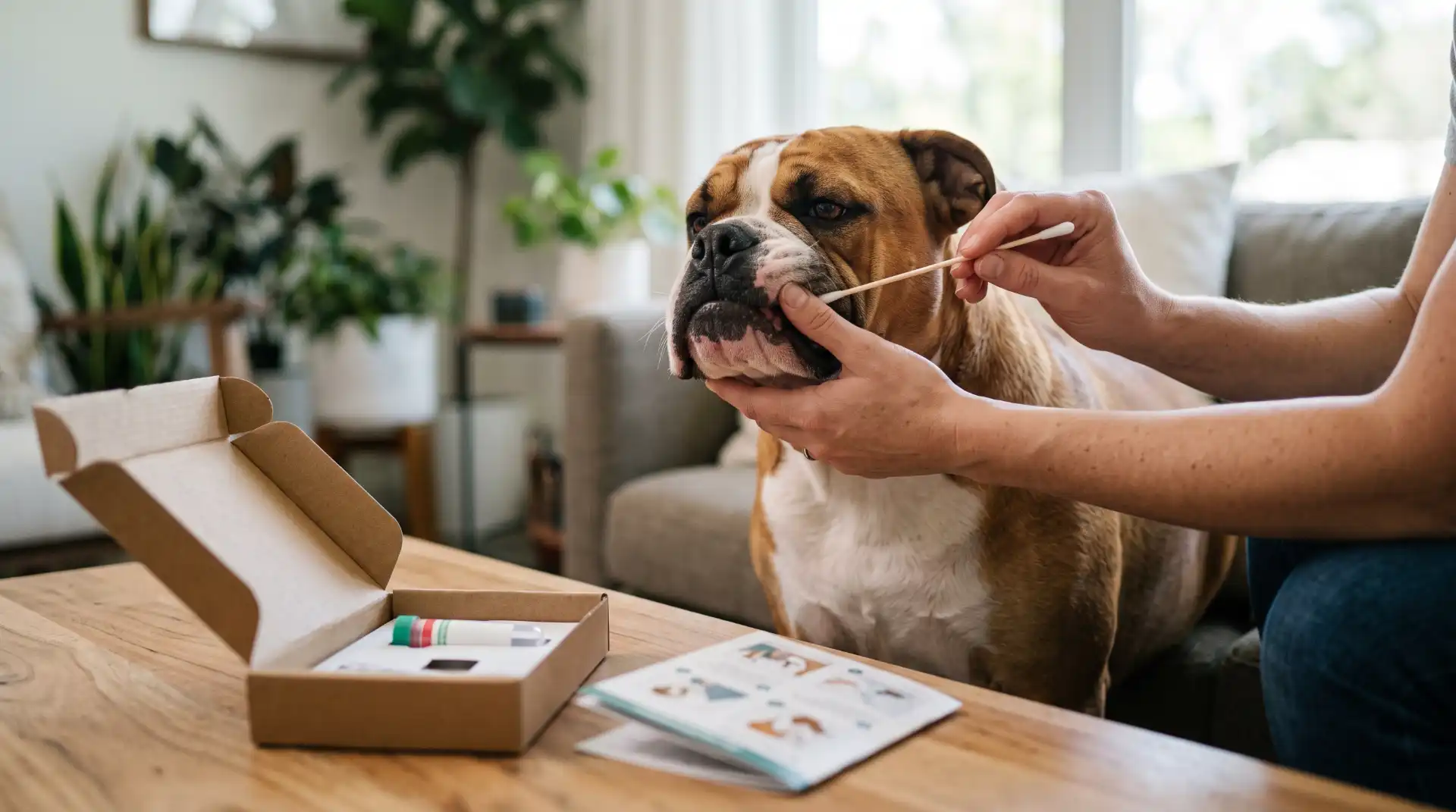
At-home pet diagnostics is a broad term covering technologies and testing methods that allow owners to gather health information outside a traditional veterinary clinic. The category includes several very different types of products, so it is important not to assume that all at-home tests provide the same level of information or accuracy.
Some services involve collecting a sample at home and sending it to a laboratory for analysis. Others provide an immediate result through a test strip or electronic device. Wearable technology can monitor activity and other measurable patterns over time, while smartphone applications can help owners organize observations, photographs, measurements, and veterinary records.
The distinction between monitoring, screening, and diagnosis is particularly important. Monitoring means observing a measurable characteristic over time. A wearable device recording activity is an example. Screening involves looking for an indication that something may deserve additional attention. Diagnosis goes further by determining the underlying medical condition responsible for a problem.
An at-home product may therefore identify a potential concern without explaining its cause. A Continental Bulldog with an unusual test result may need a physical examination, laboratory confirmation, imaging, or another diagnostic procedure before a veterinarian can determine what is actually happening.
This distinction protects owners from one of the biggest risks associated with consumer pet-health technology: assuming that a convenient result automatically represents a medical diagnosis.
Why At-Home Pet Health Technology Is Growing
The growth of at-home pet diagnostics is part of a much larger change in how Americans manage health information. Smartphones, wearable sensors, digital records, laboratory services, and remote communication have made it easier to collect information outside traditional healthcare settings.
Pet owners are increasingly interested in applying similar concepts to their dogs. A person who tracks their own exercise, sleep, heart rate, nutrition, or other health information may naturally become interested in monitoring similar patterns in a companion animal.
The growth of veterinary technology is also being encouraged by greater demand for preventive care. Many owners no longer want to wait until a dog becomes obviously sick before paying attention to health changes. They want to identify potential concerns earlier and maintain a more complete picture of their dog’s condition.
This philosophy fits well with responsible Continental Bulldog ownership. Your existing guide on preventive care for Continental Bulldogs discusses the broader shift toward year-round wellness rather than relying only on occasional veterinary visits. At-home technology can become one component of that broader preventive approach.
The important word is “component.” Technology should support a dog’s healthcare plan rather than become the healthcare plan by itself.
What Can Continental Bulldog Owners Monitor at Home?
Some of the most useful information does not require advanced equipment. Owners can monitor body weight, appetite, water consumption, bowel movements, activity, sleeping habits, skin appearance, ear condition, medication schedules, and general behavior.
The value comes from consistency. A single observation may not mean much, but repeated observations can reveal a trend.
For example, imagine a Continental Bulldog that normally enjoys a 20-minute walk but gradually becomes less interested in going outside. On one day, that change may seem insignificant. If the same pattern continues for several weeks, however, it becomes much more meaningful.
Similarly, an owner may not immediately notice a small increase in body weight. Regular measurements can reveal that the dog has been steadily gaining weight even though its appearance has not changed dramatically.
These observations do not diagnose disease. They provide useful information that can help an owner decide when to contact a veterinarian.
At-Home Urine Testing and What It Can Tell You
Urine is one of the biological samples that can be collected outside a veterinary clinic. Depending on the specific product, urine testing may provide information about characteristics such as concentration or the presence of certain substances.
However, owners should be careful about interpreting home urine tests. A test result may identify an abnormality without explaining why it occurred. Hydration, diet, medications, infections, metabolic conditions, and other factors can influence urine findings.
Sample collection can also affect results. Contamination, improper storage, incorrect timing, or failure to follow instructions can reduce the usefulness of a test.
If a Continental Bulldog repeatedly produces an unusual home test result, the safest approach is to contact a veterinarian and ask whether professional laboratory testing is appropriate.
Home urine testing can therefore be useful as an information-gathering tool, but it should not become a reason for owners to diagnose or treat their dogs without professional guidance.
At-Home Stool Testing and Digestive Health
Digestive health is another area where home sample collection may be useful. Owners are often able to collect a stool sample and submit it for laboratory analysis when a veterinarian or testing service recommends it.
Changes in stool can provide important information about a dog’s health, but they should always be considered alongside other symptoms.
A Continental Bulldog experiencing diarrhea could have eaten something unusual, experienced a dietary change, encountered stress, developed an infection, or developed another health problem. A single test cannot necessarily distinguish among all of these possibilities.
For this reason, owners should record additional details whenever digestive symptoms occur. The dog’s appetite, energy, vomiting, frequency of bowel movements, recent dietary changes, medications, and duration of symptoms may all help a veterinarian interpret the situation.
In other words, the sample is only one part of the story. The dog’s overall condition remains important.
Wearable Technology and Continental Bulldog Health Monitoring
Wearable pet technology is one of the most visible developments in modern animal health monitoring. Depending on the device, a wearable may record activity, movement, rest periods, location, or other measurements.
The greatest advantage may be the ability to establish an individual baseline.
Every Continental Bulldog has a different routine. One dog may be naturally active, while another may prefer short walks followed by long periods of rest. Breed averages cannot fully explain what is normal for an individual animal.
If a wearable device shows that a dog’s activity has gradually decreased, the information may give the owner a reason to pay closer attention. If the change continues, the owner can discuss the trend with a veterinarian.
However, activity data should never be interpreted as a diagnosis. A decrease in movement could result from pain or illness, but it could also be caused by extreme weather, changes in household routine, stress, or simple differences between days.
The device identifies a change. It does not necessarily identify the cause.
Smartphones Are Becoming Health-Tracking Tools
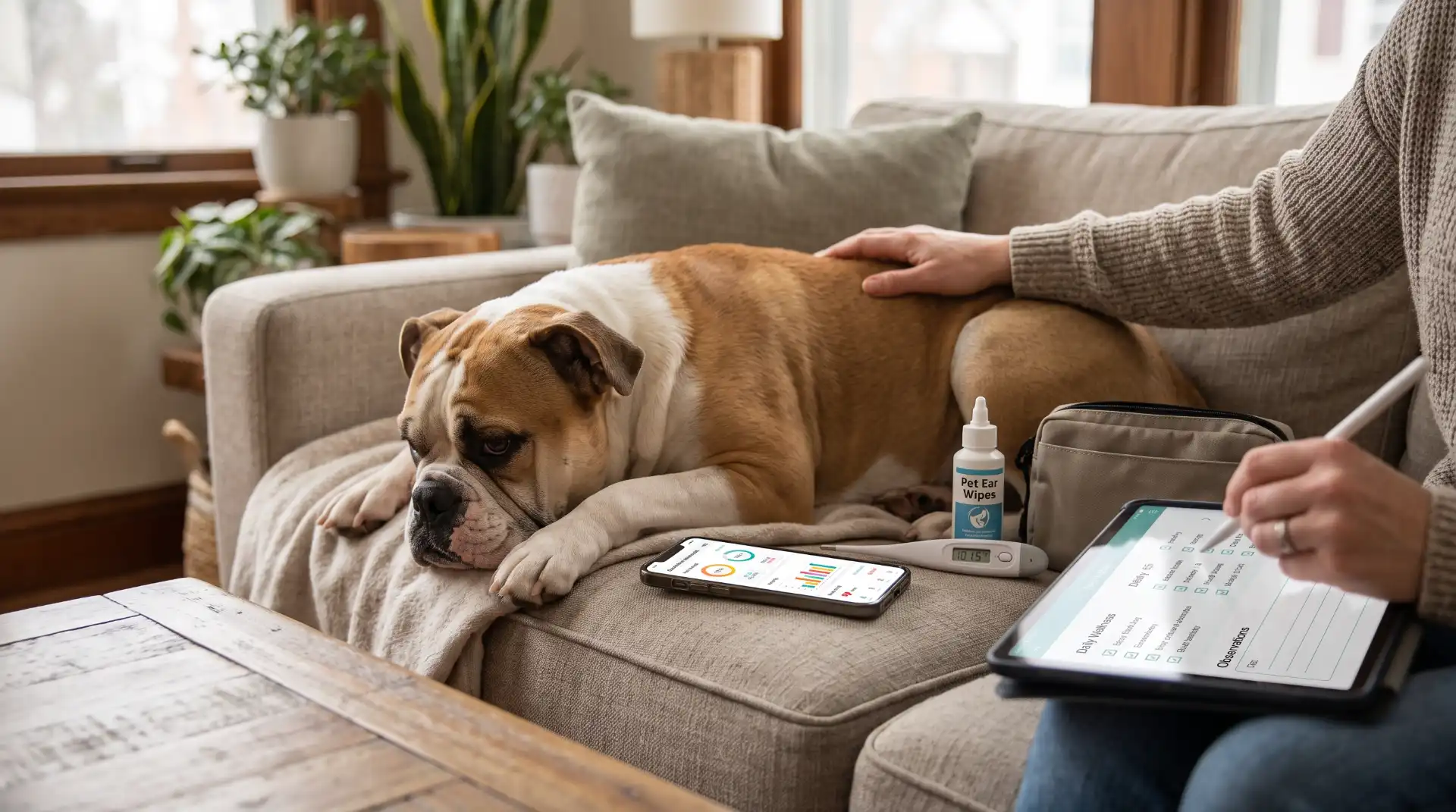
The smartphone may eventually become one of the most useful pieces of pet-health technology because it can bring many different types of information together.
A Continental Bulldog owner can use a phone to record weight measurements, take photographs of changes in the skin, record videos of unusual movement, track medications, document symptoms, and store veterinary records.
This can be particularly useful because dogs sometimes behave differently in a veterinary clinic than they do at home.
A dog that walks normally inside an examination room might limp occasionally at home. A breathing sound that occurs during sleep may not happen during the appointment. A behavioral problem may also disappear when the dog is placed in an unfamiliar environment.
A short, appropriately recorded video can sometimes provide useful context for the veterinarian. Owners should never delay urgent treatment to create a video, but when a non-emergency symptom is intermittent, documentation can help communicate what is happening.
AI and the Next Generation of Pet Diagnostics
Artificial intelligence is beginning to influence veterinary technology as well. Researchers are exploring whether machine-learning systems can analyze digital information such as recordings, images, or physiological measurements to assist with screening.
One emerging area is smartphone-assisted analysis of animal sounds. Research published in 2026 has explored systems that can analyze recordings associated with canine and feline heart murmurs. Such technology illustrates the direction in which pet diagnostics may be moving, although research systems should not automatically be treated as universally available or equivalent to veterinary examination.
The potential is significant. An AI-assisted system could eventually help identify patterns that are difficult for owners to recognize themselves and recommend that a veterinarian investigate further.
However, artificial intelligence introduces another important question: how accurate is the system for the particular dog being evaluated?
A tool trained on one population may not perform identically across every breed, age group, body type, environment, or medical condition. A promising research result is not the same thing as a universally validated diagnostic tool.
For Continental Bulldog owners, AI should therefore be viewed as an emerging technology rather than an independent veterinary authority.
Could Technology Help Monitor Breathing?
Breathing deserves special attention in any discussion of Continental Bulldog health. Although the Continental Bulldog was developed with the goal of producing a more functional bulldog type, individual dogs can still have respiratory differences.
At-home technology may eventually help owners document breathing patterns, but owners should not assume that a consumer device can determine whether a dog has an airway disorder.
Simple observation remains valuable.
Owners should know how their Continental Bulldog normally breathes while sleeping, resting, walking, and recovering from appropriate exercise. A new or progressive change may deserve veterinary attention.
Your existing article on Continental Bulldog snoring and breathing problems provides a useful companion resource for owners who are trying to distinguish ordinary sleeping noises from changes that may require professional evaluation.
If a dog is visibly struggling to breathe, collapses, develops blue or gray gums or tongue, or appears severely distressed, an owner should seek emergency veterinary care rather than experimenting with an at-home diagnostic device.
At-Home Testing and Weight Management
Weight monitoring is one area where home technology can be especially practical.
A household pet scale or appropriately used human scale can help owners monitor trends between veterinary appointments. The goal is not to weigh a dog obsessively every day but to identify meaningful changes over time.
Weight can influence mobility, exercise tolerance, and overall health. For a Continental Bulldog, maintaining an appropriate body condition can be especially valuable because excess weight can increase physical demands on the joints and make activity more difficult.
If an owner notices steady weight gain despite apparently unchanged feeding habits, that information can be shared with a veterinarian. Likewise, unexplained weight loss deserves attention, especially if it occurs alongside changes in appetite, thirst, digestion, energy, or behavior.
Home measurement cannot explain why weight changed. It simply makes the change easier to identify.
Why At-Home Diagnostics Cannot Replace a Veterinarian
This is the most important point for owners to understand.
An at-home diagnostic product may provide one measurement, but veterinary medicine depends on context.
A veterinarian considers the dog’s medical history, physical examination, symptoms, age, breed, medications, lifestyle, laboratory findings, and other relevant information. Depending on the problem, the veterinarian may also recommend radiographs, ultrasound, specialized laboratory testing, or other diagnostic procedures.
The FDA similarly warns consumers that direct-to-consumer tests vary in the amount of scientific evidence supporting their claims. The agency recommends understanding the limitations of a test and discussing meaningful results with an appropriate healthcare professional. The FDA’s direct-to-consumer testing guidance is therefore a useful authoritative resource for owners evaluating the claims made by consumer testing companies.
A negative result does not always mean a dog is completely healthy. A positive result does not necessarily mean a disease is present. Both results need to be considered within the appropriate clinical context.
How to Evaluate a Pet Diagnostic Product
The rapidly expanding pet technology market makes product selection increasingly important.
Owners should look beyond attractive packaging, impressive advertisements, and claims that a test can identify a large number of conditions.
Start by asking what the product actually measures. Is it measuring a physical parameter, analyzing a sample, estimating a risk, or making a prediction? These are very different functions.
Owners should also determine whether the test has been validated for dogs and whether there is credible evidence supporting the company’s specific claims. A product developed for humans should not automatically be assumed to work for dogs.
Instructions matter as well. Sample collection, storage, timing, and handling can influence the quality of results. Even a scientifically sound test can produce misleading information if it is used incorrectly.
Finally, owners should determine what happens after an abnormal result. A responsible testing company should explain what the result means, what it does not mean, and when professional veterinary evaluation is recommended.
Privacy and Pet Health Data
Digital pet healthcare also introduces a privacy issue that is easy to overlook.
A wearable device or smartphone application may collect more than health information. Depending on the product, it may also collect location information, activity patterns, photographs, account information, or other data.
Owners should review privacy policies before purchasing connected technology. They should understand what information is collected, how it is stored, whether it is shared with third parties, and whether they can delete their information.
As veterinary care becomes increasingly digital, pet owners should treat health data as something worth protecting.
At-Home Diagnostics and Veterinary Telemedicine
At-home testing is closely connected with the growth of veterinary telemedicine.
An owner may collect information at home and then communicate with a veterinarian through an online service. This can be useful for follow-up discussions, reviewing non-emergency changes, or determining whether an in-person appointment is appropriate.
However, telemedicine does not eliminate the need for physical examinations.
Veterinary telemedicine requirements can also vary depending on federal and state rules and the circumstances of the veterinary-client-patient relationship. Owners should therefore avoid assuming that every veterinary service can legally be performed remotely in every state.
The safest approach is to view telemedicine as another method of communicating with veterinary professionals, not as a universal substitute for traditional veterinary care.
Building a Digital Health Record for Your Continental Bulldog
One of the easiest ways to benefit from modern technology is to create a simple digital health record.
The record can contain the dog’s date of birth, weight history, diet, medications, preventive treatments, vaccination information, veterinary appointments, allergies or sensitivities, and notable health events.
Owners can also keep photographs of the dog at different stages of life. Consistent photographs can make changes in body condition, skin appearance, or other visible characteristics easier to recognize.
Short videos can also be useful when symptoms are intermittent. A video of an unusual gait, for example, may give a veterinarian information that is difficult to reproduce during an appointment.
The purpose is not to become a veterinarian. The purpose is to become a better observer and provide better information.
At-Home Diagnostics Can Complement Genetic Testing
At-home diagnostics should also be distinguished from genetic testing.
Your existing article on Continental Bulldog DNA testing explains how genetic testing can provide information about inherited variants, traits, and other genetic characteristics.
Genetic information and everyday health monitoring answer different questions.
A DNA test may identify an inherited variant or provide information about genetic risk. An activity monitor might identify a change in movement. A urine test might detect an abnormal measurement. A photograph might document a skin change.
None of these tools provides the complete picture by itself.
The future of pet healthcare is likely to involve combining different forms of information rather than depending on one universal test.
When an At-Home Test Should Lead to a Veterinary Visit
An abnormal home result should generally be considered a reason to investigate rather than a final diagnosis.
The urgency depends on the result and the dog’s overall condition.
If a healthy-appearing dog has a minor unexpected measurement, an owner may be able to contact the regular veterinary office and ask whether additional testing is recommended. If an abnormal result is accompanied by serious symptoms, the situation may require much faster attention.
Emergency warning signs can include severe breathing difficulty, collapse, seizures, significant bleeding, repeated vomiting accompanied by weakness, severe lethargy, inability to urinate, or other signs of serious illness.
Owners should never delay emergency veterinary care simply because they want to perform an at-home test first.
What At-Home Diagnostics May Look Like in the Future
The future of pet health monitoring is likely to become increasingly connected.
Wearable sensors may collect continuous information. Smartphones may organize the data. Artificial intelligence may identify unusual patterns. Laboratory services may analyze samples collected at home. Veterinary professionals may then review the combined information and determine whether an examination or additional diagnostic work is appropriate.
This could create a more continuous health-monitoring model.
Instead of seeing a dog only as a snapshot during an annual or occasional appointment, veterinarians may eventually have access to months of relevant information about the dog’s activity, weight, behavior, and other measurable patterns.
That possibility is exciting, but it also creates a responsibility to ensure that the information being collected is accurate and clinically useful.
More Data Does Not Always Mean Better Healthcare
One potential problem with the growth of pet technology is information overload.
An owner could eventually receive dozens of measurements every day without knowing which ones matter.
A good health-monitoring system should therefore not simply produce more data. It should help identify meaningful changes and provide information that can be interpreted appropriately.
For example, knowing that a Continental Bulldog moved slightly less on one Tuesday may not be clinically meaningful. A consistent decline in activity combined with reduced appetite and a change in behavior may be far more important.
Context remains essential.
The Importance of Knowing Your Continental Bulldog’s Normal Baseline
Perhaps the most valuable thing owners can do with modern technology is establish a baseline.
Know your dog’s typical appetite, weight, activity, sleeping behavior, breathing pattern, bathroom habits, and personality.
When the normal pattern is understood, changes become easier to recognize.
This is especially useful as a dog gets older. A gradual change may be easy to dismiss as “just aging,” but a documented pattern can help a veterinarian determine whether further evaluation is appropriate.
Your dog’s baseline is more useful than a generic breed statistic because it reflects the individual animal.
A Practical Approach for Continental Bulldog Owners
Owners do not need to purchase every new pet-health device that appears on the market.
A practical approach is to begin with simple monitoring and add technology only when it provides a clear benefit.
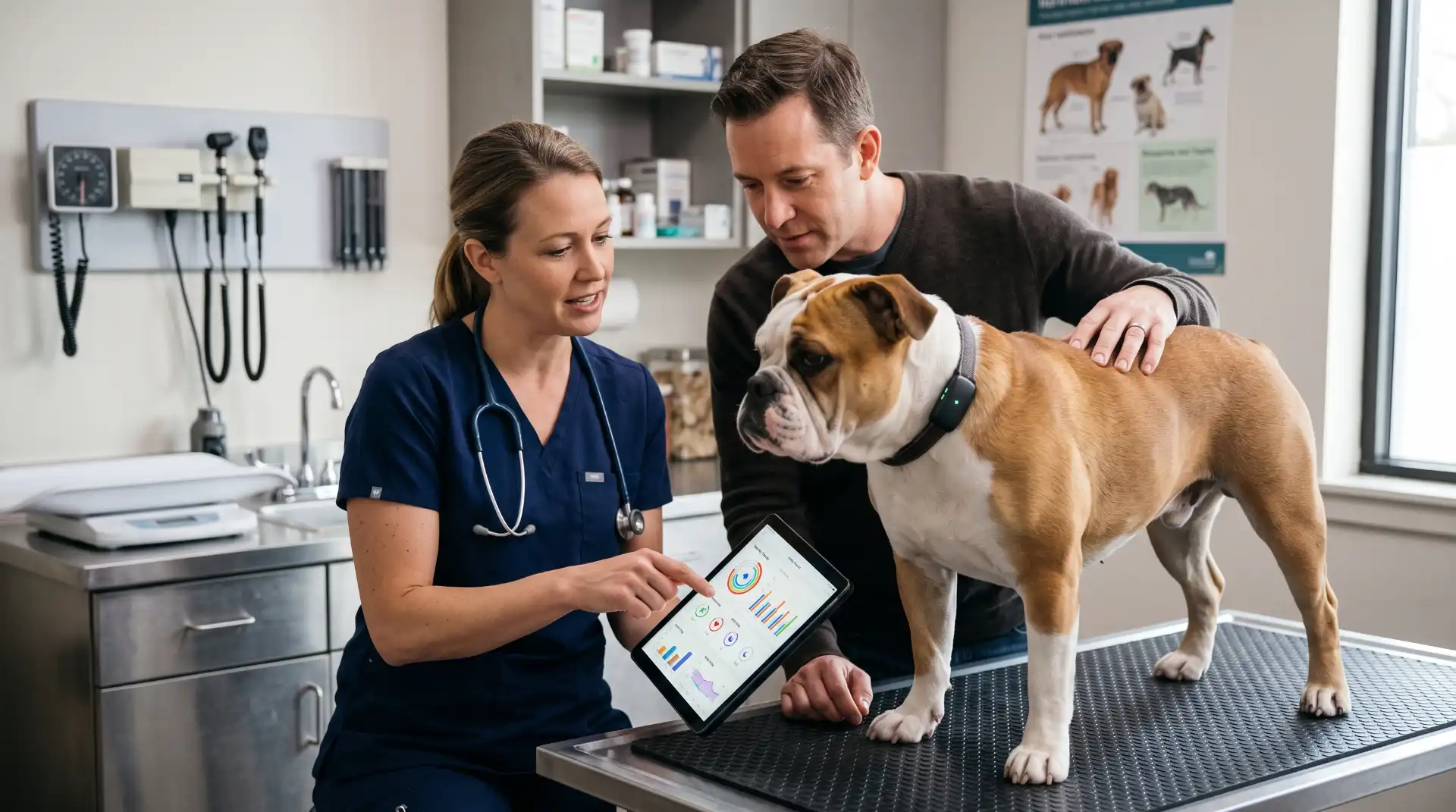
Regular weight measurements, a digital health record, photographs, appropriate sample collection, and consistent observation can already provide valuable information. Wearable devices or specialized tests can then be considered when they have a specific purpose.
The most useful technology is technology that answers a meaningful question.
If an owner is purchasing a device simply because it promises to measure everything, the benefit may be limited. If the owner has a specific reason to monitor activity, weight, or another characteristic, the technology may be much more useful.
How Technology Can Improve Communication With Your Veterinarian
Perhaps the greatest long-term benefit of at-home diagnostics is better communication.
Instead of saying that a Continental Bulldog “has seemed different lately,” an owner may be able to provide a timeline showing when the change began and how it progressed.
Instead of trying to remember whether a symptom occurred twice or ten times, the owner can maintain a record.
Instead of attempting to describe an unusual movement, the owner may be able to show a short video recorded safely at home.
This information does not replace clinical judgment. It improves the information available to the person making that judgment.
Responsible Technology Use Is Part of Responsible Dog Ownership
Modern pet technology should ultimately support the same goal as traditional preventive care: helping dogs live healthier and more comfortable lives.
For Continental Bulldog owners, that means using technology responsibly rather than becoming dependent on it.
Owners should continue scheduling appropriate veterinary examinations, maintaining preventive care, providing a balanced diet, monitoring body condition, providing appropriate exercise, and responding promptly when health changes occur.
At-home diagnostics can make some of these processes more informed, but they cannot eliminate the need for professional veterinary care.
Final Thoughts
The rise of at-home pet diagnostics represents one of the most interesting developments in modern dog ownership. American pet owners now have more opportunities than ever to collect health information outside the veterinary clinic, from wearable activity monitoring and smartphone records to home sample collection and emerging AI-assisted technologies.
For Continental Bulldog owners, the real benefit is not the ability to diagnose a dog independently. It is the ability to become more informed observers.
Consistent monitoring can reveal trends that might otherwise be missed. Digital records can make veterinary conversations more precise. Appropriate home testing can provide useful information when used correctly. Wearable technology may eventually help identify changes in activity or behavior before owners recognize them visually.
At the same time, responsible owners need to understand the limitations of these tools. Not every consumer test has the same scientific support. A positive result does not automatically establish a disease, and a negative result does not guarantee that a dog is healthy.
The best approach is therefore collaborative. Technology gathers information, owners provide observations, and veterinarians interpret the findings within the context of the dog’s complete health history.
As veterinary technology continues to evolve, Continental Bulldog owners can expect more tools designed to make health monitoring convenient, personalized, and data-driven. The challenge will be learning which technologies are genuinely useful and which simply produce impressive-looking information.
For now, the smartest strategy is straightforward: establish your dog’s normal baseline, monitor meaningful changes, use reputable testing tools responsibly, protect your pet-health data, and involve your veterinarian whenever a result or symptom raises concern.
At-home diagnostics should not replace the veterinary clinic. They should help owners arrive at the veterinary clinic better informed.
That distinction is likely to remain one of the most important principles of modern Continental Bulldog healthcare.