
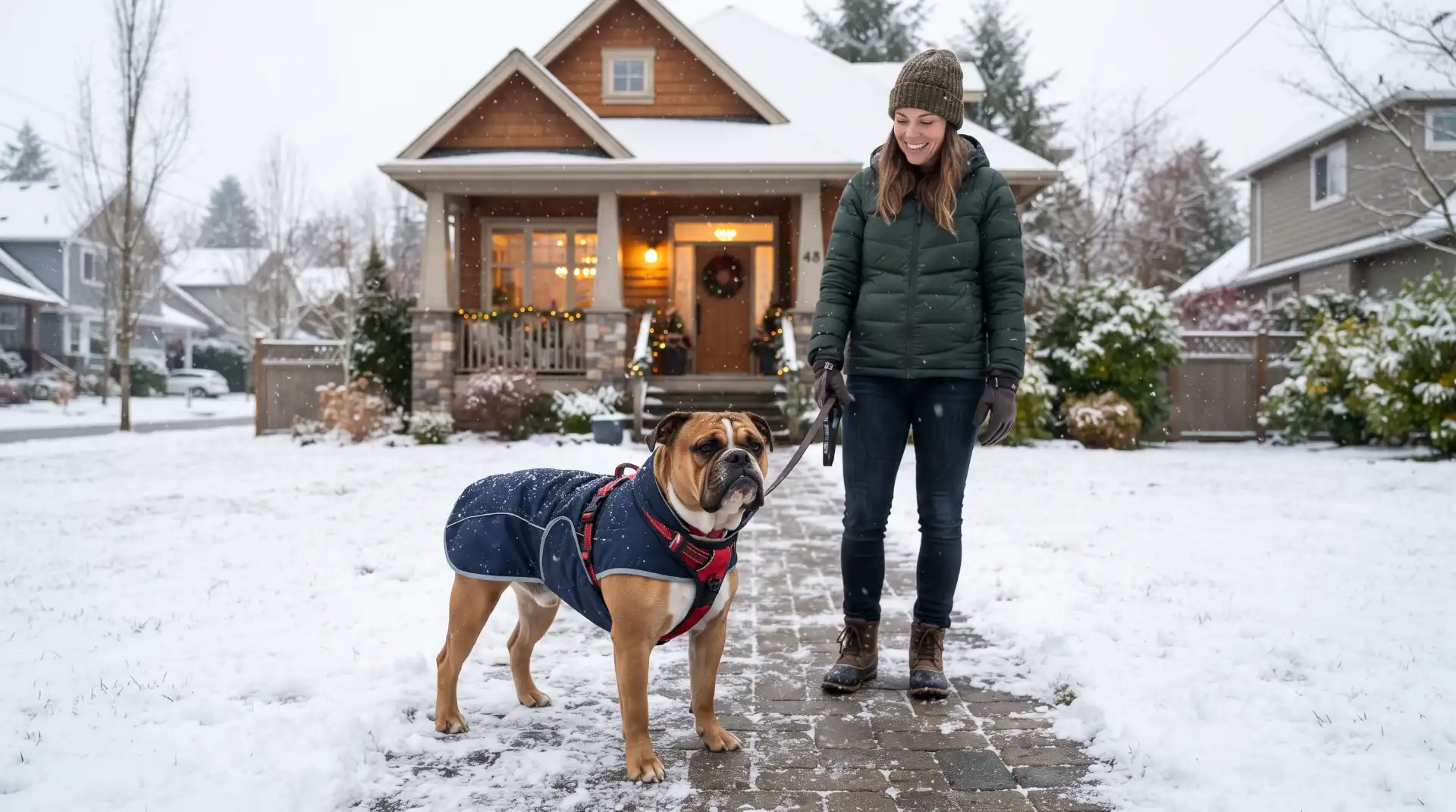
Winter storms can bring freezing temperatures, heavy snow, ice, strong winds, road closures, and unexpected power outages across many parts of the United States. For Continental Bulldog owners, preparing before severe winter weather arrives can make everyday care considerably easier.
Continental Bulldogs may enjoy cool weather, but that does not mean they are naturally equipped for prolonged exposure to extreme cold. Their relatively short coat provides less insulation than the thick double coats found on breeds developed specifically for harsh winter climates. Individual dogs also differ in age, health, body condition, activity level, and tolerance for low temperatures.
Winter storm safety for Continental Bulldogs therefore involves more than putting a sweater on your dog before a walk. Owners need to think about outdoor exposure, paw protection, reliable shelter, safe indoor heating, food and water supplies, medications, emergency transportation, identification, and what to do if electricity or heating fails.
The American Veterinary Medical Association explains that pets can be vulnerable to frostbite and hypothermia and generally should stay indoors during very cold weather.
A little preparation can help your Continental Bulldog remain comfortable while your household manages whatever winter brings.
Understand Your Continental Bulldog’s Cold Tolerance
There is no single temperature at which every dog becomes uncomfortable.
Cold tolerance varies considerably among individual animals. Coat thickness, body fat, age, health, wind, moisture, activity level, and the length of time spent outdoors can all influence how a dog responds.
A healthy adult Continental Bulldog walking actively on a calm winter afternoon may tolerate conditions differently from a senior dog standing outside during freezing rain.
Wind also matters. Strong winter winds can make outdoor conditions feel considerably colder. Wet fur may accelerate heat loss, which means rain, sleet, melting snow, and deep wet snow deserve additional attention.
Continental Bulldogs have relatively short coats compared with many northern working breeds. Owners should therefore watch the dog rather than assuming that being a bulldog automatically provides adequate winter protection.
Signs that your dog may be uncomfortable include shivering, lifting the paws repeatedly, slowing down, refusing to walk, searching for shelter, whining, appearing anxious, or trying to return home.
Persistent weakness, significant lethargy, or unusual behavior after cold exposure warrants veterinary attention.
Keep Winter Walks Shorter During Extreme Cold
Daily physical activity remains useful during winter, but severe weather may require changes to the normal routine.
Instead of taking one long walk during freezing conditions, consider several shorter bathroom and exercise breaks. Indoor play can supplement outdoor activity until temperatures become more comfortable.
This approach can be particularly useful during blizzards, ice storms, and periods of dangerous wind chill.
Walking conditions matter just as much as temperature. Snow can hide uneven pavement, sharp objects, frozen debris, or patches of ice.
Keep your Continental Bulldog on a secure leash during winter walks. Snowfall can alter familiar smells and visual landmarks, while poor visibility can make it easier for dogs and owners to become separated.
A properly fitted harness can provide additional control on slippery sidewalks.
Your dog should also have current identification before leaving the house.
Consider a Winter Coat for Cold Conditions
Some Continental Bulldogs may benefit from additional insulation during cold walks.
A properly fitted dog coat or sweater should cover much of the torso without interfering with movement, breathing, bathroom breaks, or the harness.
Avoid clothing that restricts the shoulders or bunches tightly around the neck.
Fit matters more than appearance.
Check the garment after several minutes of movement. Look for rubbing around the chest, front legs, shoulders, and neck.
Remove wet clothing after returning indoors. A soaked sweater can hold moisture against the body rather than keeping a dog comfortable.
Winter clothing also needs regular washing because road salt, dirt, and deicing chemicals can accumulate on the fabric.
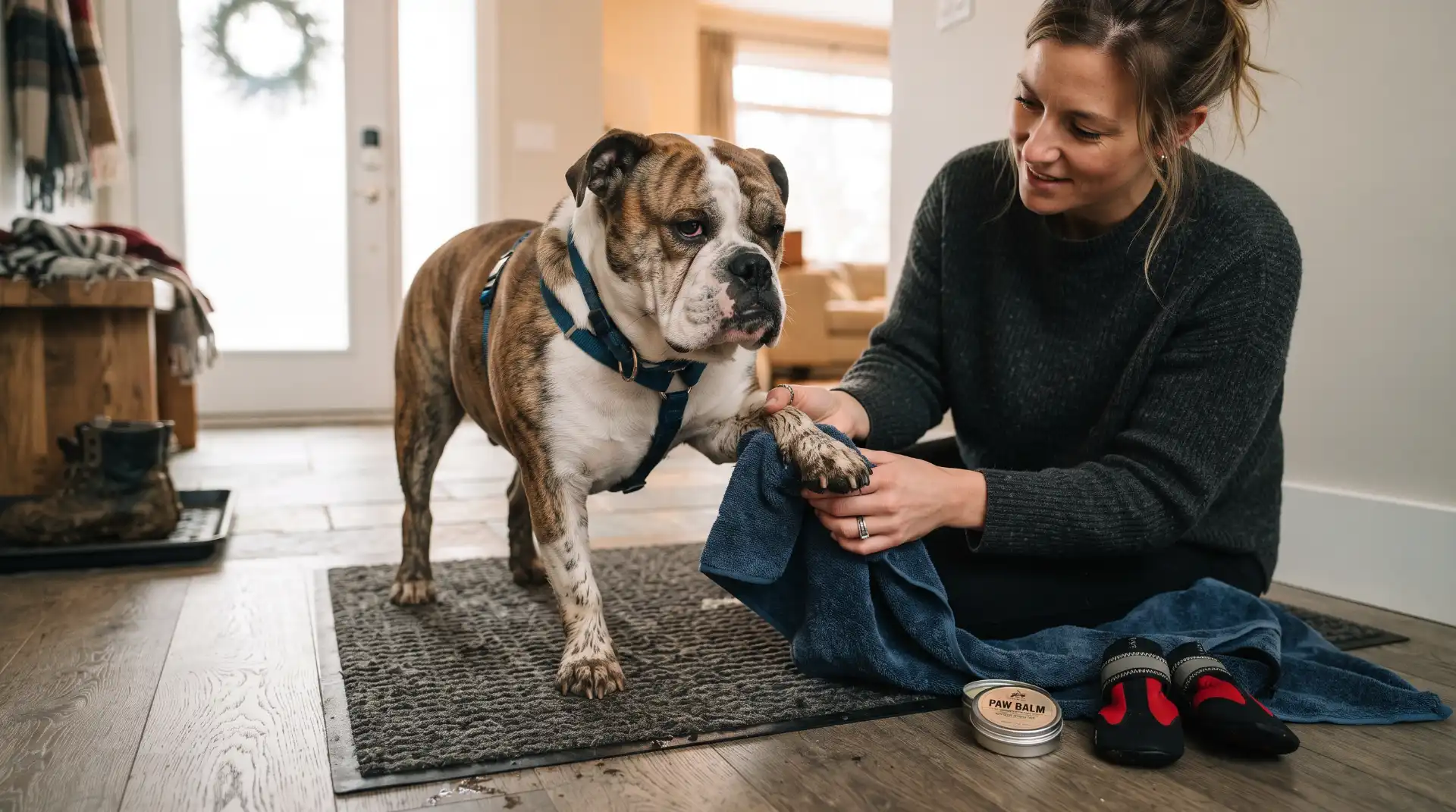
Winter streets and sidewalks create several challenges for dog paws.
Ice, packed snow, road salt, and chemical deicers may irritate paw pads and the skin between the toes. Snow can also accumulate between the toes, particularly during longer walks.
Check your Continental Bulldog’s paws after outdoor activity.
Wipe or rinse away road salt and other residue, then dry the paws carefully. Pay attention to the spaces between the toes.
Look for redness, cracked pads, cuts, irritation, or anything unusual.
Dog booties may provide another layer of protection in snowy areas. Introduce them indoors before expecting your dog to walk comfortably outside. Short practice sessions can help your Continental Bulldog adjust to the sensation.
A veterinarian can also advise whether a paw balm or similar product is appropriate for your dog.
For more seasonal coat and paw-care information, see our guide to seasonal grooming tips for Continental Bulldogs.
Be Careful Around Antifreeze and Deicing Chemicals
Some of the most serious winter hazards are not caused directly by snow or freezing temperatures.
Antifreeze presents a significant poisoning danger to pets. Even relatively small exposures can create a medical emergency.
Store automotive fluids where pets cannot reach them and clean spills immediately.
Do not allow your Continental Bulldog to drink from puddles in garages, driveways, parking lots, or near vehicles.
Ice-melting products also deserve attention. Residue may stick to the paws and later be swallowed when a dog licks its feet.
Cleaning the paws after walks can reduce this exposure.
Contact a veterinarian promptly if you believe your dog has swallowed antifreeze, deicer, or another potentially toxic substance.
Prepare for Power Outages Before the Storm
Winter storms sometimes damage power lines and interrupt electricity for hours or longer.
A home that normally feels comfortable can become cold quickly when heating systems stop functioning.
Plan in advance for where your Continental Bulldog can stay if your home becomes too cold.
Choose an interior room away from drafts. Keep dog bedding, blankets, flashlights, batteries, portable phone chargers, water, and essential supplies readily accessible.
Never use unsafe heating equipment inside an enclosed space.
Generators should be operated according to manufacturer safety instructions and should not be placed inside a home, garage, or other enclosed area where carbon monoxide can accumulate.
Portable space heaters also require caution around pets. A dog can accidentally knock over some models, and close contact with heating equipment can cause burns.
Provide a warm sleeping location that is away from doors, cold floors, and drafts.
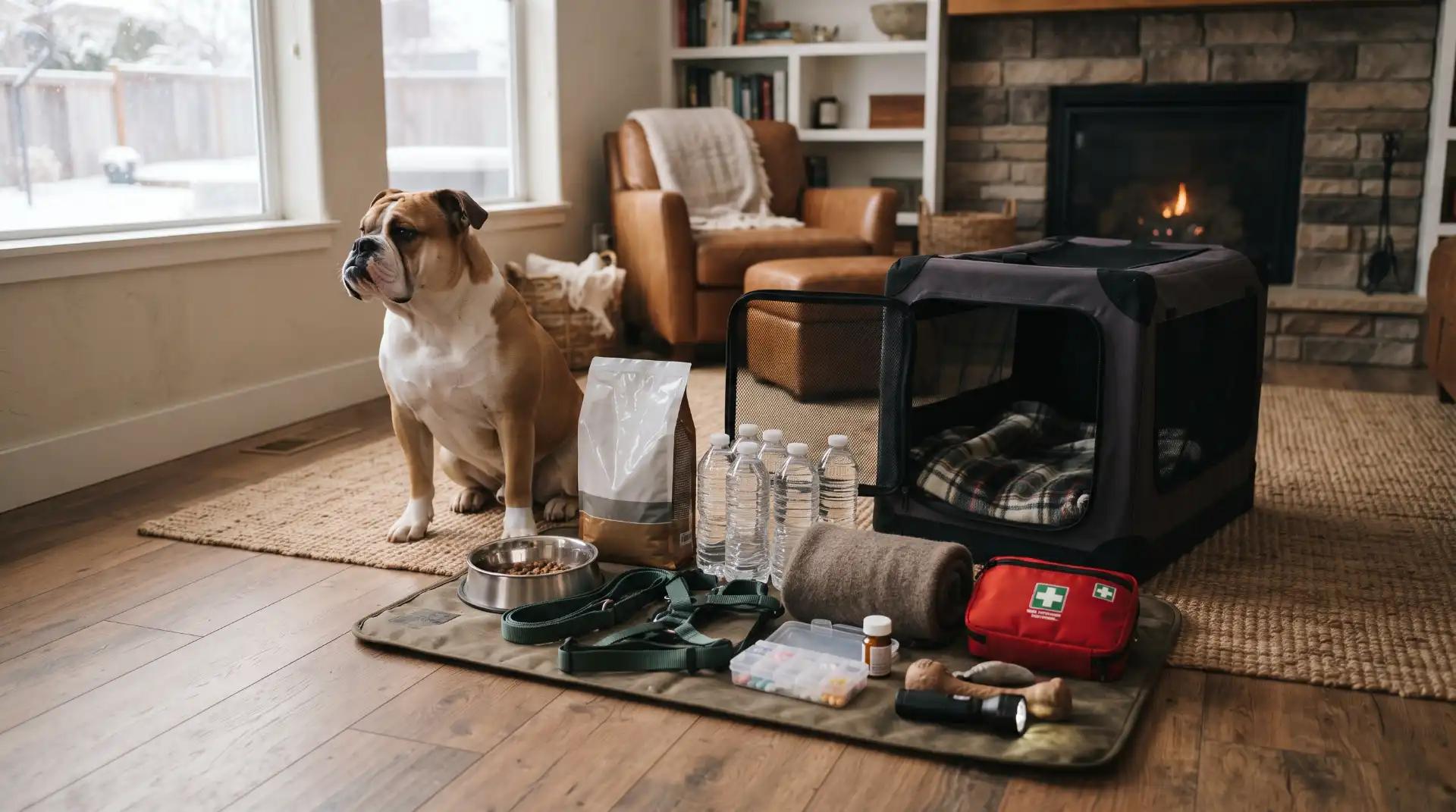
Build a Winter Emergency Kit for Your Dog
A winter emergency kit can reduce confusion if roads close, electricity fails, or your household needs to leave quickly.
The federal Ready.gov pet preparedness guide advises households to include pets in emergency plans and maintain supplies for them.
Your Continental Bulldog’s emergency supplies can include several days of normal food and water, medications, bowls, a leash and harness, waste bags, basic first aid supplies, veterinary information, identification records, blankets, and familiar comfort items.
Keep food in sealed containers protected from moisture.
If your dog takes prescription medication, speak with your veterinarian about emergency planning before severe weather arrives.
Keep copies of useful medical information where household members can find them.
A photograph showing you together with your Continental Bulldog may also be useful if you become separated during an emergency.
Check the kit periodically because food, medication, batteries, and other supplies can expire.
Keep Identification Information Current
Storms can create unusual situations.
Doors may blow open. Fences may become damaged by fallen branches. Dogs may become frightened by wind, emergency equipment, unfamiliar noises, or household activity.
Current identification provides another layer of protection.
Your Continental Bulldog should wear a secure collar or harness with an identification tag when appropriate.
If your dog has a microchip, verify that the contact information connected to the registration remains accurate.
Store clear recent photographs of your dog on your phone and with emergency documents.
These simple preparations become particularly useful if families need to evacuate unexpectedly.
Plan Where You Could Go With Your Dog
Do not assume every emergency shelter or hotel accepts pets.
Before winter storm season, identify several possible places where your Continental Bulldog could stay if your household needs to evacuate.
Options may include pet-friendly hotels, relatives, friends, boarding facilities, or designated emergency resources in your community.
Keep more than one destination in mind because roads may become blocked.
Know at least two reasonable driving routes when possible.
Local government agencies may announce emergency shelter information as conditions develop. Follow official instructions regarding road closures and evacuation orders.
If local officials direct residents to evacuate, take your dog with you rather than leaving the animal behind.
Prepare Your Continental Bulldog for Car Travel
Emergency travel can be stressful for a dog that rarely rides in a vehicle.
Regular positive exposure to car travel can make evacuation easier.
Your Continental Bulldog should travel using a secure restraint appropriate for the dog and vehicle. Keep a leash accessible before opening vehicle doors.
Bring water, food, medications, cleanup supplies, bedding, and identification.
Do not leave your Continental Bulldog unattended inside a cold parked vehicle. Vehicle interiors can become dangerously cold during winter.
Before traveling during a storm, review official road conditions rather than relying only on your normal navigation route.
Maintain Access to Fresh Water
Dog owners sometimes focus on preventing freezing while overlooking hydration.
Dogs still require access to clean water during winter.
Indoor heating can contribute to dry conditions, and active dogs still lose water through normal respiration and activity.
If household water service could be disrupted, include drinking water for your Continental Bulldog in your emergency supply.
Never depend on snow as the dog’s primary water source.
Eating snow does not provide a predictable source of clean drinking water, and roadside snow may contain salt, chemicals, or other contaminants.
Create Indoor Exercise Alternatives
Severe winter weather can keep dogs indoors for longer than usual.
Continental Bulldogs still need appropriate activity and mental stimulation, even when normal walks are temporarily shortened.
Indoor training provides a useful alternative.
Practice familiar commands, scent games, food puzzles, gentle tug sessions, or short games of hide-and-seek.
You can scatter part of a normal meal around a safe room and encourage your dog to locate the pieces.
Short training sessions may also provide mental activity without requiring a large indoor space.
Avoid intense activity on slippery flooring. Rugs or nonslip mats can improve traction in play areas.
Exercise should match your dog’s age, physical condition, and veterinary guidance.
Watch Senior Continental Bulldogs More Closely
Older dogs may require additional attention during winter storms.
The AVMA notes that cold weather may worsen certain medical conditions, including arthritis. Older animals may also have more difficulty regulating body temperature or walking on icy surfaces.
A senior Continental Bulldog might need shorter bathroom breaks, additional bedding, improved traction indoors, and closer monitoring.
Consider placing nonslip mats along frequently traveled areas of the home.
If your dog already has mobility limitations, discuss cold-weather management with your veterinarian before winter becomes severe.
Keep medications organized and maintain an emergency supply when possible.
Protect Puppies During Cold Weather
Continental Bulldog puppies also deserve special attention.
Young dogs may not regulate body temperature as effectively as healthy adults, and puppies may become distracted while exploring snow.
Keep outdoor sessions controlled and supervised.
Introduce snow gradually rather than turning the first major snowfall into a long outdoor adventure.
Dry the puppy thoroughly after coming inside.
Winter also provides an opportunity to teach calm behavior around boots, coats, towels, harnesses, and paw handling.
These skills can make future winter routines easier.
Recognize Signs of Hypothermia
Hypothermia occurs when body temperature drops below a healthy range.
Shivering can be an early sign of cold stress. Other concerning signs may include weakness, unusual quietness, slowed movement, confusion, or seeking warm places.
Bring your Continental Bulldog indoors if the dog appears uncomfortable in cold conditions.
Move the dog to a warm, dry environment and contact a veterinarian for guidance if significant cold exposure or hypothermia is suspected.
Avoid aggressive heating methods that could cause burns.
A veterinary professional can advise you based on your dog’s symptoms and exposure.
Understand Frostbite Risk
Frostbite involves tissue damage caused by freezing.
Areas with less insulation, including ears, paws, and the tail, may be vulnerable during prolonged exposure.
Frostbite is not always immediately obvious. Tissue changes can become more noticeable later.
Contact a veterinarian if you suspect frostbite.
Prevention centers on limiting prolonged exposure, keeping dogs dry, watching weather conditions, and returning indoors when a dog begins showing discomfort.
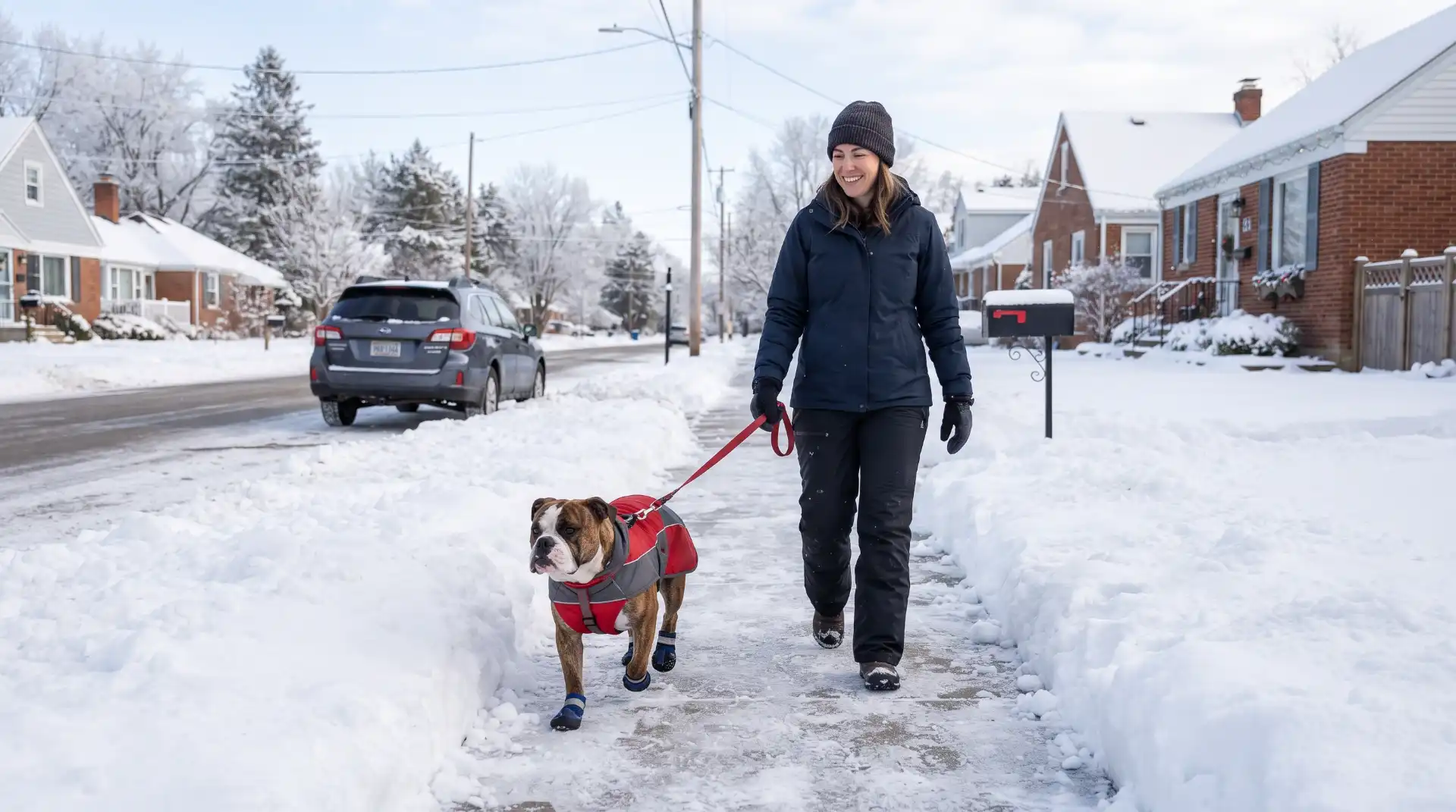
Keep Snow and Ice From Becoming a Playground Hazard
Fresh snow may look inviting, but winter landscapes contain hidden hazards.
Avoid letting your Continental Bulldog run across frozen lakes, ponds, streams, or other bodies of water.
Ice thickness can vary dramatically, and a surface that looks solid may not safely support a person or dog.
Snowbanks near streets can also reduce visibility around vehicles.
Use a leash near roads, driveways, parking areas, and snow-removal equipment.
Be cautious around snowplows, salt trucks, and machinery. Give equipment operators plenty of space.
Deep snow can also make physical activity much more demanding than a normal walk. Watch your dog’s breathing and energy level instead of judging exercise only by distance.
Keep Emergency Veterinary Information Accessible
A winter storm is not the ideal time to search for basic veterinary information.
Save your regular veterinarian’s contact details on your phone.
It can also be useful to know the location and contact information of an emergency veterinary hospital that operates outside normal clinic hours.
Weather may affect operating hours, staffing, and road access, so call ahead when practical.
Your dog’s medical documents should include current medications, important health history, and relevant veterinary information.
For additional household preparation, you can also review our guide to first aid essentials for Continental Bulldog owners.
A home first aid kit can help with minor situations, but it does not replace veterinary treatment for serious injuries, poisoning, frostbite, breathing problems, or significant hypothermia.
Groom Carefully During Winter
Winter grooming should support your Continental Bulldog’s coat and skin rather than removing too much natural protection.
Brush regularly to remove loose hair and debris.
After snowy walks, dry the coat and inspect skin folds, paws, and the underside of the body.
Road spray and deicing residue can reach the legs, chest, and belly.
Avoid excessively frequent bathing during cold, dry weather unless needed. Repeated bathing may contribute to skin dryness in some dogs.
When a bath is necessary, dry your Continental Bulldog thoroughly before outdoor activity.
Never send a damp dog outside into freezing conditions.
Keep the Home Comfortable but Safe
Indoor winter safety matters just as much as outdoor protection.
Fireplaces, candles, space heaters, electrical cords, and heating equipment can create new hazards.
Place portable heaters where your dog cannot easily knock them over or lie directly against them.
Use barriers around open fireplaces.
Keep bedding a safe distance from heating appliances.
Have functional smoke alarms and carbon monoxide detectors throughout the home.
A warm household environment should still provide your Continental Bulldog with choices. Some dogs may prefer a blanket, while others may become uncomfortable if covered too heavily.
Watch your dog and adjust accordingly.
Make Winter Preparation Part of Your Routine
The best time to prepare for a winter storm is before snow begins falling.
At the start of the cold season, inspect your dog’s winter coat, harness, leash, identification tags, booties, food supply, medications, emergency documents, and first aid supplies.
Review evacuation options.
Check weather forecasts when a major storm approaches.
Charge phones and portable batteries.
Bring your Continental Bulldog indoors before conditions deteriorate.
Preparation does not need to be complicated. It simply needs to address the everyday needs your dog depends on.
A Safer Winter Starts Before the First Major Storm
Winter storm safety for Continental Bulldogs involves planning for both everyday cold-weather activities and unusual emergencies.
Shorter walks during extreme cold, paw care, secure identification, warm indoor shelter, proper hydration, safe heating, emergency supplies, and an evacuation plan can all play a role.
Every Continental Bulldog is different. Age, health, coat, body condition, activity level, and individual tolerance affect how a dog responds to winter weather.
Pay attention to the dog in front of you rather than following one temperature rule for every situation.
For additional cold-weather information, the American Veterinary Medical Association, Ready.gov, and the ASPCA provide useful U.S. pet safety resources.
With thoughtful preparation, your Continental Bulldog can remain comfortable at home while your family is better equipped to handle snow, ice, freezing temperatures, power outages, and other challenges that winter storms may bring.