
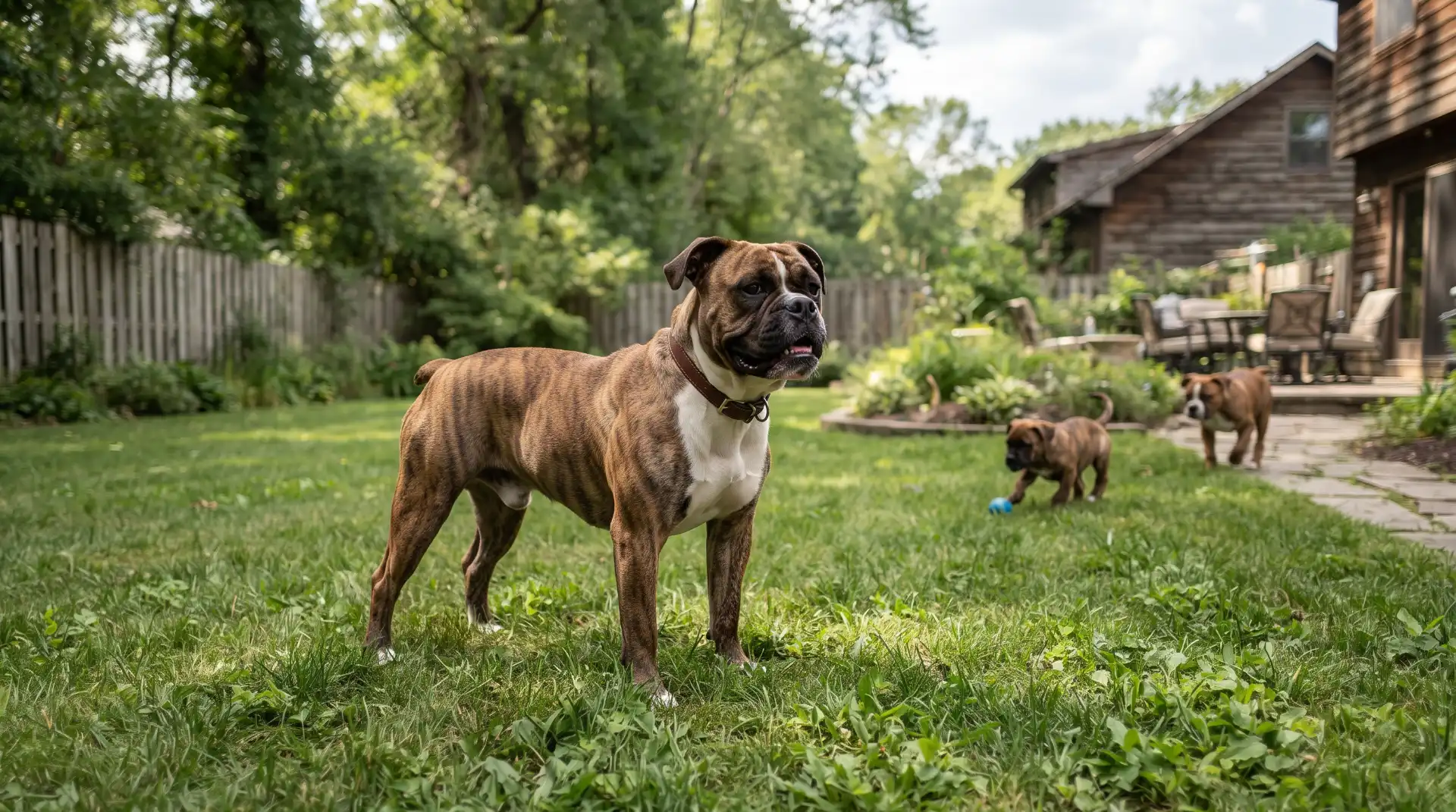
Continental Bulldogs generally complete most of their height growth during the first year to year and a half of life. However, physical development does not always stop when a dog reaches its adult height. Many young Bulldogs continue filling out through the chest, shoulders, neck, and muscles as they approach full maturity.
For owners in the United States, understanding this growth timeline can make puppy feeding, exercise, weight monitoring, and veterinary care easier to manage. Every Continental Bulldog develops at an individual pace, so a growth chart should serve as a general reference rather than a strict target.
The Continental Bulldog is officially described by the Fédération Cynologique Internationale as a medium-sized, athletic bull-type dog. The current FCI standard lists an expected adult weight of approximately 20 to 30 kilograms, or about 44 to 66 pounds, depending on height.
At What Age Is a Continental Bulldog Fully Grown?
Most Continental Bulldogs may reach close to their adult height somewhere between approximately 12 and 18 months. Their body can continue developing afterward as muscle mass increases and the chest, shoulders, and head mature.
This distinction is important because reaching adult height does not necessarily mean the dog has completed every stage of physical development.
Veterinary guidance for dogs of similar size generally places physical maturity between approximately 12 and 18 months. VCA Animal Hospitals notes that most large-breed dogs reach adult size during this period, while some heavier breeds continue developing for longer.
Continental Bulldogs fall around the medium-to-substantial range rather than being a true giant breed. Their exact growth timeline depends on genetics, sex, nutrition, activity, and individual development.
A puppy that appears nearly full-sized at 12 months may therefore still look noticeably different at 18 or 24 months.
Continental Bulldog Growth Does Not Happen at the Same Rate Throughout Puppyhood
Puppies grow very quickly during their early months. That rapid pace gradually decreases as they approach adulthood.
A Continental Bulldog puppy may appear to change almost weekly during early puppyhood. Legs become longer, the body becomes heavier, and the chest begins developing.
Later, growth becomes less dramatic.
Between approximately one and two years of age, owners may notice more subtle changes rather than significant increases in height. The dog may develop broader shoulders, a deeper chest, greater muscle definition, and a more mature head.
The American Kennel Club explains that the major puppy growth spurt generally begins slowing after the first year. Larger dogs can then continue adding weight and muscle for months afterward.
For this reason, asking when Continental Bulldogs stop growing has two answers.
Their skeletal height may stabilize first, while their overall adult physique develops more gradually.
Continental Bulldog Growth From Birth to Eight Weeks
The earliest stage of growth happens rapidly.
Newborn puppies depend completely on their mother. Their first weeks involve nursing, sleeping, gaining weight, and gradually developing their senses and mobility.
By approximately three to four weeks, puppies become considerably more active. They begin walking more confidently, interacting with littermates, exploring their surroundings, and transitioning toward solid puppy food.
During the following weeks, coordination continues improving.
By eight weeks, Continental Bulldog puppies are still very small compared with their eventual adult size, but their general bulldog structure has begun becoming recognizable.
Early growth should be steady rather than focused on producing the largest possible puppy.
Excessive weight gain is not the same as healthy development.
A puppy’s developing bones and joints already carry increasing body weight, so keeping the puppy in an appropriate body condition is more useful than trying to make it grow faster.
Continental Bulldog Growth From Two to Six Months
The period from approximately two through six months contains some of the most noticeable physical changes.
A puppy may gain height rapidly while its legs and body appear temporarily out of proportion.
This awkward stage is normal in many breeds.
Some puppies look tall and lean for a period before the rest of the body catches up. Others develop a stockier appearance earlier.
During this phase, owners should focus on balanced nutrition and appropriate activity rather than attempting to manipulate final size.
Nutrition plays a substantial role during puppy development. Puppies require enough calories and nutrients to support growth, but excess feeding can cause unnecessary weight gain.
AKC guidance notes that excessive calorie intake in growing dogs may contribute to orthopedic concerns, particularly when puppies become too heavy during development.
Meals should therefore support steady development rather than rapid weight gain.
Our guide to feeding Continental Bulldogs provides more information about nutrition throughout puppyhood and adulthood.
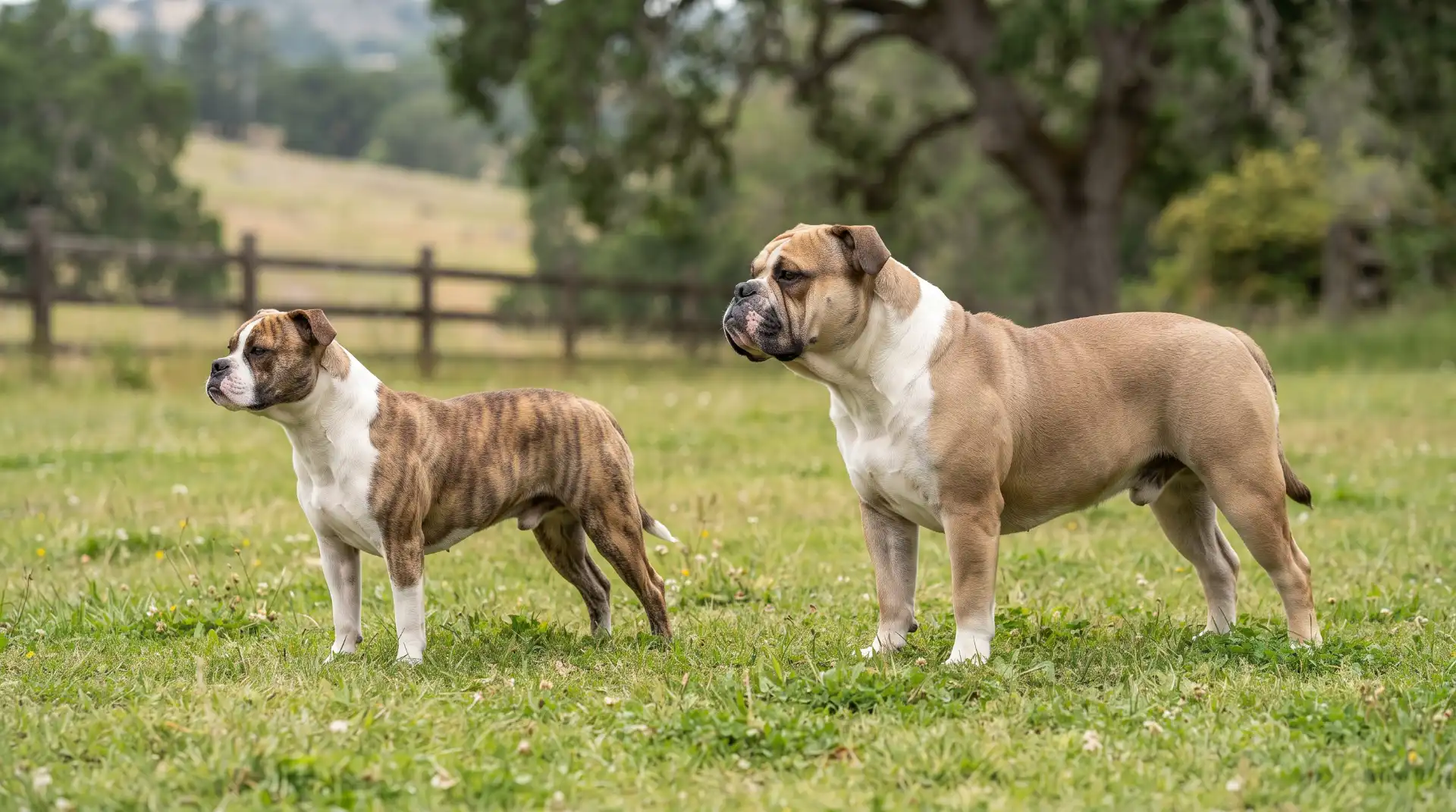
Continental Bulldog Growth From Six to Twelve Months
Growth remains significant between six and twelve months, although the pace typically begins slowing.
During this stage, the puppy starts looking more like an adult Continental Bulldog.
Height increases, the chest begins broadening, muscle develops, and the head becomes more mature. However, many dogs at this age still have relatively narrow bodies compared with fully mature adults.
Owners sometimes become concerned because their adolescent Continental Bulldog appears lean.
A developing adolescent does not necessarily need to look as broad as a mature dog.
Attempting to force additional body mass through excessive feeding can add unnecessary pressure to developing joints.
Instead, look at overall body condition and discuss concerns about weight or development with your veterinarian.
Six to twelve months is also a major behavioral development period.
Dogs may become physically stronger while still behaving very much like puppies.
Training and socialization should therefore continue consistently.
What Happens Between 12 and 18 Months?
Around the first birthday, many Continental Bulldogs begin approaching their adult height.
Growth may become difficult to notice from week to week.
That does not mean development has completely stopped.
Between 12 and 18 months, the body may become broader and more muscular. The chest can deepen, the shoulders become more pronounced, and the overall physique may lose some of its adolescent appearance.
This stage matters because the skeleton may still be maturing even when the dog looks nearly adult.
The American Kennel Club notes that the growth plates in the long bones of larger dogs may not fully fuse until approximately 16 to 18 months.
Growth plates contain developing cartilage near the ends of bones. As the dog matures, these areas gradually close.
Until that process is complete, owners should use reasonable judgment with repetitive high-impact activity.
Do Continental Bulldogs Continue Growing After 18 Months?
Some do, depending on what is meant by “growing.”
Significant increases in height are generally less likely after skeletal maturity. However, changes in muscle mass and body shape can continue.
A male Continental Bulldog that looks relatively narrow at 14 months may have a broader chest and heavier musculature by two years of age.
Females may also continue filling out after their height stabilizes.
These changes represent maturation rather than the rapid skeletal growth seen during puppyhood.
The individual dog’s genetics largely determine its final frame.
Looking at mature parents and other related dogs can provide a useful indication of the puppy’s likely adult build.
How Big Does a Full-Grown Continental Bulldog Get?
The Continental Bulldog is considered a medium-sized bull-type dog with a powerful but athletic appearance.
According to the current FCI breed standard, adult Continental Bulldogs generally weigh between approximately 20 and 30 kilograms, equivalent to about 44 to 66 pounds.
Individual dogs may differ according to sex, height, frame, and body composition.
Weight alone should not define whether a dog is healthy.
Two Continental Bulldogs at the same height could have different healthy weights because one may naturally have a larger frame or greater muscle mass.
The breed standard emphasizes balanced proportions and athletic construction rather than extreme bulk.
Our Continental Bulldog size, weight, and growth chart guide provides additional information about expected development throughout puppyhood.
Male vs Female Continental Bulldog Growth
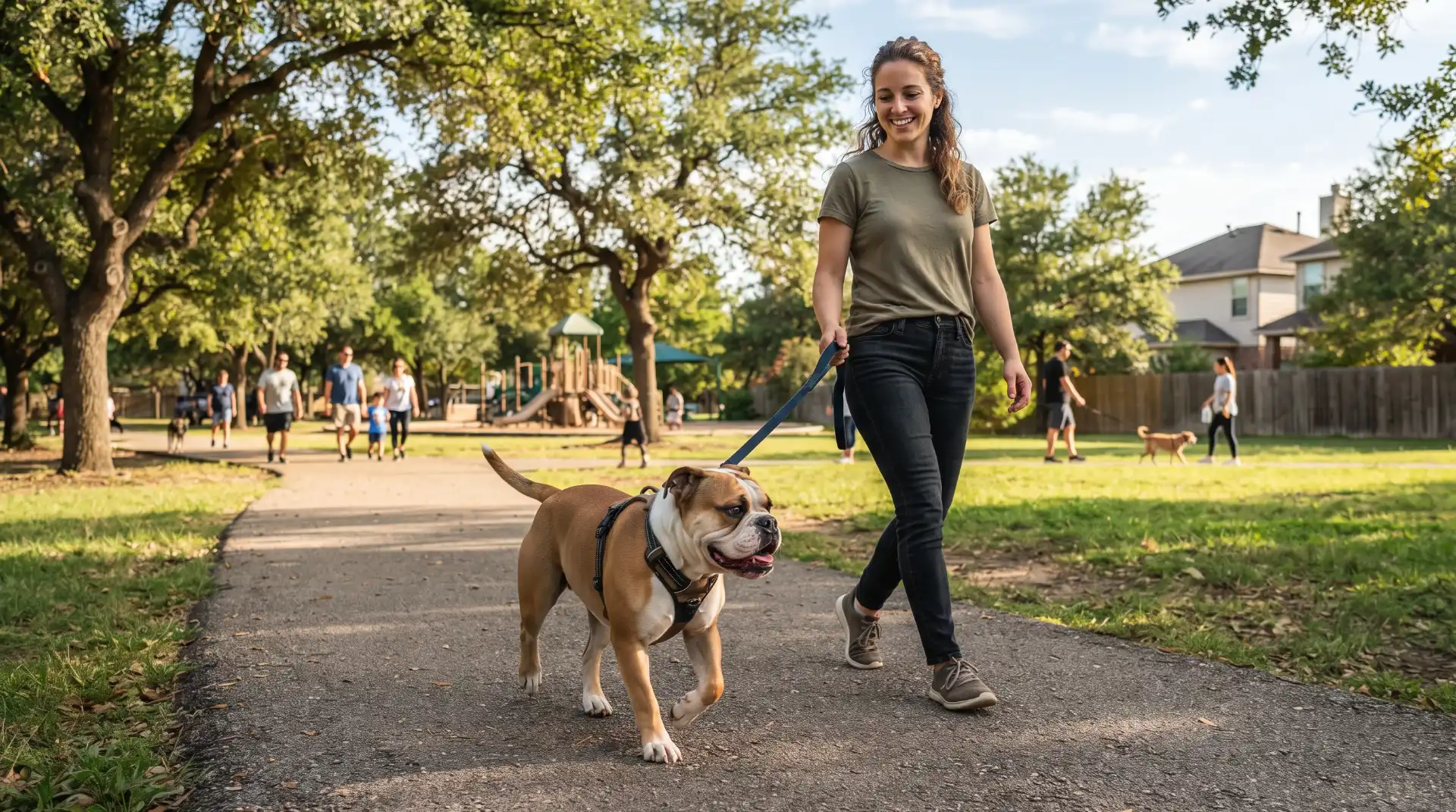
Male and female Continental Bulldogs usually follow similar developmental stages, but adult males often become somewhat larger and heavier.
Males may develop broader heads, heavier necks, and greater overall muscle mass.
Females frequently mature into a slightly lighter frame.
These differences are averages, not rules.
A large female may outweigh a smaller male, and individual bloodlines can produce noticeably different builds.
Genetics remain one of the strongest predictors of final size.
When purchasing a puppy from a responsible breeder, asking about the mature size of parents and grandparents may provide more useful information than relying solely on generic online weight charts.
Genetics Influence Final Continental Bulldog Size
Genetics determine much of a dog’s eventual height, frame, head structure, and natural body type.
Puppies inherit physical traits from both sides of their pedigree.
This means two puppies of the same age can grow at noticeably different rates while both remain healthy.
Breeding lines also differ.
Some Continental Bulldog families may consistently produce dogs near the lower portion of the accepted size range, while others produce larger dogs.
Parents provide a useful reference, although puppies do not always become exact copies of either parent.
Responsible breeding focuses on healthy structure and breed type rather than producing exceptionally large Bulldogs merely for appearance.
Nutrition and Healthy Growth
Food does not determine a dog’s genetically programmed maximum size, but nutrition strongly influences whether development occurs appropriately.
Growing puppies require calories, protein, fats, minerals, vitamins, and other nutrients in suitable proportions.
More food does not create a better developed dog.
Overfeeding primarily increases body fat and may cause puppies to gain weight faster than their developing skeleton should comfortably support.
VCA Animal Hospitals advises that growing puppies should develop slowly and steadily toward an appropriate adult body condition rather than being encouraged to become excessively heavy.
Choose a complete puppy diet suited to your dog’s expected adult size and discuss feeding questions with your veterinarian.
Avoid adding calcium or other supplements unless a veterinarian specifically identifies a reason.
A nutritionally complete commercial puppy food should already contain carefully balanced mineral levels.
Watch Body Condition, Not Just Weight
Owners commonly compare their puppy’s weight with charts online.
Charts can provide useful reference points, but they cannot account for every dog’s frame and genetics.
Body condition provides additional information.
Ideally, you should generally be able to feel the ribs without pressing through a thick layer of fat. Viewed from above, a healthy dog should normally have some visible waist behind the ribs.
A growing puppy does not need the exceptionally broad, heavy appearance sometimes associated with adult bulldogs.
Keeping a young dog lean can reduce unnecessary stress on its developing musculoskeletal system.
Your veterinarian can evaluate body condition during regular puppy examinations.
Exercise While Your Continental Bulldog Is Growing
Puppies need exercise.
Walking, exploring, playing, training, and interacting with the environment support physical and mental development.
However, puppy exercise differs from conditioning an adult athlete.
Young Continental Bulldogs should generally receive opportunities for self-directed play and moderate walks without excessive repetitive impact.
Long-distance running beside a bicycle, repeated jumping from significant heights, and intense forced exercise deserve greater caution while the skeleton is developing.
AKC veterinary guidance notes that structured road work or jogging is commonly postponed in larger dogs until roughly 14 to 18 months because growth plates may still be developing.
VCA similarly advises that growth plates remain vulnerable during puppy development and that their closure timing differs according to breed and size.
That does not mean puppies should remain inactive.
The objective is appropriate exercise rather than complete restriction.
Walks, controlled play, basic obedience, scent games, and exploration can provide plenty of activity.
Once skeletal maturity approaches, exercise intensity can gradually increase according to the dog’s health and conditioning.
Why Growth Plates Matter
Growth plates are areas of cartilage near the ends of developing long bones.
They allow bones to lengthen as puppies mature.
Because these regions have not yet completely transformed into mature bone, they require consideration during the growth period.
Eventually, growth plates close and become part of mature skeletal structure.
Closure does not happen on the same day throughout the entire body.
Different bones mature at different times.
This is one reason an exact universal age for full physical maturity cannot be assigned to every Continental Bulldog.
Veterinary examination can provide individualized guidance when owners plan demanding activities such as running, agility, weight pulling, or other structured athletic work.
When Can a Continental Bulldog Start More Strenuous Exercise?
There is no single birthday on which every Continental Bulldog suddenly becomes ready for strenuous activity.
Many dogs may approach skeletal maturity somewhere around 12 to 18 months, but individual development matters.
Before beginning repetitive running, intensive jumping, or demanding canine sports, owners may want to discuss their dog’s development with a veterinarian.
This is especially relevant when the dog has experienced limping, orthopedic concerns, unusual growth, previous injury, or substantial changes in body weight.
Exercise should also increase gradually.
A physically mature dog that has spent months taking short walks should not immediately begin running several miles.
Muscles, cardiovascular fitness, tendons, and overall conditioning need time to adapt.
Neutering, Hormones, and Development
Owners sometimes ask whether spaying or neutering changes how long their Continental Bulldog grows.
Reproductive hormones interact with skeletal development, and the timing of sterilization can influence growth plate closure.
The appropriate timing varies according to the dog, sex, breed, lifestyle, health history, and veterinary considerations.
Rather than relying on a universal age, discuss the decision with your veterinarian.
For U.S. owners, this conversation can include reproductive management, orthopedic development, behavior, lifestyle, and individual medical factors.
Signs Your Continental Bulldog May Be Near Full Size
Owners often notice several gradual changes as their puppy approaches maturity.
Height increases become less obvious. Feet begin looking proportional to the body. The chest fills out. Muscle becomes more defined. Weight gain slows considerably compared with early puppyhood.
Behavior may still remain youthful even after physical growth slows.
A 16-month-old Continental Bulldog can look almost completely mature while still showing adolescent excitement and impulsiveness.
Physical maturity and behavioral maturity are separate processes.
Training should continue even when your Bulldog looks like an adult.

What If Your Continental Bulldog Seems Too Small?
Puppies rarely follow an identical growth schedule.
One puppy may grow rapidly early and slow down sooner. Another may develop gradually for a longer period.
A slightly smaller dog is not automatically unhealthy.
Consider the parents’ size, body condition, appetite, energy level, and overall development.
If your puppy appears significantly smaller than expected or stops gaining weight during an active growth stage, discuss the issue with your veterinarian.
Medical problems, parasites, inadequate nutrition, digestive disorders, and other conditions can interfere with healthy growth.
Guessing based solely on an online growth chart may overlook underlying causes.
What If Your Continental Bulldog Seems Too Heavy?
More weight does not necessarily mean more growth.
An overweight puppy may appear bigger without actually having a larger skeletal frame.
Extra body fat adds load to developing joints.
Monitor portions, treats, table food, activity, and body condition.
If weight increases rapidly, your veterinarian can evaluate growth and help determine whether calorie intake needs adjustment.
The goal is not to keep a puppy as heavy as possible.
It is to support gradual development toward a healthy adult body.
How Often Should You Weigh a Growing Continental Bulldog?
During early puppyhood, regular weighing can provide a useful record of development.
You do not need to obsess over daily changes.
Recording weight every few weeks may reveal broader trends and can make veterinary conversations easier.
Keep the measurements under similar conditions whenever possible.
For example, weighing your dog at roughly the same time of day produces more comparable results.
Photographs can also provide a surprisingly useful record.
Take a side and front photograph every month while your puppy stands naturally.
Over time, you can see changes in height, chest depth, muscle development, and overall proportions that numbers alone may not reveal.
When Should a Continental Bulldog Switch From Puppy Food?
The transition from puppy food to adult food should correspond reasonably closely with growth and nutritional needs.
There is no need to rush simply because the dog reaches its first birthday.
VCA notes that larger dogs may reach mature size between 12 and 18 months, which can influence when owners discuss transitioning to adult diets.
Your veterinarian can help determine an appropriate transition based on your Continental Bulldog’s body condition, growth, activity level, and current diet.
When switching foods, make the change gradually unless your veterinarian advises otherwise.
Sudden food changes can upset digestion.
Do Continental Bulldogs Get Broader With Age?
Yes, many do.
This is one of the reasons a one-year-old Continental Bulldog may look noticeably different from the same dog at two years.
The shoulders, chest, neck, and head may continue developing after height growth slows.
Regular age-appropriate activity also contributes to muscle development.
A healthy adult physique should come from genetics, maturation, nutrition, and sensible exercise rather than excess calories.
Do not try to create a wider Bulldog simply by feeding more food.
Extra fat does not substitute for natural muscular development.
Adult Size Is Only One Part of Healthy Development
Owners naturally enjoy watching their puppy grow, but reaching a particular weight should not become the primary goal.
Health, mobility, breathing, temperament, and functional structure matter more than producing the largest possible dog.
The FCI describes the Continental Bulldog as an athletic, medium-sized bull-type dog.
That athletic description matters.
A mature Continental Bulldog should combine the recognizable strength of a bulldog with a body capable of comfortable everyday movement.
Maintaining appropriate body condition can help preserve that balance.
Frequently Asked Questions About Continental Bulldog Growth
When do Continental Bulldogs stop getting taller?
Many Continental Bulldogs may approach their adult height between approximately 12 and 18 months. Individual dogs can mature somewhat earlier or later.
When does a Continental Bulldog reach full adult weight?
Adult weight can take longer than adult height because dogs may continue developing muscle and filling out after skeletal growth slows.
Can a Continental Bulldog keep growing after two years?
Major increases in height are unlikely once skeletal development is complete. However, muscle mass and body condition can continue changing throughout adulthood.
How much should an adult Continental Bulldog weigh?
The current FCI breed standard gives a general weight range of approximately 20 to 30 kilograms, or about 44 to 66 pounds, depending on height.
Why does my one-year-old Continental Bulldog still look skinny?
Young dogs frequently look leaner and narrower than mature adults. Chest, shoulders, head, and muscle development can continue after height growth slows.
Should I feed more food to make my Continental Bulldog grow bigger?
Feeding more calories cannot increase the genetically determined skeletal size of a healthy dog. Excess calories mainly increase the risk of unwanted weight gain.
Can puppies exercise while they are still growing?
Yes. Puppies benefit from suitable play, walking, exploration, and training. Repetitive high-impact exercise deserves additional caution until skeletal maturity.
When should I ask a veterinarian about my puppy’s growth?
Veterinary advice is appropriate if your puppy suddenly stops gaining weight, loses weight, develops persistent limping, struggles with exercise, gains excessive body fat, or shows other concerning physical changes.
Tracking Your Continental Bulldog From Puppy to Adult
Watching a Continental Bulldog grow is one of the most noticeable parts of puppy ownership.
During the first several months, changes happen quickly. Height increases, legs become longer, and body weight rises rapidly.
Growth then gradually slows.
Around the first year and into the following months, development becomes more subtle. The chest broadens, shoulders mature, muscle develops, and the puppy gradually takes on its adult appearance.
Rather than comparing your Continental Bulldog with every other dog online, monitor your puppy’s individual pattern.
Keep weight records, take photographs, attend routine veterinary examinations, and observe body condition.
Genetics establish much of the eventual size. Nutrition, exercise, veterinary care, and lifestyle help support healthy development along the way.
For additional information, read our Continental Bulldog Size, Weight, and Growth Chart Guide and our Complete Guide to Caring for Your Continental Bulldog Puppy.
For a broader authoritative resource about puppy development, the American Kennel Club’s guide to when puppies finish growing explains growth plates and the differences in maturity timelines among dogs of different sizes.
Final Thoughts
So, when do Continental Bulldogs stop growing?
Most may reach close to their adult height somewhere around 12 to 18 months, while their chest, shoulders, head, and muscle development can continue afterward. Genetics, sex, nutrition, health, and individual development all influence the exact timeline.
Instead of concentrating on a specific number on the scale, focus on steady growth and healthy body condition. Feed an appropriate diet, provide age-suitable activity, monitor development, and discuss unusual changes with your veterinarian.
The result should not simply be a bigger Continental Bulldog. The goal is a healthy, balanced adult dog capable of enjoying an active life with its family.