
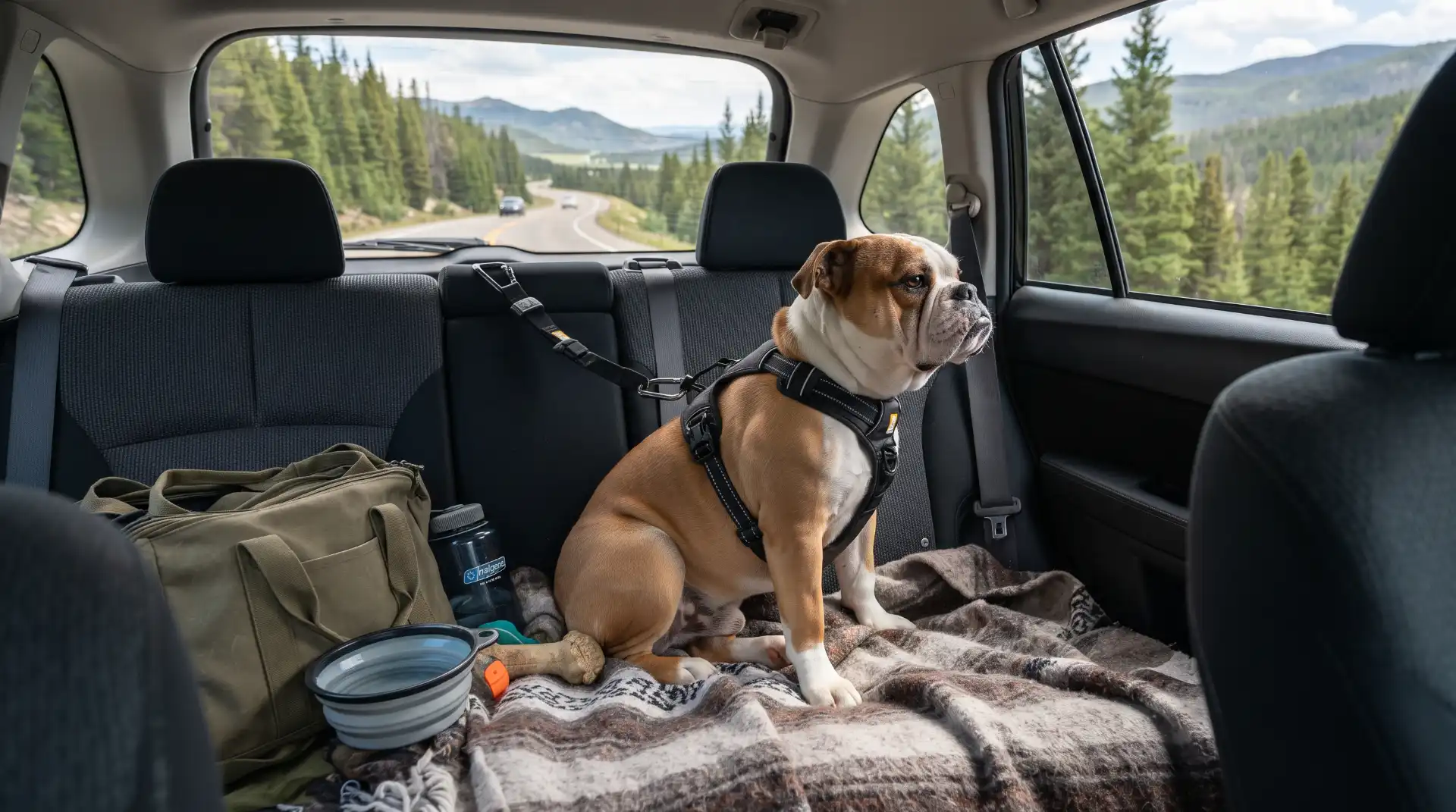
Taking a road trip with a Continental Bulldog can be a great experience when the trip is planned around the dog’s comfort, safety, and routine. Continental Bulldogs are loyal, people-focused dogs that often enjoy being close to their families, but they are not the kind of breed that should be treated like an afterthought during travel. Their body type, moderate exercise needs, possible sensitivity to heat, and strong attachment to routine all make preparation important.
A good Continental Bulldog travel checklist does more than remind you to bring food and a leash. It helps you think through safe car restraint, hydration, rest stops, temperature control, feeding schedules, hotel rules, emergency planning, and your dog’s behavior in new places. Road trips can be exciting, but they can also be stressful for dogs if owners move too fast, skip breaks, or forget small items that make the dog feel secure.
In the U.S., many families travel by car with their pets for weekend trips, family visits, camping, relocation, and vacations. Before leaving, owners should understand that car safety for dogs is not only about convenience. The American Veterinary Medical Association recommends that pets be properly restrained in vehicles and not allowed to ride in a driver’s lap or move freely in the car. You can review their general travel guidance here: AVMA traveling with your pet FAQ.
Why Continental Bulldogs Need Extra Travel Planning
Continental Bulldogs are sturdy, affectionate, and usually calmer than many high-energy breeds, but that does not mean they are automatically easy travelers. Their comfort depends on airflow, temperature, safe footing, predictable breaks, and a calm space in the vehicle. Because bulldog-type dogs can be more sensitive to heat and breathing stress than some breeds, owners should be especially careful during warm-weather travel.
Even a mild day can become risky inside a vehicle. Cars can heat up quickly, and dogs should never be left alone in a parked car. This matters even if the windows are cracked or the stop seems short. A Continental Bulldog may overheat faster than expected, especially in direct sun, humid weather, or after excitement. The safest plan is simple: if you leave the car, your dog leaves with you unless another responsible adult remains in the running, climate-controlled vehicle.
Travel can also disrupt a bulldog’s digestion. Sudden schedule changes, unfamiliar treats, too much excitement, or eating right before a long drive may lead to vomiting, gas, loose stool, or discomfort. A travel checklist helps keep your dog’s routine steady enough that the trip feels familiar instead of chaotic.
Start With a Pre-Trip Health Check
Before a long road trip, make sure your Continental Bulldog is healthy enough to travel. If your dog has breathing issues, heart concerns, mobility problems, anxiety, recent surgery, digestive trouble, or a chronic medical condition, schedule a veterinary visit before the trip. This is especially important if you are traveling across state lines, staying in hotels, visiting dog parks, or boarding your dog during part of the trip.
Ask your veterinarian whether your dog is current on vaccines, parasite prevention, and any medications. If your dog takes prescriptions, bring more than you expect to need. Delays happen. Weather changes, car problems, family schedule changes, and hotel issues can extend a trip. Running out of medication while away from your regular veterinarian can make the trip stressful fast.
It is also smart to carry a copy of your dog’s vaccine records and basic medical information. Keep a digital copy on your phone and a printed copy in your travel bag. If your Continental Bulldog needs emergency care in another city, having accurate records can save time.
Choose a Safe Car Restraint
One of the most important parts of any Continental Bulldog travel checklist is safe restraint. A loose dog in the car can distract the driver, fall during a sudden stop, climb into the front seat, or be injured in a crash. For a strong medium-sized dog like a Continental Bulldog, a regular leash clipped inside the car is not enough.
Many owners use a crash-tested travel harness, secured crate, or vehicle barrier depending on the dog’s size, the vehicle layout, and the trip length. A travel harness should fit securely around the chest and body without pressing into the throat. It should allow your dog to sit or lie down comfortably while preventing free movement around the vehicle. If you use a crate, it should be well-ventilated, properly sized, and secured so it does not slide during sudden braking.
Let your dog practice with the harness or crate before the actual trip. Do not introduce a new restraint system on the morning you leave. A Continental Bulldog that has never worn a car harness may resist, twist, chew straps, or become anxious. Short practice rides can help your dog learn that the setup is normal and safe.
Pack Food, Water, and Bowls From Home
Travel is not the best time to experiment with new food. Bring your Continental Bulldog’s regular food in a sealed container and pack enough for the entire trip, plus extra. If your dog eats a specific brand or formula, do not assume you can easily find it in every town. Sudden diet changes may cause digestive upset, and that is the last thing most owners want during a road trip.
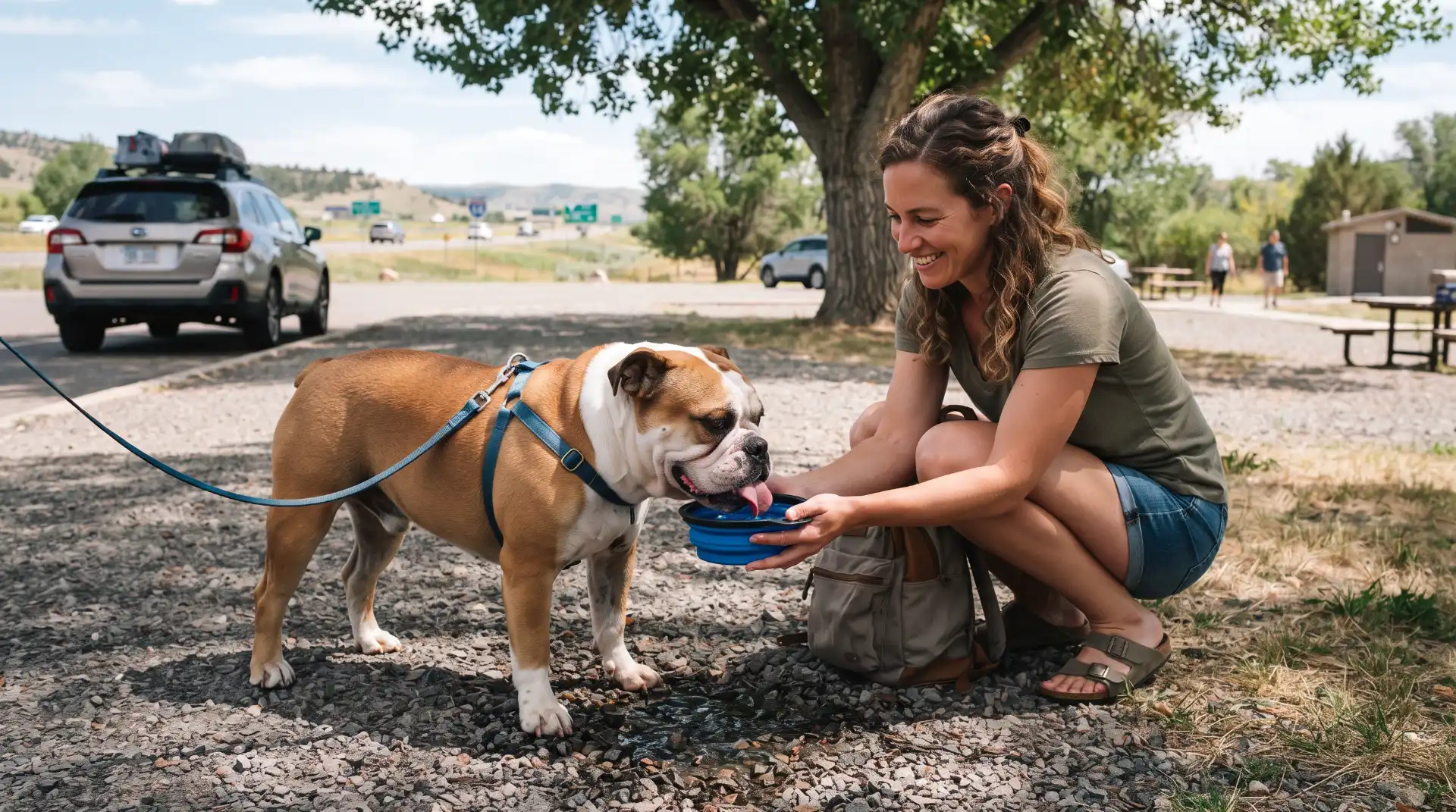
Pack collapsible bowls for water and meals. Some dogs drink more comfortably from bowls they recognize, so bringing a familiar bowl from home can help. Keep fresh water within easy reach, not buried under luggage. Offer water at every stop, especially in warm weather or after walking.
Avoid feeding a large meal right before departure if your dog is prone to motion sickness. Many dogs travel better when fed a few hours before the drive. For long travel days, smaller meals may be easier on the stomach than one large meal. If your Continental Bulldog has a sensitive stomach, ask your veterinarian for feeding advice before the trip.
Plan Rest Stops Before You Leave
A road trip with a Continental Bulldog should include planned breaks. Most dogs should not be expected to stay still for long hours without a chance to stretch, drink, and relieve themselves. Rest stops also help owners check the dog’s breathing, energy, and comfort.
For many dogs, stopping every two to three hours works well, but your dog’s needs may vary. Puppies, seniors, anxious dogs, and dogs with medical issues may need more frequent stops. During each break, keep your dog leashed before opening the car door. New places can be exciting, loud, and unpredictable. Even a well-trained dog may jump out quickly if startled by traffic, other dogs, or unfamiliar sounds.
Look for shaded, quiet areas when possible. Avoid hot pavement, especially in summer. If the ground is too hot for your hand, it is too hot for your dog’s paws. A Continental Bulldog may not always show discomfort immediately, so owners need to be proactive.
Keep Temperature Control at the Center of the Trip
Temperature management is one of the biggest safety concerns for road trips with a Continental Bulldog. Keep the vehicle cool and well-ventilated. Use air conditioning when needed, and avoid placing your dog in direct sunlight for long stretches. Window shades can help reduce heat in the back seat, but they do not replace proper climate control.
Bring a cooling mat, towel, and extra water if you are traveling in warm weather. Avoid long outdoor walks during midday heat. If you need to stop for food, choose pet-friendly places with shade or use drive-through options when appropriate. The safest road trip plan is one that avoids forcing your dog to wait in hot, exposed, or crowded areas.
Watch for signs of overheating, including heavy panting, drooling, weakness, bright red gums, vomiting, confusion, or collapse. If your dog shows concerning signs, move to a cooler place and seek veterinary help immediately. Heat issues can become serious quickly, especially in bulldog-type dogs.
Bring Comfort Items From Home
Road trips are easier when your Continental Bulldog has familiar smells and textures nearby. Pack your dog’s usual blanket, travel bed, favorite toy, or crate mat. These items can help your dog settle in the car, at a hotel, or in a family member’s home.
Comfort items are especially useful for dogs that become anxious in unfamiliar spaces. A hotel room may smell like other people and pets. A family home may have children, stairs, other animals, or loud appliances. Your dog’s own blanket or bed gives them a clear place to rest.
Try to keep your dog’s sleep routine as normal as possible. If your Continental Bulldog sleeps in a crate at home, bring a travel crate when practical. If your dog usually sleeps near you, set up a familiar resting area in the same room. The more predictable the routine feels, the easier the trip will be.
Prepare a Dog Travel Bag
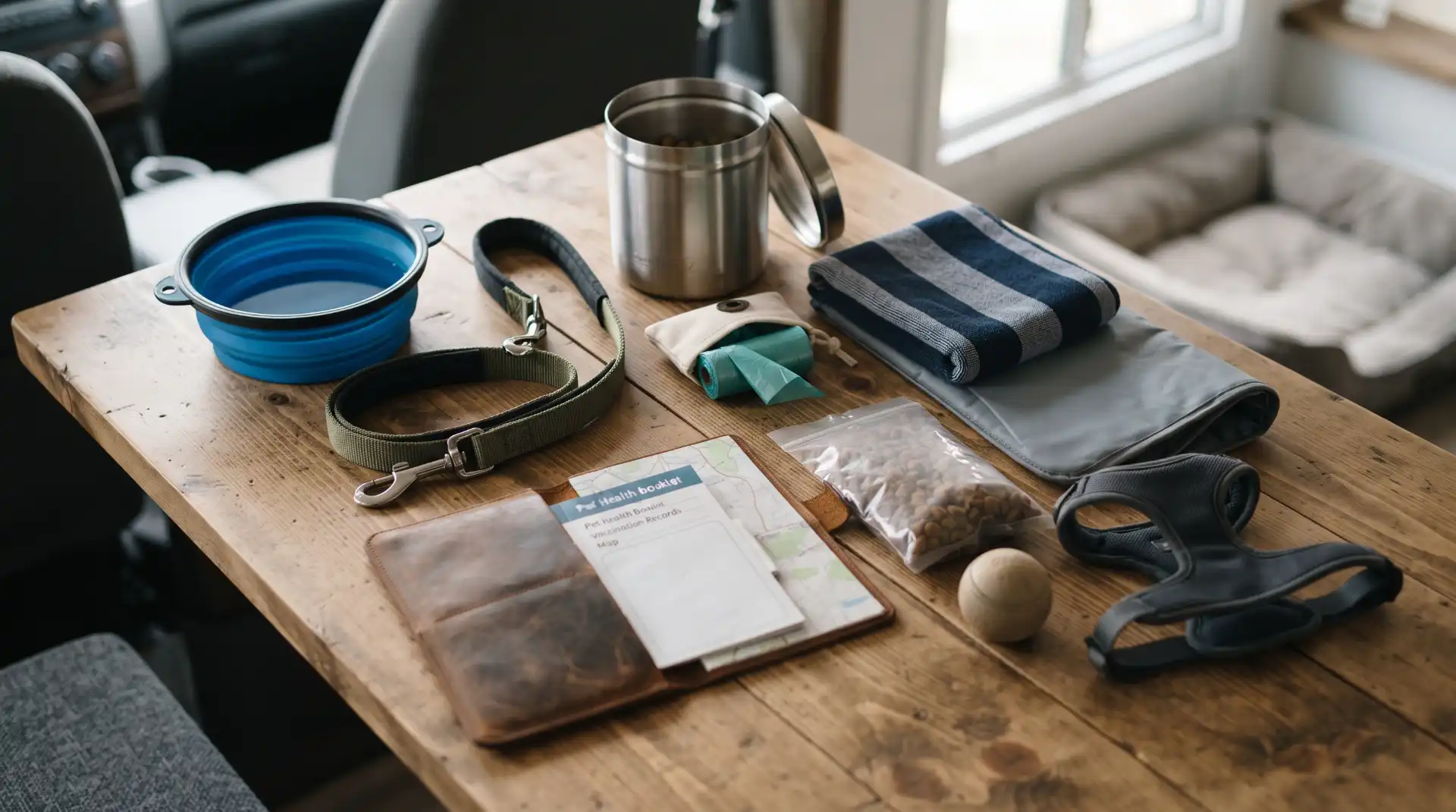
A well-packed dog travel bag keeps you from digging through suitcases at every stop. It should include your dog’s food, water, bowls, leash, harness, waste bags, medications, vaccine records, grooming wipes, towel, first-aid basics, and a favorite comfort item. For Continental Bulldogs, it is also wise to pack skin-fold wipes if your dog needs them, paw balm for rough surfaces, and any vet-approved products your dog uses regularly.
Keep cleanup supplies close. Accidents happen during travel, even with house-trained dogs. Stress, schedule changes, and unfamiliar potty areas can lead to mistakes. Paper towels, pet-safe cleaning wipes, and extra towels can save the day.
Pack an extra leash and collar or harness if possible. A broken clip or chewed strap can become a real problem away from home. Make sure your dog’s ID tag has current contact information. A microchip is also helpful, but it should be registered with updated details before the trip.

Check Pet-Friendly Rules Before Booking
Not every hotel, vacation rental, campground, or attraction that says “pet-friendly” is equally friendly to bulldogs. Some places have weight limits, breed restrictions, pet fees, cleaning deposits, limits on leaving dogs alone in rooms, or rules about where dogs can walk. Read the policy carefully before booking.
Call ahead if the policy is unclear. Confirm that your Continental Bulldog is allowed, ask about fees, and find out whether there are grassy areas nearby. If your dog is sensitive to noise, request a quieter room away from elevators, ice machines, and busy entrances.
Once you arrive, give your dog time to explore calmly. Set up the bed, water bowl, and food area before expecting your dog to relax. Keep the leash on until you are sure doors and exits are secure. Many dogs become curious in new rooms, and it only takes one open door for a stressful escape.
Do Not Forget Identification and Emergency Planning
Even careful owners should prepare for emergencies. Before leaving, search for veterinary clinics and emergency animal hospitals near your destination and along your route. Save phone numbers and addresses on your phone. If your dog gets sick late at night in an unfamiliar city, you do not want to start searching from scratch.
Your Continental Bulldog should wear a secure collar or harness with an ID tag. The tag should include your phone number. If your dog is microchipped, check that the registration is current. Many lost-pet problems become harder because contact information is outdated.
Take clear recent photos of your dog before the trip. Include full-body photos and close-ups of markings. If your dog is lost, current photos can help with posters, shelter reports, and social media posts.
Help Your Bulldog Handle Motion Sickness and Anxiety
Some Continental Bulldogs settle into car rides easily. Others drool, pant, whine, pace, vomit, or refuse to lie down. Motion sickness and travel anxiety can look similar, and both can make road trips hard. If your dog has a history of car trouble, speak with your veterinarian before the trip. Do not give human medications unless your veterinarian specifically approves them.
Practice can help. Start with short rides around the neighborhood, then slowly increase the time. Make the car a calm place instead of only using it for vet visits. Bring the same blanket or toy each time so your dog connects the car with familiar comfort.
During the trip, keep the car calm. Loud music, strong air fresheners, sudden braking, and chaotic packing can all add stress. A steady routine, cool temperature, and secure resting spot can make a big difference.
Road Trip Checklist for Continental Bulldog Owners
Before leaving, review the essentials. Your dog should have a safe restraint, current ID, regular food, water, bowls, leash, waste bags, medications, medical records, comfort items, and cleanup supplies. You should also have planned rest stops, confirmed pet-friendly lodging, checked the weather, and saved emergency vet contacts.
During the trip, monitor your dog’s breathing, temperature, energy, and digestion. Offer water often, stop regularly, avoid hot pavement, and never leave your dog alone in a parked car. Keep your dog leashed at every stop and remove them from crowded or stressful areas if they seem overwhelmed.
At your destination, rebuild the routine quickly. Set up food, water, and a resting area. Keep meals familiar, provide quiet downtime, and watch for signs of stress or stomach upset. A successful road trip is not only about getting to the destination. It is about helping your Continental Bulldog feel safe the whole way.
Final Thoughts on Traveling With a Continental Bulldog
A Continental Bulldog can be a wonderful road trip companion when the journey is planned with care. The best trips are built around safety, comfort, and routine. That means using a proper restraint, packing familiar supplies, planning breaks, managing temperature, and preparing for emergencies before they happen.
Every dog is different. Some Continental Bulldogs love car rides from the beginning, while others need patience and practice. The goal is not to force your dog into a perfect travel mood. The goal is to make the trip safe, calm, and manageable.
With the right checklist, road trips can become a positive part of life with your Continental Bulldog. Good preparation helps protect your dog’s health, reduces stress for the whole family, and gives you more freedom to enjoy the places you visit together.