
Veterinary visits are an essential part of responsible dog ownership, but not every dog feels comfortable entering an animal hospital. Unfamiliar smells, unfamiliar people, strange equipment, loud noises, and physical examinations can create anxiety even in dogs that are normally affectionate and confident at home. For Continental Bulldog owners, making veterinary appointments comfortable and predictable is an important part of maintaining their companion’s long-term physical and emotional well-being.
Continental Bulldogs are known for their muscular appearance, affectionate personalities, intelligence, and strong relationships with their families. They generally enjoy human interaction and can become excellent family companions when properly socialized and cared for. However, individual dogs have different temperaments, handling preferences, and experiences. A Continental Bulldog that happily welcomes visitors at home may still become nervous when a veterinarian approaches with a thermometer, examines its ears, trims its nails, or attempts to collect a blood sample.
This is where fear-free veterinary care, cooperative care, and positive reinforcement become particularly valuable. Instead of relying on forceful restraint or expecting a dog to tolerate every examination procedure, these approaches encourage cooperation through patience, rewards, gradual training, and careful attention to canine body language.
The goal is not simply to make a Continental Bulldog behave quietly during an appointment. It is to help the dog develop positive associations with veterinary care while allowing the veterinary team to perform necessary examinations safely and effectively.
For American dog owners, adopting these practices can make routine wellness appointments, vaccinations, dental examinations, diagnostic procedures, and other veterinary services easier to manage. It can also help establish a stronger relationship between the dog, its owner, and the veterinary professionals responsible for its health.
Understanding Fear-Free Veterinary Care for Continental Bulldogs
Fear-free veterinary care focuses on reducing fear, anxiety, and stress during interactions with veterinary professionals. It recognizes that emotional well-being is an important part of animal health and that a frightened dog may have difficulty participating in an examination.
Traditional veterinary appointments sometimes involve holding a dog still while the veterinarian completes the required procedures. Although physical restraint may occasionally be necessary for medical reasons, excessive restraint can increase fear and create negative associations with veterinary environments.
A Continental Bulldog that experiences repeated stressful examinations may begin recognizing warning signs before an appointment even starts. The sight of a leash, the sound of a car door, or the familiar route to the animal hospital may trigger nervous behavior.
Fear-free handling takes a different approach. Veterinary professionals consider the dog’s emotional state throughout the appointment and adjust their techniques according to its comfort level. They may allow the dog to remain on the floor, use nonslip surfaces, provide food rewards, reduce unnecessary noise, and introduce examination equipment gradually.
The American Animal Hospital Association (AAHA) recommends low-stress handling techniques, appropriate positive reinforcement, and individualized strategies for reducing fear during veterinary appointments. These approaches are valuable for dogs of different breeds, ages, sizes, and temperaments.
It is important to understand that fear-free care does not mean avoiding necessary veterinary procedures. Vaccinations, diagnostic tests, preventive examinations, and medical treatments remain essential. Instead, the objective is to perform them using methods that minimize unnecessary distress.
Why Veterinary Appointments Can Become Stressful
A veterinary hospital contains many unfamiliar experiences that can overwhelm a dog.
The waiting room may contain barking dogs, unfamiliar animals, strong cleaning-product smells, and people moving around constantly. Inside the examination room, a Continental Bulldog may encounter stainless steel instruments, examination tables, medical equipment, and unfamiliar handling techniques.
Some dogs become uncomfortable when strangers touch sensitive areas such as their paws, ears, mouths, or abdomen. Others dislike being lifted, restrained, or positioned on elevated examination tables.
Past experiences can also influence how a dog responds. A puppy that received uncomfortable injections without sufficient reassurance may become increasingly hesitant during later appointments. An adult dog that experienced a painful ear infection may become defensive when someone approaches its ears.
Fear can also develop without a clearly identifiable negative event. Some dogs are naturally cautious around unfamiliar people or environments.
Owners should avoid assuming that nervous behavior is stubbornness or disobedience. A dog that pulls toward the exit, refuses treats, trembles, hides behind its owner, or growls during an examination may be communicating discomfort.
Recognizing these reactions early allows owners and veterinary professionals to make adjustments before the situation becomes more difficult.
Why Stress Reduction Matters for Veterinary Examinations
Reducing stress is not only about improving a dog’s experience. It can also support better veterinary care.
A frightened dog may struggle, pant excessively, resist examination, or become difficult to position safely. Stress can influence certain physiological measurements, including heart rate and respiratory rate, which may complicate interpretation of clinical findings.
When a Continental Bulldog feels more comfortable, the veterinary team may have an easier time evaluating its movement, examining its skin, checking its ears, and performing routine procedures.
A calmer examination can also improve safety for veterinary employees and owners. A dog that feels threatened may attempt to escape, scratch, or bite, even if it has never displayed those behaviors at home.
Fear-free care therefore benefits everyone involved. It supports the dog’s emotional well-being while helping veterinary professionals complete necessary procedures with greater consideration for the animal’s individual needs.
What Is Cooperative Care and Why Does It Matter?
Cooperative care is an approach that teaches animals to participate voluntarily in routine handling and healthcare procedures whenever medically practical.
Instead of physically forcing a dog to accept every interaction, owners and veterinary professionals gradually teach it that certain positions, touches, and examination activities predict positive experiences.
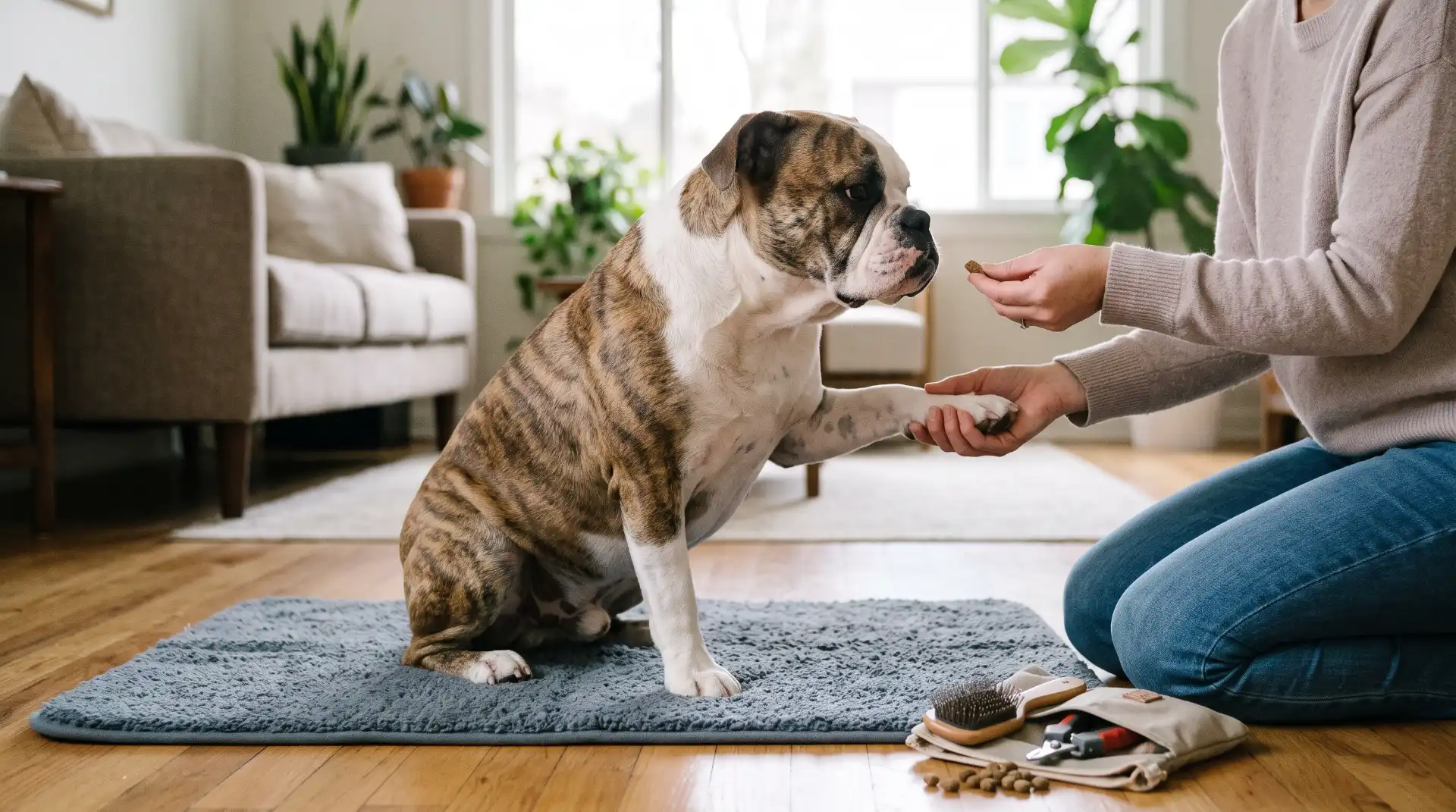
For example, a Continental Bulldog can learn to place its chin on a padded surface while a veterinarian examines its ears. It may also learn to offer a paw for nail inspection or remain standing comfortably while its body is checked.
These behaviors are developed through small training steps and consistent rewards.
Cooperative care does not mean allowing a dog to refuse emergency treatment or medically essential procedures. It means building cooperation wherever possible and using appropriate veterinary assistance when the animal cannot safely participate.
The Importance of Voluntary Participation
Voluntary participation gives dogs more opportunities to communicate whether they are comfortable.
Consider a Continental Bulldog that becomes nervous whenever someone attempts to examine its paws. A traditional approach might involve holding the dog firmly while completing the examination.
Cooperative care instead begins by teaching the dog to remain relaxed when someone approaches its front leg. The owner rewards calm behavior and gradually progresses toward touching the paw, examining individual toes, and briefly handling the nails.
The process may take several days or weeks, depending on the individual dog.
If the dog pulls its paw away, the owner can pause and return to an easier training step. This helps prevent repeated uncomfortable experiences.
Allowing the dog to communicate through movement and body language can make handling more predictable. It also gives owners an opportunity to identify specific triggers that may require additional training or professional support.
Teaching a Cooperative Examination Position
One useful cooperative care behavior is a voluntary stationing position.
Stationing means teaching a dog to stand, sit, or lie down in a particular location during a specific activity.
For example, owners can place a nonslip mat on the floor and reward their Continental Bulldog whenever it steps onto the mat. Once the dog understands the behavior, the owner can introduce a verbal cue such as “mat” or “place.”
The next step is teaching the dog to remain comfortable while receiving gentle touches.
An owner might begin by briefly touching the shoulder, delivering a treat, and then allowing the dog to move away. Over time, the exercise can include touching the back, chest, legs, and other areas commonly examined by veterinarians.
The dog should never be forced to remain in position when showing significant signs of distress.
A well-trained stationing behavior can be useful during wellness examinations, grooming, brushing, and certain home health checks.
Understanding Consent Behaviors
Some cooperative care programs use specific behaviors that indicate when a dog is ready to participate.
For example, a dog may voluntarily place its chin on a towel or rest its head against its owner’s hand. As long as it maintains that position, the examination continues at an appropriate pace.
If the dog lifts its head or moves away, the handler recognizes that the animal needs a pause.
This does not mean that every veterinary procedure can be controlled through a consent behavior. Some examinations require professional judgment, medical restraint, sedation, or other safety measures.
However, teaching a Continental Bulldog to participate voluntarily in suitable procedures can make many routine interactions easier.
Owners interested in structured cooperative care training can explore the educational resources provided by Fear Free Pets.
How Positive Reinforcement Makes Veterinary Visits Easier
Positive reinforcement involves rewarding a desired behavior so the dog becomes more likely to repeat it.
For Continental Bulldogs, rewards may include small food treats, praise, favorite toys, playtime, or other activities the individual dog enjoys.
The purpose is to create positive associations with activities that might otherwise feel unfamiliar or uncomfortable.
For example, if a Continental Bulldog receives a small treat whenever someone gently touches its shoulder, it may gradually become more comfortable with physical contact.
If the dog receives a reward after voluntarily stepping onto a veterinary examination mat, it may begin approaching the mat more confidently.
These small experiences can build a foundation for easier examinations.
Choosing the Right Rewards
Not every dog responds to the same rewards.
Some Continental Bulldogs are highly motivated by food, while others respond better to toys, attention, or praise.
Owners should identify what their dog finds rewarding before beginning cooperative care exercises.
Small, soft treats are often convenient because they can be delivered quickly during training. They are particularly useful for reinforcing short behaviors such as allowing an ear to be touched or remaining relaxed while a veterinarian examines a paw.
Treats should be appropriately sized and included in the dog’s daily calorie intake. Owners should also inform the veterinary team about food allergies, dietary restrictions, or medical conditions that affect food choices.
For dogs that are not interested in eating during stressful situations, forcing food rewards is unlikely to help. A lack of interest in normally desirable treats may indicate that the training environment is too difficult or that the dog needs additional support.
Rewarding Calm Behavior Without Creating Pressure
Timing matters when using positive reinforcement.
If an owner wants to teach a Continental Bulldog to remain comfortable while its ears are examined, the reward should follow the desired behavior as closely as possible.
A simple exercise might begin with the owner reaching toward the dog’s head without touching it. If the dog remains relaxed, the owner delivers a reward.
The next session might involve briefly touching the outside of one ear before rewarding the dog.
As the dog becomes more comfortable, the owner can gradually increase the duration and complexity of the interaction.
The important principle is to avoid progressing faster than the dog can comfortably handle.
Positive reinforcement should never become a way to distract an animal while repeatedly exposing it to an experience that causes severe fear. The objective is to improve the dog’s emotional response, not simply keep it occupied while it struggles.
Why Punishment-Based Handling Should Be Avoided
Punishing a dog for growling, withdrawing, resisting, or displaying fear can make veterinary visits more difficult.
A growl is a warning signal that the dog is uncomfortable. Punishing that warning may suppress communication without addressing the underlying fear.
The dog may become less predictable during future handling because it has learned that showing discomfort leads to unpleasant consequences.
Instead, owners should recognize warning signals, create additional space, and discuss the behavior with their veterinarian.
Reward-based training provides a more constructive way to teach cooperation. It encourages desirable behaviors while helping the dog develop confidence in situations that previously caused anxiety.
For additional training guidance, readers can explore the site’s article on training tips for Continental Bulldogs from puppy to adult.
Preparing Your Continental Bulldog for a Stress-Free Veterinary Appointment
A positive veterinary experience often begins long before the dog enters the clinic. Owners can prepare their Continental Bulldogs at home by introducing common examination activities, practicing comfortable car travel, and creating positive associations with unfamiliar handling.
Preparation is particularly important for puppies because early experiences can influence how they respond to veterinary care as adults. However, older dogs can also learn new behaviors and develop more comfortable relationships with veterinary environments.
The key is consistency. A few minutes of gentle practice each day can be more effective than attempting to teach every examination behavior immediately before an appointment.
1. Practice Gentle Handling at Home
Begin by identifying the areas your Continental Bulldog is comfortable having touched and those that produce hesitation.
Common examination areas include the ears, mouth, paws, legs, chest, abdomen, and tail. These areas may require attention during routine veterinary appointments, so gradually introducing gentle handling can make future examinations easier.
Start with areas your dog already accepts. Briefly touch the shoulder, reward the dog, and stop. Once the dog remains relaxed, gradually introduce other body areas.
For paw handling, an owner might begin by touching the upper leg before progressing toward the foot. Eventually, the dog can learn to accept gentle contact with individual toes.
Mouth handling can begin with a brief touch near the muzzle. Later, the owner may gently lift the lip to allow a quick look at the teeth.
The objective is not to complete a full veterinary examination at home. It is to help the dog become familiar with appropriate handling without creating unnecessary discomfort.
Avoid manipulating painful or inflamed areas. If your dog suddenly becomes sensitive to touch, consult your veterinarian rather than assuming the reaction is behavioral.
2. Introduce Examination Equipment Gradually
Veterinary equipment can appear unfamiliar or frightening to dogs.
A thermometer, stethoscope, nail clipper, ear examination instrument, or digital weighing scale may produce sounds, movements, or sensations that a dog has never experienced.
Owners can introduce harmless versions of these objects during short training sessions.
For example, place a stethoscope on the floor and allow your Continental Bulldog to investigate it voluntarily. Reward calm curiosity and remove the object before the dog becomes uncomfortable.
The next step might involve briefly touching the dog’s shoulder with the cool surface of the stethoscope before offering a reward.
Similar exercises can be performed with grooming tools, a soft brush, and nail-care equipment.
Never attempt to imitate medical procedures that require veterinary training. The purpose is simply to build familiarity with harmless objects and gentle handling.
3. Make Car Travel a Positive Experience
Some dogs become anxious before they even reach the veterinary hospital because they associate car travel with uncomfortable experiences.
If your Continental Bulldog only rides in a vehicle when visiting the veterinarian, it may begin anticipating the appointment as soon as the car door opens.
Owners can reduce this association by making car travel part of ordinary life.
Start with short sessions in a parked vehicle. Allow the dog to enter voluntarily, explore the interior, and receive rewards.
Once comfortable, introduce short drives to pleasant destinations such as quiet walking areas or other dog-friendly locations.
Always use an appropriately secured travel harness or suitable vehicle restraint system. A dog should not be allowed to move freely around a moving vehicle.
For dogs that experience severe motion sickness or travel-related anxiety, discuss appropriate solutions with a veterinarian.
4. Practice Calm Waiting and Observation
Waiting rooms can be challenging because they expose dogs to unfamiliar animals and unpredictable activity.
Owners can practice calm observation in less demanding environments before introducing a busy veterinary clinic.
For example, take your Continental Bulldog to a quiet outdoor location where it can watch people walking at a comfortable distance.
Reward relaxed behavior such as looking at passing people, remaining beside the owner, or returning attention to the handler.
The dog should not be forced to approach strangers or unfamiliar animals.
This type of training helps develop the ability to remain calm while observing unfamiliar surroundings.
It is particularly useful for dogs that become excited or nervous when they encounter other animals.
5. Schedule Positive Practice Visits
One of the most useful ways to improve a dog’s relationship with a veterinary clinic is through short, nonmedical visits.
These are often called happy visits.
A happy visit allows the dog to experience the clinic without undergoing injections, examinations, or uncomfortable procedures.
Depending on clinic policies, a visit might involve entering the building, receiving treats from a staff member, stepping onto a scale, or briefly exploring an examination room.
Owners should contact the clinic beforehand because not every practice can accommodate unscheduled social visits.
The first visit may be limited to receiving treats outside the entrance. Later visits may involve entering the reception area or meeting a veterinary technician.
These experiences help create a more positive association with the building and its staff.
Cornell University’s Riney Canine Health Center provides additional guidance in its article, How to Make Veterinary Visits Less Stressful for Dogs.
Understanding Continental Bulldog Body Language During Examinations
One of the most important responsibilities of a dog owner is recognizing signs of discomfort before anxiety becomes overwhelming.
Continental Bulldogs cannot verbally explain how they feel, but their body language provides useful information.
A dog may initially display subtle signs of stress before progressing to more obvious reactions. Learning to recognize these signals allows owners and veterinary professionals to adjust their approach.
Early Signs of Fear and Anxiety
Some signs of mild or developing anxiety include:
-
Repeated lip licking when no food is present.
-
Yawning outside normal tiredness.
-
Turning the head away from an approaching person.
-
Avoiding eye contact.
-
Lowering the body or shifting weight backward.
-
Repeatedly looking toward the exit.
-
Suddenly becoming unusually still.
-
Refusing normally appealing treats.
These behaviors do not always indicate fear by themselves. Their meaning depends on the surrounding situation and the dog’s normal behavior.
For example, a Continental Bulldog may yawn because it is tired rather than anxious. However, repeated yawning combined with avoidance, tense muscles, and reluctance to approach someone may suggest discomfort.
Owners should consider the complete pattern rather than interpreting one behavior in isolation.
More Obvious Signs of Stress
As anxiety increases, a dog may begin trembling, panting excessively, hiding, pulling away, vocalizing, or attempting to escape.
Some dogs may growl, bark, snap, or display defensive behavior when they feel trapped.
These reactions should be taken seriously.
A dog that growls when a veterinarian reaches toward its face may be communicating that the interaction is too uncomfortable. The correct response is to reassess the situation, not punish the dog.
Veterinary professionals may recommend changing the examination position, allowing a break, reducing the number of people handling the animal, or using additional medical support.
Recognizing Shutdown Behavior
Not every frightened dog struggles or attempts to escape.
Some dogs respond to overwhelming situations by becoming extremely still. They may lower their heads, avoid movement, stop responding to familiar cues, or appear unusually passive.
This response can be mistaken for cooperation.
However, a motionless dog is not necessarily a relaxed dog.
Owners should watch for muscle tension, changes in breathing, facial expression, and other signs of discomfort.
If the dog appears overwhelmed, the veterinary team should consider whether the examination can be modified or paused.
Understanding these differences helps prevent a common mistake: assuming that an examination was successful simply because the dog did not physically resist.
Making the Veterinary Clinic More Comfortable
The veterinary clinic itself plays a major role in determining how comfortable a Continental Bulldog feels during an appointment.
Owners should look for veterinary practices that recognize the importance of behavioral health and are willing to adjust their handling methods when necessary.
A dog that becomes anxious in a crowded reception area may benefit from waiting in a quieter location or entering the examination room immediately.
Choosing a Veterinary Practice That Uses Low-Stress Handling
When searching for a veterinarian, ask about the clinic’s approach to fearful or anxious dogs.
Useful questions include whether staff members use positive reinforcement, whether examinations can take place on the floor, whether nonslip mats are available, and whether owners can remain with their dogs during routine procedures.
You can also ask whether the clinic offers longer appointments for dogs that need additional time.
Some practices have team members with training through Fear Free or other low-stress handling programs. These credentials can indicate specialized education, although owners should still ask how the clinic applies those principles during everyday appointments.
A veterinarian who listens to concerns and discusses individualized handling plans can make a significant difference.
Reducing Waiting Room Anxiety
For some Continental Bulldogs, the waiting room is more stressful than the examination itself.
Other dogs may bark, pull on their leashes, or approach too closely. Cats in carriers may also contribute unfamiliar sounds and smells.
If your dog becomes uncomfortable in crowded spaces, ask whether the clinic allows clients to wait outside or in their vehicles until the examination room is ready.
Some veterinary practices can arrange direct entry through another door for particularly anxious patients.
Owners should maintain a comfortable distance from unfamiliar animals and avoid allowing greetings unless both dogs are relaxed and the owners agree.
A quiet waiting environment can reduce unnecessary stimulation and help the dog begin its appointment in a better emotional state.
Using Nonslip Surfaces and Comfortable Examination Positions
A slippery examination table can make some dogs nervous.
They may struggle to maintain their footing, resist being lifted, or become tense when they feel unstable.
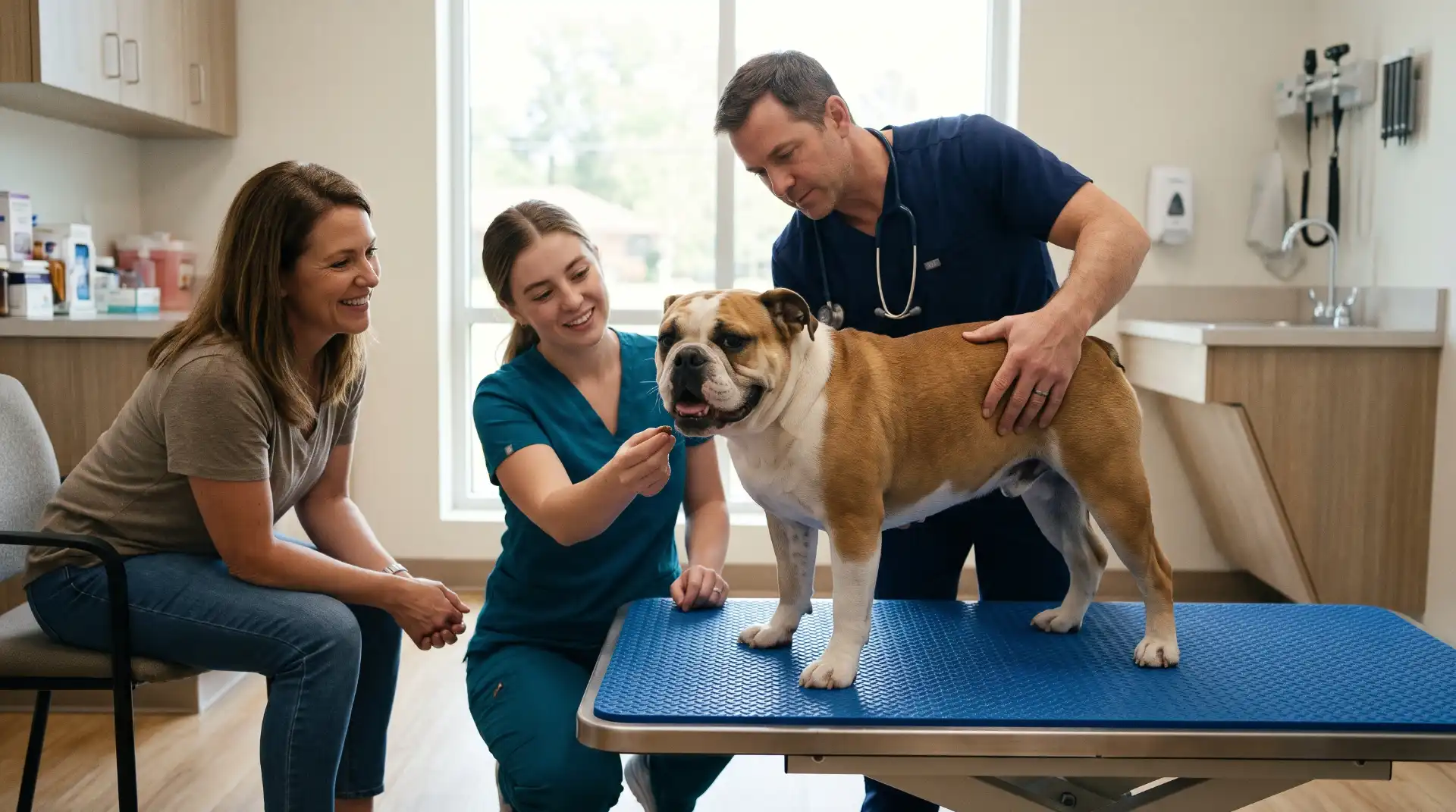
Nonslip mats provide better traction and can make examination surfaces more comfortable.
Some Continental Bulldogs may also feel more secure when examined on the floor.
This can be particularly helpful for older dogs, animals with mobility limitations, or individuals that dislike elevated surfaces.
Owners can request these adjustments before the examination begins.
The veterinary team should select a position that provides safe access to the areas requiring examination while minimizing unnecessary discomfort.
Maintaining a Calm Environment
A quiet examination room can help reduce stimulation.
Sudden movements, loud voices, unnecessary equipment noise, and multiple people approaching the dog at once can increase anxiety.
A veterinary team may improve the experience by allowing one person to interact with the dog while another prepares equipment.
The owner can also help by speaking calmly and following the veterinary team’s instructions.
Continental Bulldogs often develop strong relationships with familiar people, so an owner’s presence may provide reassurance during unfamiliar procedures.
However, the dog should not be forced to remain close to an owner if that interaction is increasing its anxiety.
Cooperative Care for Common Veterinary Procedures
Different veterinary procedures require different handling strategies.
A Continental Bulldog may comfortably tolerate a general physical examination but become nervous during nail trimming or ear cleaning.
Training should therefore address individual procedures instead of assuming that comfort with one type of handling automatically translates to every other activity.
Physical Examinations
Routine physical examinations allow veterinarians to evaluate a dog’s general health.
These appointments may include checking the eyes, ears, mouth, skin, coat, abdomen, heart, lungs, joints, and movement.
Owners can prepare their dogs by practicing brief, gentle handling of the areas commonly examined.
For example, teaching a Continental Bulldog to stand comfortably on a nonslip mat can help during weight checks and general body examinations.
The veterinarian may also allow the dog to remain beside its owner while listening to its heart or checking its abdomen.
If the dog becomes uncomfortable, the examination can sometimes be divided into smaller steps.
Not every procedure can be modified indefinitely, but a flexible approach may make routine examinations easier.
Ear Examinations and Cleaning
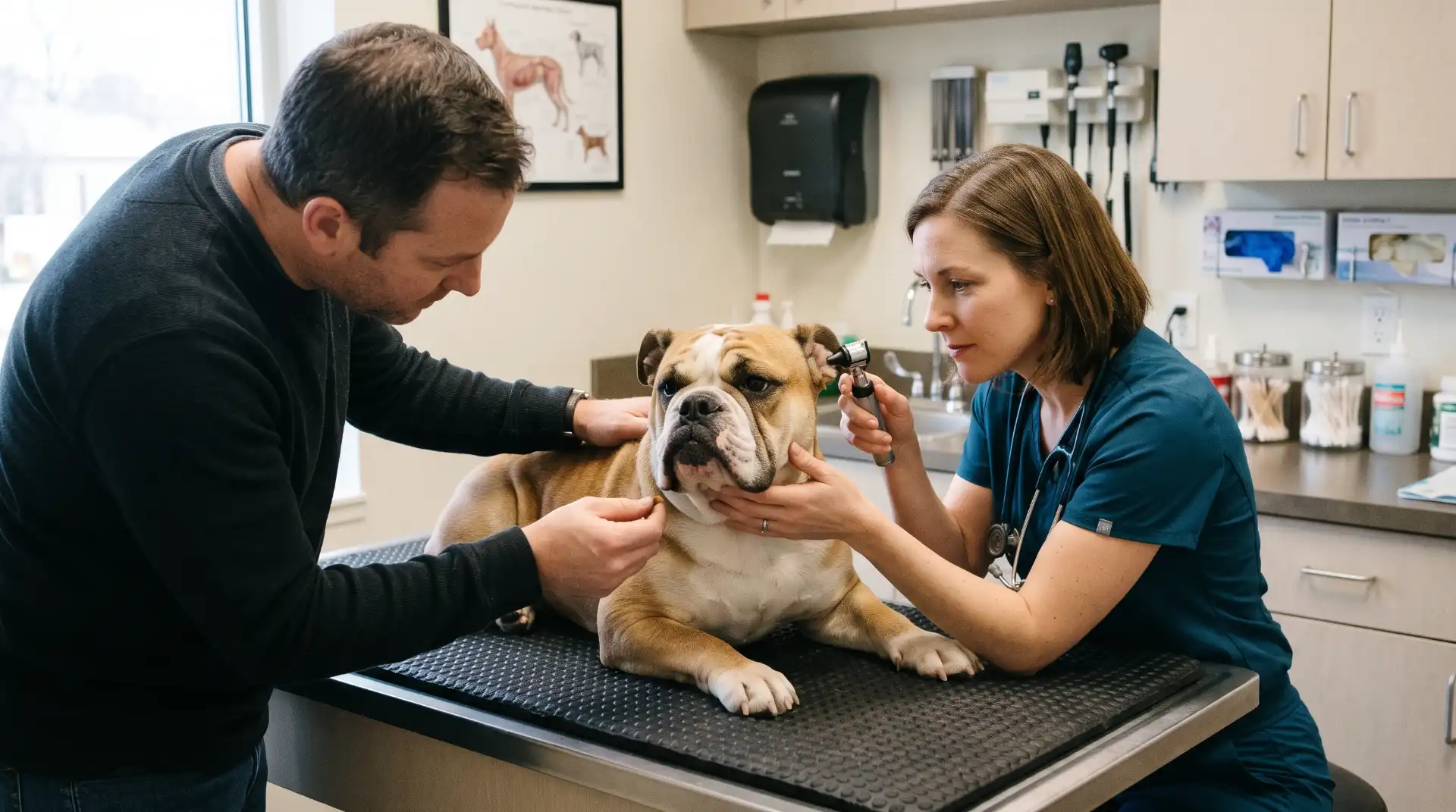
Ear examinations can be particularly challenging for dogs that dislike having their heads handled.
Some Continental Bulldogs may develop ear irritation or infections, making veterinary attention important when symptoms appear.
Owners should watch for repeated head shaking, scratching, redness, unusual discharge, unpleasant odors, or sensitivity around the ears.
Do not assume that resistance during an ear examination is purely behavioral. Pain and inflammation may be responsible.
Cooperative care training can begin with rewarding the dog for allowing a brief touch near the ear.
Gradually, the owner may introduce gentle handling of the outer ear before practicing short periods of stillness.
Actual ear cleaning and treatment should follow veterinary instructions, particularly when an infection or injury is suspected.
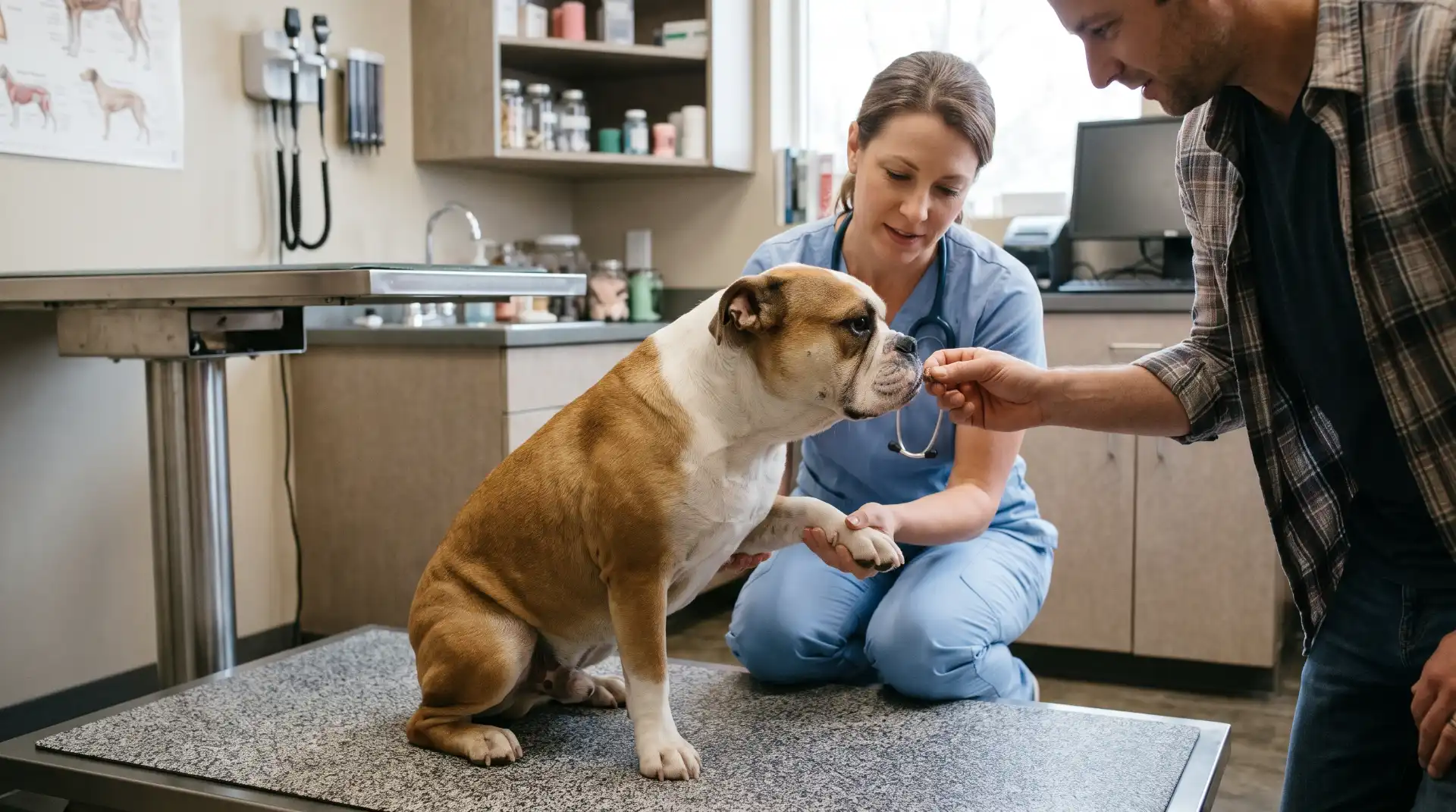
Paw Handling and Nail Trimming
Paw handling is another common source of discomfort.
Some dogs dislike having their feet touched because they are sensitive to the sensation or have previously experienced painful nail trimming.
Begin by rewarding the dog for allowing a hand to approach the leg.
Gradually introduce brief contact with the lower leg, paw, and individual toes.
Nail clippers or grinders should be introduced separately so the dog can become familiar with their appearance and sounds.
Never rush through nail trimming when the dog is frightened. Cutting a nail too short can cause pain and bleeding, potentially creating an even stronger negative association.
If the dog cannot safely tolerate nail care, ask the veterinary team about professional handling, additional training, or appropriate medical support.
Dental Examinations
Dental health is an important part of preventive veterinary care.
Dogs can develop plaque, tartar, gum inflammation, and periodontal disease without obvious signs during the early stages.
Owners can help prepare their Continental Bulldogs by gradually introducing mouth handling at home.
Begin with gentle touches around the muzzle and lips. Reward calm participation and gradually progress toward brief lip lifting.
Tooth brushing can also become part of a cooperative care routine.
Use toothpaste specifically formulated for dogs. Human toothpaste should not be used because some ingredients may be harmful when swallowed.
Although home dental care is valuable, it does not replace professional dental examinations or veterinary dental treatment when needed.
A complete dental assessment and cleaning may require anesthesia. Owners should discuss the procedure, individual risks, and appropriate precautions with their veterinarian.
Blood Draws and Vaccinations
Injections and blood collection can be stressful because they involve unfamiliar equipment and brief physical discomfort.
Owners can help by teaching their dogs to remain comfortably beside them or on a nonslip surface while receiving gentle handling.
During appointments, the veterinary team may use food rewards, distraction, and minimal necessary restraint.
Some dogs benefit from receiving treats immediately before, during, and after an injection, provided the veterinarian considers food appropriate.
For particularly anxious dogs, a different examination position or additional preparation may be necessary.
The objective is to prevent a single difficult procedure from becoming the basis for increasingly fearful future visits.
Special Considerations for Continental Bulldog Health and Veterinary Handling
Every dog should receive individualized veterinary care, but owners should also understand how their Continental Bulldog’s physical condition may influence examination comfort.
The breed’s muscular build, individual facial structure, skin condition, joint health, and activity level can all influence the type of handling that is most comfortable.
A veterinarian should assess each dog rather than assuming that every Continental Bulldog has identical medical or behavioral needs.
Respiratory Comfort During Veterinary Visits
Continental Bulldogs were developed with an emphasis on improved health and more functional anatomy compared with more extremely built bulldog types. Nevertheless, individual dogs can have respiratory sensitivities, and owners should pay attention to breathing comfort.
Stress, excitement, heat, and physical exertion can increase respiratory effort in susceptible dogs.
A veterinary visit should therefore avoid unnecessary exertion, prolonged struggling, or exposure to excessive heat.
If your Continental Bulldog has a history of noisy breathing, exercise intolerance, overheating, or respiratory difficulty, inform the veterinary team before the examination.
The clinic may recommend a cooler examination room, additional breaks, reduced physical activity, or a modified handling position.
Owners should never interpret significant breathing difficulty as ordinary nervousness. Labored breathing, collapse, blue or pale gums, or severe respiratory distress require immediate veterinary attention.
Skin Folds and Sensitive Areas
Some Continental Bulldogs have facial folds or skin creases that require regular inspection and cleaning.
Moisture, trapped debris, friction, and irritation can contribute to skin problems if affected areas are not maintained appropriately.
Veterinary examinations may therefore include checking the facial folds, skin around the mouth, and other areas where irritation develops.
Because these areas can become sensitive when inflamed, owners should practice gentle handling before problems occur.
A dog that comfortably accepts routine facial cleaning at home may be easier to examine when a veterinarian needs to investigate redness or irritation.
For additional information about maintaining coat condition, facial hygiene, and routine veterinary care, readers can visit the existing Continental Bulldog health and grooming guide.
Joint Comfort and Mobility
Continental Bulldogs have strong, muscular bodies, but their joints still require appropriate care.
Some individuals may experience orthopedic conditions, stiffness, discomfort, or mobility limitations as they age.
An examination involving lifting, turning, or positioning the dog should take these factors into account.
If your dog struggles to climb onto an examination table, ask whether the veterinarian can conduct the examination on the floor.
For older dogs, a comfortable padded surface may make it easier to remain standing or lying down.
Owners should also report changes in walking patterns, difficulty getting up, reluctance to jump, or unusual sensitivity when the legs or back are touched.
These changes may indicate pain rather than a behavioral problem.
Weight Checks and Body Condition Monitoring
Maintaining a healthy body weight is important for joint function, mobility, and overall health.
However, some dogs become nervous when placed on a veterinary scale.
Owners can practice stepping onto a household scale or a stable platform at home, provided it is safe and appropriate for the dog’s size.
Rewarding voluntary participation can make weight checks less stressful.
If your Continental Bulldog refuses to stand on the scale, the veterinary team may use alternative weighing arrangements.
The important thing is to maintain consistent health monitoring without creating unnecessary fear.
Helping Continental Bulldog Puppies Develop Positive Veterinary Habits
Puppyhood provides an excellent opportunity to establish positive relationships with veterinary care.
Young Continental Bulldogs are still learning how to respond to new people, environments, sounds, and physical experiences.
Introducing appropriate handling exercises early can help them become more comfortable with activities they will encounter throughout adulthood.
However, early socialization should be gradual and balanced with appropriate vaccination and disease-prevention precautions.
Start Cooperative Care During Puppyhood
Once a puppy has settled into its new home, owners can begin introducing gentle handling exercises.
Start with short sessions involving familiar people and a quiet environment.
Touch the puppy’s shoulder, reward calm behavior, and stop before it becomes uncomfortable.
Over time, introduce brief handling of the ears, paws, mouth, and other areas.
These exercises should feel like positive interactions rather than forced examinations.
The puppy should have opportunities to move away, investigate objects, and rest between sessions.
Make the First Veterinary Experiences Positive
A puppy’s early veterinary appointments should involve more than vaccinations and medical procedures.
Whenever practical, the veterinary team can provide treats, gentle handling, and opportunities for exploration.
Owners should bring familiar treats and discuss the puppy’s temperament with the clinic before the appointment.
A puppy that is comfortable being weighed, examined, and gently handled may develop more confidence as it grows.
This does not guarantee that the dog will never experience veterinary anxiety, but positive early experiences can provide a helpful foundation.
Continue Socialization After Puppyhood
Socialization does not end when a puppy reaches adulthood.
Continental Bulldogs benefit from continued exposure to unfamiliar environments, people, sounds, and appropriate handling experiences throughout their lives.
Owners should maintain reward-based training and introduce new experiences gradually.
If a dog becomes uncomfortable, reduce the difficulty instead of forcing continued exposure.
For more information about early development and establishing healthy routines, see the site’s guide to Continental Bulldog puppy care during the first six months.
What to Do When Your Continental Bulldog Already Fears the Veterinarian
Some dogs have already developed strong negative associations with veterinary appointments before their owners begin cooperative care training.
An adult Continental Bulldog may refuse to enter the clinic, tremble during examinations, or become defensive when veterinary employees approach.
These situations require patience and an individualized plan.
Owners should not assume that a dog with established veterinary anxiety cannot improve. However, changing long-standing emotional responses may require more time and professional assistance.
Identify the Specific Triggers
The first step is identifying what causes the dog’s anxiety.
For one Continental Bulldog, the primary trigger may be entering the building. Another may become uncomfortable when unfamiliar people reach toward its face.
Some dogs tolerate the waiting room but become nervous when placed on an examination table.
Owners should write down the behaviors they observe and discuss them with their veterinarian.
A useful record may include:
-
What happened immediately before the dog became anxious.
-
Which person or activity triggered the reaction.
-
Whether the dog attempted to move away or hide.
-
Whether food rewards were accepted.
-
How long the dog needed to recover afterward.
This information helps the veterinary team develop a more effective plan.
Use Gradual Desensitization
Desensitization involves introducing a trigger at a level that does not overwhelm the dog and gradually increasing exposure as the dog becomes comfortable.
For example, if a Continental Bulldog becomes anxious near the veterinary clinic, training may begin at a comfortable distance outside the building.
The owner rewards relaxed behavior and ends the session before anxiety increases.
On another day, the dog may approach the entrance, receive a reward, and leave.
Later sessions may involve entering the reception area briefly.
The process should progress according to the dog’s response rather than a fixed timetable.
Combine Desensitization With Counterconditioning
Counterconditioning involves changing the dog’s emotional association with a particular experience.
If a dog previously associated the sound of a nail clipper with discomfort, the owner may introduce the sound at a low intensity while providing a reward.
Gradually, the dog learns that the sound predicts something pleasant.
The same approach can be used for unfamiliar handling, examination equipment, and veterinary environments.
Desensitization and counterconditioning are often used together, but they should be planned carefully.
Exposing a dog to a frightening trigger at an intensity that causes panic can make the problem worse rather than better.
When Professional Behavioral Support Is Necessary
Some dogs have severe veterinary anxiety that cannot be managed through basic home training alone.
In these situations, owners should consider working with a qualified positive-reinforcement trainer, veterinary behaviorist, or other appropriately credentialed animal behavior professional.
The veterinarian can help determine whether pain, medical conditions, previous experiences, or underlying anxiety are contributing to the problem.
A veterinary behaviorist may develop a structured behavior modification plan that combines training, environmental changes, and medical treatment when appropriate.
Professional assistance is particularly important when fear involves snapping, biting, repeated escape attempts, or extreme distress.
Veterinary Anxiety Medication: When Is It Appropriate?
One common misconception about fear-free veterinary care is that medication should never be used.
In reality, medication can be an important part of humane veterinary treatment for dogs experiencing significant anxiety.
Some Continental Bulldogs may remain extremely distressed despite gradual training, environmental adjustments, and positive reinforcement.
When this happens, a veterinarian may recommend medication before an appointment or procedure.
Pre-Visit Medication
Pre-visit medication is prescribed to help reduce anxiety before a dog arrives at the clinic.
The specific medication and administration instructions depend on the dog’s medical history, age, weight, temperament, and procedure requirements.
Owners should never administer human anxiety medication or use another pet’s prescription.
Some medications require advance administration to provide the intended effect. Others may be used as part of a broader veterinary treatment plan.
The veterinarian should explain when to administer the medication, what effects to monitor, and whether the dog needs additional precautions during travel.
Sedation During Necessary Procedures
In some cases, sedation may be more appropriate than attempting to complete a procedure while a dog is severely frightened.
Sedation can help veterinary professionals perform certain examinations or treatments safely while minimizing physical struggle and emotional distress.
This may be particularly relevant when a dog needs painful diagnostic procedures, extensive examination, or treatment that cannot be completed comfortably through ordinary handling.
Sedation is not a failure of cooperative care.
Instead, it can be a responsible medical decision when the dog’s welfare and the safety of everyone involved require additional support.
The veterinarian must evaluate the potential risks and benefits before recommending sedation.
For Continental Bulldogs with respiratory concerns or other medical conditions, individualized assessment is especially important.
Why Medication Should Be Combined With Behavioral Training
Medication does not automatically teach a dog to feel comfortable around veterinary equipment or unfamiliar people.
It may reduce anxiety enough to make training and necessary care more manageable, but the underlying behavioral concerns may still require attention.
Combining appropriate medication with cooperative care and gradual positive experiences can help create a more sustainable approach.
Owners should regularly review the treatment plan with their veterinarian and report any changes in behavior or medication response.
Creating a Long-Term Fear-Free Veterinary Care Routine
A successful veterinary care strategy should continue throughout a Continental Bulldog’s life.
Dogs experience different medical and behavioral needs as they move from puppyhood into adulthood and eventually senior years.
The handling approach that works for a confident young dog may need adjustment when that same dog develops arthritis, hearing changes, or age-related anxiety.
Maintain Regular Wellness Examinations
Preventive veterinary visits help identify health problems before they become more difficult to manage.
Depending on age, health history, and individual circumstances, the veterinarian may recommend annual or more frequent wellness appointments.
These visits can include weight monitoring, physical examinations, vaccination planning, parasite prevention, dental assessments, and discussions about nutrition and exercise.
Owners should not postpone necessary medical care simply because their dog dislikes the clinic.
Instead, they should work with the veterinary team to develop a more comfortable examination strategy.
Keep a Veterinary Comfort Record
Maintaining a written record of your dog’s handling preferences can help veterinary professionals prepare for future appointments.
Include information about:
-
Preferred examination positions.
-
Areas the dog dislikes being touched.
-
Rewards that work well.
-
Previous stressful experiences.
-
Signs that indicate increasing anxiety.
-
Any prescribed pre-visit medication.
-
Medical conditions affecting handling or positioning.
Share this information when visiting a new veterinary practice.
It can also be useful to ask the clinic to document handling preferences in the dog’s medical record.
This reduces the need to explain the same concerns repeatedly and allows different veterinary employees to follow a consistent approach.
Schedule Appointments Strategically
Appointment timing can make a difference for dogs that become overwhelmed in busy clinics.
If your Continental Bulldog is sensitive to noise or unfamiliar animals, ask whether the clinic can schedule a quieter appointment time.
Early morning, late afternoon, or less crowded periods may be more suitable depending on the practice.
Owners can also request additional appointment time when their dogs need gradual introductions or breaks.
A longer appointment may provide more flexibility without rushing the examination.
Continue Practicing Between Appointments
Cooperative care should become part of ordinary home life rather than something practiced only before veterinary visits.
Short sessions involving paw handling, brushing, ear inspection, mouth handling, and stationing can help maintain familiarity.
Owners should also continue rewarding calm behavior during everyday activities.
The purpose is to make routine care predictable and comfortable.
A dog that regularly participates in gentle handling at home may find veterinary procedures less unfamiliar, although individual responses will still vary.
Common Mistakes Owners Should Avoid During Veterinary Visits
Even well-intentioned owners can accidentally increase their dog’s anxiety by using handling techniques that make an unfamiliar situation more frightening.
Understanding these mistakes can help Continental Bulldog owners support better veterinary experiences.
Forcing the Dog to Accept Handling
Holding a frightened dog in place while repeatedly attempting an examination may increase defensive behavior.
Although some procedures require appropriate restraint, unnecessary physical pressure should be avoided.
Owners should communicate their dog’s handling preferences before the examination begins and ask whether alternative positions or techniques are available.
Ignoring Early Signs of Discomfort
Waiting until a dog growls, snaps, or attempts to escape before responding to its anxiety can make veterinary appointments more difficult.
Subtle signs such as lip licking, turning away, muscle tension, and refusal of treats deserve attention.
Recognizing these signals early allows the veterinary team to make adjustments before the dog becomes overwhelmed.
Using Treats Without Addressing Fear
Treats are valuable training tools, but they are not a complete solution for every fearful dog.
A dog may accept food while still feeling uncomfortable with an examination.
Owners should evaluate the dog’s overall body language rather than assuming that eating means the animal is relaxed.
Punishing Defensive Behavior
Scolding a dog for growling, pulling away, or resisting examination does not resolve the underlying discomfort.
Punishment may increase anxiety and discourage the dog from communicating its boundaries.
Owners should focus on identifying the cause of the behavior and developing an appropriate management and training plan.
Avoiding Veterinary Care Entirely
One of the most damaging mistakes is skipping necessary veterinary appointments because a dog becomes difficult to handle.
Preventive examinations, vaccinations, dental care, and treatment of developing medical conditions remain important.
The better solution is to work with a veterinarian who can accommodate anxious patients and recommend appropriate behavioral or medical support.
The Role of American Veterinary Professionals in Fear-Free Care
Veterinary practices throughout the United States increasingly recognize that patient behavior and emotional well-being deserve attention during medical care.
Low-stress handling, behavior assessments, reward-based interactions, and individualized appointment planning are useful tools for improving the veterinary experience.
Organizations such as the American Animal Hospital Association provide resources that help veterinary professionals and pet owners understand the importance of behavior-centered healthcare.
The AAHA’s guidance emphasizes that veterinary practices should consider environmental conditions, patient comfort, positive reinforcement, and appropriate anxiety management.
Owners can explore the organization’s resource on how to make veterinary visits less stressful for additional recommendations.
Finding a Fear Free Certified Veterinary Professional
Some American veterinary professionals pursue specialized education through the Fear Free program.
Fear Free certification involves training intended to help veterinary teams recognize and reduce fear, anxiety, and stress in animals.
For owners, choosing a certified professional may provide access to staff members who have received additional education in behavior-aware handling.
However, certification should not be the only consideration when choosing a veterinarian.
Medical expertise, communication, emergency capabilities, appropriate diagnostic equipment, and the ability to manage breed-specific health concerns remain essential.
Owners should look for a practice that combines high-quality veterinary medicine with a willingness to accommodate their dog’s individual needs.
Building a Partnership With the Veterinary Team
Successful fear-free care requires cooperation between owners and veterinary professionals.
Owners understand their dogs’ personalities, daily behavior, previous experiences, and handling preferences. Veterinary professionals provide medical expertise and determine which examination procedures are necessary.
When both sides communicate effectively, they can develop a realistic plan that protects the dog’s health while minimizing avoidable stress.
For example, an owner may explain that their Continental Bulldog becomes uncomfortable when someone approaches its face.
The veterinarian may respond by allowing the dog to remain beside its owner, beginning with a less sensitive examination area, and gradually approaching the head when the dog is more comfortable.
This type of partnership can improve future appointments and help prevent unnecessary conflict during medical procedures.
Frequently Asked Questions About Fear-Free Veterinary Visits for Continental Bulldogs
1. Are Continental Bulldogs Naturally Afraid of Veterinary Visits?
No. There is no reason to assume that all Continental Bulldogs are naturally afraid of veterinarians. Individual temperament, socialization, previous experiences, medical conditions, and handling preferences influence how a dog responds.
Some Continental Bulldogs are comfortable meeting unfamiliar people and participating in examinations, while others need additional preparation.
Even confident dogs can develop veterinary anxiety after painful or frightening experiences. Positive reinforcement and cooperative care can help improve their comfort.
2. At What Age Should I Start Cooperative Care Training?
Cooperative care can begin during puppyhood once the puppy has settled into its new home.
Start with simple activities such as touching the shoulders, briefly handling the paws, and rewarding calm behavior.
Young puppies generally benefit from short, enjoyable sessions rather than extended handling exercises.
However, adult and senior Continental Bulldogs can also learn cooperative care behaviors. Training should be adjusted to accommodate the dog’s health, experience, and physical abilities.
3. Can Treats Really Help My Bulldog Enjoy Veterinary Examinations?
Yes. Treats can help create positive associations with veterinary environments and handling procedures.
For example, offering a small reward when a dog voluntarily steps onto a nonslip mat may make future examinations easier.
However, rewards should be combined with appropriate handling and gradual training. Treats should not be used to distract a dog while forcing it through an experience that causes severe fear.
Ask your veterinarian which treats are appropriate if your dog has dietary restrictions or medical conditions.
4. What Should I Do If My Continental Bulldog Growls at the Veterinarian?
Do not punish the dog for growling.
A growl is an important warning that the animal may be uncomfortable, frightened, or experiencing pain.
Inform the veterinary team immediately and allow them to reassess the examination.
The veterinarian may recommend changing the dog’s position, creating additional space, using different handling techniques, or postponing a nonurgent procedure.
If the behavior happens repeatedly, ask about a structured behavioral treatment plan.
5. Should I Stay With My Continental Bulldog During Examinations?
In many situations, owner presence can help provide reassurance.
Some dogs feel more comfortable when their familiar person remains nearby, offers rewards, or helps them maintain a preferred position.
However, not every dog responds the same way. Some become more excited or protective when their owner is present.
Discuss the best arrangement with the veterinary team and follow its recommendations.
6. Can Older Continental Bulldogs Learn to Accept Veterinary Handling?
Absolutely. Dogs can develop new positive associations at different stages of life.
Older dogs may need additional time, particularly if they have experienced previous medical procedures or developed joint pain.
Training should account for mobility, hearing, vision, and other age-related changes.
For senior dogs, comfortable positioning and pain management are especially important.
7. Is Sedation Necessary for a Fearful Continental Bulldog?
Not always. Many dogs improve through gradual desensitization, counterconditioning, environmental adjustments, and positive reinforcement.
However, sedation or prescribed anti-anxiety medication may be appropriate when fear is severe or when a necessary procedure cannot be completed safely.
The veterinarian should evaluate the dog’s medical history and individual risks before recommending medication.
Owners should never attempt to sedate their dogs without professional veterinary instructions.
8. How Often Should I Practice Cooperative Care at Home?
Short, consistent sessions are generally more useful than occasional long training sessions.
Many owners can begin with a few minutes of practice several times per week, adjusting the frequency according to their dog’s comfort and progress.
For example, one session may focus on paw handling, while another introduces gentle ear inspection.
Always finish on a positive note and avoid progressing when the dog shows signs of discomfort.
9. What Is the Difference Between Fear-Free Care and Regular Veterinary Care?
Fear-free care places additional emphasis on recognizing and minimizing fear, anxiety, and stress during veterinary interactions.
It may involve environmental adjustments, reward-based handling, cooperative care, gradual exposure, and appropriate medication when needed.
It does not replace medical examinations or treatments. Instead, it aims to make necessary veterinary care more comfortable and manageable.
10. How Can I Find a Fear Free Certified Veterinarian in the United States?
Owners can use the professional directory available through the Fear Free Pets website to look for participating veterinary professionals and practices.
You can also contact local animal hospitals and ask whether their staff members have training in low-stress handling or cooperative care.
Before choosing a practice, discuss your Continental Bulldog’s temperament, medical history, and previous veterinary experiences.
Conclusion: Building a Lifetime of Positive Veterinary Experiences
Fear-free veterinary care is an important part of responsible Continental Bulldog ownership. Regular medical examinations are essential, but the way dogs experience those appointments can influence their willingness to participate in future healthcare.
Cooperative care, positive reinforcement, and low-stress handling provide practical ways to improve these experiences. By gradually introducing examination activities, rewarding calm behavior, and respecting individual handling preferences, owners can help their dogs become more comfortable with routine veterinary procedures.
Preparation should begin at home. Simple exercises involving paw handling, ear inspection, mouth examination, and comfortable positioning can make unfamiliar procedures easier to understand. Positive practice visits, appropriate car travel, and calm waiting arrangements can also reduce anxiety before an appointment begins.
Equally important is choosing a veterinary practice that recognizes behavioral health as part of patient care. A veterinarian who listens to concerns, understands canine body language, and adapts examination techniques can make a meaningful difference in a dog’s experience.
Continental Bulldogs have individual personalities and physical needs, so there is no single approach that works for every dog. Some may need only a few adjustments, while others require structured behavior training or veterinary-prescribed medication.
The ultimate objective is not to eliminate every sign of nervousness or make every procedure effortless. It is to provide necessary medical care while respecting the dog’s comfort, safety, and emotional well-being.
With patience, consistent positive reinforcement, and cooperation between owners and veterinary professionals, Continental Bulldogs can develop healthier relationships with veterinary care. These efforts can make routine appointments less stressful and support a lifetime of better preventive healthcare.