
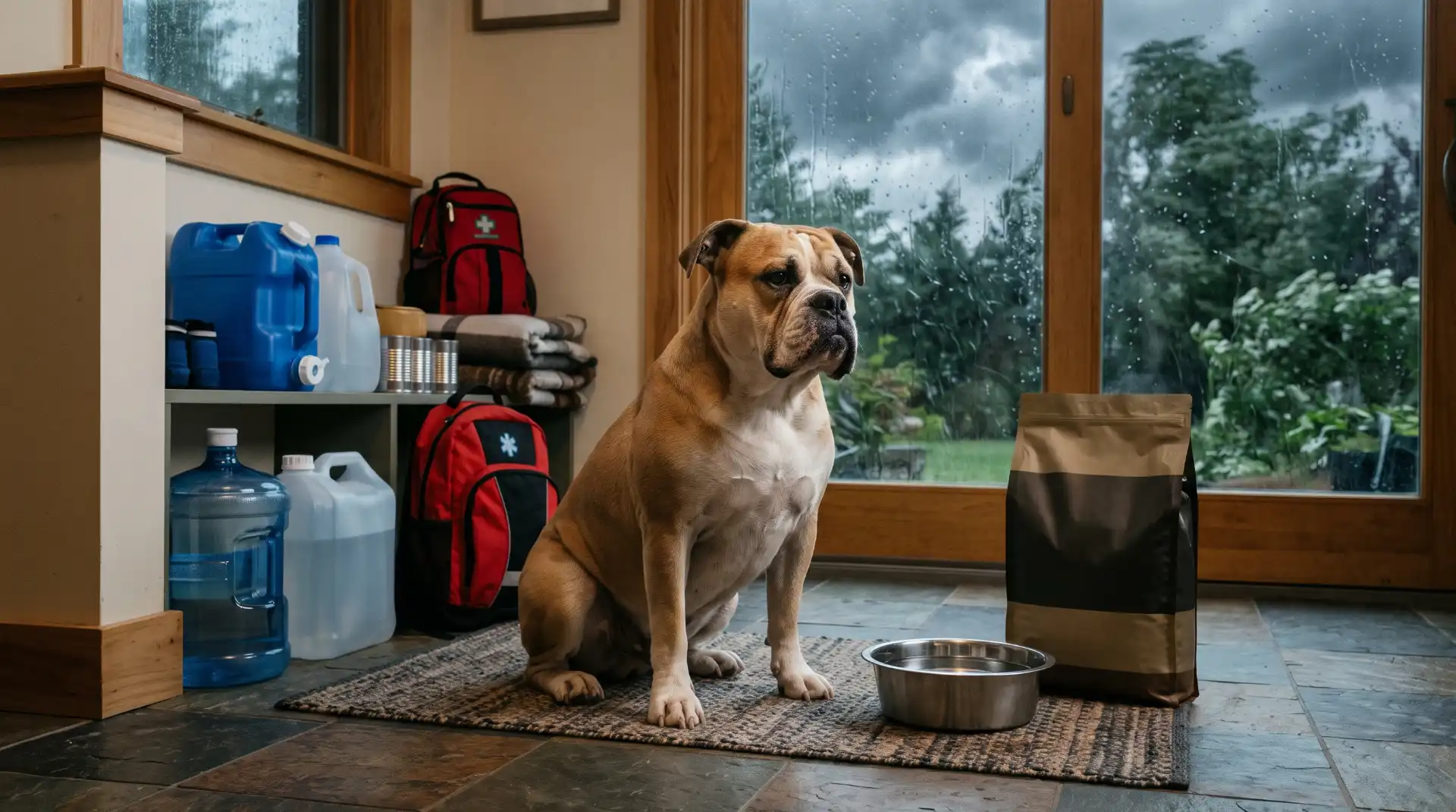
Extreme weather can create serious challenges for American households, and responsible dog owners need to consider more than keeping their pets comfortable during heat waves, storms, droughts, and power outages. One important concern that is sometimes overlooked is the safety of a dog’s food and drinking water. When severe weather disrupts electricity, damages water systems, floods neighborhoods, or makes normal shopping trips difficult, the everyday supplies that keep a dog healthy can become harder to protect.
For Continental Bulldog owners, preparing for these conditions is particularly important because food quality, reliable hydration, and consistent daily routines all contribute to general health. A contaminated water bowl, spoiled wet food, improperly stored kibble, or an interruption in access to clean drinking water can create problems that extend beyond temporary inconvenience.
The 2027 weather outlook also gives American pet owners another reason to review their household emergency plans. Discussions surrounding the possibility of a strong El Niño during the 2026–2027 period have increased attention on changing seasonal weather patterns, drought risks in some regions, unusual rainfall in others, and the possibility of challenging local conditions. El Niño does not guarantee identical weather across the United States, and its effects vary by location. Nevertheless, storms, flooding, heat waves, drought, and infrastructure disruptions are practical risks that every household should be prepared to manage.
A Continental Bulldog depends on its owner for access to safe food and water. Unlike people, dogs cannot recognize a contaminated supply, understand a boil-water advisory, or decide that food left in a hot vehicle should not be eaten. Owners must make those decisions on their behalf.
This guide explains how extreme weather can affect dog food and water safety, how to recognize possible contamination and spoilage, how to build an emergency pet food and water supply, and how to maintain safe feeding routines when normal household services are disrupted.
Why Extreme Weather Can Put Your Continental Bulldog’s Food and Water at Risk
Extreme weather affects household supplies in several ways. A heat wave can raise indoor temperatures and accelerate food spoilage. A hurricane can interrupt electricity and damage refrigerators. Flooding can contaminate drinking water and food-storage areas. Drought can place pressure on local water supplies, while severe storms can prevent families from reaching grocery stores or veterinary supply shops.
These situations do not necessarily happen together, but they can create similar problems: owners may have difficulty obtaining, storing, and safely preparing their dog’s usual meals.
Heat Waves and High Indoor Temperatures
Hot weather can affect pet food even when it is stored inside the house. A kitchen pantry, garage, storage shed, or utility room that becomes excessively warm can expose dry food to unfavorable storage conditions.
Heat can accelerate the deterioration of fats and oils in kibble. Over time, improperly stored food may develop rancid odors, lose quality, or become less appealing to your dog. Exposure to moisture and heat can also encourage mold growth under the right conditions.
Wet food requires additional attention because it is perishable once opened. Leaving an opened can or pouch at room temperature for extended periods, particularly during hot weather, can create conditions that encourage bacterial growth.
For example, an owner who opens a can of food during a summer afternoon and leaves the remainder on the kitchen counter until the evening may unintentionally expose the food to unsafe conditions. Refrigeration and proper handling are important even when the home is not experiencing an emergency.
Water bowls also require more frequent attention during warm weather. Outdoor bowls can become exposed to dust, insects, leaves, soil, and other contaminants. Water that sits for long periods may become dirty, especially in an uncovered area.
Hurricanes, Severe Storms, and Flooding
Hurricanes and severe storms can create multiple food and water safety problems at once. Heavy rainfall may cause flooding, electricity interruptions can affect refrigeration, and damaged roads may prevent access to stores.
Floodwater is particularly concerning because it may contain sewage, bacteria, chemicals, pesticides, fuel residues, and other harmful substances. Even if water looks relatively clear after a flood, its appearance cannot establish that it is safe to drink.
A dog should never be allowed to drink from flooded streets, drainage ditches, standing water near damaged buildings, or other unknown sources.
Food packaging also needs protection. Dry dog food stored in a garage, basement, or ground-level pantry may be exposed to floodwater. Even sealed-looking packages can become unsafe if their packaging is damaged or contaminated.
The U.S. Food and Drug Administration provides disaster-specific advice in its guide to protecting food and water during hurricanes and other storms.
Owners should apply the same cautious approach to their dog’s supplies. If pet food or drinking water has been exposed to floodwater, do not assume that it can be made safe simply by rinsing the container.
Drought and Water Supply Disruptions
Drought is another important consideration during the 2026–2027 Super El Niño discussion.
Depending on regional conditions, prolonged dry periods can increase pressure on municipal water systems, private wells, agricultural resources, and household water availability.
A dog may need additional water during hot weather, particularly after physical activity or when indoor temperatures are elevated. If an emergency interrupts the household water supply, an owner who has not prepared a reserve may suddenly have difficulty meeting those needs.
Continental Bulldog owners should calculate their dog’s normal daily water consumption and maintain an emergency reserve that accounts for expected disruptions. Water requirements vary by body size, diet, activity, health, and environmental temperature, so there is no single quantity that works for every dog.
It is also important to understand that water restrictions do not automatically mean drinking water is unsafe. Follow local utility announcements and public-health instructions rather than making assumptions based on drought conditions alone.
Power Outages and Refrigeration Problems
Electricity interruptions are common during severe weather. High winds, falling trees, damaged electrical equipment, and overloaded infrastructure can all cause outages.
For dog owners, the main food safety concern is refrigerated and frozen pet food.
Fresh, refrigerated, and opened wet foods may become unsafe if they remain too warm for too long. Frozen raw food can also thaw during an extended outage, creating uncertainty about whether it can safely be refrozen or served.
The FDA recommends keeping refrigerator temperatures at or below 40°F and freezer temperatures at or below 0°F. Appliance thermometers can help owners assess conditions when electricity is interrupted.
If you rely on refrigerated dog food, prepare a backup feeding arrangement before storm season begins. This may include an appropriate shelf-stable food that your veterinarian agrees is suitable for your dog.
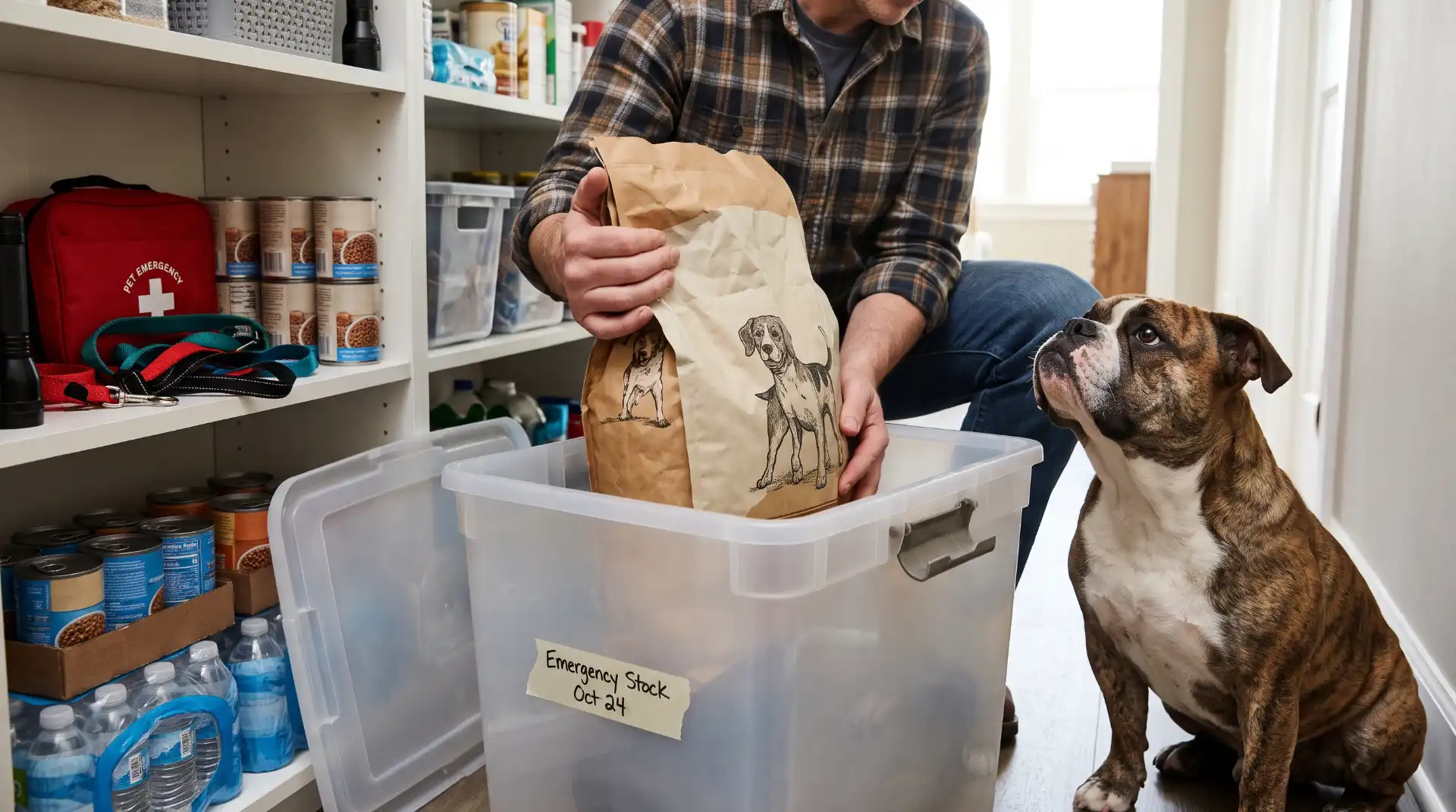
How to Store Dry Dog Food Safely During Extreme Weather
Dry dog food is convenient for everyday feeding and emergency preparation because it generally has a longer storage life than opened wet food. However, it still requires proper handling.
Continental Bulldog owners should pay attention to packaging, temperature, humidity, insects, rodents, and expiration dates.
Keep Dog Food in Its Original Packaging
One of the most useful recommendations from the FDA is to keep pet food in its original bag whenever possible.
The original packaging contains important information, including the product name, manufacturer, lot number, and best-by date. These details are particularly important if a manufacturer issues a recall or a safety investigation involves a specific batch.
Instead of emptying an entire bag of kibble into an unmarked container, place the original bag inside a clean, airtight storage container.
This approach combines convenient storage with the ability to identify the product if a problem occurs.
The FDA explains this recommendation in its official guide to proper storage of pet food and treats.
Choose a Cool, Dry Storage Location
Avoid storing dog food in places that become excessively hot or humid.
Garages, outdoor sheds, vehicles, and unventilated storage rooms may experience large temperature changes throughout the day. These conditions can accelerate food deterioration and create opportunities for moisture problems.
A cool, dry indoor pantry or suitable storage cabinet is generally preferable.
Keep the food away from direct sunlight, cleaning chemicals, fertilizers, pesticides, and household products that could contaminate it.
If your home has a history of basement flooding, avoid storing emergency dog food directly on the floor. Use raised shelving in an area that remains dry and protected.
Use Airtight Containers Correctly
A food-safe, airtight container can help protect kibble from insects, rodents, moisture, and household contaminants.
However, it is generally better to place the entire original bag inside the container rather than pouring loose kibble directly into it.
This makes it easier to preserve the product’s identifying information and reduces the need to clean the storage container every time a new bag is opened.
Before adding a replacement bag, remove remaining food, clean the container according to the manufacturer’s instructions, and allow it to dry completely.
Never place fresh kibble on top of old crumbs or food residue. Accumulated oils and debris can become rancid and contaminate a new supply.
Avoid Buying More Food Than You Can Store Properly
Buying large quantities during emergency preparation may appear economical, but purchasing more food than you can store safely can create unnecessary waste.
A large bag kept in a hot garage for months may deteriorate before your dog finishes it.
Instead, maintain a reasonable rotating supply. Purchase food your dog regularly eats, monitor the best-by date, and use older supplies before opening newer ones.
If you are preparing for a potentially difficult summer, increase your reserve gradually rather than buying a large quantity at the last minute.
Wet Dog Food Safety During Heat Waves and Power Outages
Wet dog food can be a useful option for Continental Bulldogs, particularly when it is part of an established feeding routine. However, it requires more careful handling because opened products are perishable.
Canned food, refrigerated fresh meals, and prepared food subscriptions all have different storage requirements.
Refrigerate Opened Wet Food Promptly
Once a can or pouch has been opened, follow the manufacturer’s refrigeration instructions.
Do not leave unused portions sitting on the counter, especially during warm weather. High indoor temperatures can increase the risk of spoilage.
Use a suitable food cover or transfer the remaining portion into an appropriate sealed container if the manufacturer’s instructions allow it.
Write the opening date on the container if necessary so that you can keep track of how long the food has been stored.
Always follow the specific product’s instructions regarding refrigeration and how quickly leftovers should be used.
Understand When Wet Food Should Be Discarded
Wet food that has been left out too long should not be saved simply because it still smells normal.
Bacteria that cause foodborne illness may not always produce obvious changes in appearance or odor.
As a general food-handling precaution, the FDA advises that opened perishable foods should not be left at room temperature for extended periods. During particularly hot conditions, owners should be especially cautious.
Discard food that has been exposed to floodwater, dirty surfaces, insects, or unknown contaminants.
Do not taste food intended for your dog to determine whether it is safe.
Plan for Refrigeration Interruptions
If your Continental Bulldog normally eats refrigerated food, identify a backup option before an anticipated storm.
For example, you might discuss a compatible shelf-stable canned diet with your veterinarian. Keep enough unopened portions available to maintain feeding consistency if the refrigerator becomes unavailable.
Do not switch to an unfamiliar emergency diet suddenly during a stressful evacuation unless there is no safer alternative.
If a transition is necessary, ask your veterinarian how to manage it based on your dog’s health and digestive history.
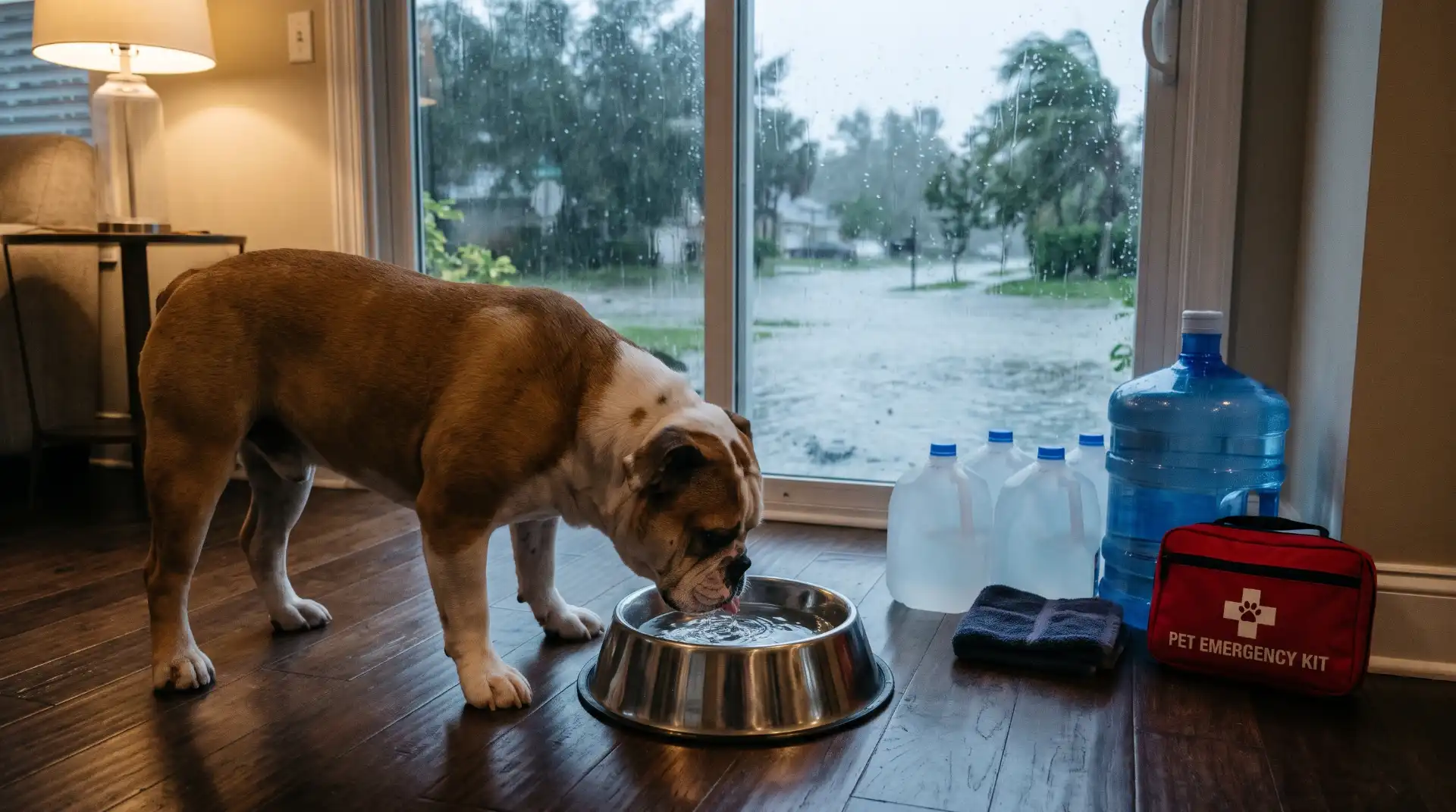
Drinking Water Safety During Floods and Water Advisories
Water safety deserves as much attention as food storage during an extreme weather event. A clean-looking water supply is not necessarily safe, and contamination may occur without producing an obvious smell, color change, or unusual taste.
For Continental Bulldog owners, the safest approach is to understand local water advisories and maintain a separate emergency supply of drinking water for their pets.
Why Floodwater Is Dangerous for Dogs
Floodwater can collect contaminants from streets, agricultural areas, damaged buildings, sewage systems, industrial facilities, and household storage areas.
It may contain bacteria, viruses, parasites, chemicals, pesticides, fuel residues, and other hazardous substances. A dog that drinks from a puddle after a major storm may swallow contaminants that are not visible to the owner.
Standing water can also contain decomposing organic material and microorganisms that create additional health risks.
Never allow your Continental Bulldog to drink from:
-
Flooded streets or sidewalks.
-
Drainage ditches and stormwater channels.
-
Puddles near damaged buildings.
-
Standing water around agricultural or industrial properties.
-
Unidentified outdoor water containers.
-
Water sources that may contain sewage or chemical runoff.
A familiar neighborhood water source should not automatically be considered safe after flooding. Conditions can change considerably following a storm.
If your dog accidentally drinks floodwater, contact your veterinarian for advice, especially if the water may have contained chemicals or sewage. Watch for vomiting, diarrhea, weakness, unusual behavior, and changes in appetite.
Understand the Different Types of Drinking Water Advisories
In the United States, local water utilities and public-health agencies may issue different types of advisories when drinking water becomes unsafe or its safety is uncertain.
Understanding the difference is important because boiling does not correct every type of contamination.
Boil water advisory: Authorities recommend boiling water to kill disease-causing organisms that may be present. Follow the exact instructions issued by your local water authority. Once prepared and cooled safely, water can be used for pets if officials specifically indicate that the boiled water is appropriate for drinking.
Do not drink advisory: This type of warning may indicate possible chemical or toxin contamination. Boiling does not reliably remove harmful chemicals and may concentrate certain contaminants. Use commercially bottled water for your Continental Bulldog.
Do not use advisory: This is a more restrictive warning. Authorities may prohibit using tap water for drinking or other contact because of potentially serious contamination. Follow the instructions and use an approved alternative water supply.
The CDC explains these distinctions in its official guide to drinking water advisories.
The important rule is to follow the exact instructions from local authorities. Do not assume that boiling, filtering, or allowing water to settle will make every contaminated supply safe.
Should You Give Your Dog Bottled Water During an Emergency?
Commercially bottled drinking water is a useful emergency supply because it is sealed and convenient to transport.
Keep several containers reserved specifically for your Continental Bulldog, especially if your household depends on a municipal supply that could be affected by flooding or infrastructure damage.
Choose ordinary drinking water rather than flavored products, sweetened beverages, or electrolyte drinks designed for humans.
Store bottled water away from direct sunlight, chemicals, fuels, and other household contaminants. Avoid using bottles that have been exposed to floodwater or have damaged seals.
If bottled water is unavailable, consult local authorities about approved treatment methods. Some contaminants cannot be removed by ordinary boiling or household filtration.
Can Dogs Drink Filtered Water During a Water Emergency?
Household water filters can improve water quality under certain conditions, but not every filter removes every contaminant.
A standard pitcher filter may reduce some substances without removing disease-causing microorganisms or industrial chemicals.
Similarly, portable outdoor filters have specific capabilities and limitations. Their effectiveness depends on the filter design, the contaminants involved, and whether the product is used correctly.
Never assume that running questionable floodwater through an ordinary household filter makes it safe for your dog.
During an emergency, use the water source recommended by public-health officials. If an advisory identifies chemical contamination, use commercially bottled water or another source specifically approved by authorities.
How Much Emergency Food and Water Should You Keep for Your Continental Bulldog?
One of the biggest mistakes owners make is waiting until a weather emergency is approaching before purchasing essential pet supplies.
Stores may run out of popular dog food brands, transportation routes may become inaccessible, and deliveries may be delayed. During a prolonged heat wave or severe storm, even a short disruption can create unnecessary stress.
Preparing a reserve ahead of time makes it easier to maintain your dog’s normal feeding schedule.
Follow the CDC’s Two-Week Pet Supply Recommendation
The Centers for Disease Control and Prevention recommends preparing a pet disaster kit that includes a two-week supply of food and water for each animal.
This is a useful starting point for Continental Bulldog owners who want to build a practical emergency reserve.
The exact amount of water required depends on the dog’s normal consumption, body weight, diet, activity, health, and environmental conditions.
For example, a dog eating primarily dry kibble may obtain less moisture from food than a dog eating a diet containing substantial amounts of wet food. A dog living in a hot region may also need more drinking water than one living in a mild climate.
Instead of guessing, measure your dog’s normal water consumption over several ordinary days. Use that information to estimate an emergency reserve, then add an appropriate margin for hotter conditions and unexpected delays.
The CDC’s Pet Disaster Preparedness Kit provides additional recommendations for food, water, medication, records, and transportation supplies.
Calculate Your Dog’s Food Reserve
Food planning is generally easier because you can use your dog’s existing feeding schedule.
If your Continental Bulldog eats two measured meals each day, calculate how much food it consumes over fourteen days.
For example, if your dog normally eats 2 cups of dry food daily, a fourteen-day reserve would require approximately 28 cups, assuming the feeding amount remains unchanged.
This is only an illustration. Actual portions should follow your veterinarian’s recommendations and the nutritional instructions for your dog’s particular food.
If you use canned food, calculate the number of unopened cans or pouches required to provide the normal daily amount.
Remember to include treats only as a supplementary supply. Treats should not replace balanced meals during an emergency.
Rotate Supplies Before They Expire
An emergency reserve should be maintained rather than forgotten.
Every month, check the food’s best-by date, inspect packaging for damage, and replace products that are approaching their recommended storage limits.
Use older supplies in your normal feeding routine and replace them with fresh stock.
This method, often called first-in, first-out rotation, helps prevent food from remaining in storage for too long.
Apply the same principle to bottled water and other emergency supplies. Follow the manufacturer’s storage recommendations and replace containers if seals become damaged or storage conditions are unsuitable.
How to Maintain Safe Feeding Routines During Evacuations
Extreme weather does not always allow families to remain at home. Hurricanes, flash floods, wildfires, and other emergencies may require rapid evacuation.
Leaving with your Continental Bulldog means taking responsibility for its food, water, and feeding arrangements throughout the journey.
Travel can be stressful for dogs, particularly when normal routines are interrupted. Maintaining familiar food and feeding times can make the transition easier.
Pack Familiar Food Rather Than Introducing an Unfamiliar Diet
A sudden change in food can cause digestive upset in some dogs. Vomiting, loose stools, reduced appetite, and abdominal discomfort can complicate an already stressful evacuation.
Whenever possible, bring your dog’s regular food in its original packaging.
If your dog normally eats a particular veterinary diet, make sure you have enough available before leaving home. Some prescription foods may be difficult to find at temporary destinations.
Keep a photograph of the product label and the manufacturer’s information on your phone. This can help if you need to purchase replacement food while traveling.
If an unexpected shortage forces you to use another diet, ask a veterinarian for guidance about suitable alternatives.
Use Clean, Portable Feeding Equipment
Travel bowls should be easy to clean, lightweight, and convenient to carry.
Collapsible silicone bowls and stainless-steel dishes are practical options because they can be packed with other emergency supplies.
After each feeding, remove leftover food and clean the bowl before using it again. Avoid allowing wet food residue to remain inside a travel container for hours.
If you are staying in a hotel, temporary shelter, or another person’s home, establish a designated feeding area away from cleaning chemicals, garbage, and other animals’ food.
Never Leave Food Exposed During Travel
Road trips and evacuations often involve unfamiliar environments, outdoor stops, and temporary storage arrangements.
Keep dry food in sealed containers and avoid leaving opened bags on vehicle floors where dirt, moisture, and pests may reach them.
Do not leave wet food sitting inside a hot vehicle. A parked car can become dangerously warm even when outdoor temperatures seem moderate.
If your Continental Bulldog eats refrigerated meals, use a properly maintained cooler with adequate ice packs and monitor storage conditions. If you cannot verify that the food has remained within its required temperature range, do not risk feeding it.
Maintain Hydration During Road Trips
Travel can make it easy to overlook drinking opportunities.
Offer fresh water during appropriate stops, particularly if the weather is warm or the journey is prolonged.
Do not wait until your dog is visibly thirsty or showing signs of exhaustion before offering water.
Bring more water than you expect to need, since public drinking fountains and roadside facilities may be unavailable or unsuitable.
Avoid allowing your dog to drink from roadside puddles, public decorative fountains, or unfamiliar outdoor containers.
Prepare for Pet-Friendly Emergency Accommodation
Not every emergency shelter or hotel accepts animals, and some facilities have specific requirements for vaccinations, identification, carriers, and feeding arrangements.
Research suitable accommodation before severe weather develops.
When making arrangements, ask whether the property provides drinking water, whether food refrigeration is available, and whether there are safe indoor areas for feeding.
If you must share temporary accommodation with other animals, keep your Continental Bulldog’s food separate. This reduces the possibility of accidental food exchanges, food guarding, and exposure to unfamiliar diets.
Recognizing Foodborne Illness and Contaminated Water Exposure
Even with careful preparation, accidents can happen. A dog may eat spoiled food, drink contaminated water, or consume food that has been exposed to an unsuitable storage environment.
Knowing the warning signs can help owners recognize when veterinary attention is necessary.
Digestive Symptoms to Watch For
Food contamination may cause digestive problems that range from mild discomfort to serious illness.
Watch for:
-
Vomiting or repeated retching.
-
Diarrhea or unusually soft stools.
-
Loss of appetite.
-
Excessive drooling.
-
Abdominal discomfort.
-
Unusual tiredness or weakness.
-
Changes in drinking behavior.
These symptoms do not automatically mean that food contamination has occurred. They can have many causes, including dietary changes, infections, parasites, and other medical conditions.
However, if symptoms begin after your Continental Bulldog eats food that may have spoiled or drinks questionable water, inform your veterinarian about the possible exposure.
Do not attempt to treat significant digestive symptoms with human medications or home remedies.
Signs of Dehydration
Dehydration can become a concern when a dog loses fluids through vomiting, diarrhea, excessive panting, or inadequate drinking.
Possible warning signs include unusual lethargy, dry or sticky gums, reduced urination, and weakness.
More severe dehydration may involve sunken-looking eyes, significant weakness, or collapse.
Skin elasticity tests are sometimes discussed as a way to assess hydration, but they are not reliable enough to rule out dehydration in every dog. Age, body condition, and other factors can affect the results.
If your dog appears dehydrated or cannot keep water down, seek veterinary advice promptly.
When to Seek Emergency Veterinary Care
Certain symptoms require immediate attention rather than observation at home.
These include repeated vomiting, bloody diarrhea, severe weakness, collapse, seizures, difficulty breathing, suspected chemical poisoning, or an inability to keep water down.
If you believe your dog has consumed a toxic substance, contact a veterinarian or an animal poison-control service immediately.
Do not induce vomiting unless a veterinary professional specifically instructs you to do so.
When possible, keep the food packaging, water source information, product lot number, and approximate time of exposure. These details can help a veterinarian determine what happened.
For additional preparation, your readers can consult the existing First Aid Essentials Every Continental Bulldog Owner Needs, which covers important emergency-care considerations.
Special Considerations for Raw and Fresh Dog Food During Extreme Weather
Some Continental Bulldog owners prefer fresh, refrigerated, or raw feeding programs. These diets require additional planning because they may depend on continuous refrigeration and careful food handling.
During an emergency, maintaining food safety can become more difficult if electricity is unavailable or clean preparation surfaces are limited.
Understand the Risks of Raw Food Storage
Raw meat can contain bacteria and other disease-causing organisms. Improper refrigeration, thawing, handling, or cross-contamination can create health risks for both dogs and people.
Floodwater contamination creates an additional concern. Never feed your dog raw meat, prepared meals, or other food products that have come into contact with floodwater.
Raw food should remain frozen or refrigerated according to the manufacturer’s instructions. If a power outage causes the food to thaw, do not assume that it is safe to refreeze.
The decision depends on how long the food was exposed to warmer temperatures and the conditions under which it was stored. If you cannot establish that the food remained safe, discard it.
Prevent Cross-Contamination in the Kitchen
When preparing your dog’s meals, keep pet food separate from human food preparation whenever practical.
Use clean utensils, wash your hands, and disinfect appropriate preparation surfaces after handling raw ingredients.
Do not use the same cutting board for raw pet food and family meals without thoroughly cleaning and sanitizing it.
During an emergency, clean water and sanitation supplies may be limited. This is another reason to keep commercially prepared, shelf-stable dog food available as a backup.
Consider a Shelf-Stable Alternative
A veterinarian-approved shelf-stable diet can be useful if your normal feeding arrangement depends on refrigeration.
Depending on your dog’s nutritional needs, options may include commercially prepared canned food or appropriately formulated dry food.
Introduce an alternative before an emergency if possible, and discuss dietary compatibility with your veterinarian.
This is particularly important if your Continental Bulldog has food sensitivities, gastrointestinal conditions, or a prescribed nutritional plan.
Keeping Water Bowls Clean During Hot and Humid Weather
Clean drinking water is not simply a matter of filling a bowl in the morning. The container itself needs regular attention.
During summer, water bowls can collect saliva, food particles, dust, insects, and other debris. Outdoor containers may also become exposed to bird droppings, soil, and environmental contaminants.
Wash Bowls Regularly
Wash your Continental Bulldog’s water bowl regularly with dish soap and clean water, then rinse it thoroughly.
Remove visible residue and inspect the container for scratches or damaged areas where dirt may accumulate.
Stainless-steel bowls are popular because they are durable and relatively easy to clean. However, any bowl material requires regular maintenance.
Avoid using harsh household cleaning chemicals unless the product is specifically suitable for the intended cleaning purpose and can be thoroughly rinsed away.
Replace Standing Water Frequently
Do not leave the same water in a bowl for an entire day, particularly in a warm outdoor environment.
Empty the bowl, clean it when needed, and refill it with fresh drinking water.
If your dog eats outdoors, move the water bowl away from food debris, waste, and areas where insects gather.
During particularly hot conditions, check the bowl more frequently because water may become warm or contaminated more quickly.
Be Careful With Outdoor Water Fountains
Pet fountains can encourage some dogs to drink, but they still require regular cleaning.
Filters need replacement according to manufacturer instructions, and water reservoirs should be cleaned to prevent accumulated debris.
During a power outage, an electric fountain may stop working. Always maintain a traditional water bowl as a backup.
Do not depend on an automatic water dispenser as your only emergency drinking source.
Maintaining Hydration During Extreme Summer Temperatures
Food safety and water safety are closely connected to your Continental Bulldog’s ability to remain hydrated.
Dogs depend on adequate water intake for normal body functions, including temperature regulation, digestion, circulation, and waste elimination.
During a heat wave, dehydration can become a concern when a dog loses more water than it consumes.
Make Fresh Water Available Throughout the Day
Your dog should have access to clean drinking water throughout the day, including when it is resting indoors.
Do not restrict water simply because your dog urinates frequently or because you are concerned about indoor accidents.
If your dog suddenly begins drinking significantly more or less than usual, discuss the change with your veterinarian. Increased thirst can sometimes indicate an underlying medical problem.
Monitor Water Intake During Hot Weather
Owners who know their dog’s normal drinking habits may find it easier to identify changes.
For several ordinary days, observe approximately how much water your Continental Bulldog consumes. This provides a useful reference point when temperatures rise or the household routine changes.
Keep in mind that water intake varies depending on the type of food, physical activity, age, and health.
A dog eating moisture-rich food may drink less from its bowl than one eating exclusively dry kibble.
Do not force a particular water quantity if your veterinarian has recommended an individualized fluid plan.
Use Wet Food as a Source of Dietary Moisture
Some canned dog foods contain substantially more moisture than dry kibble.
For dogs that already tolerate wet food, it may contribute to their overall daily water intake.
However, switching to wet food during a heat wave is not a substitute for providing fresh drinking water.
Any dietary change should be considered in relation to calorie intake, nutritional balance, and your dog’s digestive tolerance.
If your Continental Bulldog has a medical condition that affects fluid intake, consult your veterinarian before changing its feeding routine.
Preparing for 2027: A Continental Bulldog Food and Water Emergency Checklist
The most effective emergency plans are practical, organized, and easy to follow.
Rather than waiting for a storm warning or water shortage announcement, prepare your supplies in advance. The following checklist can help you organize the essentials for your household.
Food supplies
-
Keep approximately two weeks of your dog’s usual food available.
-
Maintain unopened shelf-stable backup meals if appropriate.
-
Store dry food in its original packaging inside a suitable sealed container.
-
Keep wet food according to the manufacturer’s storage instructions.
-
Record product names, lot numbers, and best-by dates.
-
Rotate older supplies before they expire.
-
Keep food away from chemicals, moisture, insects, and rodents.
Water supplies
-
Maintain an emergency supply of drinking water.
-
Estimate your dog’s normal daily water consumption.
-
Add a reasonable reserve for hot weather and unexpected delays.
-
Store water in clean, sealed, food-safe containers.
-
Protect supplies from direct sunlight and floodwater.
-
Keep portable water bowls available for travel.
-
Follow local drinking-water advisories.
Feeding and cleaning supplies
-
Pack stainless-steel or suitable portable bowls.
-
Keep dish soap and appropriate cleaning supplies available.
-
Store clean towels and paper towels.
-
Bring food covers or sealed containers.
-
Pack waste bags and basic sanitation supplies.
-
Keep a manual can opener if your emergency food requires one.
Medical and emergency information
-
Keep your veterinarian’s contact information accessible.
-
Record your dog’s normal feeding schedule.
-
Include medication instructions and prescriptions.
-
Keep vaccination and medical records in a waterproof container.
-
Maintain a current photograph of your Continental Bulldog.
-
Identify nearby emergency veterinary hospitals.
-
Prepare a transportation plan for evacuation.
The CDC also recommends including medication supplies, identification, veterinary documentation, and other essential equipment in a pet emergency kit. Its guidance is particularly useful for households preparing for storms, floods, and other emergencies.
Common Food and Water Safety Mistakes Dog Owners Should Avoid
Even experienced owners can make mistakes when managing food and water during stressful weather conditions.
Understanding these problems in advance can help prevent avoidable health risks.
Assuming Clear Water Is Safe
One of the most dangerous assumptions is that water is safe because it looks clean.
Floodwater may contain harmful microorganisms and chemicals that are impossible to identify visually.
Do not allow your Continental Bulldog to drink from unknown water sources, even if the water appears clear.
Leaving Wet Food Out for Too Long
Wet food should not remain on the counter throughout a hot afternoon.
Follow the manufacturer’s instructions for serving, refrigeration, and disposal. Discard food that has been exposed to unsafe temperatures or contamination.
Storing Kibble in a Hot Garage
Garages are convenient storage areas, but they can become extremely hot during summer.
High temperatures and humidity can negatively affect stored food. Choose a more suitable indoor location whenever possible.
Ignoring Food Recall Information
Pet food recalls can occur because of contamination, manufacturing problems, or other safety concerns.
Keep your food packaging information so that you can identify the exact product and lot number.
Periodically check FDA pet food recall announcements and manufacturer notices.
If your dog’s food is recalled, follow the official instructions. Do not continue feeding an affected product simply because your dog appears healthy.
Making Sudden Dietary Changes
An emergency may create pressure to purchase whatever food is available.
However, a sudden diet change can cause digestive problems in some dogs.
Keep a familiar backup food available whenever possible, and consult your veterinarian about appropriate alternatives.
Relying on One Water Source
A household that depends entirely on tap water may experience difficulties if a water main breaks or a local advisory is issued.
Maintain a separate drinking-water reserve for your dog. Do not rely exclusively on a refrigerator dispenser, electric fountain, or automatic water system.
Frequently Asked Questions About Dog Food and Water Safety During Extreme Weather
Can extreme heat spoil dry dog food?
Extreme heat can accelerate the deterioration of fats and oils in dry food, particularly when the food is also exposed to moisture or unsuitable storage conditions.
Keep kibble in its original packaging inside a suitable airtight container, and store it in a cool, dry location. Follow the manufacturer’s storage recommendations and discard food that develops unusual odors, visible mold, or other signs of deterioration.
Can my Continental Bulldog drink tap water after a hurricane?
That depends on the condition of the local water supply and instructions from public-health authorities.
If officials issue a boil water advisory, follow their instructions. If a do not drink or do not use advisory is issued, use the approved alternative water source.
Do not assume that tap water is safe simply because it looks normal after a hurricane.
How much bottled water should I keep for my Continental Bulldog?
Prepare enough water to cover your dog’s normal consumption for the expected emergency period, using the CDC’s two-week supply recommendation as a starting point.
Add a reasonable reserve for increased needs during hot weather. Your veterinarian can help estimate an appropriate quantity based on your dog’s size, health, and diet.
Is bottled water better than tap water for dogs?
Both can be appropriate when they come from safe sources.
Municipal tap water that meets local drinking-water standards is generally suitable for healthy dogs. Commercially bottled water is useful when the household supply becomes unavailable or authorities issue a drinking-water warning.
There is no general requirement for healthy dogs to drink bottled water every day.
Can I give my dog boiled water after flooding?
Boiling can kill many disease-causing organisms, but it does not remove harmful chemicals or toxins.
Only use boiled water when local authorities recommend that treatment for the specific advisory affecting your area. If chemical contamination is suspected, use commercially bottled or otherwise approved water.
Can Continental Bulldogs drink water with ice cubes during summer?
Ordinary ice cubes made from safe drinking water are generally acceptable for many healthy dogs when offered in moderation.
However, ice is not a substitute for fresh drinking water. Avoid forcing a dog to consume ice or giving it large amounts if it has difficulty chewing or swallowing.
If your dog has a medical condition affecting swallowing or digestion, ask your veterinarian first.
How long can opened wet dog food remain unrefrigerated?
The safe period depends on the product, serving conditions, and manufacturer’s instructions.
Do not leave opened wet food sitting out throughout the day. Warm indoor temperatures increase spoilage concerns, so remove leftovers promptly and refrigerate them according to the label.
When the safety of the food is uncertain, discard it.
What should I do if my dog drinks floodwater?
Prevent further exposure and contact your veterinarian for guidance, particularly if the water may contain sewage, chemicals, or agricultural runoff.
Monitor your dog for vomiting, diarrhea, weakness, appetite changes, and unusual behavior.
If chemical exposure is possible or serious symptoms develop, seek emergency veterinary care.
Should I change my Continental Bulldog’s diet before a predicted Super El Niño?
Not necessarily. A climate forecast alone is not a reason to change a healthy dog’s diet.
Instead, maintain a sufficient supply of the food your dog already tolerates, review storage arrangements, and prepare a suitable backup diet if refrigeration or shopping access becomes a concern.
Discuss any major nutritional changes with your veterinarian.
Can I use human electrolyte drinks to hydrate my dog?
Do not routinely give human sports drinks or electrolyte products without veterinary advice.
Some products contain excessive sodium, sweeteners, or ingredients that may be inappropriate for dogs. Fresh drinking water is generally the best everyday hydration option.
If your dog is dehydrated or has lost fluids through vomiting or diarrhea, seek veterinary advice about appropriate treatment.
How often should I clean my Continental Bulldog’s water bowl?
Clean it regularly, ideally at least daily, and replace the water with fresh drinking water. During hot weather or when the bowl becomes dirty, clean it more frequently.
Outdoor bowls may require additional attention because they are exposed to insects, dust, soil, and other contaminants.
What food is best to keep in an emergency dog food kit?
The best option is generally a nutritionally complete food your dog already eats and tolerates.
Dry food and unopened commercially prepared canned food can be convenient emergency options, provided they are stored according to the manufacturer’s instructions.
If your dog needs a prescription diet or has food sensitivities, discuss emergency alternatives with your veterinarian before an emergency occurs.
Final Thoughts: Protecting Your Continental Bulldog Starts With Safe Food and Water
Extreme weather can affect much more than your Continental Bulldog’s comfort. Heat waves, drought, flooding, severe storms, and power outages can disrupt the food and water supplies that your dog depends on every day.
As American households prepare for the possibility of challenging weather conditions during 2027, pet owners should make food and water safety part of their emergency planning.
The most important steps are straightforward: maintain an emergency supply of familiar dog food, store kibble properly, refrigerate opened wet food, keep drinking water in clean sealed containers, and follow local water safety advisories. Never allow your dog to drink floodwater or consume food that may have been contaminated by sewage, chemicals, or unsafe storage conditions.
For Continental Bulldogs, maintaining hydration is particularly important during hot weather. Owners should provide constant access to fresh water, monitor changes in drinking behavior, and avoid unnecessary outdoor activity when temperatures and humidity become dangerous.
Preparation also means thinking beyond the home. If evacuation becomes necessary, bring your dog’s normal food, drinking water, bowls, medications, and veterinary records. Maintaining familiar feeding routines can help reduce stress and make an unfamiliar environment more manageable.
Remember that El Niño does not produce identical weather conditions throughout the United States. Some communities may experience greater drought concerns, while others may face unusual rainfall, storms, or different seasonal conditions. Follow local forecasts and official emergency announcements instead of relying on broad climate predictions alone.
Your Continental Bulldog depends on you to make decisions about its health and safety. A properly maintained food supply, clean drinking water, and a practical emergency plan can make a meaningful difference when severe weather disrupts everyday life.
The best time to prepare your dog’s food and water supplies is before an emergency happens, not after the shelves are empty or the tap water becomes unsafe.