
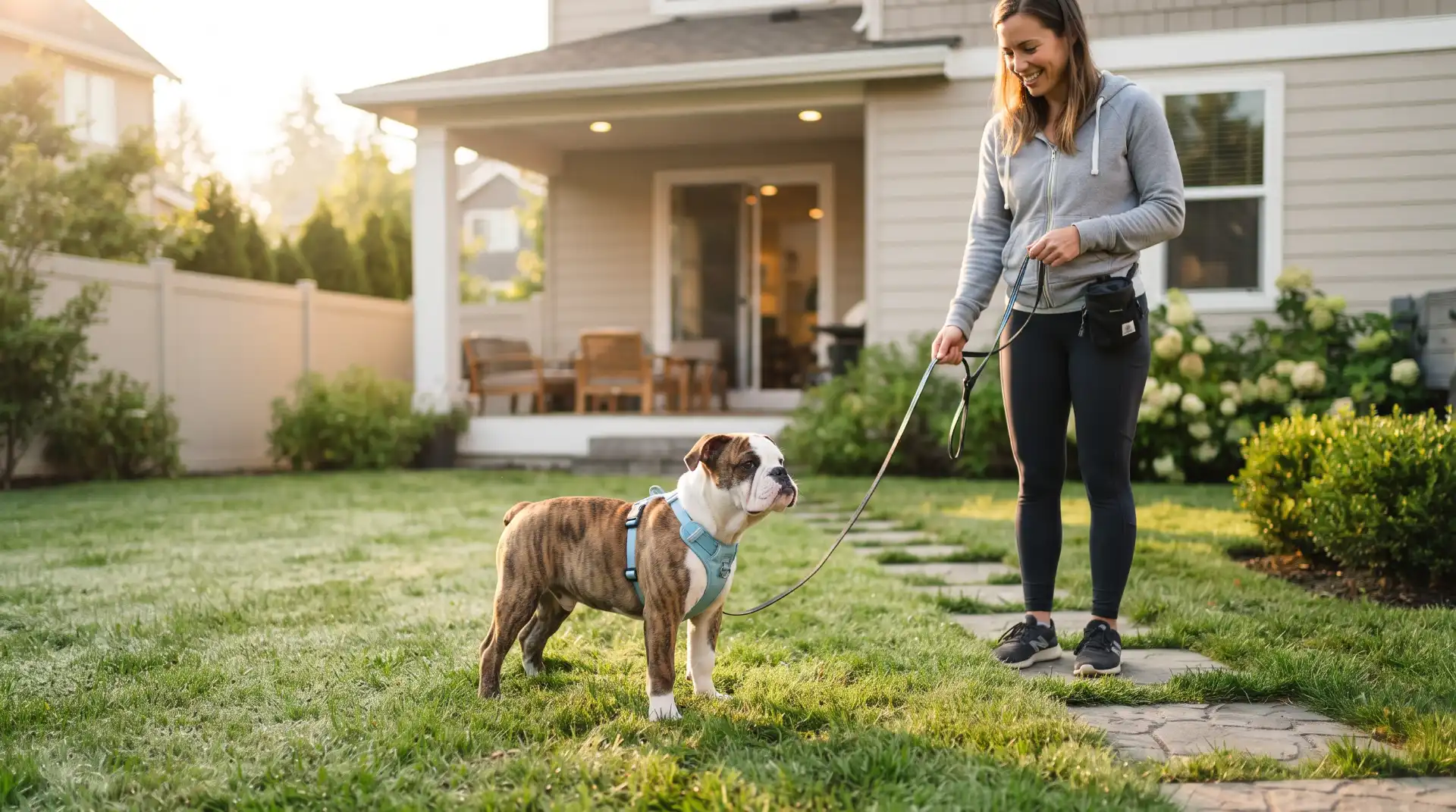
Bringing home a Continental Bulldog puppy is exciting, but it also introduces one of the first major responsibilities of puppy ownership: house training. Learning how to potty train a Continental Bulldog puppy is much easier when you establish a predictable routine from the beginning rather than waiting for accidents to become an established habit.
Continental Bulldogs are intelligent, people-oriented dogs that can learn household routines well when expectations remain consistent. Like any puppy, however, they do not arrive knowing that the carpet is off-limits and the grass outside is the appropriate bathroom. They need repeated opportunities to make the correct choice, followed immediately by a reward that helps them understand what you want.
Successful potty training is less about correcting mistakes and more about preventing them. A predictable schedule, careful supervision, appropriate crate use, consistent rewards, and patience provide the foundation.
For new owners who are also learning about feeding, exercise, socialization, and early development, our guide to caring for a Continental Bulldog puppy during the first six months provides additional information for this important stage.
When Should You Start Potty Training?
Potty training should begin as soon as your Continental Bulldog puppy comes home.
Many puppies join their new households at approximately eight weeks of age. At that stage, bladder control is still developing, so expecting a puppy to remain accident-free for long periods is unrealistic.
Instead of measuring early success by how long your puppy can “hold it,” concentrate on giving your puppy enough bathroom opportunities that accidents become increasingly uncommon.
A young puppy may need to go outside after waking up, after eating, after drinking a significant amount of water, after playing, after leaving the crate, and before bedtime. Excitement can also trigger the need to urinate.
This means the first few weeks may involve many trips outdoors each day.
The effort pays off because every successful bathroom trip reinforces the same lesson: this is where I go potty.
Choose One Designated Potty Area
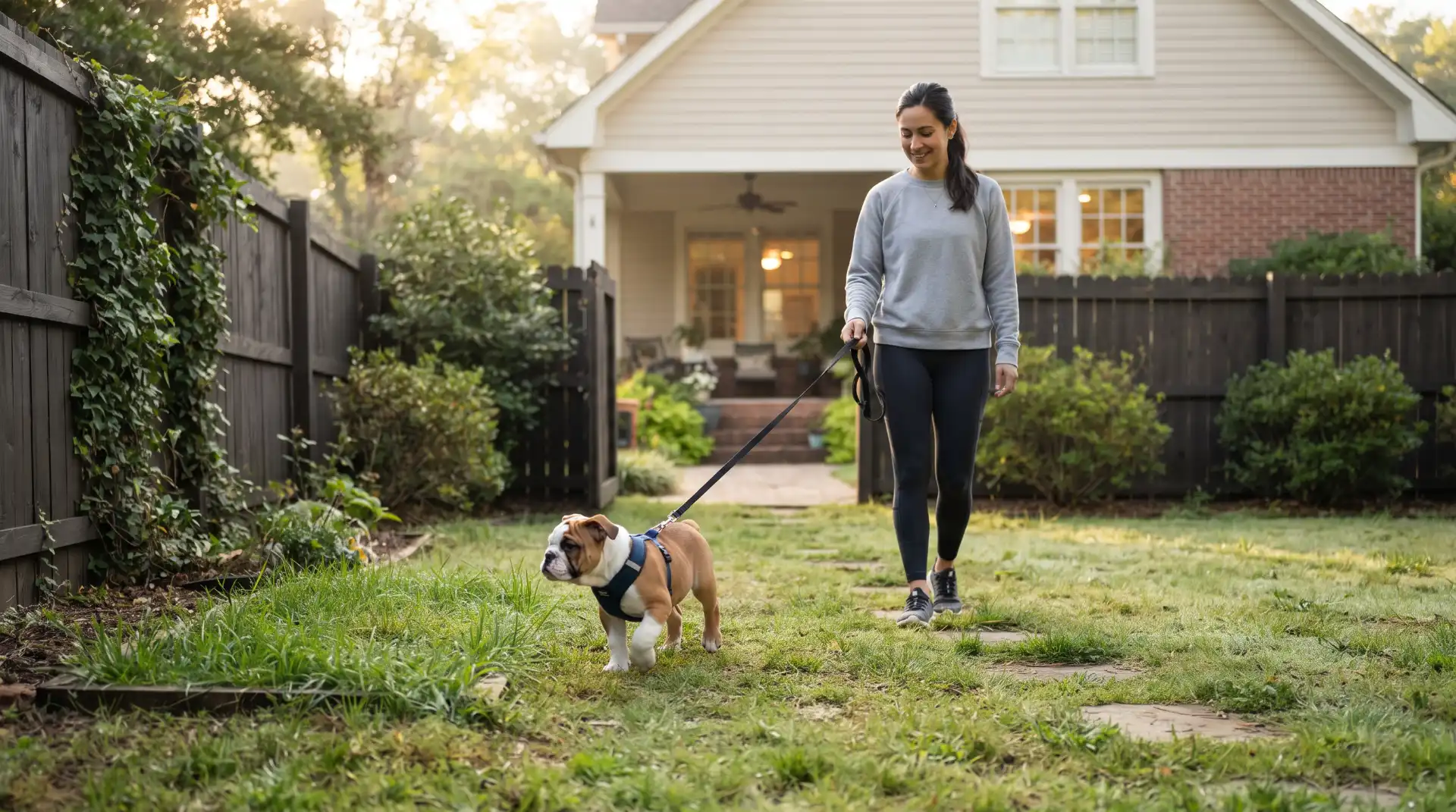
Before beginning training, choose a specific outdoor location that will normally serve as your puppy’s bathroom area.
A designated location makes the routine easier to understand. Instead of allowing your Continental Bulldog puppy to wander throughout the yard, take the puppy directly to approximately the same area each time.
Keep the first few trips relatively boring.
Your puppy may want to smell flowers, chase leaves, chew grass, or explore the yard rather than concentrate on going to the bathroom. Keep the leash relaxed, stand quietly, and allow enough time for the puppy to eliminate.
Once your puppy finishes, praise and reward immediately.
You can allow additional exploration or play afterward. This creates an important distinction: potty comes first, while play is something that may happen after the bathroom trip.
Create a Consistent Potty Training Schedule
Routine is one of the most powerful tools available when house training a Continental Bulldog.
Puppies often need to eliminate at predictable moments, particularly after sleeping, eating, drinking, and vigorous activity. Taking advantage of those moments reduces the chance that your puppy will have an accident indoors.
Start every morning by taking your puppy directly outside. Do this before becoming distracted by coffee, emails, breakfast, or other household activities.
Meals should also be reasonably predictable. Scheduled meals make bowel movements easier to anticipate than leaving food available throughout the entire day.
Take your puppy outside shortly after eating and watch for individual patterns. One puppy may need to defecate almost immediately after breakfast, while another may consistently need more time.
Record these patterns during the first week if necessary. A simple note on your phone showing feeding times, bathroom trips, and accidents can quickly reveal a routine.
Young puppies may need trips outside very frequently while awake. The correct interval depends on the puppy’s age, activity, water intake, development, and individual bladder capacity.
Do not stretch the schedule merely because your puppy successfully waited longer once. Increase intervals gradually as reliability improves.
Useful Times to Take Your Puppy Outside
Rather than relying only on the clock, connect bathroom trips to events throughout the day. Take your Continental Bulldog puppy outside after waking, eating, drinking, energetic play, training sessions, naps, and crate time.
A final potty trip immediately before bed can also reduce nighttime accidents.
Consistency teaches your puppy what comes next. Eventually, walking toward the outside door after waking or eating becomes part of an established routine.
Use Crate Training as Part of the Process
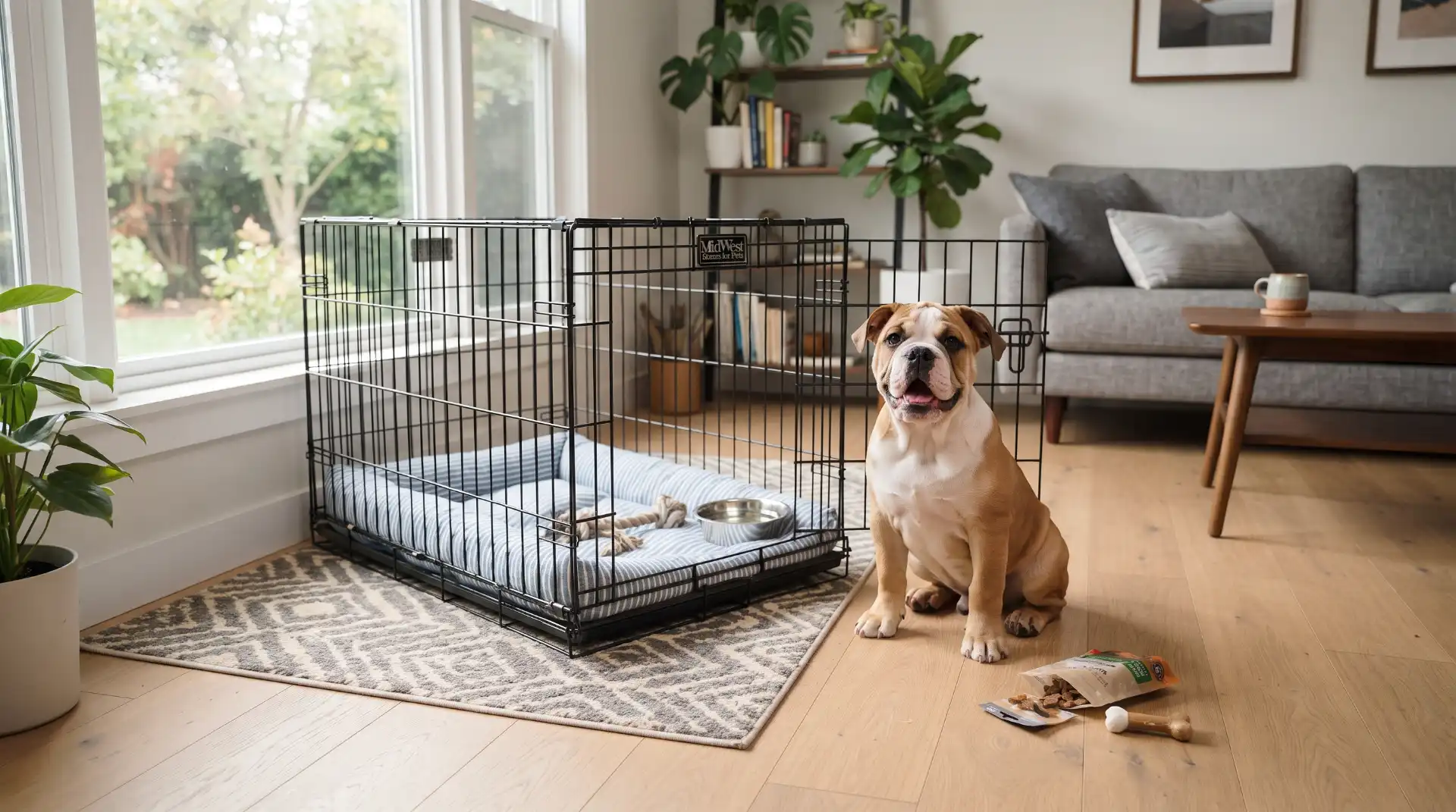
Crate training can be extremely useful for potty training when the crate is introduced properly.
The crate should function as a comfortable sleeping and resting area rather than punishment. Your puppy should associate it with calmness, security, naps, treats, and relaxation.
Choose an appropriately sized crate. Your puppy should have enough room to stand normally, turn around, and lie down comfortably.
However, an oversized crate may allow a puppy to sleep at one end and eliminate at the other. Adjustable crates with dividers can be particularly useful as a Continental Bulldog grows.
Take your puppy outside immediately after letting them out of the crate.
Do not expect a young puppy to remain confined for unreasonable periods. Crate training does not create mature bladder control before the puppy is physically capable of it.
If you are away from home longer than your puppy can reasonably remain comfortable, arrange an appropriate bathroom opportunity rather than expecting the crate to solve the problem.
For broader crate, obedience, and behavioral guidance, see our Continental Bulldog training tips from puppy to adult.
Teach a Simple Potty Cue
A verbal cue can eventually make bathroom trips faster and more predictable.
Choose one short phrase, such as “go potty,” and use it consistently.
When your puppy begins eliminating in the correct location, calmly say the cue. Avoid repeating it constantly while the puppy is merely sniffing around. You want the words to become associated with the actual behavior.
As this association develops, the cue may help your dog understand what is expected when traveling, staying at a hotel, visiting family, or stopping during a road trip.
Everyone in the household should use the same phrase. Switching between several different commands can make the lesson unnecessarily complicated.
Reward Your Continental Bulldog Immediately
Timing matters enormously when using positive reinforcement.
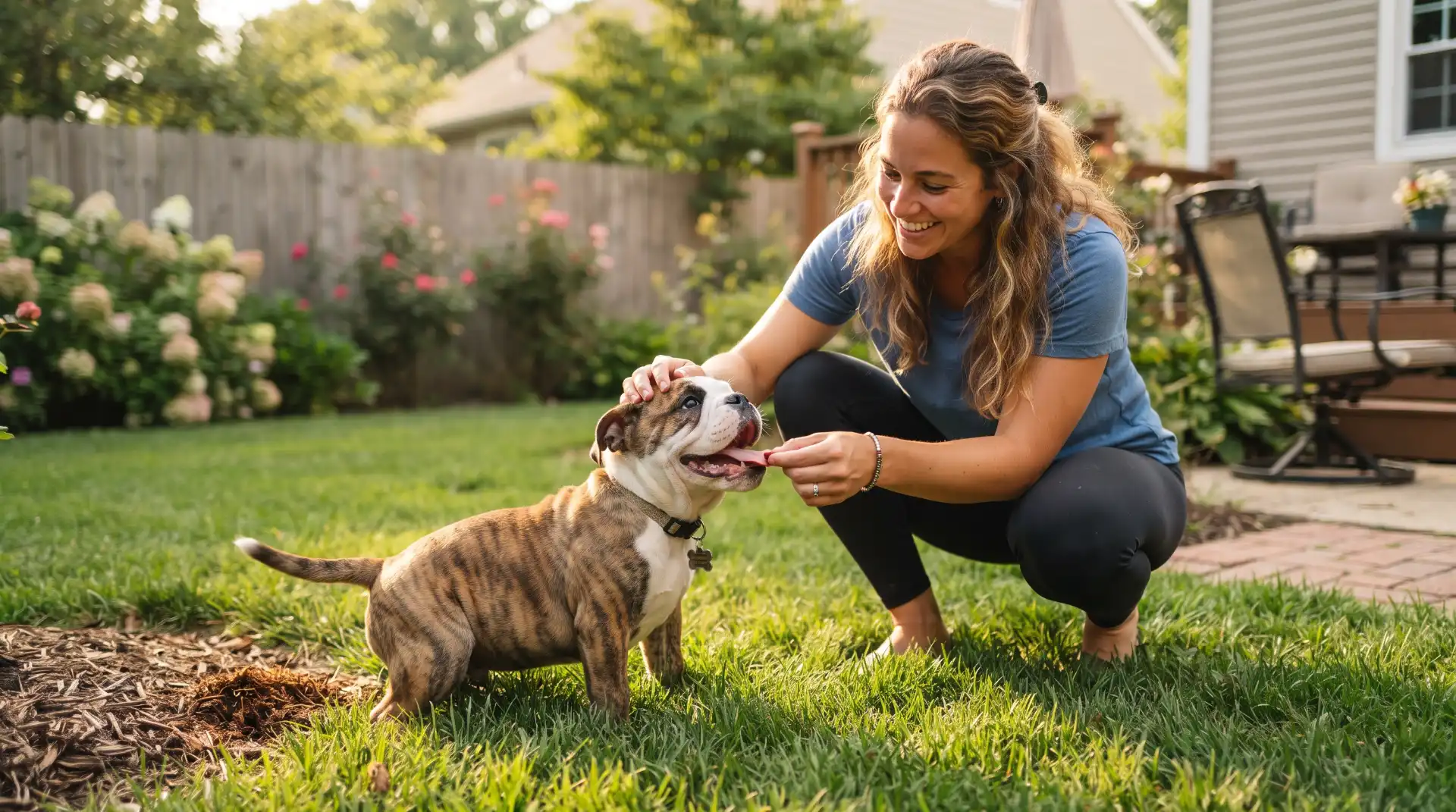
When your puppy finishes going potty outside, offer enthusiastic but not overwhelming praise and provide a small training treat immediately.
Waiting until you return to the kitchen may be too late. By then, the puppy may associate the treat with coming indoors rather than eliminating outside.
Keep small treats near the door or carry them in a training pouch so that rewards are always available.
The reward should be valuable enough to motivate your puppy without adding excessive calories. Because training may involve many successful bathroom trips during the day, very small treats are usually adequate.
Praise can eventually replace frequent food rewards once the behavior becomes reliable.
Positive reinforcement is also useful far beyond house training. Continental Bulldogs generally benefit from calm, consistent training instead of confrontation. Owners dealing with resistance during other types of training can also read our guide on how to train a stubborn Continental Bulldog without stress.
Learn Your Puppy’s Pre-Potty Signals
As you spend more time with your Continental Bulldog, you will begin recognizing subtle signs that a bathroom trip may be needed.
Some puppies suddenly stop playing. Others begin sniffing the floor intensely, circling, pacing, walking toward a previously soiled location, moving toward the door, whining, or becoming restless.
Respond immediately when you notice these behaviors.
Do not wait to see whether the puppy “really” needs to go. Taking an unnecessary trip outside costs only a few minutes. Waiting too long can result in another indoor accident.
Supervision is especially important during the early stages because puppies can disappear behind furniture and eliminate before you realize what happened.
If direct supervision is impossible, use an appropriately sized crate or puppy-safe confinement area rather than giving unrestricted access to the house.
Limit Freedom Inside the House
Giving a puppy access to an entire house too quickly is one of the most common potty-training mistakes.
Your Continental Bulldog might understand that the kitchen should remain clean while still believing that an upstairs bedroom is an acceptable bathroom location.
Dogs need time and experience to generalize household rules.
Begin with a manageable area where you can supervise your puppy closely. Baby gates can help limit access to hallways, bedrooms, or carpeted areas.
As your puppy demonstrates consistent reliability, gradually increase access.
Freedom should be earned through successful behavior rather than granted simply because the puppy has reached a certain age.
If accidents begin after expanding the puppy’s territory, reduce freedom temporarily and return to the previous successful routine.
What Should You Do When Your Puppy Has an Accident?
Accidents are normal.
Even a puppy that appears to understand the routine may occasionally urinate or defecate indoors because of excitement, distraction, changes in schedule, incomplete bladder control, or simply because the owner missed a signal.
If you catch your puppy beginning to eliminate indoors, interrupt calmly and take the puppy outside.
Avoid yelling, hitting, frightening, rubbing the puppy’s nose in the mess, or using the crate as punishment. These reactions do not teach the desired bathroom location. They can instead make a puppy afraid to eliminate in front of you.
If you discover an accident after it happened, simply clean it.
Your puppy cannot connect punishment delivered minutes later with the earlier behavior in the way a person might expect.
Think of an accident as information. Ask yourself what preceded it. Was the puppy allowed too much freedom? Was the last bathroom break too long ago? Did the puppy just wake up? Was a warning signal missed?
Adjust the routine accordingly.
Clean Indoor Accidents Thoroughly
Proper cleaning is an important but often overlooked part of house training.
Dogs have a powerful sense of smell. A location that appears clean to you may still contain odor that encourages your puppy to return to the same area.
Use a pet-safe enzymatic cleaner designed for urine and other biological stains. Follow the product directions carefully and test it on delicate surfaces when necessary.
Avoid relying solely on fragrance to cover the odor.
The objective is to break down the residue rather than simply make the room smell better to humans.
Pay particular attention to carpet, rugs, upholstered furniture, and absorbent flooring where urine can penetrate beneath the visible surface.
Should You Use Puppy Pads?
Puppy pads can be useful in certain households, but owners should decide whether indoor potty training supports their long-term goal.
For example, an apartment resident several floors above street level may not always be able to reach an outdoor area quickly enough with an eight-week-old puppy. Severe weather, temporary mobility limitations, and vaccination-related concerns about heavily trafficked public dog areas may create similar challenges.
In such cases, an indoor potty area may provide a practical temporary solution.
However, if your ultimate goal is exclusively outdoor elimination, consistently teaching both an indoor and outdoor bathroom location can make the process more complicated for some puppies.
If you choose pads, create one defined toilet area rather than scattering pads throughout several rooms.
Later, transition gradually toward the desired outdoor routine.
The American Kennel Club also provides extensive guidance on puppy house training, crate training, potty schedules, and indoor potty options for owners who need additional general training information.
Potty Training in an Apartment
Apartment living requires additional planning, especially with a young Continental Bulldog.
If you live several floors above ground level, learn how long it takes to get from your apartment to the designated bathroom area.
Keep the leash, harness, waste bags, keys, shoes, and rewards ready near the exit so you are not searching for supplies while your puppy urgently needs to go.
Very young puppies may need to be carried to the outdoor location if the journey through elevators and hallways takes too long.
Before allowing a puppy to use shared dog areas, discuss appropriate disease precautions and vaccination status with your veterinarian. Public areas used by many unfamiliar dogs may present different health considerations than a private yard.
Once your veterinarian considers outdoor access appropriate, establish the same consistent location and routine you would use in a single-family home.
Potty Training During Hot U.S. Weather
Continental Bulldog owners also need to consider weather conditions.
During hot summers, particularly in states such as Arizona, Nevada, Texas, and parts of California and the Southeast, outdoor bathroom trips should be efficient and carefully supervised.
Use shaded areas when possible and avoid allowing a necessary bathroom trip to turn into strenuous exercise during extreme heat.
Pavement can also become very hot.
A grassy or otherwise suitable surface close to your home can make quick bathroom trips easier. Keep outdoor sessions focused on elimination and return indoors afterward when conditions are uncomfortable.
In cold or rainy climates, some puppies initially resist going outside. A covered potty area can help, but consistency remains important. If every rainy day suddenly means indoor bathroom privileges, your puppy may have difficulty understanding the rule.
Nighttime Potty Training
Nighttime house training is often one of the most challenging parts of raising a puppy.
Place the puppy’s crate close enough that you can hear restlessness or whining. If the puppy wakes and appears to need the bathroom, take them directly outside.
Keep nighttime trips calm and uneventful.
Avoid turning on every light, beginning a game, or providing a long play session. Go to the designated area, give the puppy an opportunity to eliminate, reward success quietly, and return to bed.
As bladder control develops, many puppies naturally begin sleeping for longer periods.
Do not deliberately withhold appropriate access to water solely to prevent accidents unless your veterinarian has specifically advised you about water management for a medical reason. Normal hydration remains important.
Coordinate Potty Training With Feeding
Predictable feeding can make predictable bathroom habits easier.
Instead of constantly changing mealtimes, establish a routine appropriate for your puppy’s age and nutritional needs.
Monitor how long your puppy typically takes to defecate after eating. Once you identify a pattern, schedule outdoor trips around it.
Avoid making major dietary changes solely because house training seems inconvenient. Puppies have specific nutritional requirements during growth.
If you need more information about feeding at different stages, review our guide to feeding a Continental Bulldog from puppyhood to adulthood.
Sudden diarrhea, constipation, or significant changes in elimination can interfere with training and may indicate that veterinary advice is needed.
When Accidents May Be a Health Issue
Not every house-training problem is behavioral.
A puppy that suddenly begins urinating much more frequently, strains to urinate, appears uncomfortable, develops diarrhea, drinks dramatically more water than usual, or begins having accidents after previously becoming reliable may need veterinary attention.
Urinary tract problems, gastrointestinal illness, parasites, medication effects, and other health conditions can affect elimination.
Contact your veterinarian when bathroom behavior changes unexpectedly or when you notice additional symptoms.
Training cannot compensate for a medical problem.
Similarly, if your puppy seems unable to make progress despite a carefully followed routine, veterinary evaluation can help rule out underlying physical issues before you assume the puppy is simply refusing to learn.
How Long Does Potty Training Take?
There is no universal deadline.
Some Continental Bulldog puppies develop dependable habits relatively quickly, while others need several months of supervision and reinforcement.
Age at arrival, previous living conditions, physical development, owner consistency, environment, feeding routine, and individual temperament can all influence progress.
Rather than looking for a particular date on the calendar, watch for behavioral milestones.
A puppy that regularly eliminates immediately after being taken outside, begins moving toward the door when necessary, remains accident-free for increasingly long periods, and can safely handle additional household freedom is demonstrating real progress.
Occasional mistakes do not erase that progress.
Potty training is usually gradual. Reliability develops through hundreds of correct repetitions, not through one perfect week.
Common Potty Training Mistakes to Avoid
Most house-training setbacks happen because the routine became inconsistent.
One family member may reward the puppy after every successful potty break while another simply opens the door and walks away. Someone may take the puppy out after meals while another assumes the puppy can wait.
Create one household system and follow it.
Another mistake is expecting too much freedom too soon. A puppy that has remained clean in the living room for several days is not automatically ready to roam three bedrooms unsupervised.
Punishment is another poor strategy. The objective is to make the correct behavior easy, predictable, and rewarding.
Finally, avoid assuming that apparent stubbornness means your Continental Bulldog understands the rule and is deliberately violating it. In many cases, inconsistent supervision, confusing expectations, poor timing, or immature bladder control better explains the accident.
How to Make Potty Training Easier for the Whole Family
Everyone responsible for the puppy should understand the same routine.
Agree on the designated outdoor location, verbal cue, feeding schedule, reward system, and rules about household access.
Keeping supplies near the door is also useful. A leash, harness, waste bags, small treats, and weather-appropriate clothing can make frequent trips less frustrating.
Some families maintain a simple training log during the first several weeks. Recording meals, water, urination, bowel movements, naps, and accidents may seem excessive at first, but patterns often become obvious within a few days.
This is especially helpful when several family members share puppy duties.
The goal is eventually to stop thinking about potty training altogether because going outside has become an automatic household routine.
Transitioning From Training to Long-Term Reliability
As your Continental Bulldog matures and becomes more dependable, you can gradually reduce the intensity of management.
Extend the time between scheduled trips appropriately, allow access to additional rooms, and begin relying more on your dog’s signals.
Continue praising outdoor elimination periodically even after food rewards become unnecessary.
Keep the routine particularly clear during major changes.
Moving to a new home, traveling, staying with relatives, boarding, changing work schedules, or introducing another pet can temporarily disrupt established habits.
When entering a new environment, treat your dog as though they need a brief refresher. Show them the appropriate bathroom area, supervise more closely, and reinforce successful behavior.
This can prevent a temporary adjustment period from becoming a longer-term habit.
A Simple Path to Successful Continental Bulldog Potty Training
Learning how to potty train a Continental Bulldog puppy ultimately comes down to consistency, timing, supervision, and positive reinforcement.
Begin immediately after bringing your puppy home. Establish one primary bathroom area, use a predictable feeding and potty schedule, supervise carefully indoors, and use a properly introduced crate when direct supervision is not possible.
Reward successful outdoor elimination immediately. Clean mistakes thoroughly without frightening or punishing your puppy.
Most importantly, adjust your expectations to your puppy’s developmental stage.
A young Continental Bulldog is learning an entirely new household system while also adapting to new people, smells, sounds, feeding routines, sleeping arrangements, and surroundings. Progress is rarely perfectly linear.
With repeated opportunities to succeed, bathroom habits become increasingly predictable. Eventually, the frequent trips outside, careful supervision, and training treats fade into the background, leaving you with a Continental Bulldog that understands exactly where to go and a cleaner, calmer home for everyone.