
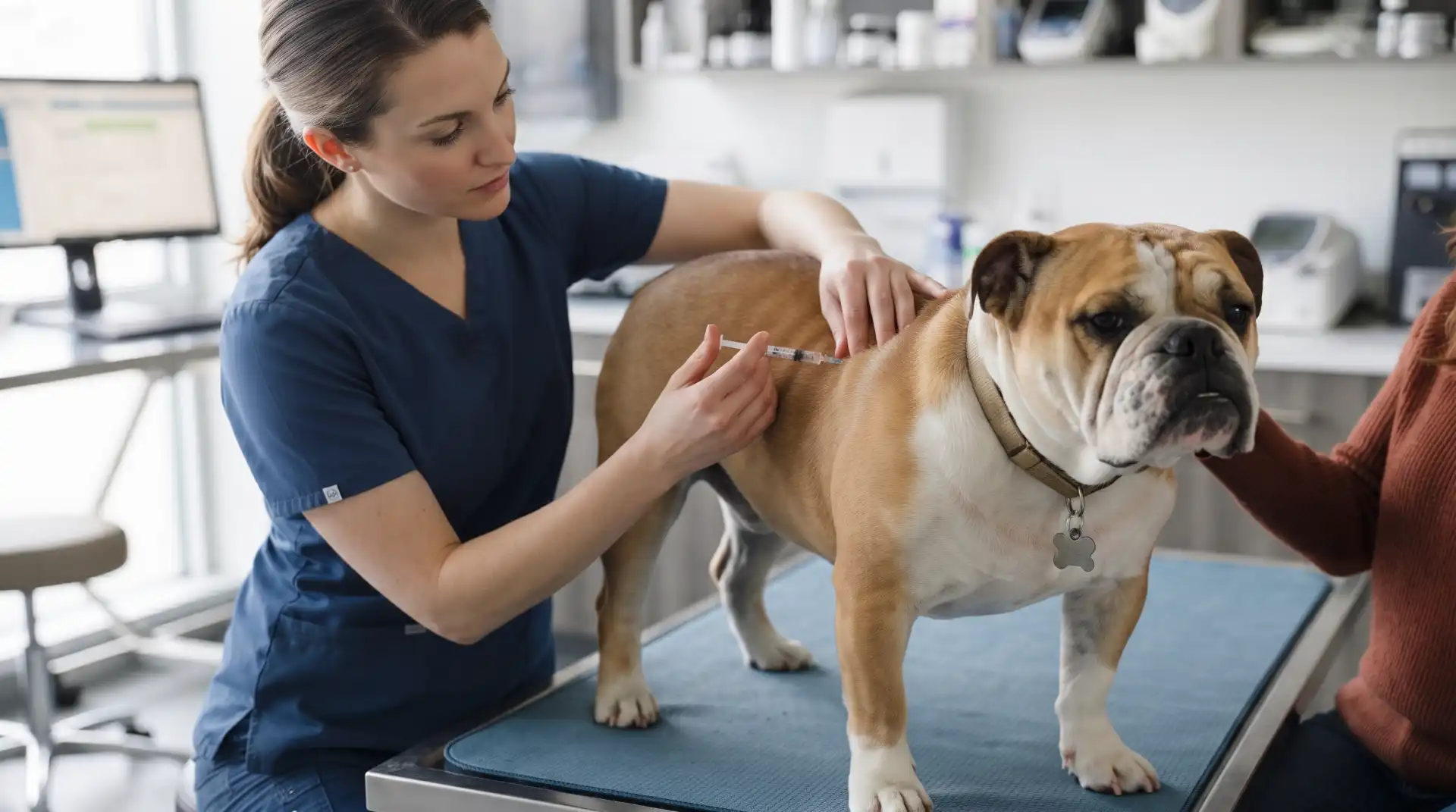
Vaccinations are one of the most important parts of preventive health care for Continental Bulldogs. They help protect dogs against infectious diseases that can cause severe illness, permanent complications, or death. Vaccination also plays a broader public health role because diseases such as rabies can spread between animals and people.
For U.S. owners, however, a Continental Bulldog vaccination schedule should not simply be a checklist copied from another dog. Age, previous vaccine history, geographic location, travel, boarding, outdoor activity, local disease patterns, and overall health can all influence what a veterinarian recommends.
The American Animal Hospital Association, commonly known as AAHA, divides canine vaccines into core and noncore categories. Core vaccines are generally recommended for all dogs unless there is a medical reason not to vaccinate. Other vaccines are selected according to an individual dog’s exposure risk.
One important change for owners to understand is that AAHA updated its canine vaccination guidance in 2024 to include leptospirosis among the core vaccines recommended for all dogs. That reflects growing concern about exposure in both urban and rural environments.
This Continental Bulldog vaccination guide explains the major vaccines U.S. owners may encounter, when puppy vaccines typically begin, how adult boosters work, what to consider when traveling or boarding, and what reactions owners should watch for afterward.
Why Vaccination Matters for Continental Bulldogs
Continental Bulldogs are muscular, active companion dogs that may spend time walking through neighborhoods, visiting parks, attending training classes, traveling with their families, or interacting with other dogs. Each of those activities can create opportunities for exposure to infectious disease.
Some pathogens spread through direct contact between dogs. Others can remain in the environment, travel through respiratory droplets, or spread through contaminated water, wildlife, rodents, urine, ticks, and other sources.
A dog does not have to live in a kennel or spend every day at a dog park to encounter disease. Parvovirus, for example, is particularly concerning because it can survive in contaminated environments. Leptospirosis can spread through water or soil contaminated with urine from infected wildlife or rodents. Rabies exposure can occur after contact with infected wildlife such as bats, raccoons, skunks, or foxes.
Vaccines work by preparing the dog’s immune system to recognize specific infectious agents. Depending on the vaccine and disease, immunization may reduce the risk of infection, decrease the severity of illness, or greatly lower the likelihood of serious complications.
Vaccination does not mean every Continental Bulldog needs every available canine vaccine. The goal is to provide appropriate protection without treating every dog as though it has the same lifestyle.
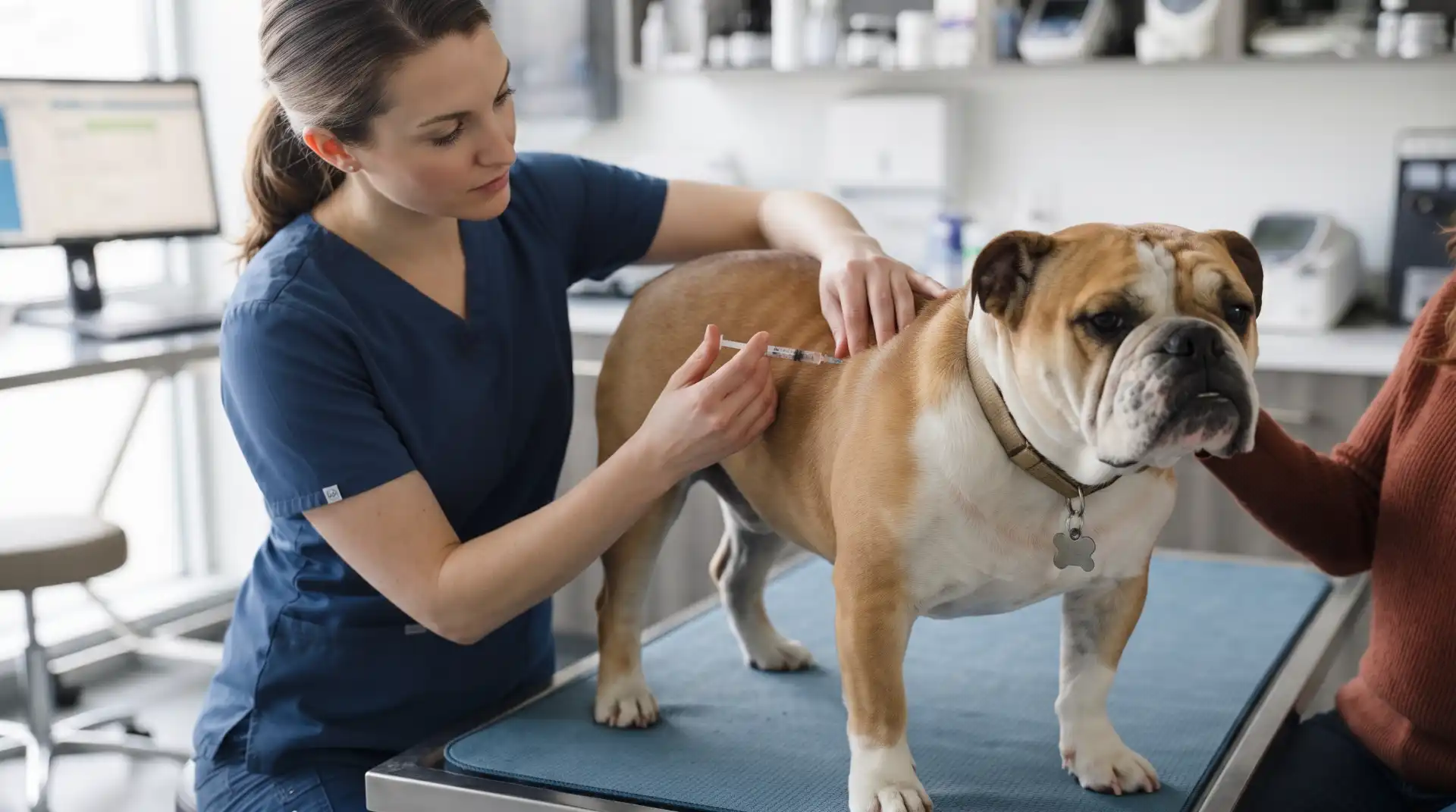
Core Vaccines for Continental Bulldogs
Under current AAHA guidance, core vaccines for dogs include protection against canine distemper virus, canine adenovirus, canine parvovirus, leptospirosis, and rabies. Parainfluenza may also be included in combination vaccines commonly used in veterinary practices.
Owners will often see abbreviations such as DAP, DA2P, DHPP, or DAPP on veterinary paperwork. The exact letters vary according to the vaccine product and included antigens, but these combination vaccines commonly protect against distemper, adenovirus, and parvovirus, with some also including parainfluenza.
Canine Distemper
Canine distemper is a highly contagious viral disease that can affect the respiratory, gastrointestinal, and nervous systems. Infected dogs may develop respiratory signs, digestive illness, fever, weakness, or serious neurological complications.
Puppies and unvaccinated dogs are particularly vulnerable. Because distemper can cause life-threatening disease and long-term neurological problems, vaccination remains a fundamental part of canine preventive care throughout the United States.
Canine Parvovirus
Parvovirus is especially dangerous for young puppies. It attacks rapidly dividing cells, particularly in the intestinal tract and immune system. Severe vomiting, diarrhea, dehydration, and systemic illness can develop quickly.
Parvovirus can also persist in contaminated environments, which is one reason veterinarians take puppy vaccination schedules so seriously. A Continental Bulldog puppy that appears healthy may still be vulnerable until its initial vaccine series has been completed and sufficient immunity has developed.
Owners should speak with their veterinarian about safe socialization during this period rather than keeping a puppy completely isolated. Appropriate early socialization remains important, but exposure should be managed carefully.
Canine Adenovirus
Canine adenovirus vaccination helps protect against infectious canine hepatitis caused by canine adenovirus type 1. Modern vaccines commonly use canine adenovirus type 2 to provide cross-protection while also helping protect against respiratory disease associated with CAV-2.
Infectious canine hepatitis can affect the liver and other organs and may cause serious illness. Because effective vaccination is widely available, adenovirus protection is routinely incorporated into combination canine vaccines.
Leptospirosis
Leptospirosis deserves particular attention from U.S. Continental Bulldog owners because recommendations have evolved. AAHA updated its canine vaccination guidelines in 2024 to classify leptospirosis vaccination as core for all dogs.
Leptospirosis is caused by bacteria that can spread through the urine of infected animals. Dogs may encounter contaminated water, wet soil, puddles, yards, parks, rodents, or wildlife. Exposure is therefore not limited to hunting dogs or dogs living on farms.
Urban and suburban dogs can also encounter rodents and contaminated environments. The disease may damage the kidneys and liver and can become severe. Leptospirosis is also zoonotic, meaning infected animals can potentially transmit the bacteria to people.
The commonly used four-serovar leptospirosis vaccine generally requires an initial two-dose series given several weeks apart. Protection then requires regular revaccination, typically on an annual basis according to current guidelines and product instructions.
Rabies
Rabies is nearly always fatal once clinical disease develops, which is why prevention receives such strong public health attention. Dogs can become exposed through bites or contact with infected mammals, particularly wildlife.
Rabies vaccination requirements in the United States are established through state and local laws rather than one identical national schedule. The timing of boosters can also depend on whether the veterinarian uses a vaccine labeled for one-year or three-year duration.
The Centers for Disease Control and Prevention advises veterinarians to vaccinate dogs against rabies according to applicable local laws. Owners should therefore follow the schedule provided by their veterinarian and maintain documentation of each rabies vaccination.
Rabies certificates may be needed for licensing, boarding, travel, housing, bite investigations, or other situations. Letting vaccination lapse can create legal and public health complications in addition to leaving the dog less protected.
Vaccinating a Continental Bulldog Puppy
A Continental Bulldog puppy usually begins receiving core combination vaccines during the first months of life. Puppies require multiple doses because antibodies received from their mother can interfere with vaccine response early in life.
Those maternal antibodies are useful because they provide temporary protection after birth. The difficulty is that they decline at different rates from one puppy to another. There can be a period when maternal antibodies are too low to fully protect the puppy against disease but still high enough to reduce the effectiveness of a vaccine.
This is why veterinarians use a series rather than relying on a single early puppy injection.
AAHA guidance generally recommends at least three doses of the distemper, adenovirus, and parvovirus combination vaccine between approximately six and sixteen weeks of age, with doses separated by roughly two to four weeks. Individual circumstances can lead a veterinarian to continue the series beyond sixteen weeks in higher-risk situations.
Leptospirosis vaccination typically begins later than the earliest puppy combination vaccines. Current AAHA guidance describes an initial two-dose series administered two to four weeks apart, beginning at about twelve weeks of age.
Rabies is normally given according to state law, vaccine labeling, and the veterinarian’s schedule. The CDC notes that most dogs should not receive rabies vaccination before twelve weeks of age, although exact timing depends on the licensed product and local requirements.
A puppy’s vaccine appointment is also an opportunity for the veterinarian to evaluate growth, weight, skin, breathing, joints, digestion, parasite prevention, nutrition, and general development.
Our Continental Bulldog puppy care guide for the first six months provides additional information about early development, feeding, socialization, and routine veterinary care.
When Can a Vaccinated Puppy Safely Go Outside?
This is one of the most common questions new owners ask. The answer depends on the puppy’s vaccination progress, local disease prevalence, and the type of environment involved.
Socialization should begin during puppyhood, but high-risk exposure should be avoided before adequate protection develops. A carefully supervised meeting with healthy, appropriately vaccinated dogs in a clean private environment may present a very different risk from walking through a heavily used dog park where vaccination histories are unknown.
Veterinarians familiar with local parvovirus activity can provide more useful guidance than a universal online rule.
Until the puppy’s initial vaccine series is complete, owners may need to avoid locations with substantial unknown-dog traffic, shared water bowls, contaminated feces, or areas where infectious disease outbreaks have been reported.
At the same time, safe exposure to people, sounds, surfaces, handling, car travel, household activities, and carefully selected dogs can support healthy behavioral development.
Adult Continental Bulldog Vaccination Schedule
Finishing puppy vaccinations does not mean vaccination ends permanently. Adult dogs need follow-up immunization according to the vaccine, product label, legal requirements, and individual risk.
For distemper, adenovirus, and parvovirus, AAHA generally recommends a booster within one year after completion of the initial series. Subsequent boosters are commonly administered at three-year intervals.
Leptospirosis differs because immunity requires more frequent reinforcement. After the initial two-dose series and subsequent booster, ongoing vaccination is generally recommended annually.
Rabies revaccination follows state or local law and the duration of the vaccine that was administered. Some dogs receive a one-year vaccine while others receive a vaccine labeled for three years.
Noncore vaccines may require annual boosters or schedules determined by the specific product. This is one reason an annual wellness visit remains useful even when a dog is not due for every core vaccine that year.
Lifestyle Vaccines for Continental Bulldogs
Noncore does not mean unimportant. It means that the vaccine is selected according to exposure risk rather than automatically recommended for every dog in every region.
A Continental Bulldog that frequently attends daycare may need a different plan from a dog living quietly at home. A Bulldog hiking in tick-heavy areas of New England may face different risks from a dog living in a dry region of the Southwest.
Bordetella
Bordetella bronchiseptica is one of several organisms associated with canine infectious respiratory disease, often informally called kennel cough.
Bordetella vaccination is commonly recommended for dogs that regularly interact with groups of other dogs. Boarding kennels, daycare facilities, training classes, grooming businesses, dog shows, shelters, and similar environments may increase exposure.
Some facilities require proof of Bordetella vaccination before admitting a dog. Owners should check requirements well before travel because a facility may specify how recently vaccination must have been administered.
Canine Influenza
Canine influenza can spread rapidly where dogs congregate. Vaccination may be recommended for dogs that frequently visit boarding facilities, daycare centers, shows, training events, or other social environments.
Risk can change over time as outbreaks occur in different regions. A veterinarian can consider local disease activity when deciding whether canine influenza vaccination makes sense for a particular Continental Bulldog.
Lyme Disease
Lyme disease is transmitted primarily by infected black-legged ticks. Vaccination may be recommended for dogs living in or frequently traveling to areas where Lyme disease is common.
Vaccination does not replace tick prevention. A comprehensive strategy may include veterinary-approved tick control, regular body checks after outdoor activities, habitat awareness, and vaccination when appropriate.
Owners who hike, camp, hunt, or spend significant time in wooded or brushy environments should discuss geographic exposure with their veterinarian.
Rattlesnake Toxoid
A Western diamondback rattlesnake toxoid vaccine is available and may occasionally be discussed for dogs with substantial exposure risk in regions where venomous snakes are common.
It is not a substitute for emergency veterinary treatment after a snakebite. Owners should discuss the potential benefits and limitations with a veterinarian familiar with their region.
Does a Continental Bulldog Need Every Lifestyle Vaccine?
No. Vaccination should reflect the individual dog’s actual risk.
A veterinarian may ask whether your Continental Bulldog goes to dog parks, stays at boarding facilities, attends daycare, participates in shows, visits grooming salons, travels across state lines, hikes, swims in natural water, encounters ticks, lives around rodents, or spends time around wildlife.
Those questions help determine which vaccines provide meaningful value.
Lifestyle also changes. A dog that rarely left home as a young adult may begin traveling with its owner. A family may move from Arizona to Pennsylvania. A new daycare schedule may increase contact with other dogs. Annual reassessment helps keep the vaccine plan aligned with current exposure rather than the dog’s lifestyle several years ago.
Vaccines for Senior Continental Bulldogs
Age alone does not automatically eliminate the need for vaccination. Senior Continental Bulldogs can still encounter infectious diseases, and older dogs may have less physiological reserve to cope with serious illness.
At the same time, senior dogs are more likely to develop chronic medical conditions or take long-term medications. A veterinarian may therefore adjust timing according to health status, treatment plans, previous reactions, and risk of exposure.
An older dog with significant illness should receive an individualized medical assessment rather than having vaccines automatically administered or automatically discontinued because of age.
What If Your Continental Bulldog Has an Unknown Vaccine History?
Rescued, adopted, or rehomed dogs sometimes arrive without reliable vaccination paperwork. Verbal claims that a dog “had all its shots” may not provide enough information for a veterinarian to determine which vaccines were given, when they were administered, or whether the initial series was completed correctly.
AAHA notes that when vaccination history and immune status are unknown, the benefits of appropriately vaccinating generally outweigh the risks for most dogs.
Do not invent dates for records or assume that a missing certificate can be reconstructed from memory. Bring every available medical record to the veterinarian and allow the clinic to determine the safest catch-up approach.
Can Vaccine Titers Replace Boosters?
Antibody titer testing can sometimes provide useful information about immunity to certain diseases such as distemper, adenovirus, and parvovirus. However, titers are not an automatic replacement for every vaccine.
The meaning of a titer depends on the disease, laboratory test, immune response being measured, and reason for testing. Some infectious diseases do not have the same relationship between measurable circulating antibodies and protection.
Rabies is particularly important because legal vaccination requirements generally cannot simply be replaced by an owner’s preference for antibody testing. Even if a dog has measurable rabies antibodies, state or local law may still require vaccination on schedule.
Owners interested in titers should discuss them with their veterinarian rather than ordering testing solely to avoid routine vaccination.
Possible Reactions After Vaccination
Most dogs tolerate vaccination well. Mild effects can occur as the immune system responds.
A Continental Bulldog may be quieter than usual for a day, have a slightly reduced appetite, develop mild tenderness at the injection site, or experience a small localized swelling. These effects generally resolve within a short period.
More serious allergic reactions are uncommon but require prompt attention. Warning signs can include repeated vomiting, diarrhea, facial swelling, hives, difficulty breathing, weakness, or collapse.
If your Continental Bulldog develops breathing difficulty, collapses, or shows another severe reaction after vaccination, seek veterinary care immediately.
Owners should also tell the veterinarian about any previous vaccine reaction before future doses are administered. A prior reaction does not necessarily mean the dog can never be vaccinated again. The veterinarian may adjust timing, vaccine selection, observation, or other aspects of the plan.
Should All Vaccines Be Given During One Visit?
Multiple canine vaccines can be administered during the same veterinary visit, and AAHA states that there is no evidence that properly administered concurrent vaccines overwhelm a dog’s immune system.
However, the veterinarian may choose to separate vaccines in some individual patients, particularly when there is a history of adverse reactions or another medical consideration.
Do not reduce vaccine doses because a Continental Bulldog is smaller than another dog. Licensed canine vaccines are administered according to the manufacturer’s dosing instructions rather than scaled down according to body weight.
Vaccines, Boarding, Travel, and Dog Activities
Vaccination records become especially important when a Continental Bulldog travels or participates in activities involving other dogs.
Boarding facilities, daycare centers, training facilities, and groomers may require proof of rabies, Bordetella, or other vaccines. Requirements vary by business, and some facilities require vaccination a certain number of days before arrival.
Air travel and international travel can involve additional health documentation. Dogs returning to the United States after visiting certain countries may face CDC requirements based on rabies risk and where the dog was vaccinated.
As of 2026, CDC requirements for dogs entering or returning to the United States vary according to the countries visited during the previous six months. Owners planning international travel should check current rules well before departure because documentation may need to be completed in advance.
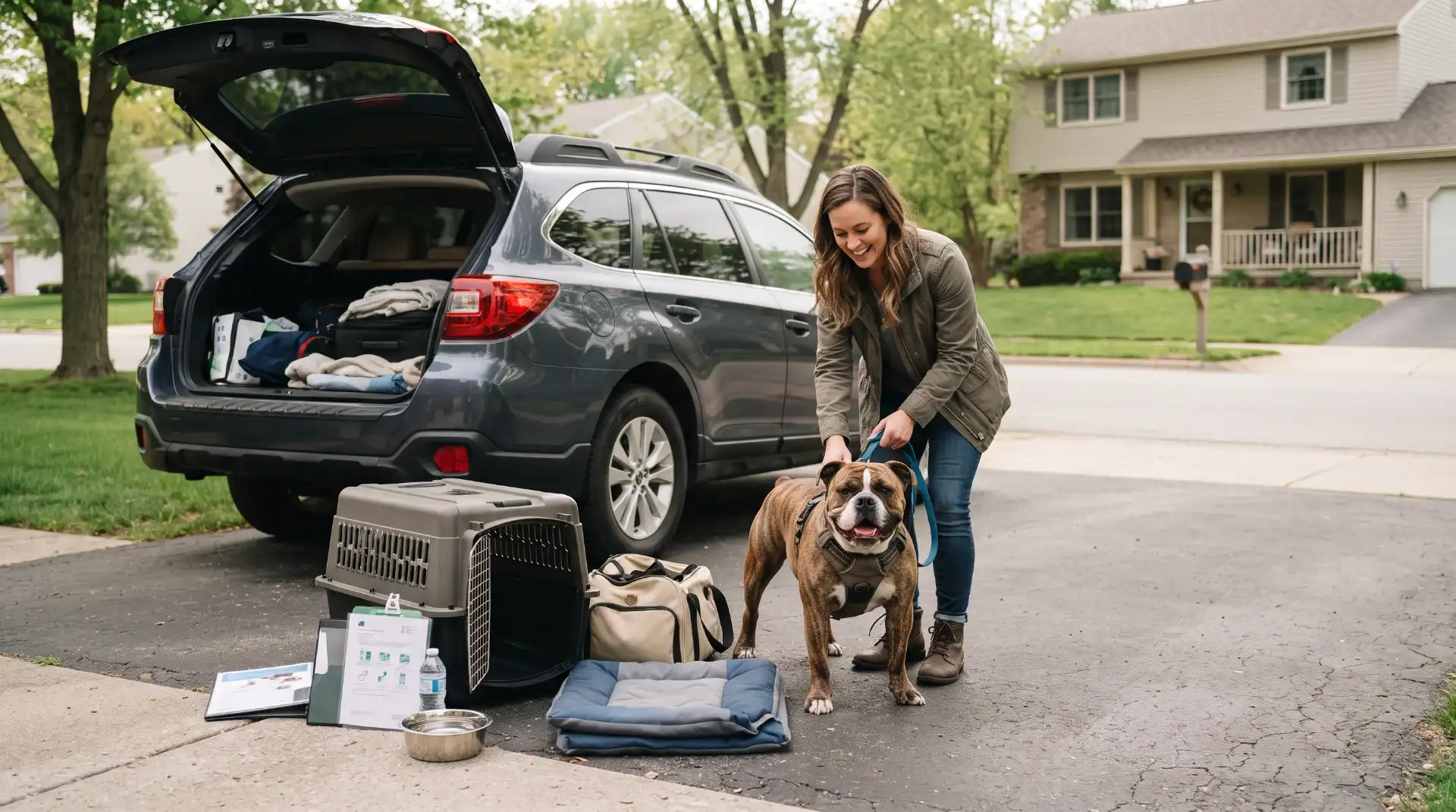
For ordinary U.S. road trips, carrying a digital and paper copy of your Continental Bulldog’s vaccination records can still be useful. Records may be needed if you unexpectedly require boarding, veterinary treatment, or proof of rabies vaccination.
Our Continental Bulldog road trip guide can help owners prepare for safer travel with their dogs.
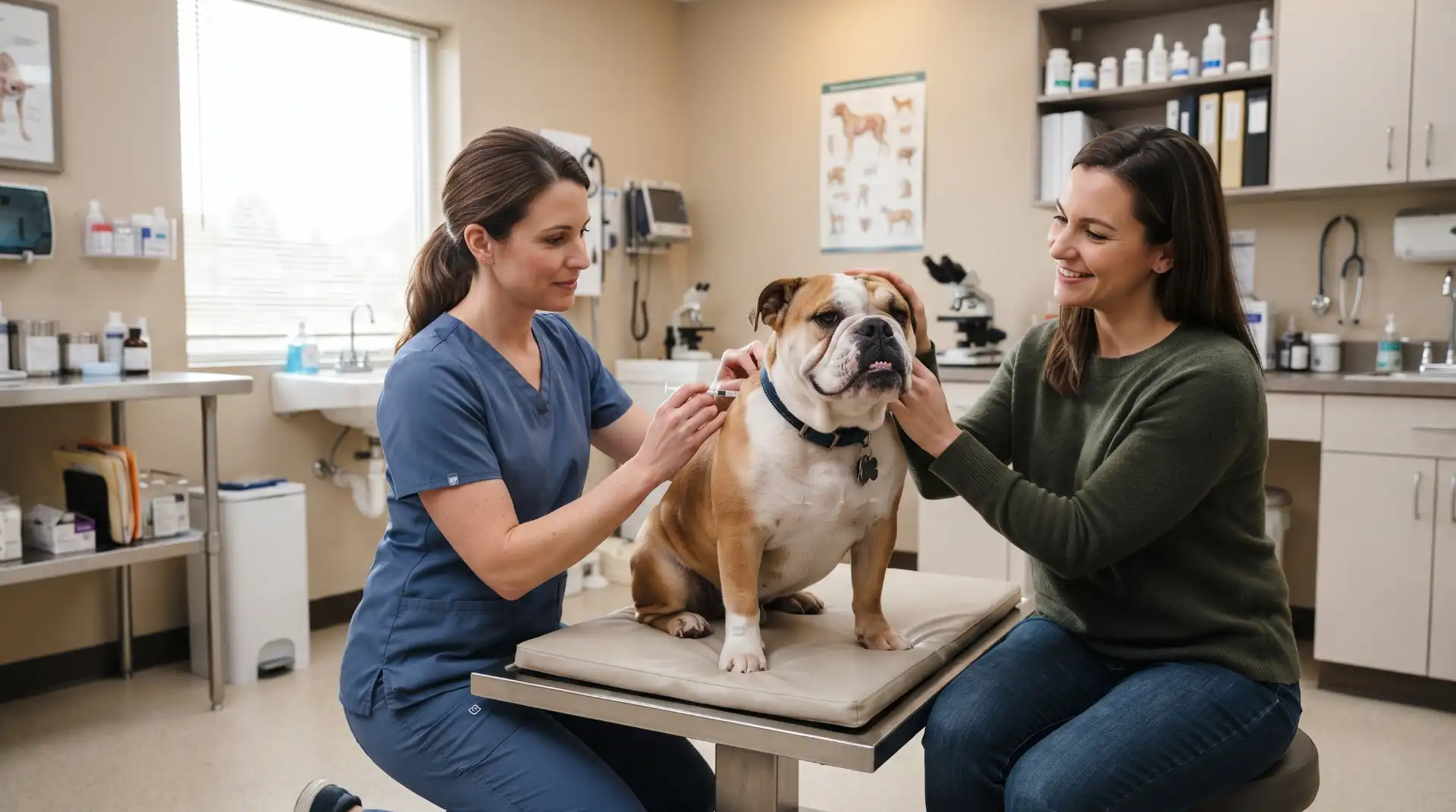
Keeping Accurate Vaccination Records
Good recordkeeping makes preventive care much easier.
Keep documentation showing the vaccine name, date administered, due date, veterinary clinic, and rabies certificate information. Many veterinary clinics provide online portals or automated reminders, but owners should maintain their own copy as well.
If you move to another state or change veterinarians, transfer the complete medical record rather than relying on a handwritten list.
Rabies documentation deserves special attention. Keep the official certificate available because it may be required for licensing, travel, boarding, housing, or public health investigations.
Vaccination and Pet Insurance
Routine vaccination is usually considered preventive or wellness care rather than treatment for an unexpected accident or illness. Standard pet insurance policies may therefore exclude routine vaccinations unless the owner purchases an optional wellness package.
This distinction matters when budgeting for veterinary care. Owners should review policy terms rather than assuming that every preventive appointment will be reimbursed.
Our Continental Bulldog pet insurance guide explains how wellness benefits, accident coverage, illness coverage, exclusions, and reimbursement can differ among U.S. policies.
Questions to Ask Your Veterinarian
A productive vaccination discussion should focus on your individual dog’s circumstances rather than simply asking which vaccines are available.
Tell the veterinarian where your Continental Bulldog lives, where you expect to travel, whether the dog boards or attends daycare, how often it interacts with unfamiliar dogs, whether it hikes or camps, and whether ticks, wildlife, or rodents are common around your home.
Also provide a complete medical history, including previous vaccine reactions, medications, allergies, chronic diseases, and recent illness.
The veterinarian can then create a schedule based on current risk instead of applying an identical protocol to every dog.
Common Vaccination Mistakes Continental Bulldog Owners Should Avoid
One common mistake is assuming that an indoor dog has no exposure risk. Even dogs that spend most of their time inside go outdoors, visit veterinary clinics, encounter wildlife, or travel.
Another mistake is allowing vaccines to expire simply because the dog appears healthy. Vaccines are preventive. Waiting until a disease becomes a local problem may leave insufficient time to complete an initial multi-dose series.
Owners should also avoid relying on online vaccine schedules as a substitute for veterinary guidance. Geographic risk differs widely across the United States.
Finally, do not assume that “noncore” means unnecessary. Bordetella or canine influenza may be extremely relevant to a dog attending daycare several times each week even though those vaccines are not universally recommended for every dog.
A Lifelong Vaccination Plan for Your Continental Bulldog
Vaccination begins during puppyhood, but preventive care continues throughout a Continental Bulldog’s life.
Young puppies need a carefully timed initial series because maternal antibodies gradually decline. Adult dogs require boosters at intervals appropriate for each vaccine. Senior dogs still need individualized protection based on their health and exposure risk.
Current U.S. guidance identifies distemper, adenovirus, parvovirus, leptospirosis, and rabies among the core protections owners should discuss with their veterinarian. Other vaccines, including Bordetella, canine influenza, Lyme disease, and rattlesnake toxoid, should be evaluated according to lifestyle and geography.
The most effective approach is not giving every vaccine available or avoiding vaccines unnecessarily. It is developing an individualized plan with a veterinarian who understands your Continental Bulldog’s age, medical history, environment, travel, and daily routine.
Keep accurate records, review vaccination needs at routine wellness examinations, and tell your veterinarian whenever your dog’s lifestyle changes. With appropriate preventive care, vaccination can help protect your Continental Bulldog from serious infectious diseases throughout puppyhood, adulthood, and the senior years.
This article provides general educational information for Continental Bulldog owners in the United States. It does not replace veterinary diagnosis, treatment, vaccination recommendations, or state and local rabies requirements. Consult a licensed veterinarian for guidance specific to your dog.
“`