
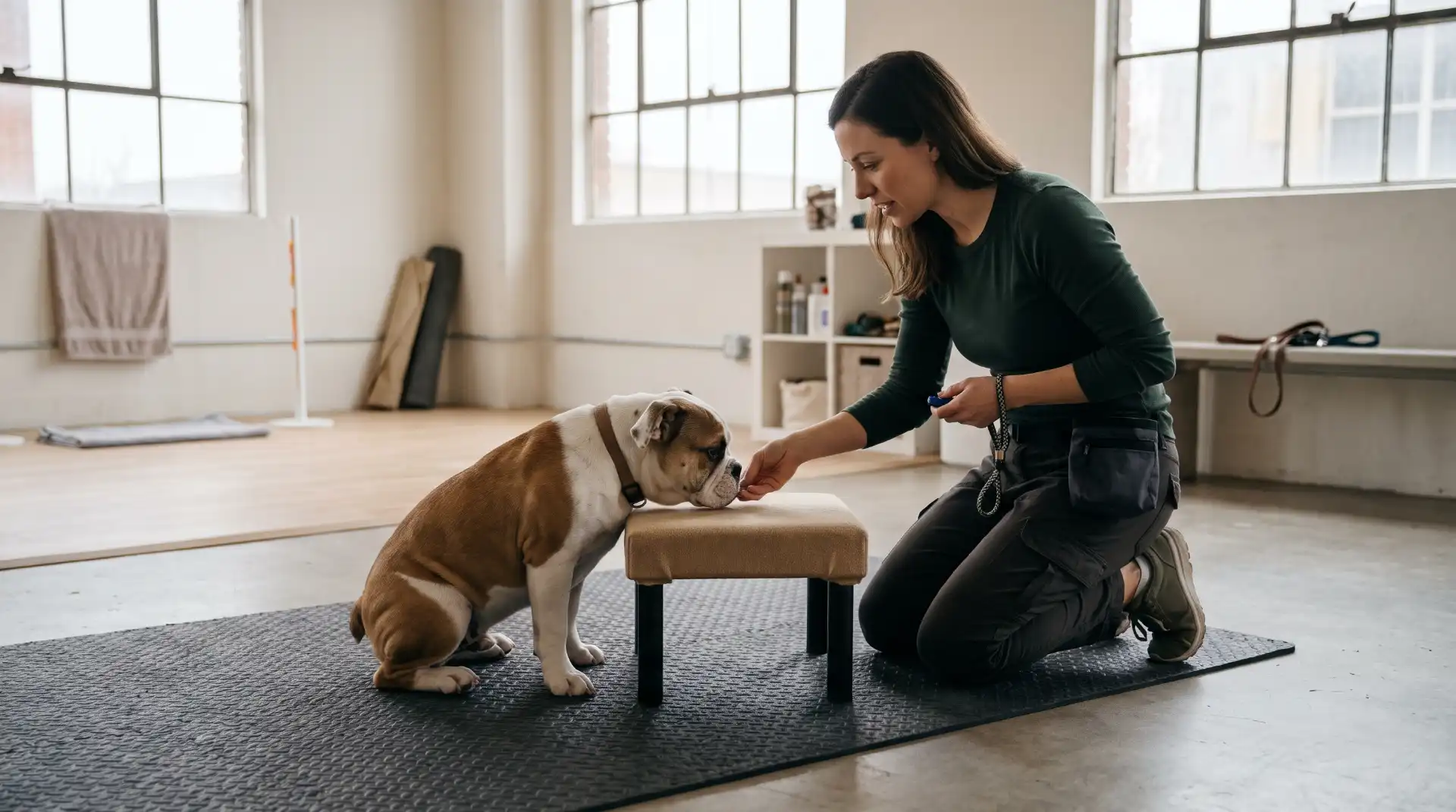
Dog training has changed considerably over the past several decades. Traditional approaches often emphasized obedience, physical control, and teaching dogs to tolerate whatever their owners or handlers required. Commands such as sit, stay, heel, and come remain important foundations of responsible dog ownership, but modern canine training increasingly recognizes that successful training involves much more than getting a dog to follow instructions.
Today’s dog training professionals, veterinarians, animal behavior specialists, and informed pet owners are paying greater attention to canine emotions, communication, and willingness to participate. Instead of concentrating exclusively on whether a dog performs a requested behavior, they are also considering how the animal feels during the interaction.
This shift has helped popularize three closely connected concepts: cooperative care, consent-based handling, and fear-free veterinary visits. Together, these approaches represent a more thoughtful way of preparing dogs for everyday handling, grooming, medical examinations, medication administration, nail trimming, ear cleaning, and other experiences that can cause discomfort or anxiety.
Cooperative care dog training teaches animals to participate voluntarily in routine care procedures through gradual learning and positive reinforcement. Consent-based handling builds on that foundation by giving dogs predictable opportunities to communicate whether they are comfortable continuing. Fear-free veterinary care applies similar principles in professional medical environments, where reducing fear, anxiety, and stress can make examinations safer and more manageable.
These methods do not mean allowing dogs to make every decision or avoiding necessary medical treatment. Rather, they encourage owners and professionals to recognize canine communication, develop trust, and make care procedures as comfortable as reasonably possible.
For American dog owners, this development is particularly relevant because routine veterinary appointments, grooming services, boarding facilities, daycare programs, and other animal care environments expose dogs to unfamiliar people, equipment, sounds, and physical handling. Preparing a dog for these experiences can improve everyday welfare while helping prevent situations in which fear develops into defensive behavior.
The new generation of dog training is therefore not simply about teaching better manners. It is about developing dogs that can approach necessary care with greater confidence, participate more comfortably, and maintain stronger relationships with the people responsible for their well-being.
1. Understanding Cooperative Care Dog Training
Cooperative care is a training approach that prepares dogs to participate more willingly in activities involving their physical health and daily maintenance. Rather than physically positioning an animal and expecting it to remain still, owners teach specific behaviors that make routine procedures more predictable and comfortable.
The central idea is that dogs can learn to participate actively in their own care. They can approach a grooming tool, place their chin on a support, offer a paw, stand on a weighing platform, or remain in a comfortable position while someone examines their ears.
These behaviors are developed through small training steps, positive reinforcement, and opportunities for the dog to pause or disengage.
For example, consider a dog that becomes uncomfortable whenever its owner attempts to trim its nails. A traditional approach might involve holding the dog firmly while another person trims each nail. Although this may accomplish the immediate task, repeated experiences can increase anxiety and make future nail trims progressively harder.
A cooperative care approach begins differently. The owner first teaches the dog that seeing the nail clippers predicts something enjoyable. The dog receives treats for voluntarily approaching the equipment. Later, the owner rewards the dog for allowing the clippers to approach a paw, briefly touching one nail, and eventually accepting a small amount of trimming.
Each stage is introduced gradually, and the owner watches for signs that the dog remains comfortable.
The objective is not simply to make the dog tolerate handling. It is to develop an experience in which the animal understands what is happening and has opportunities to participate.
How Cooperative Care Differs From Traditional Handling
Traditional handling often prioritizes completing a procedure. If a dog struggles during an examination, a handler may increase physical restraint to finish the task. In some circumstances, restraint is necessary for safety or urgent medical treatment, but repeatedly relying on it for routine activities can create negative associations.
Cooperative care places greater emphasis on preparation and communication.
A dog that has learned to voluntarily rest its chin on a towel may be more comfortable receiving an eye examination when the veterinarian uses that familiar position. A dog that has practiced standing on a scale at home may be less concerned when asked to step onto a veterinary weighing platform.
The difference is that the animal has been taught what to expect before the procedure begins.
This approach also encourages owners to recognize that behavioral cooperation and physical restraint are not the same thing. A dog may remain motionless because it feels comfortable, but it may also remain motionless because it is frightened. Looking only at whether the animal moves can therefore provide an incomplete understanding of its emotional state.
Cooperative care requires attention to body language, environmental conditions, and the dog’s willingness to continue.
Why Cooperative Care Is Becoming More Important
Modern veterinary and animal behavior professionals increasingly recognize that emotional welfare is an important part of overall animal health.
An unpleasant grooming experience can affect future handling. A frightening veterinary examination can make a dog more reluctant to enter the clinic. Repeated experiences involving unexpected restraint may contribute to defensive behaviors, including growling, snapping, and attempts to escape.
Cooperative care offers a proactive alternative.
When dogs learn that handling can be predictable and rewarding, they may become more comfortable with procedures that previously caused distress. This can also help owners identify discomfort earlier because they become more familiar with the dog’s normal responses to touch.
The benefits are not limited to veterinary appointments. Cooperative care can improve brushing, bathing, dental hygiene, medication administration, harness fitting, and routine physical inspections.
For dogs living in busy American households, these skills can make everyday care easier for everyone involved.
2. What Consent-Based Dog Handling Really Means
Consent-based handling is closely connected to cooperative care, but it places particular emphasis on recognizing a dog’s communication during an interaction.
Dogs cannot provide verbal consent in the same way humans do. However, they communicate through posture, facial expressions, movement, vocalizations, and their willingness to approach or remain engaged.
A consent-based approach uses these signals to help determine whether a dog is comfortable continuing.
For example, an owner might invite a dog to place its chin on a cushion before beginning a gentle ear inspection. If the dog maintains the position and appears relaxed, the owner can proceed with a brief examination. If the dog lifts its head and moves away, that behavior communicates that the interaction should pause.
This is sometimes described as an opt-in behavior or start-button behavior.
The important distinction is that the dog is not merely being distracted while handling continues. Its participation is part of the training process.
Understanding Start-Button Behaviors
A start-button behavior is a specific action that signals a dog’s readiness to participate in a procedure.
Common examples include:
-
Resting the chin on a towel or padded surface.
-
Standing on a designated mat.
-
Placing the front paws on a stable platform.
-
Offering a paw for inspection.
-
Remaining in a comfortable standing position.
Suppose an owner wants to clean a dog’s ears. Instead of immediately reaching toward the animal’s head, the owner first teaches the dog to place its chin on a folded towel.
At the beginning, the dog receives a reward for simply approaching the towel. Later, it receives reinforcement for briefly resting its chin on the surface. Once this behavior becomes familiar, the owner can introduce a hand approaching the ear.
Eventually, the dog may learn that maintaining the chin-rest behavior allows a short ear inspection to take place.
If the dog lifts its head, the procedure stops.
This gives the dog a predictable way to communicate that it needs a break. It also gives the owner an opportunity to identify discomfort before the animal becomes overwhelmed.
However, a start-button behavior must be taught carefully. If an owner ignores repeated attempts to disengage, the behavior loses its value as a communication signal. The dog may stop participating altogether because it learns that its signals do not affect what happens next.
Learning to Recognize Canine Body Language
Consent-based handling depends on understanding more than obvious signs of fear.
A dog does not need to growl, bark, or attempt to bite to communicate discomfort. Many dogs display subtle signs long before more dramatic behaviors appear.
Some common indicators include:
-
Turning the head away from a person’s hand.
-
Repeated lip licking when no food is present.
-
Yawning during handling.
-
Showing the whites of the eyes.
-
Lowering the body or shifting weight backward.
-
Flattening the ears.
-
Tucking the tail.
-
Suddenly becoming unusually still.
-
Attempting to move behind the owner.
These signals must be interpreted in context. A single yawn does not automatically mean that a dog is frightened, and some dogs naturally display certain behaviors more frequently than others.
The important consideration is whether several changes appear together or whether the dog’s behavior changes when a particular handling action begins.
For instance, a dog may happily accept petting along its back but become tense when someone touches its hind legs. That difference may indicate sensitivity, uncertainty, or physical discomfort.
Owners should avoid forcing the interaction to determine whether the dog will eventually tolerate it. Instead, they should reduce pressure, stop when appropriate, and consider whether a veterinary examination is needed.
Why Ignoring a Dog’s Signals Can Create Problems
Dogs learn from repeated experiences.
If a dog consistently communicates discomfort but people continue touching, restraining, or manipulating it, the animal may eventually develop stronger defensive responses.
Some dogs begin avoiding the person involved. Others hide when they see grooming equipment. A dog that previously accepted nail trimming may begin pulling its paws away, growling, or attempting to escape.
These behaviors should not automatically be labeled stubbornness or disobedience.
They may represent learned attempts to avoid an unpleasant experience.
Respecting a dog’s communication can help prevent escalation. It also creates opportunities to rebuild positive associations through gradual training.
Importantly, consent-based handling does not mean a dog has complete control over every medical decision. Owners and veterinarians remain responsible for providing necessary care. The goal is to preserve as much choice and comfort as reasonably possible while maintaining safety.
3. Positive Reinforcement Is the Foundation of Modern Cooperative Care
Positive reinforcement is one of the most important tools used in cooperative care dog training.
It involves providing something the dog values immediately after a desired behavior, increasing the likelihood that the behavior will happen again.
Rewards can include food, praise, toys, play, access to an enjoyable activity, or another form of reinforcement that motivates the individual dog.
Food is particularly useful during early cooperative care exercises because it can be delivered quickly and consistently.
For example, when introducing a dog to a grooming brush, an owner can reward the animal for looking at the brush, approaching it, and eventually allowing a brief touch.
The process should be divided into small steps. If the dog becomes uncomfortable, the owner returns to an easier stage rather than increasing pressure.
Choosing the Right Rewards
Not every dog responds to the same rewards.
Some dogs are strongly motivated by small pieces of cooked chicken, while others prefer commercial training treats, soft food, toys, or verbal praise.
The best reward is one that the dog genuinely values in the specific situation.
A dog that happily accepts dry kibble in the living room may ignore it inside a busy veterinary clinic. In that situation, higher-value rewards may be more effective.
Owners should also consider portion size. Training rewards should be small enough to avoid excessive calorie consumption, particularly when several short sessions take place throughout the day.
Dogs with food allergies, dietary restrictions, or medical conditions may require veterinarian-approved alternatives.
Breaking Difficult Procedures Into Smaller Steps
One of the most useful principles in cooperative care is dividing a challenging procedure into manageable components.
Consider introducing a dog to a stethoscope.
The owner or trainer might begin by placing the instrument on the floor at a comfortable distance. The dog receives a reward for calmly looking at it.
The next stage involves allowing the dog to approach and investigate the equipment. Later, the trainer may reward the dog for remaining relaxed while the stethoscope is picked up.
Only after these steps become comfortable should the equipment approach the dog’s body.
The same method can be applied to thermometers, examination lights, grooming tools, nail clippers, and other objects associated with routine care.
This process helps dogs develop familiarity instead of repeatedly encountering equipment without preparation.
Avoiding the Mistake of Moving Too Quickly
Owners sometimes become enthusiastic when a dog makes progress and advance through several training steps too quickly.
For example, a dog may accept having one paw touched during a training session. The owner then assumes that the animal is ready for a complete nail trim.
However, accepting brief paw contact does not necessarily mean the dog is comfortable with prolonged handling, pressure, or the sound of nail clippers.
Each new element should be introduced separately whenever possible.
A useful approach is to end a session while the dog is still comfortable rather than continuing until it becomes restless.
Consistency is more important than speed.
4. Preparing Dogs for Grooming Through Cooperative Care
Grooming is one of the most practical applications of cooperative care because it involves repeated physical contact.
Brushing, bathing, drying, nail trimming, ear inspections, and facial cleaning can all become difficult when a dog associates these activities with discomfort.
Owners can reduce many problems by introducing grooming equipment gradually and making routine care predictable.
Teaching a Dog to Accept Brushing
Start by allowing the dog to investigate the brush without using it.
Place the brush nearby and reward calm interest. Once the dog is comfortable, briefly touch the brush to an area that it generally enjoys having handled.
For some dogs, the shoulder or upper back is a suitable starting point.
Use one gentle stroke and immediately reward the dog. Gradually increase the number of strokes as the animal becomes more comfortable.
Pay attention to pressure and equipment selection. A brush that is too firm can irritate sensitive skin, especially in dogs with short coats or existing dermatological problems.
For additional breed-specific grooming advice, readers can explore the existing guide on caring for a Continental Bulldog’s health and grooming needs.
Making Nail Trimming Less Stressful
Nail trimming is a common challenge for dog owners because the procedure involves sensitive body parts and unfamiliar equipment.
Some dogs dislike having their feet handled. Others become uncomfortable when they hear the sound of clippers or feel pressure against a nail.
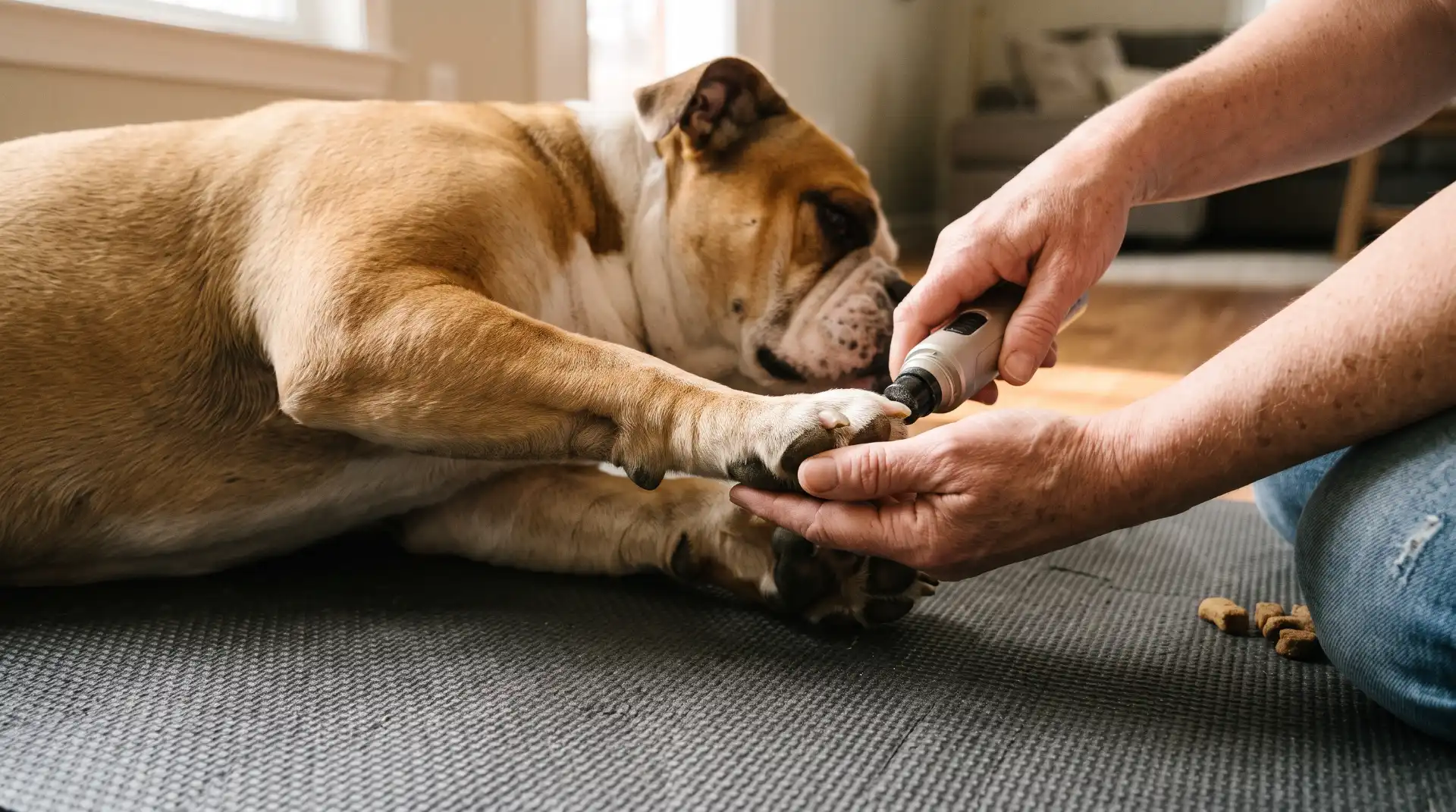
Start by rewarding the dog for allowing brief paw contact. Do not immediately attempt to hold the paw for an extended period.
Next, introduce the clippers at a comfortable distance. Reward the dog for looking at them, approaching them, and remaining relaxed while they are handled.
Once the dog is comfortable, briefly touch the clipper to a nail without cutting.
Only progress to trimming when the dog can comfortably tolerate the earlier stages.
Owners who are uncertain about nail anatomy should ask a veterinarian or professional groomer for guidance. Cutting into the quick can cause pain and bleeding, potentially creating a negative association that makes future nail care more difficult.
Cooperative Bathing and Drying
Bathing introduces several potential stressors, including running water, slippery surfaces, unfamiliar smells, and the sound of a shower or dryer.
A dog that dislikes baths may benefit from learning to stand on a nonslip mat and receive rewards while gradually becoming familiar with the bathing environment.
Begin with the empty bathtub or bathing area. Allow the dog to investigate it without immediately turning on the water.
Later, introduce small amounts of water while rewarding relaxed behavior.
Drying should be introduced separately. Some dogs tolerate towels but dislike electric dryers. Others become uncomfortable with air movement near their faces.
Owners should never assume that accepting a bath means accepting every part of the drying process.
The same gradual approach can be used for ear cleaning, facial fold maintenance, and other routine hygiene activities.
5. Fear-Free Veterinary Visits: Changing the Experience of Medical Care
For many dogs, veterinary appointments are among the most challenging handling experiences they encounter.
Even a friendly dog that enjoys meeting strangers may become uncomfortable in a veterinary clinic.
The environment contains unfamiliar smells, barking animals, hard floors, examination tables, medical equipment, and people who may need to touch sensitive parts of the dog’s body.
Some procedures also involve discomfort, restraint, or temporary separation from the owner.
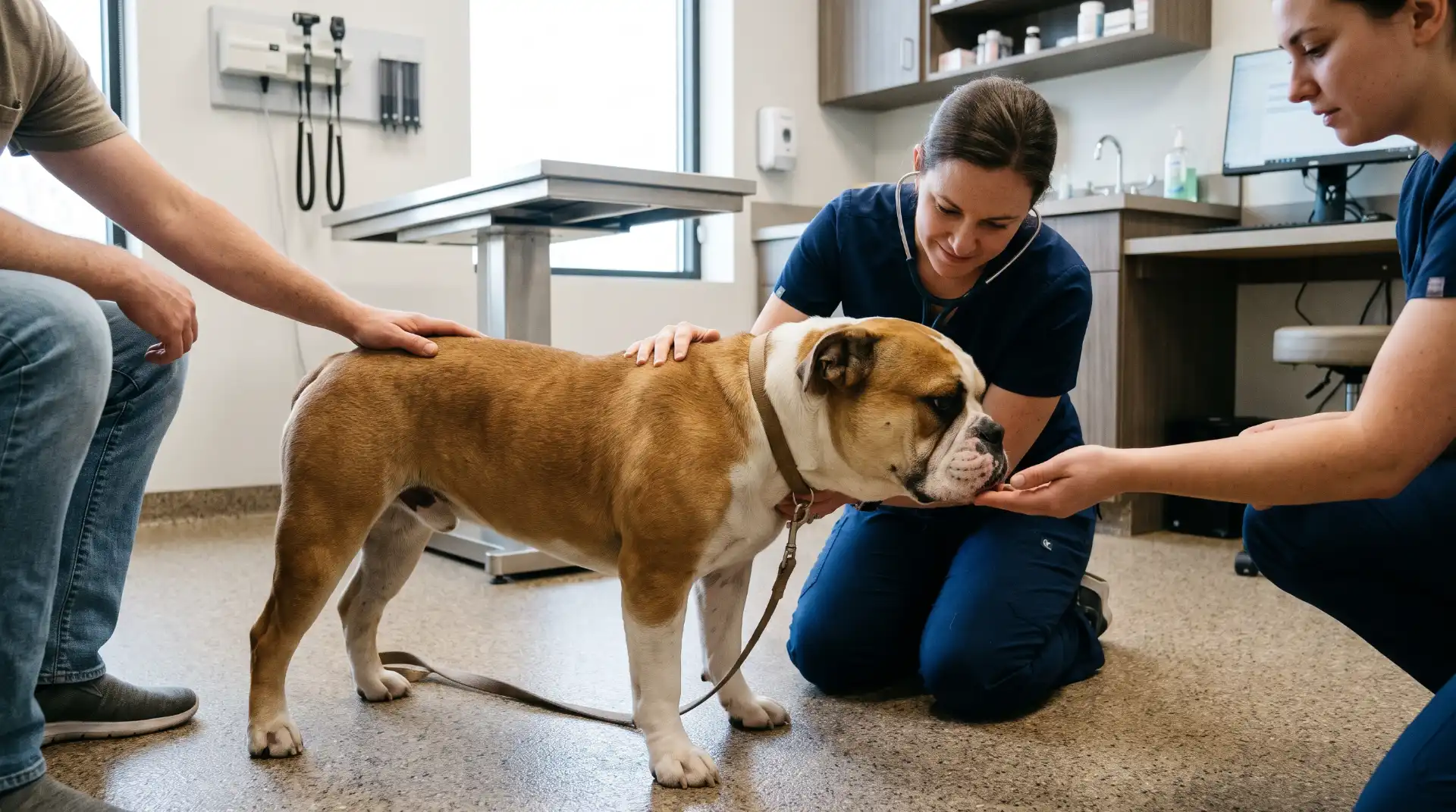
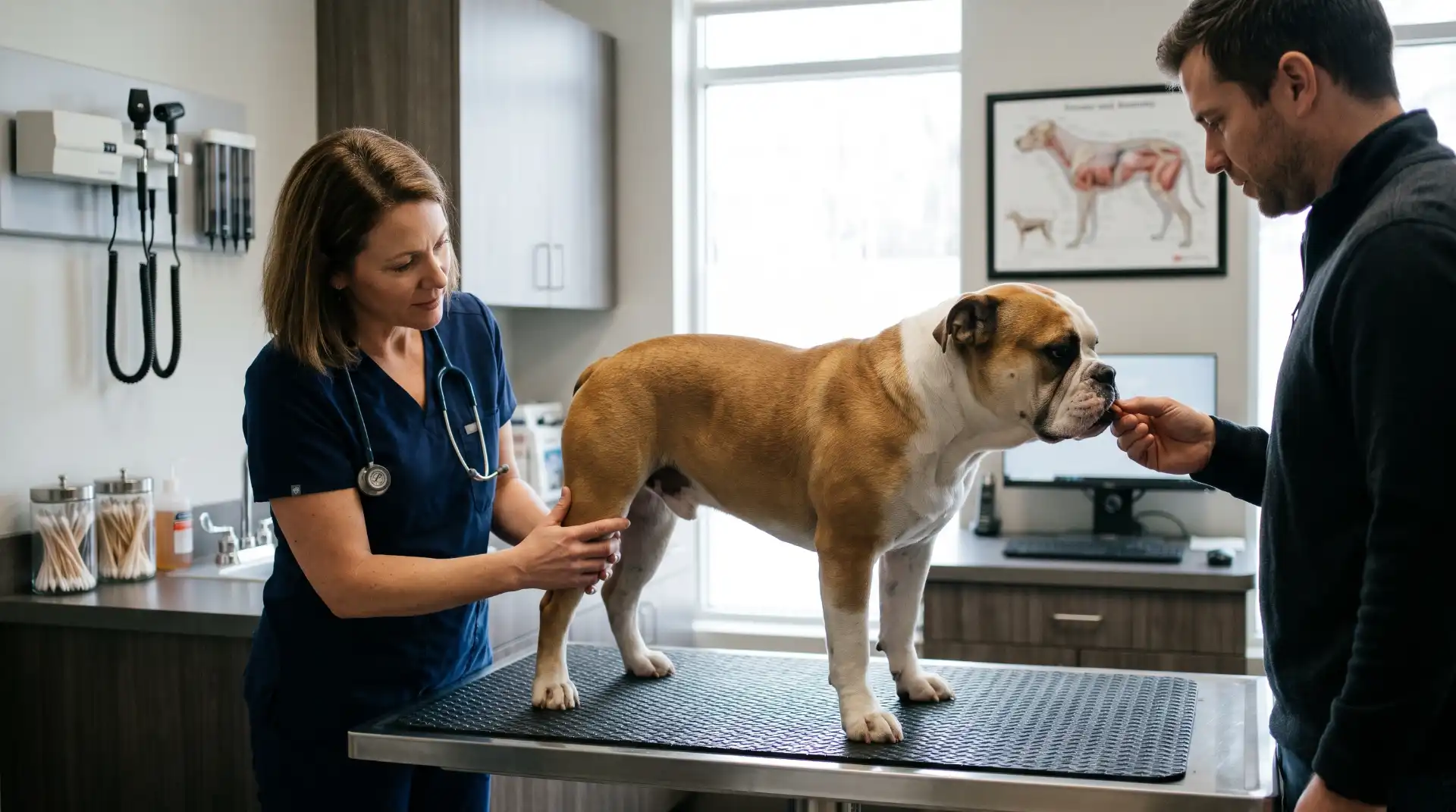
Fear-free veterinary care aims to reduce these stressors through environmental adjustments, gentle handling, positive reinforcement, and individualized treatment plans.
The approach recognizes that emotional well-being is relevant to the veterinary experience, not something that should be considered only after a dog becomes difficult to examine.
What Makes a Veterinary Visit Fear-Free?
A fear-free appointment is designed around the individual dog’s emotional and physical needs.
A clinic may use quieter waiting areas, nonslip surfaces, examination rooms with fewer distractions, treats, toys, and gentle handling techniques.
Some veterinarians conduct examinations on the floor when appropriate rather than placing an uncomfortable dog on a raised table.
Other dogs may benefit from waiting in the car until an examination room is ready.
The veterinary team may also adjust the order of procedures to complete less stressful activities before more challenging ones.
For example, a dog that becomes anxious when its ears are examined might benefit from having its general physical examination completed first.
There is no single approach that works for every animal. The veterinary team should evaluate the dog’s behavior and medical needs before choosing an appropriate handling strategy.
The Cornell University College of Veterinary Medicine’s guide to less stressful veterinary visits offers additional advice about selecting veterinary professionals and preparing dogs for appointments.
Cornell Vet School
Why Veterinary Anxiety Should Not Be Ignored
Veterinary anxiety can affect both the dog and the people providing medical care.
A frightened animal may struggle, hide, vocalize, or attempt to escape. In some situations, defensive behavior can create safety concerns for veterinary personnel and owners.
Fear may also make certain examinations more difficult.
A dog that is extremely tense may be harder to examine accurately, particularly when evaluating areas that require careful palpation or prolonged handling.
Repeated stressful visits can also influence future behavior. A dog that experiences frightening procedures without adequate support may become increasingly reluctant to enter the clinic.
This is why veterinary teams often recommend preparing dogs before they develop severe appointment-related anxiety.
Happy Visits and Positive Clinic Associations
One practical strategy is arranging short, positive visits that do not involve medical procedures.
These are often called happy visits.
The dog may enter the clinic, receive treats, interact briefly with friendly staff members, explore an examination room, and leave without undergoing an examination.
The purpose is to help the dog associate the building and its surroundings with positive experiences.
However, happy visits should not be treated as a complete solution for every anxious dog. Some animals need a more structured behavior modification plan, and the clinic should determine whether the dog can comfortably participate.
Owners should contact the veterinary practice before arriving to ask whether these visits are available.
Communicating With the Veterinary Team Before an Appointment
Owners should tell the clinic about handling difficulties before the appointment begins.
Useful information includes whether the dog dislikes paw handling, becomes frightened around unfamiliar people, reacts to other dogs, struggles with restraint, or has previously attempted to bite during medical procedures.
The owner should also explain which rewards the dog enjoys and whether any handling techniques have been successful.
This information allows the veterinary team to prepare an appropriate examination environment.
For example, a dog that becomes overwhelmed in a crowded waiting room may be scheduled during a quieter period or allowed to enter through a separate entrance if the clinic can accommodate that arrangement.
Open communication can make a significant difference in the quality of the visit.
6. Training Dogs to Cooperate With Common Veterinary Procedures
Many veterinary procedures can be introduced through gradual cooperative care exercises.
Although owners should never attempt to replace professional medical examinations with home training, they can help dogs become familiar with the positions, equipment, and handling sensations involved in routine appointments.
Teaching Comfortable Ear and Eye Examinations
Ear and eye inspections are common components of preventive veterinary care.
Dogs that dislike having their heads touched may benefit from short exercises that reward voluntary positioning.
For an ear examination, an owner can first reward the dog for allowing a hand to approach the side of its head. Later, the owner may briefly touch the outer ear.
The process should remain gentle and should not involve inserting objects into the ear canal.
Eye examinations can be introduced by rewarding the dog for calmly looking toward a person’s face and accepting brief handling around the head.
If the dog displays irritation, excessive tearing, discharge, swelling, or other concerning symptoms, veterinary evaluation is more appropriate than continuing training exercises.
Preparing for Blood Draws and Vaccinations
Blood collection and vaccination procedures can be challenging because they involve unfamiliar equipment and physical contact.
Some dogs benefit from learning to stand calmly beside their owner or rest their chin on a support during examination.
Owners can also practice gentle body handling at home, provided the dog remains comfortable.
However, cooperative training cannot eliminate the discomfort associated with every procedure. Veterinary professionals must determine the safest method of restraint, positioning, and medical treatment.
For a highly anxious dog, the veterinarian may recommend medication or sedation when clinically appropriate.
These interventions should not be viewed as failures of training. Reducing distress and protecting the animal’s welfare are more important than completing every procedure without medical assistance.
Teaching Dogs to Accept Weighing and Examination Tables
Many dogs become uncertain when asked to step onto an unfamiliar platform.
Owners can introduce a stable, nonslip mat at home and reward the dog for standing on it.
Later, the dog can practice stepping onto a slightly raised platform if it is safe and appropriate for its size and physical condition.
The goal is to build confidence with different surfaces and positions.
Dogs should never be encouraged to jump onto unstable objects or surfaces that could cause injury.
Preparing for Medication Administration
Medication administration is another area where cooperative care can help.
Dogs that resist oral medication may benefit from learning to accept gentle handling around the muzzle before medication becomes necessary.
Owners can also teach positive associations with empty pill pockets, approved food rewards, or medication containers.
However, medications must always be administered according to veterinary instructions. Some tablets must not be crushed, split, or mixed with food, and certain medications require specific timing.
Owners should ask their veterinarian or pharmacist about the correct method before introducing medication-related training.
7. Building a Cooperative Care Training Program at Home
Cooperative care does not require expensive equipment or complicated training arrangements.
Most owners can begin with ordinary household materials, a quiet environment, and a small supply of suitable rewards.
The most important requirements are consistency, patience, and the ability to recognize when a dog needs a break.
Start With a Comfortable Training Environment
Choose a location where the dog normally feels relaxed.
Avoid beginning with difficult handling exercises in a crowded room or near loud household activities.
A nonslip mat, folded towel, or comfortable resting surface can become a familiar training station.
Keep sessions short enough that the dog remains interested.
Some dogs may benefit from sessions lasting only a minute or two, particularly when learning a new behavior.
Teach a Reliable Chin Rest
A chin rest is one of the most useful cooperative care behaviors because it can provide a consistent starting position for several procedures.
Begin by presenting your hand or a soft surface near the dog’s nose.
Reward the dog for investigating it. When the dog voluntarily lowers its chin toward the surface, provide another reward.
Gradually encourage the dog to rest its chin for slightly longer periods.
Do not physically push the dog’s head down or hold it in position.
Once the behavior becomes familiar, introduce small movements around the head and neck while rewarding continued comfort.
If the dog lifts its head, stop the handling activity and give it an opportunity to reset.
Introduce Touch in Small Increments
After establishing a comfortable position, begin introducing brief touches.
Start with areas the dog already enjoys having handled. Gradually move toward more sensitive areas only when the animal remains comfortable.
For example, an owner preparing a dog for a veterinary examination might practice gentle touches along the shoulders, back, chest, and legs.
Sensitive areas such as the paws, ears, mouth, and abdomen may require additional preparation.
Avoid using training sessions to investigate suspected injuries or painful areas. Pain-related concerns should be assessed by a veterinarian.
Keep a Training Record
Recording progress can help owners identify which exercises are working.
A simple notebook can include the date, training activity, duration, rewards used, and the dog’s response.
For example, an owner might record that the dog comfortably accepted two brief paw touches but became uncomfortable when the paw was held.
That information helps establish the next training goal.
It also makes it easier to explain progress to a professional trainer or veterinarian.
Know When to End a Session
One of the most important cooperative care skills is recognizing when training should stop.
If the dog moves away, repeatedly avoids contact, becomes tense, or refuses to participate, the owner should reconsider the difficulty of the exercise.
Ending a session does not mean the dog has failed.
It means the training process has provided useful information about the animal’s current comfort level.
Returning to an easier step during the next session can help rebuild confidence.
8. Breed-Specific Considerations: Cooperative Care for Continental Bulldogs
Cooperative care can benefit dogs of every breed, but individual physical characteristics and health considerations should influence how training is introduced.
Continental Bulldogs are muscular, athletic companion dogs that benefit from consistent positive reinforcement and structured routines. Like other dogs, individual Continental Bulldogs have different temperaments, handling preferences, and levels of sensitivity.
Some may happily accept brushing but dislike having their paws touched. Others may be comfortable with routine handling at home but become uncertain in unfamiliar veterinary environments.
Owners should avoid assuming that every dog of the same breed will respond identically.
Making Facial Fold Care More Comfortable
Dogs with facial folds may need regular skin inspections and cleaning, depending on their individual anatomy and veterinary recommendations.
For a Continental Bulldog, this routine can become easier when the dog learns to participate voluntarily.
Begin by rewarding the dog for calmly positioning its head. Introduce a soft cloth near the face without immediately wiping the folds.
When the dog remains comfortable, briefly touch the outside of the face with the cloth. Gradually introduce the specific cleaning routine recommended by the veterinarian.
The folds should be cleaned and dried appropriately to reduce moisture accumulation and irritation. Avoid using scented household wipes, harsh cleaning products, or unapproved solutions.
If the skin becomes red, swollen, painful, develops an unusual odor, or produces discharge, consult a veterinarian rather than attempting to resolve the problem through additional cleaning.
Paw Handling and Nail Maintenance
Regular nail maintenance is important for maintaining comfortable movement.
Continental Bulldogs may be strong enough to make physical restraint challenging when they resist paw handling. Cooperative training can reduce the need for uncomfortable wrestling during routine nail care.
Start by rewarding voluntary paw presentation. Later, introduce brief contact with individual toes and nails.
Owners can also teach a dog to stand comfortably on a nonslip surface while its paws are inspected.
This is particularly useful because paw inspections may reveal foreign objects, damaged nails, skin irritation, or other concerns.
Consider Physical Comfort During Training
Training surfaces and exercise intensity should be appropriate for the dog’s physical condition.
Choose supportive, nonslip flooring rather than smooth surfaces where the dog may slide while changing position.
Avoid requiring repeated jumping onto examination platforms, unstable furniture, or elevated surfaces.
Dogs that show stiffness, unusual fatigue, reluctance to move, or sensitivity during handling should receive veterinary assessment.
For additional foundational training advice, owners can read Training Tips for Continental Bulldogs: From Puppy to Adult. The positive reinforcement principles discussed in that guide provide a useful starting point for introducing more specialized cooperative care exercises.
Introducing Veterinary Preparation During Puppyhood
Puppyhood offers an excellent opportunity to introduce handling in a positive and gradual manner.
Young dogs can learn that people touching their ears, paws, mouth, and body is a normal part of everyday life.
However, socialization should be appropriate for the puppy’s age, vaccination status, and health.
Owners should follow their veterinarian’s recommendations regarding exposure to public spaces and contact with unfamiliar dogs.
The objective is not to expose puppies to every possible experience immediately. It is to help them develop positive associations without overwhelming them.
Adult dogs can learn these skills too. A dog that has never experienced cooperative care can still develop more comfortable handling responses with patience and appropriate professional support.
9. When Professional Trainers and Veterinary Behaviorists Are Needed
Although many cooperative care exercises can be practiced at home, some situations require professional guidance.
A dog that growls, snaps, bites, or panics during handling may have a more complicated behavioral history than an owner can safely address independently.
Similarly, a dog that suddenly begins resisting touch may be experiencing pain or another medical problem.
The first step in these situations should be veterinary evaluation.
Choosing a Qualified Dog Trainer
Owners should look for trainers who use evidence-based, reward-based methods and have experience with cooperative care.
Professional credentials can help when evaluating qualifications. Relevant organizations include the Certification Council for Professional Dog Trainers and the International Association of Animal Behavior Consultants.
However, credentials should be considered alongside practical experience, professional references, and the trainer’s willingness to explain their methods.
Ask whether the trainer has experience preparing dogs for veterinary examinations, grooming, nail trimming, and medication administration.
A qualified professional should be willing to adjust the training plan according to the dog’s emotional responses rather than forcing the animal through difficult procedures.
When a Veterinary Behaviorist Can Help
Some dogs experience severe anxiety associated with medical handling.
They may panic when entering a clinic, become defensive when touched, or struggle to recover after stressful encounters.
A board-certified veterinary behaviorist can assess these cases and develop an individualized treatment plan.
Treatment may involve behavior modification, environmental adjustments, cooperative care exercises, and medication when appropriate.
Medication can sometimes reduce anxiety enough to allow a dog to learn more comfortably.
Owners should not discontinue prescribed medication or substitute supplements without veterinary advice.
Understanding the Role of Sedation and Pre-Visit Medication
Fear-free veterinary care does not mean that medication or sedation should never be used.
For some dogs, attempting to complete an examination without appropriate pharmaceutical support can create unnecessary distress.
A veterinarian may recommend pre-visit medication to reduce anxiety before arrival or sedation to facilitate a necessary procedure safely.
The decision depends on the dog’s medical history, behavioral needs, procedure, and individual risk factors.
The American Animal Hospital Association discusses stress-reducing handling, positive reinforcement, and appropriate pre-visit anxiety medication in its guidance on efficient canine wellness visits.
These recommendations reinforce an important principle: a successful veterinary appointment should be measured by the quality and safety of the care provided, not simply by whether the dog remained completely still without assistance.
10. The Relationship Between Preventive Health Care and Cooperative Training
Cooperative care becomes particularly valuable when it is integrated into a dog’s broader preventive health routine.
Veterinary appointments are not limited to vaccinations or treatment when an animal becomes sick. Routine visits also provide opportunities to assess body condition, dental health, mobility, skin condition, parasite prevention, and other aspects of general wellness.
A dog that is more comfortable with handling may make some of these routine assessments easier.
However, cooperative care should complement rather than replace professional veterinary examinations.
Making Vaccination Visits Less Stressful
Vaccinations are an important part of preventive health care for American dogs.
Depending on age, health, lifestyle, and exposure risk, a veterinarian may recommend core and noncore vaccines.
Owners should prepare dogs for the appointment by practicing calm positioning, rewarding gentle handling, and familiarizing them with the experience of entering the clinic.
It is also helpful to bring preferred treats and inform the veterinary team about any previous negative experiences.
Owners of Continental Bulldogs can refer to the 2026 vaccination guide for Continental Bulldogs for additional information about vaccination schedules and lifestyle-related considerations.
The veterinarian should determine the appropriate vaccination plan for each individual dog.
Regular Physical Inspections at Home
Short, positive handling exercises can help owners become familiar with their dog’s normal physical condition.
For example, an owner may practice briefly examining the paws, looking at the outer ears, checking the coat, and observing general movement.
These activities should not become forced examinations.
Instead, owners can incorporate them into ordinary routines and reward voluntary participation.
Becoming familiar with the dog’s normal behavior can make it easier to notice changes such as new lumps, unusual swelling, damaged nails, skin irritation, or reluctance to move.
Any concerning finding should be discussed with a veterinarian.
Why Consistency Matters
A dog that receives cooperative care training only once every few months may not maintain the same level of comfort as a dog that practices regularly.
Short sessions integrated into normal life can help preserve familiarity.
For example, owners might practice a brief paw presentation after a walk, a chin rest before brushing, or calm standing on a mat before weighing.
These activities do not need to become lengthy training sessions.
The important part is maintaining positive associations and avoiding unnecessary pressure.
11. Common Cooperative Care Training Mistakes to Avoid
Cooperative care is relatively straightforward in concept, but implementing it successfully requires patience and an understanding of canine behavior.
Several common mistakes can interfere with progress.
Mistake 1: Confusing Stillness With Comfort
A motionless dog is not necessarily a relaxed dog.
Some animals become extremely still when frightened. This response is sometimes described as freezing.
Owners should consider posture, facial expression, muscle tension, breathing, and the dog’s willingness to engage.
A dog that stops moving but displays a stiff body and avoids eye contact may need a break rather than additional handling.
Mistake 2: Ignoring Attempts to Disengage
If a dog repeatedly moves away from an exercise, the owner should not simply hold it in place.
Doing so can undermine the communication system that cooperative care is intended to establish.
Instead, pause the interaction and consider whether the task is too difficult, the environment is uncomfortable, or the dog is experiencing pain.
Mistake 3: Using Treats to Distract a Frightened Dog
Food rewards are useful, but they should not become a way to disguise excessive handling.
A dog that eats while becoming increasingly tense may still be experiencing significant stress.
Owners should observe the entire interaction rather than assuming that accepting food means the animal is comfortable.
Mistake 4: Expecting Immediate Results
A dog that has spent years avoiding nail trims or resisting veterinary handling may need considerable time to develop new associations.
Progress should be evaluated according to the dog’s individual starting point.
Some dogs learn simple handling behaviors relatively quickly. Others need professional assistance and a longer behavior modification program.
Mistake 5: Practicing Only at Home
A dog may comfortably accept ear inspections in a familiar living room but become uncomfortable when a veterinarian attempts the same procedure.
This happens because learning does not always transfer automatically between environments.
Owners should work with their veterinary practice to gradually generalize trained behaviors to the clinic.
Happy visits, familiar mats, preferred rewards, and consistent handling routines may help.
Mistake 6: Treating Every Handling Problem as Disobedience
Resistance to grooming or examination is not necessarily a training problem.
Pain, arthritis, skin irritation, ear infections, dental disease, previous injuries, and other health conditions can influence handling tolerance.
A dog that suddenly dislikes being touched should be examined by a veterinarian before the behavior is treated as simple noncompliance.
12. The Future of Dog Training: From Obedience to Partnership
The growing interest in cooperative care reflects a broader change in how people understand their relationships with companion animals.
For many years, dog training discussions focused heavily on obedience, control, and the ability to follow human instructions.
Those skills remain useful. Reliable recall, leash manners, and basic commands contribute to safety and responsible ownership.
However, modern training increasingly recognizes that a dog’s emotional experience matters just as much as the visible behavior.
A dog that willingly participates in grooming or veterinary examinations demonstrates a different type of learning from one that simply tolerates restraint.
This distinction is becoming more important as veterinary professionals, trainers, groomers, and owners work together to improve animal welfare.
Better Communication Between Owners and Veterinary Professionals
Cooperative care can also improve communication between veterinary teams and pet owners.
When an owner understands the dog’s handling preferences, the clinic can prepare an appropriate approach before the appointment.
Likewise, veterinary professionals can demonstrate useful handling exercises and help owners recognize signs of fear or discomfort.
This shared approach can create more consistent experiences across the dog’s daily life.
More Individualized Training Plans
The future of canine training is likely to place even greater emphasis on individual needs.
Age, medical history, temperament, previous experiences, and physical characteristics all influence how a dog responds to handling.
A young puppy learning to accept brushing requires a different approach from a senior dog with painful joints.
Similarly, a confident adult dog may progress quickly through basic cooperative care exercises, while a rescue dog with a history of frightening experiences may require a slower plan.
Training should reflect these differences.
Technology and New Training Resources
Technology is also making cooperative care education more accessible.
Online courses, demonstration videos, virtual consultations, and digital training records allow owners to learn practical exercises and monitor progress.
Some veterinary practices also provide educational materials that explain how to prepare dogs for appointments.
However, online instruction should not replace professional assessment when a dog displays severe fear, aggression, pain, or medical symptoms.
The most useful resources are those that help owners understand the principles behind training and apply them safely to their own animals.
Ultimately, technology is a support tool. Successful cooperative care still depends on careful observation, consistent practice, and an appropriate relationship between the dog, owner, trainer, and veterinarian.
13. How American Dog Owners Can Make the Transition
For American dog owners interested in adopting cooperative care, the best starting point is to identify the routine activities that currently cause the most difficulty.
Some dogs dislike nail trimming. Others become anxious when entering a veterinary hospital, accepting medication, or having their ears examined.
Rather than attempting to change every handling behavior simultaneously, owners should select one manageable goal.
A practical starting plan might look like this:
Week 1: Build Positive Associations
Introduce a comfortable training mat, select suitable rewards, and teach the dog to approach and voluntarily stand on the mat. Avoid introducing challenging handling procedures during the first few sessions.
Week 2: Introduce Gentle Handling
Practice brief touches on comfortable areas of the body. Reward voluntary participation and allow the dog to move away when needed. Gradually introduce slightly more sensitive areas when the dog is ready.
Week 3: Introduce Grooming Equipment
Allow the dog to investigate a brush, towel, nail clipper, or other appropriate equipment. Reward calm interest before introducing brief contact.
Week 4: Practice Veterinary Preparation
Work on behaviors that may be useful during veterinary visits, such as standing on a mat, resting the chin on a support, accepting gentle body handling, and remaining comfortable while equipment is nearby.
This schedule is only a starting framework, not a deadline. Some dogs may need several weeks or months to become comfortable with particular procedures. Others may need professional assistance before certain exercises can be introduced safely.
Owners should prioritize the dog’s emotional responses rather than attempting to complete every stage according to a calendar.
Finding Fear-Free Veterinary Professionals in the United States
American dog owners can also look for veterinary practices and professionals with specialized education in low-stress animal handling.
The Fear Free Certified Professional and Practice Directory is one resource for locating professionals who have completed relevant Fear Free education and certification programs.
When evaluating a veterinary clinic, ask whether its staff can accommodate dogs that experience handling anxiety, whether examinations can be performed on the floor when appropriate, and whether pre-visit medication is available for particularly anxious patients.
Also ask how the practice handles dogs that need additional time or become uncomfortable during examinations.
Certification can be a useful indicator of specialized training, but owners should still communicate their dog’s individual needs and evaluate whether the clinic’s actual handling practices are appropriate.
Conclusion: Building Trust Is the Future of Responsible Dog Training
The new generation of dog training recognizes that a well-trained dog is not simply one that follows commands. A successful training relationship also involves trust, communication, emotional security, and the ability to participate comfortably in everyday experiences.
Cooperative care dog training provides practical ways to prepare animals for grooming, physical examinations, nail trimming, medication administration, and other necessary activities. Consent-based handling encourages owners to recognize canine communication and respect opportunities for their dogs to pause or disengage. Fear-free veterinary care extends these principles into professional medical environments, where reducing fear and anxiety can make treatment safer and more comfortable.
These approaches are valuable because they address problems before they become severe. Instead of waiting until a dog begins resisting veterinary appointments or reacting defensively during grooming, owners can gradually introduce positive handling experiences from puppyhood onward.
For Continental Bulldogs and other companion breeds, routine handling education can become an important part of responsible ownership. Learning to accept paw inspections, brushing, facial cleaning, and veterinary examinations can make preventive care more manageable throughout a dog’s life.
However, cooperative care is not about eliminating every form of restraint or allowing a dog to refuse urgent treatment. Medical professionals must still provide necessary care, and some situations require appropriate restraint, medication, or sedation. The goal is to minimize unnecessary distress while protecting the dog’s health and safety.
The most important lesson is that dogs communicate continuously, even when they cannot use words. Their posture, movement, facial expressions, and willingness to participate provide valuable information about their emotional state.
When owners learn to recognize these signals and respond appropriately, everyday care can become a more positive experience.
Ultimately, the future of responsible dog training is not built around control alone. It is built around cooperation, patience, and a relationship in which dogs can feel secure while receiving the care they need.