
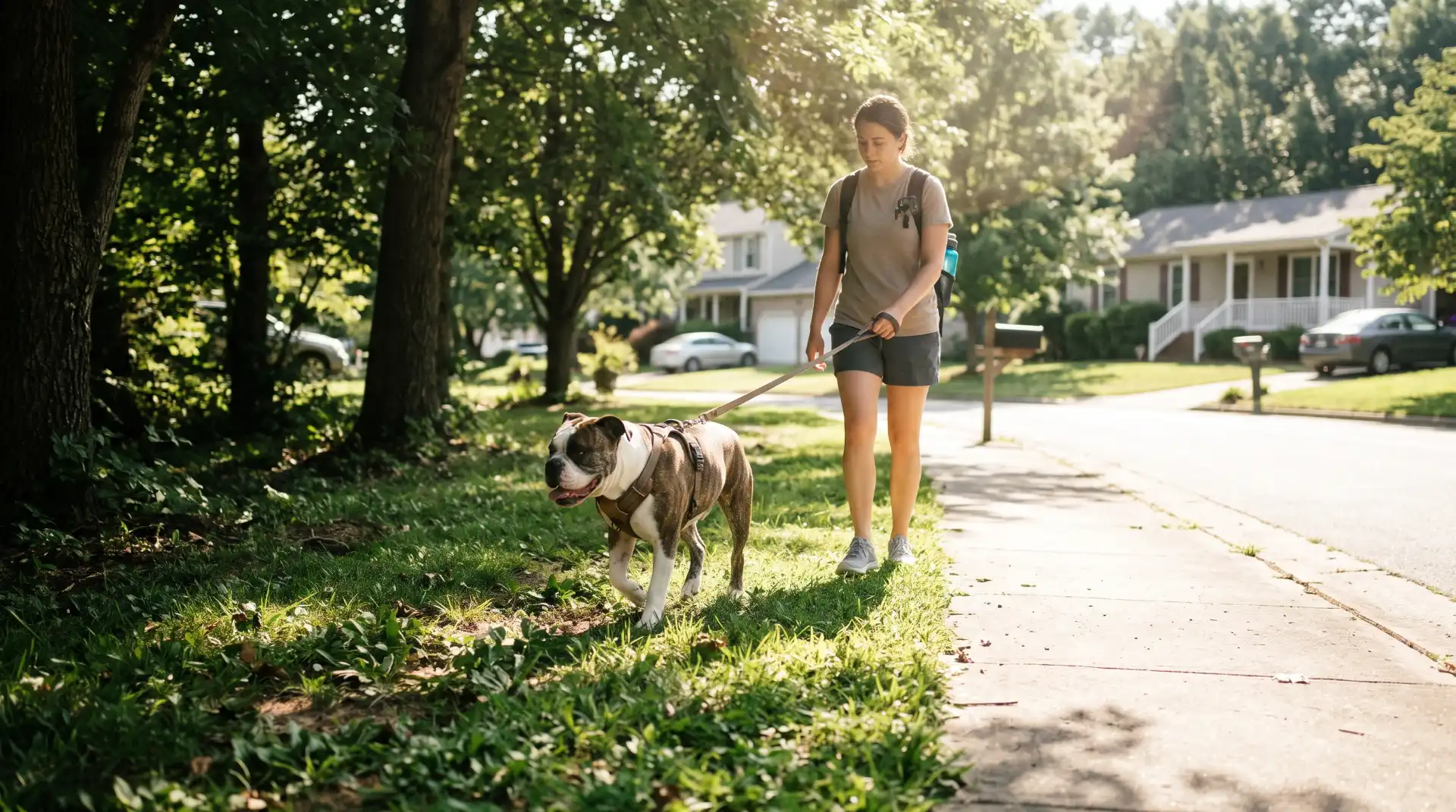
Summer is a season when many American families enjoy longer days, outdoor activities, neighborhood walks, vacations, and time in the backyard with their dogs. For Continental Bulldog owners, however, rising temperatures bring an important responsibility: protecting their dogs from environmental hazards that are not always immediately obvious. One of the most overlooked dangers is hot pavement.
Asphalt roads, concrete sidewalks, parking lots, driveways, artificial turf, and even sandy walking paths can absorb substantial amounts of solar heat. While people often notice how uncomfortable the air feels, they may not realize that the ground beneath their feet can become significantly hotter. Dogs experience these conditions differently because their paw pads are in direct contact with the walking surface. A short walk across a sun-heated driveway can cause discomfort, irritation, or painful thermal injuries.
For Continental Bulldogs, the problem deserves particular attention. Although individual dogs differ in their physical structure, conditioning, and ability to tolerate heat, owners should be especially cautious about combining hot outdoor surfaces with strenuous activity. Heat exposure can place additional demands on a dog’s ability to regulate body temperature, particularly when humidity is high or breathing becomes more difficult.
The concern becomes especially relevant as American communities prepare for potentially challenging seasonal weather conditions associated with the 2026–2027 Super El Niño period. El Niño influences weather patterns differently across the United States, and it does not guarantee identical temperatures or conditions in every state. Nevertheless, owners should be prepared for local heat waves, unusually warm periods, and changing outdoor conditions rather than waiting until their dogs show signs of distress.
Protecting a Continental Bulldog requires more than simply choosing a cooler time for walks. Owners need to understand how pavement becomes dangerous, recognize early signs of paw injuries, know how to respond when a burn occurs, and develop safer exercise routines throughout the summer.
This guide explains how to recognize hot-surface hazards, prevent paw pad injuries, select appropriate protective equipment, and keep your Continental Bulldog comfortable during periods of extreme summer heat.
Why Hot Pavement Is Dangerous for Continental Bulldogs
A dog’s paw pads are designed to withstand everyday contact with the ground, provide traction, and help protect the tissues beneath them. However, they are not indestructible. Repeated contact with extremely hot surfaces can damage the outer layers of the pads, resulting in inflammation, blisters, peeling skin, and painful burns.
People usually wear shoes when walking across asphalt or concrete, which makes it easy to underestimate the temperature of these surfaces. A sidewalk that feels reasonably comfortable while wearing sneakers may be dangerously hot for an unprotected dog.
The problem is not limited to the hottest part of the afternoon. Pavement absorbs energy from sunlight and can remain hot after the surrounding air begins cooling. This means that a walk shortly after sunset may still expose a dog’s paws to uncomfortable temperatures.
How Asphalt and Concrete Absorb Heat
Different outdoor materials absorb and retain solar energy at different rates. Dark asphalt is particularly concerning because its surface can become much hotter than the surrounding air during direct sunlight.
Concrete can also become dangerously hot, especially when exposed to sunlight for several hours. Parking lots, residential driveways, pedestrian walkways, and commercial sidewalks may provide little shade, allowing their surfaces to heat continuously.
Artificial turf is another surface that deserves attention. Some synthetic grass products can become extremely hot under direct sunlight, even when the surrounding lawn appears comfortable. Sand, metal ramps, playground surfaces, and outdoor stairs may also become uncomfortable or unsafe for a dog’s paws.
According to the American Kennel Club, pavement temperatures can become hazardous even when the reported air temperature does not initially seem extreme. Its guidance explains why owners should check walking surfaces rather than relying exclusively on weather forecasts.
You can read its detailed recommendations in the AKC guide to protecting dog paws from hot pavement.
For Continental Bulldog owners, the practical lesson is straightforward: the temperature displayed by a weather application does not tell you exactly how hot the ground has become.
Why a Short Walk Can Still Cause Injury
Some owners assume that paw burns only happen after long walks or intense outdoor exercise. Unfortunately, this is not always true.
A dog may experience damaging surface temperatures during a relatively short trip from the house to a parked vehicle, a quick walk around the block, or a bathroom break across an exposed driveway.
The risk increases when the dog repeatedly walks over hot surfaces without sufficient opportunities to move onto cooler ground. A longer outing also creates more opportunities for exposure, particularly when the route includes asphalt roads, concrete intersections, and unshaded parking areas.
Dogs do not always communicate discomfort immediately. Some continue walking because they are excited, distracted, or accustomed to following their owners. By the time they begin lifting their paws, slowing down, or licking their feet, the skin may already be irritated.
Owners should therefore make the decision about whether conditions are safe before leaving home. Waiting for a Continental Bulldog to refuse to walk is not a reliable prevention strategy.
Understanding the Connection Between Super El Niño and Summer Paw Safety
The 2026–2027 Super El Niño discussion has encouraged many American households to reconsider their seasonal preparedness plans. For pet owners, this is an opportunity to review outdoor routines and identify environmental hazards before temperatures become difficult to manage.
El Niño is a climate pattern involving changes in ocean temperatures in the tropical Pacific and associated atmospheric circulation. These changes can influence seasonal weather patterns across different parts of the world, including the United States.
However, El Niño does not mean every American community will experience the same weather. Regional conditions depend on multiple atmospheric and geographical factors. Some areas may face elevated heat concerns, while others may experience different precipitation or storm patterns.
For Continental Bulldog owners, the most useful approach is to prepare for the actual conditions in their community.
Why Regional Heat Conditions Matter
A Continental Bulldog living in Phoenix, Arizona, may experience a very different summer environment from one living in Seattle, Washington. Owners in Las Vegas, Nevada, parts of Southern California, Texas, and inland desert communities may need to pay particular attention to prolonged periods of intense sunlight and hot pavement.
Meanwhile, owners in humid states such as Florida, Louisiana, Georgia, and Mississippi should consider how moisture in the air can affect a dog’s ability to cool itself through panting.
The temperature of the walking surface also depends on local conditions. A shaded neighborhood sidewalk may remain relatively comfortable while a nearby parking lot becomes dangerously hot. Similarly, a residential lawn may provide a safer route than an exposed concrete walkway.
Instead of treating Super El Niño as a prediction that every area will experience record-breaking heat, use the seasonal discussion as a reason to establish a flexible summer safety plan.
For additional preparation advice, see our existing guide, How to Protect Your Continental Bulldog From Extreme Heat During the 2026–2027 Super El Niño.
Heat Exposure Creates More Than One Problem
Hot pavement is primarily a contact hazard, but it can occur alongside other environmental stresses.
When a dog walks on a hot surface under direct sunlight, its body is also exposed to elevated environmental temperatures. If the dog is exercising, its muscles generate additional heat. Humidity can make evaporative cooling through panting less effective.
These factors can combine to create a situation in which a Continental Bulldog experiences both paw discomfort and general heat stress.
This is why owners should avoid thinking about paw protection and heat protection as completely separate responsibilities. A dog wearing protective boots may have a barrier between its pads and the pavement, but the boots do not prevent overheating.
A safer summer routine addresses the entire environment, including ground temperature, sunlight, humidity, activity level, access to water, and opportunities to rest in a cool location.
How to Tell Whether Pavement Is Too Hot for Your Dog
Checking the ground before a walk is one of the simplest ways to reduce the risk of burned paw pads. Unfortunately, many owners only check the weather forecast or look at the sidewalk without considering how much heat it has absorbed.
A surface may appear completely normal while being uncomfortable or dangerous for an unprotected dog.
The Ten-Second Hand Test
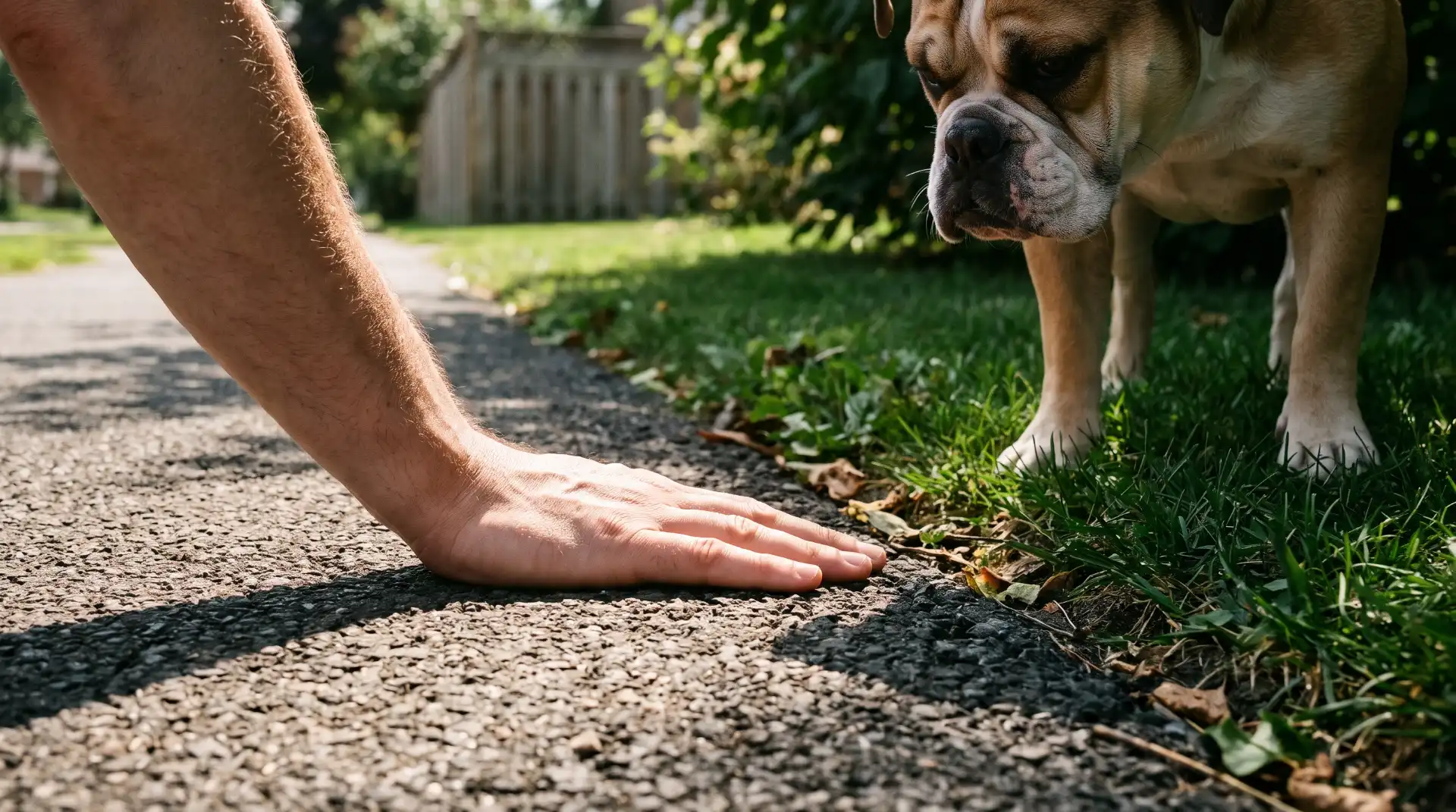
One commonly recommended precaution is the ten-second hand test.
Place the back of your hand against the pavement and see whether you can comfortably maintain contact for approximately ten seconds. If the surface feels too hot for you to tolerate, do not ask your dog to walk across it.
This method is a practical screening tool, not a scientific measurement or a guarantee of safety. Human skin and canine paw pads are different, and surface temperatures can vary considerably across a short distance.
If you are uncertain, choose a cooler route or postpone the walk.
Check Multiple Areas Along Your Route
Testing one small section of pavement does not tell you whether the entire walking route is safe.
A sidewalk may begin beneath a large shade tree and continue into an exposed area where the temperature is substantially higher. A driveway may have a cooler section near the house but become much hotter near the street.
Before walking your Continental Bulldog, examine the surfaces it will actually encounter.
Pay particular attention to:
-
Dark asphalt roads and parking lots.
-
Concrete sidewalks exposed to direct sunlight.
-
Residential driveways and garage entrances.
-
Artificial grass and synthetic playground surfaces.
-
Metal ramps, steps, and outdoor platforms.
-
Sand and other exposed ground materials.
Whenever possible, choose shaded grass, natural soil, or another cooler walking surface. Remember that even grass can become warm during prolonged heat, so do not assume that every green area is automatically safe.
Why Evening Walks Are Not Always Safe
Many owners move their dogs’ walking schedules to early morning or late evening during summer. This is generally a sensible adjustment, but the clock alone cannot determine whether a surface is comfortable.
Pavement can retain heat after sunset, especially following a long period of direct sunlight. A sidewalk that was exposed throughout the afternoon may remain warm well into the evening.
Early morning often provides better opportunities for cooler walks because surfaces have had more time to release stored heat overnight. Even then, check the actual conditions.
A useful habit is to establish a preferred walking route that includes shaded sidewalks, grass, and nearby areas where your dog can rest. This reduces the likelihood of being forced to cross a large exposed parking lot or road.
Recognizing the Early Signs of Burned Paw Pads
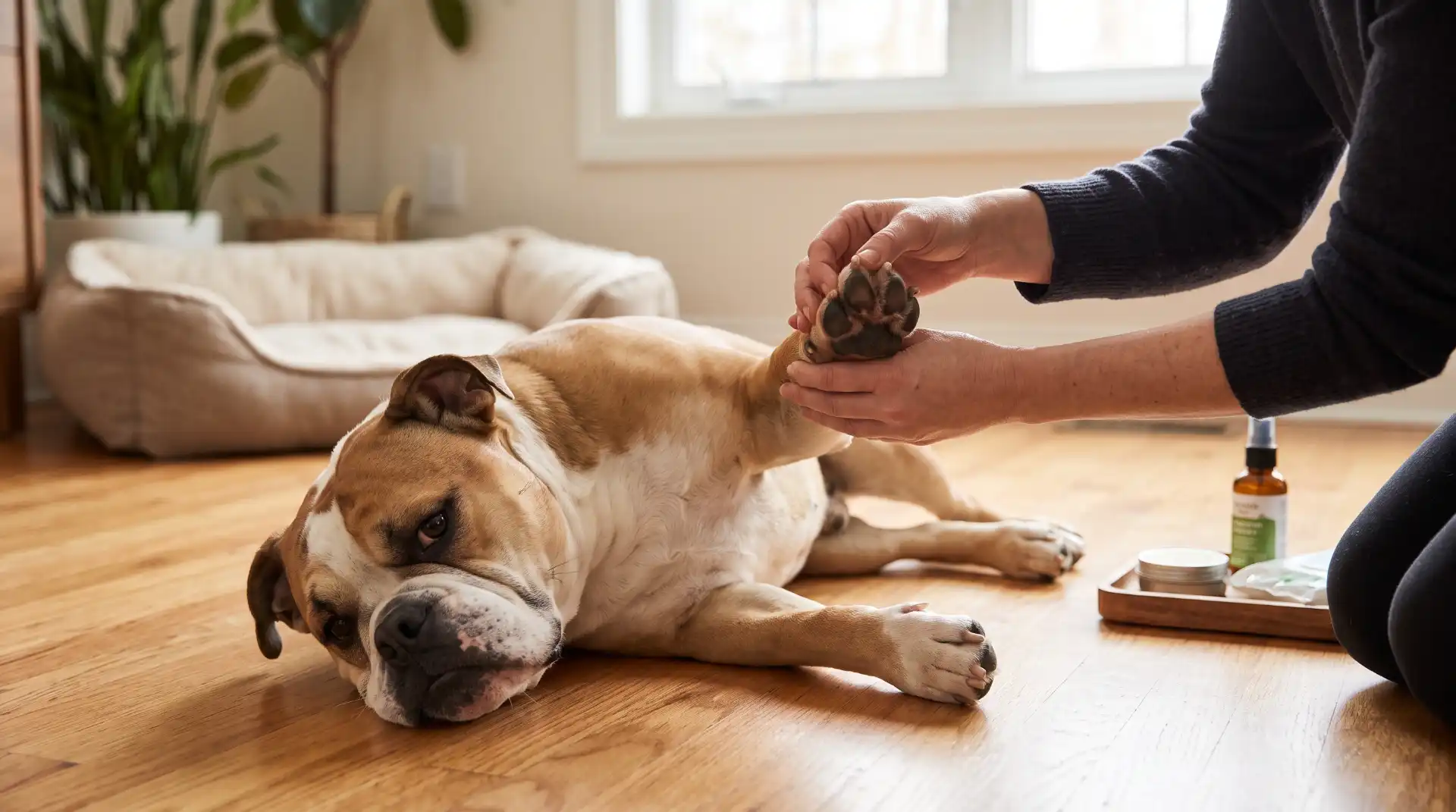
One of the most important responsibilities of a Continental Bulldog owner is learning to recognize changes in paw condition. Dogs cannot explain that the ground hurts, so owners must pay attention to their movements and behavior.
Paw pad injuries can develop gradually or appear suddenly after exposure to an extremely hot surface. The severity depends on the surface temperature, duration of contact, and condition of the dog’s paws.
Behavioral Signs That Your Dog’s Paws May Be Hurting
A Continental Bulldog experiencing paw discomfort may begin behaving differently during or after a walk. Some dogs suddenly stop moving, while others attempt to avoid placing weight on one or more feet.
Common warning signs include:
-
Frequently lifting one paw while standing.
-
Limping or walking with an unusual gait.
-
Suddenly refusing to continue a walk.
-
Repeatedly licking or chewing the paws.
-
Hesitating before stepping onto concrete or asphalt.
-
Moving toward grass, shade, or cooler surfaces.
-
Whining or showing discomfort when the paws are touched.
These behaviors should not automatically be dismissed as stubbornness, tiredness, or a lack of interest in walking. A dog that normally enjoys outdoor exercise but suddenly refuses to move may be experiencing pain.
Pay particular attention to behavior after returning home. Some dogs initially appear normal but begin licking their paws or walking differently once they have rested.
If you notice these changes, inspect the paw pads carefully without forcing your dog to tolerate unnecessary handling.
Physical Symptoms of Paw Pad Burns
Burned paw pads may show visible changes that become more noticeable as the injury develops.
Mild irritation can cause redness, tenderness, and unusual sensitivity. More serious burns may produce blisters, swelling, damaged outer skin, or areas where the surface layer begins separating.
In severe cases, the paw pad may appear discolored, raw, or partially detached. Walking may become extremely painful because the damaged tissue is exposed to pressure and friction.
Watch for the following physical changes:
Redness and inflammation: The affected pad may look redder than the surrounding skin and feel unusually sensitive.
Blister formation: Fluid-filled areas can develop following thermal injury. Do not puncture or squeeze them because doing so can increase the risk of infection.
Peeling or loose skin: The outer surface may begin separating from the underlying tissue. This should be evaluated by a veterinarian.
Bleeding or exposed tissue: Open wounds indicate a more serious injury and require prompt professional attention.
Swelling and discharge: These symptoms can indicate tissue damage or a developing infection, particularly if the paw has been exposed to dirt and debris.
It is important to remember that the visible appearance of a paw does not always reveal the full extent of an injury. Even when a burn looks relatively small, underlying tissue may be affected.
Inspect All Four Paws
When examining your Continental Bulldog, do not assume that only the paw that appears uncomfortable has been injured.
A dog may have walked across the same hot surface using all four feet, and several pads may have experienced similar exposure.
Check the front and rear paws, including the individual pads and the spaces between the toes. Look for small areas of redness, cracks, swelling, blisters, and foreign material.
If your dog becomes distressed during the examination, stop and allow a veterinarian to complete the assessment. Painful injuries should not be investigated through repeated squeezing or manipulation.
What to Do if Your Continental Bulldog Burns Its Paws
Discovering that your dog has burned paw pads can be upsetting, especially if the injury happens during an ordinary neighborhood walk. The most important thing is to stop the exposure and avoid making the damage worse.
A suspected thermal burn should be treated seriously. Do not assume that a dog will recover simply because it can still walk.
Step 1: Immediately Leave the Hot Surface
Move your Continental Bulldog away from asphalt, concrete, artificial turf, or whichever surface caused the discomfort.
If your dog can walk comfortably, guide it toward a shaded or indoor location. If walking appears painful, avoid forcing it to continue. Carrying a smaller dog or using another safe method of transportation may help prevent further irritation.
Do not make the dog walk several additional blocks to reach home.
Step 2: Gently Cool the Affected Paws
If you suspect a thermal burn, gently cool the affected area using cool running water. Avoid ice, ice packs placed directly against the skin, or extremely cold water.
The objective is to reduce the heat affecting the tissue without creating additional cold injury.
Do not rub the pads, scrub away loose skin, or attempt to remove damaged tissue. These actions can increase pain and worsen the injury.
If you are uncertain about the severity of the burn, contact a veterinary professional for instructions rather than experimenting with home treatments.
Step 3: Protect the Injured Area
After cooling, keep your dog away from hot, rough, dirty, or abrasive surfaces.
Prevent excessive licking or chewing because these behaviors can damage already irritated tissue and introduce bacteria. Your veterinarian may recommend an appropriate protective covering or an Elizabethan collar if necessary.
Do not apply human pain-relief creams, household disinfectants, essential oils, or other products without veterinary approval. Some substances that are commonly used by people can be harmful to dogs if absorbed through the skin or swallowed during grooming.
Avoid applying thick ointments or bandages without professional guidance. An improperly placed dressing can trap moisture, create pressure, or interfere with healing.
Step 4: Contact Your Veterinarian
A suspected paw pad burn deserves veterinary advice, particularly when there is visible redness, blistering, peeling, swelling, bleeding, limping, or persistent discomfort.
A veterinarian can evaluate the damaged tissue, determine whether the injury is superficial or deeper, and recommend appropriate treatment.
Depending on the severity, treatment may involve wound cleaning, professionally applied dressings, pain management, infection monitoring, and follow-up examinations.
Do not give human medications such as ibuprofen or acetaminophen unless a veterinarian specifically directs you to do so. Some common human medications can cause serious poisoning in dogs.
If your Continental Bulldog has significant pain, open wounds, extensive blistering, or difficulty standing, seek prompt veterinary care rather than waiting to see whether the injury improves overnight.
Why Paw Burns Should Never Be Ignored
Paw pads serve an important purpose in everyday movement. They provide cushioning, traction, and protection while a dog walks, runs, changes direction, and stands.
When this protective tissue becomes damaged, even ordinary activities can become uncomfortable.
An injured dog may begin shifting its weight to other legs, avoiding stairs, refusing to play, or walking differently. These changes can affect mobility and make recovery more difficult if the injury is not managed properly.
Paw burns can also become contaminated when damaged tissue comes into contact with dirt, grass, soil, or other outdoor materials.
Early veterinary attention helps owners avoid unnecessary complications and gives the dog a better opportunity to recover comfortably.
The Best Ways to Prevent Hot Pavement Burns
Prevention is considerably easier than treating a painful paw injury. The most effective strategy is to reduce direct contact with dangerous surfaces while maintaining a summer routine that supports your dog’s overall health.
Continental Bulldogs benefit from consistent activity, but exercise should always be adjusted according to weather conditions and individual physical limitations.
Choose Grass and Shaded Walking Routes
One of the simplest ways to reduce pavement exposure is to select routes with more natural ground cover.
Neighborhood parks, grassy paths, shaded residential streets, and areas beneath mature trees may provide more comfortable walking conditions than large stretches of exposed asphalt.
Before taking your Continental Bulldog to a park, check whether the grass is comfortable and whether the route requires crossing hot parking lots or sidewalks.
Some parks have artificial turf, rubberized play areas, or paved sections that become uncomfortable in direct sunlight. A green appearance does not necessarily mean the surface is cool.
If the route includes a combination of grass and pavement, use the cooler sections whenever possible.
Owners living in urban areas without convenient grassy paths may need to shorten walks and arrange more indoor exercise during particularly hot periods.
Establish a Safer Summer Walking Schedule
A consistent walking schedule helps prevent unnecessary exposure to dangerous temperatures.
Early morning is often the most practical time for outdoor activity because pavement has had an opportunity to cool overnight. Late evening may also be suitable when surfaces have released enough stored heat.
However, owners should continue checking ground conditions rather than automatically assuming that a particular hour is safe.
During an extreme heat advisory, it may be necessary to eliminate nonessential outdoor exercise entirely.
A Continental Bulldog does not need to complete its normal walking distance every day regardless of the weather. Missing a walk or replacing it with indoor enrichment is preferable to risking burns or heat-related illness.
Keep Walks Short and Comfortable
When outdoor conditions are suitable, prioritize relaxed movement instead of strenuous exercise.
Allow your dog to walk at a comfortable pace, explore its surroundings, and take breaks when needed. Avoid running, repetitive ball chasing, and long-distance walking during hot weather.
Pay attention to changes in breathing, energy, and coordination. Excessive panting, unusual slowing, weakness, or distress are reasons to stop the activity and move to a cooler environment.
A short, comfortable walk on an appropriate surface is more beneficial than a long outing that pushes the dog beyond its physical limits.
Use Dog Boots When Appropriate
Protective dog boots can provide a physical barrier between paw pads and hot surfaces. They may be particularly useful for owners who live in neighborhoods where crossing pavement is unavoidable.
However, choosing the right boots is important.
Look for products designed specifically for dogs, with flexible soles, secure closures, and breathable materials. The boots should fit comfortably without restricting circulation or creating pressure around the toes.
A boot that is too tight may cause rubbing and irritation, while one that is too loose may twist or fall off during walking.
Introduce boots gradually inside the house. Allow your Continental Bulldog to wear them for short periods while offering praise and rewards. Many dogs initially respond by walking awkwardly, lifting their feet, or attempting to remove the footwear.
Give your dog time to become comfortable before relying on the boots outdoors.
It is also important to inspect the paws after each use. Boots can trap moisture, dirt, and heat, potentially creating additional irritation if they remain on for too long.
Most importantly, protective footwear does not make an otherwise dangerous walk safe. Your dog can still overheat even when its paw pads are covered.
Use Paw Balm for General Pad Maintenance
Dog-safe paw balms can help maintain the condition of paw pads by supporting skin moisture and reducing dryness.
This may be useful for Continental Bulldogs that regularly experience dry conditions, rough ground, or seasonal changes.
However, paw balm should not be considered a treatment for thermal burns or a substitute for avoiding hot pavement.
A moisturizing product cannot reliably prevent a serious burn from direct contact with extremely hot asphalt. Applying balm and then allowing a dog to walk across a dangerously hot surface creates a false sense of protection.
Choose products specifically formulated for dogs and ask your veterinarian before using unfamiliar ingredients.
Avoid applying products to open wounds or damaged tissue unless the veterinarian recommends them.
Choosing the Right Summer Paw Protection Products
The pet-care market offers many products marketed for summer protection. Some can be useful when selected appropriately, but owners should understand what each product can and cannot accomplish.
Breathable Dog Boots
Dog boots are among the most practical options for protecting paws during unavoidable contact with warm surfaces.
Look for designs that provide adequate sole protection without completely restricting natural movement. Adjustable closures can help achieve a secure fit, while breathable construction may improve comfort.
Check the product’s care instructions and inspect the inside after every outing. Remove the boots when returning home unless there is a specific veterinary reason to keep them on.
Do not use boots to justify walking during extreme heat. They protect the feet, not the dog’s entire body.
Cooling Mats and Indoor Resting Products
Cooling mats can provide a more comfortable place for a Continental Bulldog to rest after a walk.
Some products use pressure-activated cooling materials, while others rely on water-based or gel-based designs.
Follow the manufacturer’s instructions, check the mat regularly for damage, and supervise dogs that chew household products.
A cooling mat can support indoor comfort, but it cannot reverse a paw burn or replace veterinary treatment.
Protective Paw Wax
Certain dog-specific paw wax products are designed to create a protective coating on the surface of the pads.
These products may be useful for some environmental conditions, but their ability to prevent thermal injury from very hot pavement should not be assumed.
If your main concern is extreme summer temperatures, avoiding the hot surface remains the most reliable option.
Portable Water Bowls and Cooling Accessories
A portable water bowl is a useful addition to any summer walking kit.
Bring fresh water when leaving home, particularly if your dog will be outdoors for more than a few minutes. Offer water during appropriate breaks without forcing your dog to drink.
Cooling accessories may also be useful, but they should be viewed as supplementary products rather than substitutes for shade, appropriate exercise schedules, and a cool indoor environment.
Protecting Continental Bulldogs During Backyard Activities
Many owners believe their dogs are safer in the backyard because they can control the environment more easily than they can during a neighborhood walk.
However, residential outdoor spaces can contain the same hazards found in public areas.
Concrete patios, stone pathways, artificial grass, wooden decks, metal stairs, and sun-exposed outdoor furniture may all become uncomfortable during hot weather.
Inspect Your Yard Before Allowing Outdoor Play
Walk through the yard during the hottest part of the day and identify surfaces that absorb substantial amounts of sunlight.
Pay particular attention to the areas your dog uses most frequently, including the route from the back door to the lawn, outdoor feeding stations, and favorite resting places.
If a concrete patio becomes too hot, block access during the hottest periods or provide a cooler alternative.
A grassy section beneath a tree may offer a more comfortable area, but make sure it has sufficient shade and access to fresh water.
Be Careful With Artificial Turf
Artificial turf is increasingly common in American residential landscaping because it requires less traditional lawn maintenance.
However, synthetic grass can become extremely hot when exposed to direct sunlight.
Continental Bulldog owners should test the surface before allowing their dogs to walk or play on it.
If it becomes uncomfortable, provide access to natural grass or an indoor area instead.
Do not assume that artificial turf is safe simply because it resembles a conventional lawn.
Supervise Outdoor Play
Dogs may become excited when playing fetch, chasing toys, or interacting with family members.
An enthusiastic Continental Bulldog may continue playing even when it is becoming uncomfortable.
Owners should control the duration and intensity of outdoor activity, provide regular opportunities to rest, and stop play before the dog becomes exhausted.
During periods of extreme heat, replace outdoor games with indoor activities that provide mental stimulation without prolonged physical exertion.
Keeping Your Continental Bulldog Active Without Walking on Hot Pavement
Exercise remains important even when the weather makes outdoor walks impractical.
Continental Bulldogs need appropriate opportunities for movement, mental engagement, and social interaction. The solution is not to eliminate activity throughout the summer but to adapt it to the environment.
Indoor enrichment can help maintain a healthy routine while reducing the risks associated with hot pavement and high temperatures.
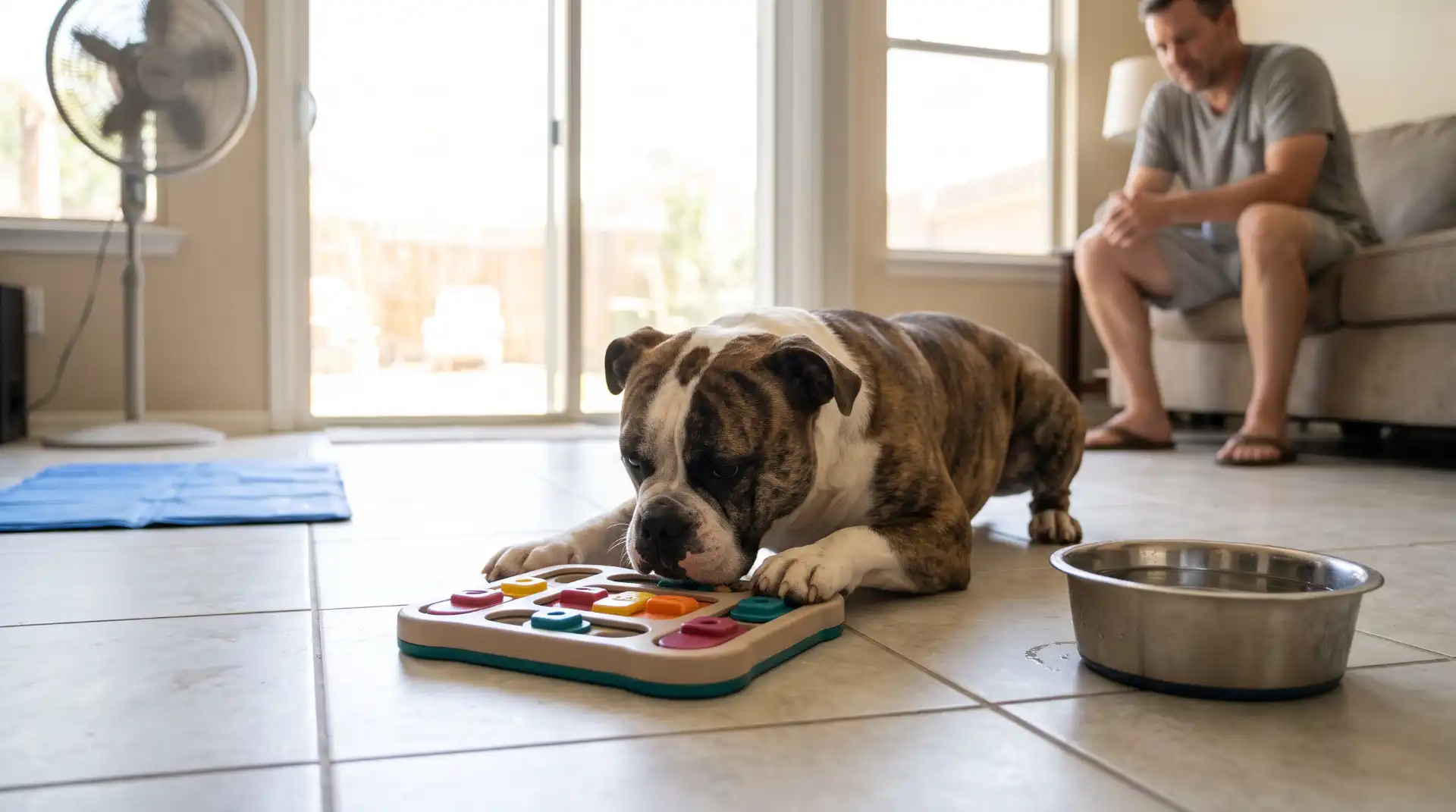
Use Food Puzzles and Interactive Toys
Food puzzles encourage dogs to use their senses and problem-solving abilities.
You can place part of your dog’s normal daily food allowance inside a suitable puzzle feeder and allow it to work out how to access the food.
Start with simple designs and gradually introduce more challenging activities as your dog becomes familiar with them.
Supervise the activity to make sure your Continental Bulldog does not chew and swallow parts of the toy.
This approach provides mental stimulation without requiring a long outdoor walk.
Practice Short Indoor Training Sessions
Training can be a useful alternative to outdoor exercise during hot weather.
Work on simple commands such as sit, stay, come, wait, and settle. You can also practice controlled movements around household objects, provided the floor is nonslip and the activities are appropriate for your dog’s physical condition.
Keep sessions short and positive. Reward calm behavior and avoid repetitive activities that cause excessive excitement or heavy breathing.
Create Indoor Sniffing Activities
Dogs naturally enjoy exploring different scents.
A supervised sniffing activity can provide mental engagement while keeping your Continental Bulldog in a comfortable indoor environment.
For example, you can hide a few pieces of its regular food around an accessible room and encourage the dog to find them.
Use safe locations and avoid areas containing cleaning products, electrical cables, small objects, or other hazards.
Rotate Toys to Maintain Interest
Dogs may lose interest when the same toys remain available every day.
Rotating a selection of safe toys can make familiar objects more interesting without requiring owners to purchase new products constantly.
Offer different toys on different days, supervise play, and remove anything damaged or potentially dangerous.
A balanced indoor routine can help your Continental Bulldog remain mentally satisfied while avoiding unnecessary exposure to summer pavement temperatures.
Why Continental Bulldogs Need Extra Attention During Summer Exercise
Continental Bulldogs are active, muscular dogs, and many enjoy spending time outdoors with their families. Nevertheless, physical enthusiasm should never be confused with unlimited heat tolerance.
A dog’s ability to tolerate warm weather depends on several factors, including body condition, respiratory health, age, fitness, humidity, and individual anatomy.
Owners should become familiar with their dog’s normal breathing and activity patterns so that changes are easier to recognize.
Consider Individual Respiratory Health
Dogs cool themselves primarily through panting. When environmental temperatures rise, effective panting becomes increasingly important.
A dog that already experiences breathing difficulties may have less ability to cope with additional environmental stress. Owners should be especially cautious if their Continental Bulldog has a history of noisy breathing, exercise intolerance, or difficulty recovering after activity.
If your dog frequently struggles to breathe during ordinary walks, discuss its exercise limitations with a veterinarian before establishing a summer activity schedule.
Our existing article, How to Keep Your Continental Bulldog Safe in Hot Weather, provides additional information about warm-weather management and breathing-related concerns.
Maintain a Healthy Body Condition
Excessive body weight can make physical activity more demanding and increase the difficulty of maintaining a comfortable body temperature.
Ask your veterinarian to evaluate your dog’s body condition and recommend an appropriate feeding and exercise plan.
Avoid suddenly increasing exercise to help a dog lose weight during a heat wave. Gradual changes, appropriate nutrition, and safe activity are more effective than strenuous outdoor workouts.
A healthy body condition can support mobility and general fitness, but it does not eliminate the risk of paw burns or heat-related illness.
Pay Attention to Puppies and Senior Dogs
Puppies may have less experience with environmental hazards and may not consistently recognize when they should stop playing.
Senior dogs may have additional mobility limitations, arthritis, reduced stamina, or other health concerns that make hot-weather activities more challenging.
Both groups benefit from shorter activities, frequent supervision, and comfortable indoor environments.
Do not assume that an older Continental Bulldog will naturally avoid dangerous pavement. A dog that has followed the same walking route for years may continue doing so even when the ground becomes unsafe.
Building a Summer Paw-Safety Kit for Your Continental Bulldog
Preparing a small collection of useful supplies can make summer outings easier and help owners respond to unexpected problems.
A summer paw-safety kit does not need to be expensive. The goal is to have basic supplies available before they are needed.
Consider including:
Portable drinking bowl: A collapsible bowl makes it easier to offer water during appropriate outdoor breaks.
Fresh drinking water: Carry enough water for your dog rather than assuming that public fountains will always be available.
Properly fitted dog boots: These may help protect paws when limited contact with warm surfaces cannot be avoided.
Clean towels: Useful for drying paws and cleaning away ordinary dirt after an outing.
Dog-safe paw-care products: Keep an appropriate product available for routine pad maintenance, following veterinary recommendations.
Leash and identification: Maintain control of your dog and make sure its identification information is current.
Veterinary contact information: Keep your regular veterinarian’s phone number and the address of a nearby emergency animal hospital readily accessible.
Recent veterinary records: These can be useful if your dog needs treatment while traveling away from home.
Before the summer season begins, check your supplies and replace damaged or expired products.
Owners who travel frequently should also identify emergency veterinary facilities near their usual destinations. During a regional heat wave, having a plan can save valuable time.
What to Do if Your Continental Bulldog Shows Signs of Heatstroke
Paw injuries are only one concern associated with hot pavement. A dog walking on a scorching surface may also become overheated, especially when the outing involves direct sunlight, high humidity, or physical exertion.
Heatstroke is a veterinary emergency and can cause serious damage to internal organs.
Warning signs may include excessive panting, heavy drooling, weakness, vomiting, confusion, poor coordination, collapse, or severe breathing difficulty.
If you suspect heatstroke, stop the activity immediately and move your dog to a cooler location. Begin gentle cooling with cool or tepid water on the body and contact an emergency veterinarian. Do not use ice baths or force water into the mouth of a weak or confused dog.
Arrange veterinary care promptly, even if your dog appears to improve after cooling. Serious complications can develop after the initial episode.
The American Veterinary Medical Association provides additional recommendations in its official warm-weather pet safety guide.
The most important principle is to avoid waiting until a dog collapses before responding to heat exposure. Unusual breathing, weakness, or significant changes in behavior should be taken seriously.
Creating a Summer Routine for Continental Bulldog Owners
A consistent routine makes it easier to protect your dog because important safety checks become part of everyday care.
Rather than making decisions only when the weather becomes uncomfortable, establish a flexible schedule that takes local conditions into account.
Morning Routine
Begin by checking the local weather forecast and any heat advisories. Look at the expected temperature, humidity, and air-quality conditions before planning outdoor activity.
Inspect the yard or walking route to identify exposed surfaces that may have become warm.
If conditions are comfortable, take your Continental Bulldog for a short morning walk. Choose shaded or grassy areas whenever possible, and avoid unnecessary pavement exposure.
After returning home, inspect the paws for dirt, cracks, redness, and other unusual changes.
Provide fresh drinking water and allow your dog to rest comfortably indoors.
Afternoon Routine
During the afternoon, prioritize indoor activities.
Keep your Continental Bulldog away from sun-heated patios, driveways, and other exposed surfaces. Provide a comfortable resting area with suitable ventilation or air conditioning.
Use interactive toys, food puzzles, or short training sessions to maintain mental engagement.
Check the indoor environment periodically, particularly during prolonged heat waves or periods when electricity use is unusually high.
Evening Routine
Before considering an evening walk, check the ground temperature again.
Do not assume that pavement has cooled simply because the sun has disappeared.
If conditions remain unsuitable, postpone outdoor exercise and use an indoor bathroom arrangement if practical, or provide only the briefest necessary outing on a safe surface.
Once your dog is back inside, check its paws and observe its breathing and behavior.
This routine is simple, but consistently following it can reduce unnecessary exposure to summer hazards.
Frequently Asked Questions About Hot Pavement and Continental Bulldogs
How hot is too hot for a Continental Bulldog to walk on pavement?
There is no single pavement temperature that guarantees safety for every dog. However, the American Kennel Club identifies approximately 85°F air temperature as a point at which pavement can become particularly hazardous, especially when temperatures remain elevated.
The ground may be considerably hotter than the surrounding air. Use the ten-second hand test as an initial precaution, but remember that it is not a guarantee of safety.
When in doubt, avoid the pavement and choose a cooler surface.
Can Continental Bulldogs get burned paws from concrete?
Yes. Concrete can absorb and retain heat during prolonged exposure to sunlight.
Although dark asphalt is particularly concerning, concrete sidewalks, driveways, patios, and parking areas can also become hot enough to injure paw pads.
Owners should inspect all walking surfaces rather than assuming that light-colored concrete is automatically safe.
Are Continental Bulldogs more vulnerable to hot pavement than other breeds?
Paw burns can affect any dog regardless of breed.
Continental Bulldogs deserve particular attention because their individual respiratory health, body condition, and ability to tolerate heat can influence their overall summer safety.
A dog with breathing limitations may face additional risks when walking outdoors during extreme temperatures.
The safest approach is to consider the individual dog’s health and avoid exposing its paws to excessively hot surfaces.
Can dog boots completely prevent paw pad burns?
Properly fitted dog boots can provide a useful protective barrier against direct contact with hot surfaces.
However, they are not guaranteed to prevent every injury. Heat can still affect the feet depending on the boot’s construction, fit, and duration of use.
Boots can also trap moisture and cause rubbing if they are poorly fitted.
Most importantly, they do not prevent heatstroke. Dogs should not be taken on unnecessary walks during dangerous weather simply because they are wearing protective footwear.
Does paw balm protect dogs from hot asphalt?
Paw balm may help maintain moisture and support healthy skin, particularly when pads become dry or rough.
However, ordinary paw balm should not be considered reliable protection against thermal burns.
It is not a substitute for avoiding hot asphalt, checking ground temperatures, or using appropriate footwear when necessary.
What should I do if my Continental Bulldog starts licking its paws after a walk?
Persistent licking can indicate irritation, discomfort, a minor injury, a foreign object, or a burn.
Inspect the paws gently and look for redness, swelling, cracks, blisters, and damaged skin.
If the dog is limping, showing significant discomfort, or has visible tissue damage, contact a veterinarian. Do not apply human creams or medications without professional guidance.
Are early morning walks always safe during summer?
Early morning walks are often preferable because pavement has had more time to cool overnight.
However, weather conditions vary, and some surfaces may remain warm during unusually hot periods.
Check the pavement before leaving home and consider humidity, sunlight, and your dog’s physical condition.
Can artificial grass burn a Continental Bulldog’s paws?
Yes. Artificial turf can absorb considerable solar energy and become extremely hot during sunny weather.
Some synthetic surfaces may become uncomfortable even when nearby natural grass feels cooler.
Test the surface before allowing your dog to walk or play on it. If it feels too hot, choose another location.
Should I walk my dog if it has already experienced a paw burn?
No. A dog with a suspected paw burn should not continue normal walks until the injury has been assessed and the veterinarian has advised when activity can resume.
Walking on damaged pads can increase pain, cause further tissue injury, and interfere with healing.
Follow the veterinarian’s instructions and provide a comfortable, clean resting environment.
How often should I inspect my Continental Bulldog’s paws during summer?
Ideally, inspect the paws after outdoor activities and make a more thorough examination part of your regular grooming routine.
Look for changes in color, texture, moisture, swelling, cracks, and sensitivity.
Regular inspections make it easier to notice problems before they become more serious.
Does Super El Niño mean every state will experience dangerous summer heat?
No. El Niño influences seasonal climate patterns, but its effects differ by region and do not guarantee identical weather conditions across the United States.
Continental Bulldog owners should follow local forecasts, heat advisories, and environmental alerts rather than assuming that every community will experience the same conditions.
Preparation should focus on the actual weather where the dog lives.
Final Thoughts: Make Paw Protection Part of Your Continental Bulldog’s Summer Routine
Hot pavement is an easily overlooked summer hazard, but it can cause painful injuries that interfere with a Continental Bulldog’s ability to walk, play, and enjoy everyday activities.
As American households prepare for changing seasonal weather patterns and the possibility of prolonged heat events during the 2026–2027 Super El Niño period, responsible dog owners should review their outdoor routines and make paw protection a priority.
The most effective approach is prevention. Check walking surfaces before leaving home, choose cooler routes, avoid exposed asphalt and concrete, and adjust exercise schedules according to actual weather conditions. Protective boots may provide additional support in certain situations, but they should never be used as an excuse to walk during dangerous temperatures.
Owners should also recognize the early signs of paw injuries, including limping, excessive licking, redness, blisters, and refusal to walk. If a burn is suspected, stop the activity, gently cool the affected area, and seek veterinary advice.
Remember that summer safety involves more than protecting your dog’s feet. A Continental Bulldog also needs fresh drinking water, a comfortable indoor environment, appropriate exercise, and careful monitoring for signs of overheating.
A few minutes spent checking the pavement and planning a safer walking route can prevent unnecessary pain and veterinary expenses. More importantly, these habits help your Continental Bulldog enjoy the summer months without being exposed to avoidable environmental dangers.
Responsible summer care does not mean keeping your dog inactive. It means making thoughtful decisions about when, where, and how your dog exercises.
With consistent paw inspections, suitable protective equipment, and a flexible daily routine, you can help your Continental Bulldog remain comfortable, active, and safe throughout the hottest months of the year.