
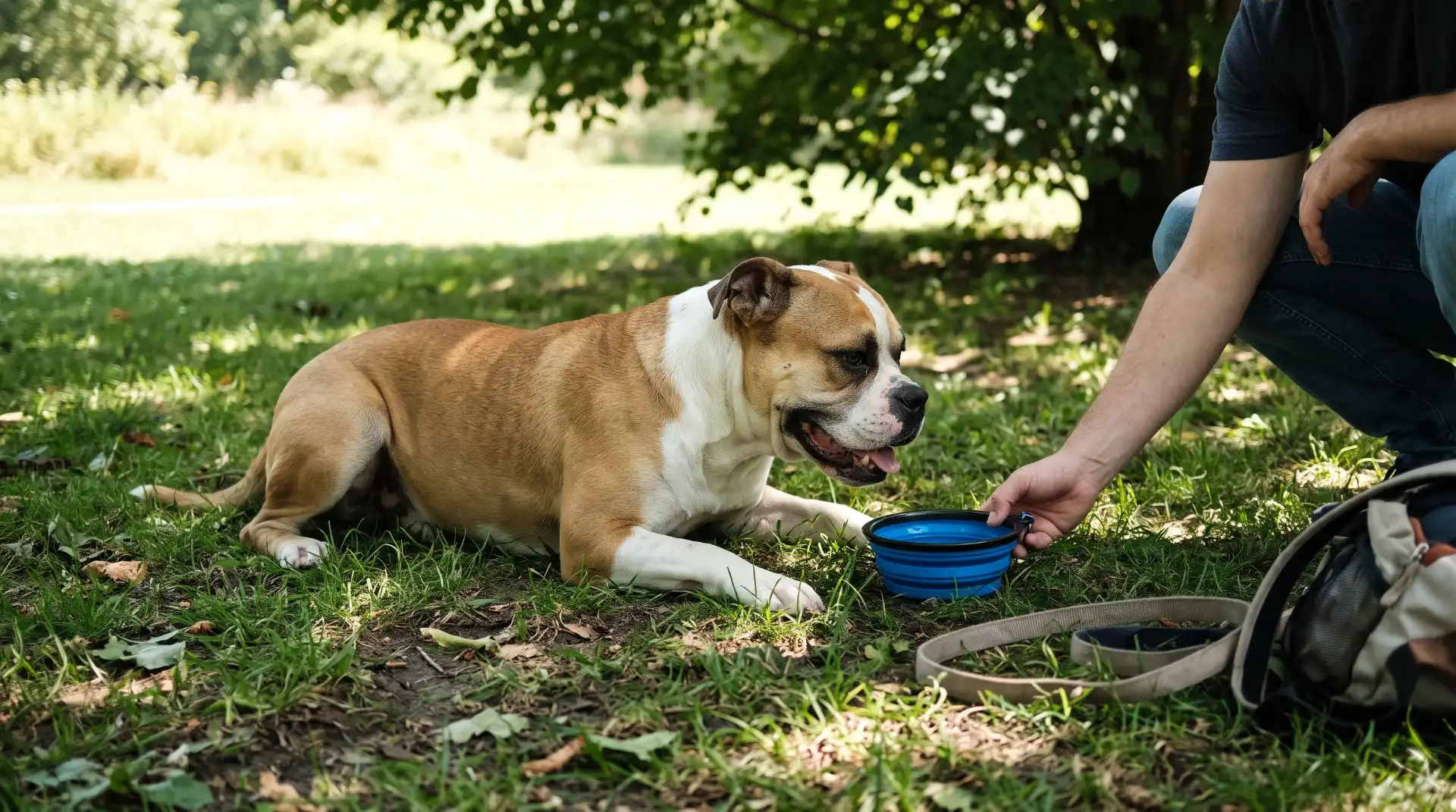
El Niño can bring challenging weather conditions, including periods of unusually hot weather, drought, and changes in rainfall patterns. For dog owners, preparing for these conditions means more than stocking up on drinking water and checking weather forecasts. It also means understanding how changing weather can affect a pet’s health, comfort, and safety.
Continental Bulldogs are active, muscular companion dogs that benefit from regular exercise, consistent care, and a comfortable living environment. However, like other bulldog-type dogs, individuals may be vulnerable to overheating, particularly if they have shortened muzzles, breathing difficulties, excess weight, or other medical conditions. Hot weather can become dangerous quickly when a dog cannot cool itself effectively.
El Niño does not cause identical weather conditions everywhere. Its effects vary by region and season, so owners should follow local weather forecasts and official emergency guidance rather than assume that every area will experience the same risks.
Preparing in advance can help Continental Bulldog owners respond calmly to heat waves, water shortages, storms, power interruptions, and evacuation orders. A practical plan should include an emergency supply kit, a safe indoor cooling area, a veterinary contact list, and a strategy for moving the dog to safety when necessary.
This guide explains how to prepare your Continental Bulldog for possible El Niño-related emergencies while maintaining its health, comfort, and daily routine.
Understanding How El Niño Can Affect Your Continental Bulldog
El Niño is a climate pattern associated with warmer-than-average sea surface temperatures in the central and eastern tropical Pacific Ocean. It can influence weather patterns in different parts of the world, although the exact effects depend on location, season, and other atmospheric conditions.
The National Oceanic and Atmospheric Administration provides updates and explanations about El Niño and related climate conditions through its Climate Prediction Center. Owners can consult the NOAA El Niño and La Niña information page for broader climate updates and should also check their local weather service for area-specific warnings.
For dog owners, the most important concern is not the name of a climate pattern but the conditions that develop locally. High temperatures, limited water supplies, poor air quality, flooding, and interruptions to electricity can all affect a dog’s well-being.
Heat and Dehydration
Hot weather increases the risk of dehydration and heat-related illness. Dogs rely heavily on panting to release body heat, and dogs with shortened airways may have more difficulty cooling themselves efficiently.
A Continental Bulldog that spends too much time outdoors during extreme heat may become exhausted, dehydrated, or dangerously overheated. Even a short walk can become risky when temperatures and humidity are high.
Water Shortages
Dry conditions may put pressure on local water supplies. Owners should maintain a reliable supply of clean drinking water for their dogs and avoid waiting until an emergency is announced before preparing.
Stored water should be kept in clean, food-safe containers and replaced according to the container’s instructions. Do not assume that tap water will always remain available during a heat wave, drought, or infrastructure disruption.
Storms, Flooding, and Power Outages
Some areas may experience heavy rainfall or severe storms even when other locations are unusually dry. Flooding, fallen trees, damaged roads, and electricity interruptions can complicate pet care and evacuation.
A power outage can also disable air conditioning, fans, water pumps, and other equipment. A dog that normally stays comfortable indoors may become vulnerable if the home becomes hot and poorly ventilated.
Changes in Daily Exercise
Hot weather may require changes to your dog’s usual routine. Exercise that is comfortable during cooler months can become unsafe during a heat wave.
Owners should be ready to shorten walks, choose shaded routes, replace strenuous outdoor activities with indoor enrichment, and move exercise to cooler periods of the day.
Why Continental Bulldogs Need Special Attention During Hot Weather
Every dog is an individual, and not every Continental Bulldog has the same physical characteristics or health risks. Nevertheless, owners should pay close attention to breathing, activity levels, body condition, and tolerance for heat.
Dogs cool themselves primarily through panting. When breathing becomes difficult, heat regulation can become less effective. A dog with an existing respiratory condition may therefore need a more conservative exercise plan during hot weather.
Weight also matters. Excess body fat can increase the physical demands of activity and make heat management more difficult. Keeping your dog at a healthy weight, providing regular veterinary care, and recognizing changes in breathing can support safer daily activity.
For additional guidance, read our article on health issues in Continental Bulldogs and prevention tips. Understanding your dog’s individual health needs can help you plan more effectively for extreme weather.
Recognize Your Dog’s Normal Breathing
Become familiar with how your Continental Bulldog normally breathes while resting, walking, and recovering after exercise. This baseline can help you recognize when something has changed.
Seek veterinary advice if your dog develops unusual breathing sounds, persistent coughing, reduced exercise tolerance, or difficulty recovering after activity. Severe breathing difficulty requires emergency veterinary attention.
Do not assume that loud panting is always normal for a bulldog-type dog. If panting is excessive, begins suddenly, or occurs alongside weakness, confusion, vomiting, or collapse, treat the situation as potentially urgent.
Keep Exercise Flexible
A fixed exercise schedule may not be appropriate during a heat wave. Instead, adjust your dog’s activity according to the actual weather, humidity, shade, air quality, and individual health.
Short toilet breaks may be safer than long walks during extreme heat. Indoor games, food puzzles, and brief training sessions can provide stimulation without requiring prolonged outdoor exercise.
Avoid vigorous running, repeated stair climbing, and strenuous play when conditions are hot. Never encourage your dog to continue exercising when it appears tired or uncomfortable.
Prepare a Continental Bulldog Emergency Kit
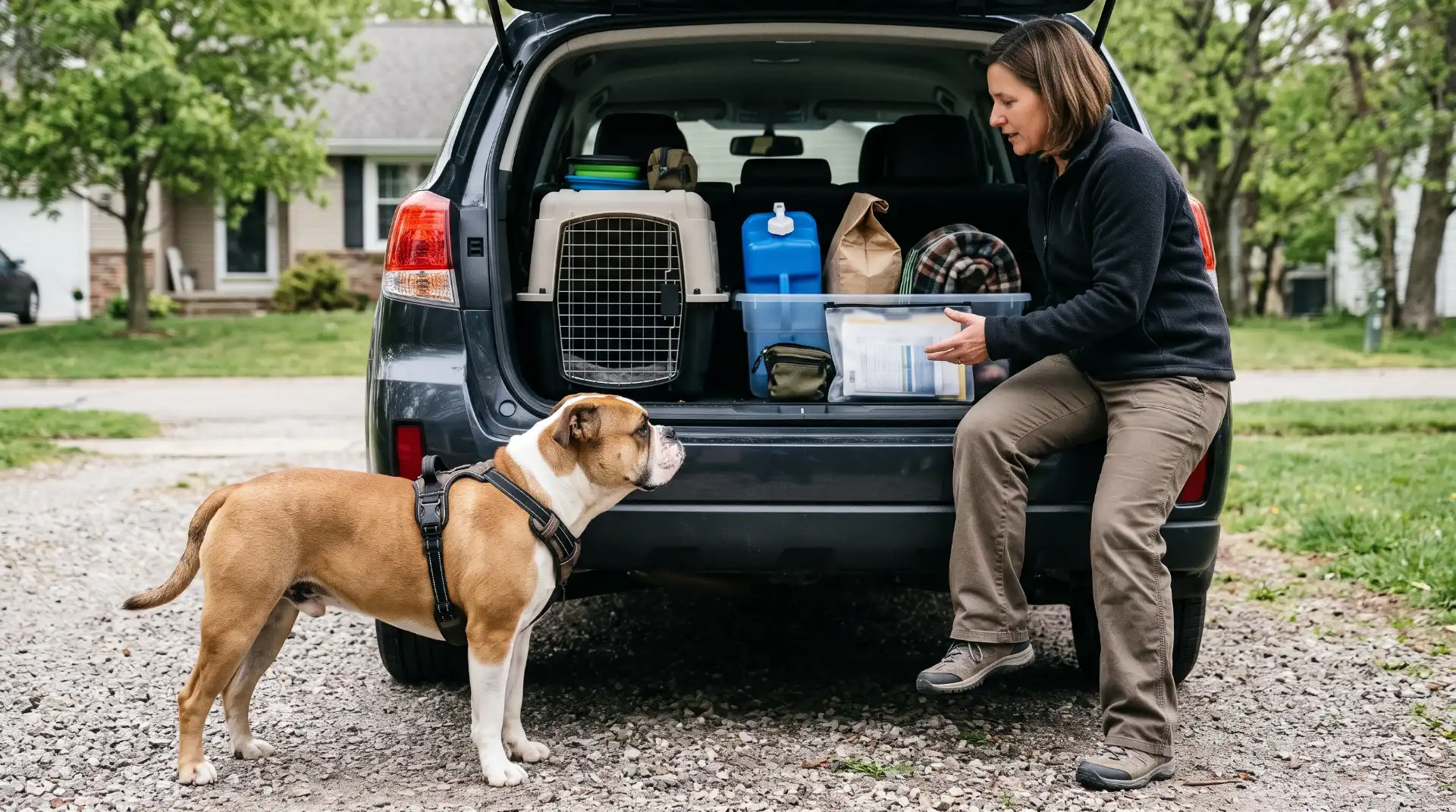
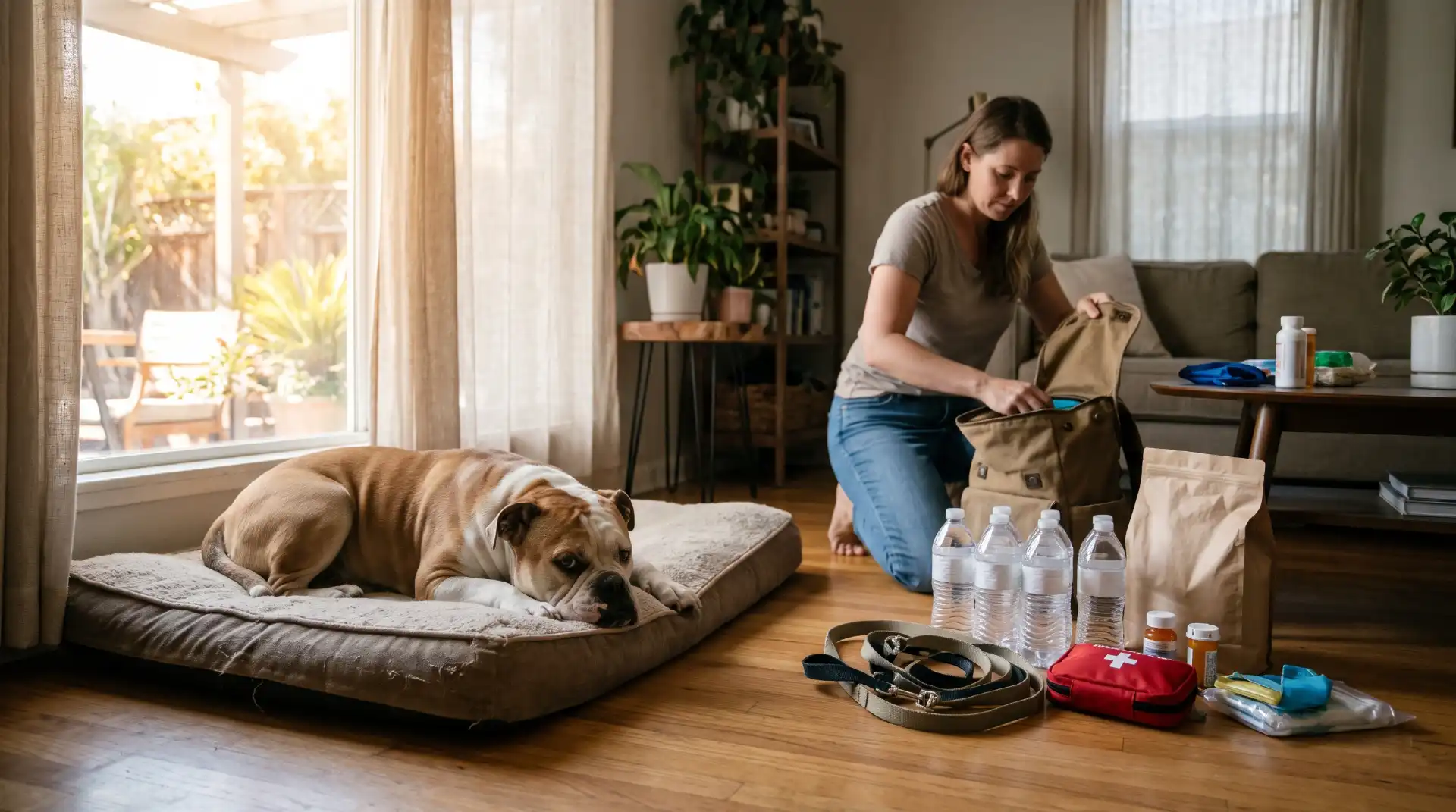
An emergency kit helps you respond more quickly if heat, storms, flooding, or water interruptions disrupt your normal routine. Store the supplies in an accessible location and make sure everyone in the household knows where they are.
The U.S. Centers for Disease Control and Prevention offers a useful pet emergency preparedness kit guide. Use it as a starting point, then adapt your kit to your dog’s needs and the hazards common in your area.
Drinking Water and Food
Keep an emergency supply of drinking water for your dog. The quantity you need will depend on your dog’s size, normal consumption, the length of the emergency, and the availability of safe water.
Store water in clean, sealed containers away from direct sunlight and chemicals. Check stored supplies regularly and replace them as appropriate.
Pack enough of your dog’s usual food for several days, along with an appropriate feeding container. Sudden changes in diet can cause digestive upset, so keeping familiar food available may make stressful circumstances easier to manage.
If your dog eats a prescription diet, make sure there is an adequate supply and speak with your veterinarian about how to handle disruptions.
Medication and Veterinary Records
Include any prescribed medication your dog may need, along with written dosing instructions from your veterinarian. Do not change medication doses or give human medicines without veterinary guidance.
Keep copies of vaccination records, medication information, relevant medical history, and your veterinarian’s contact details in a waterproof folder. Digital copies stored securely on your phone can provide a useful backup.
If your dog has a known breathing, heart, mobility, or other medical issue, ask your veterinarian whether additional emergency precautions are appropriate.
Cooling and Comfort Supplies
Pack a few familiar items that can help your dog settle in an unfamiliar place. These may include a lightweight blanket, a familiar toy, a leash, a secure harness, waste bags, and a portable water bowl.
A cooling mat may be useful when used according to the manufacturer’s instructions, but it should never be treated as a replacement for a cool environment or veterinary care. Check that your dog can move away from the mat if it becomes uncomfortable.
Avoid using equipment that could trap excessive heat or create a chewing, choking, or ingestion hazard.
Identification and Transport
Your emergency kit should include a sturdy leash, a well-fitting harness, a secure carrier or vehicle restraint appropriate for your dog, and current identification details.
Check that your dog’s collar tag has a working phone number. Make sure its microchip registration details, if applicable, are current.
If evacuation becomes necessary, having these items ready can prevent delays and reduce the chance that your dog becomes separated from you.
Create a Safe Cooling Area at Home
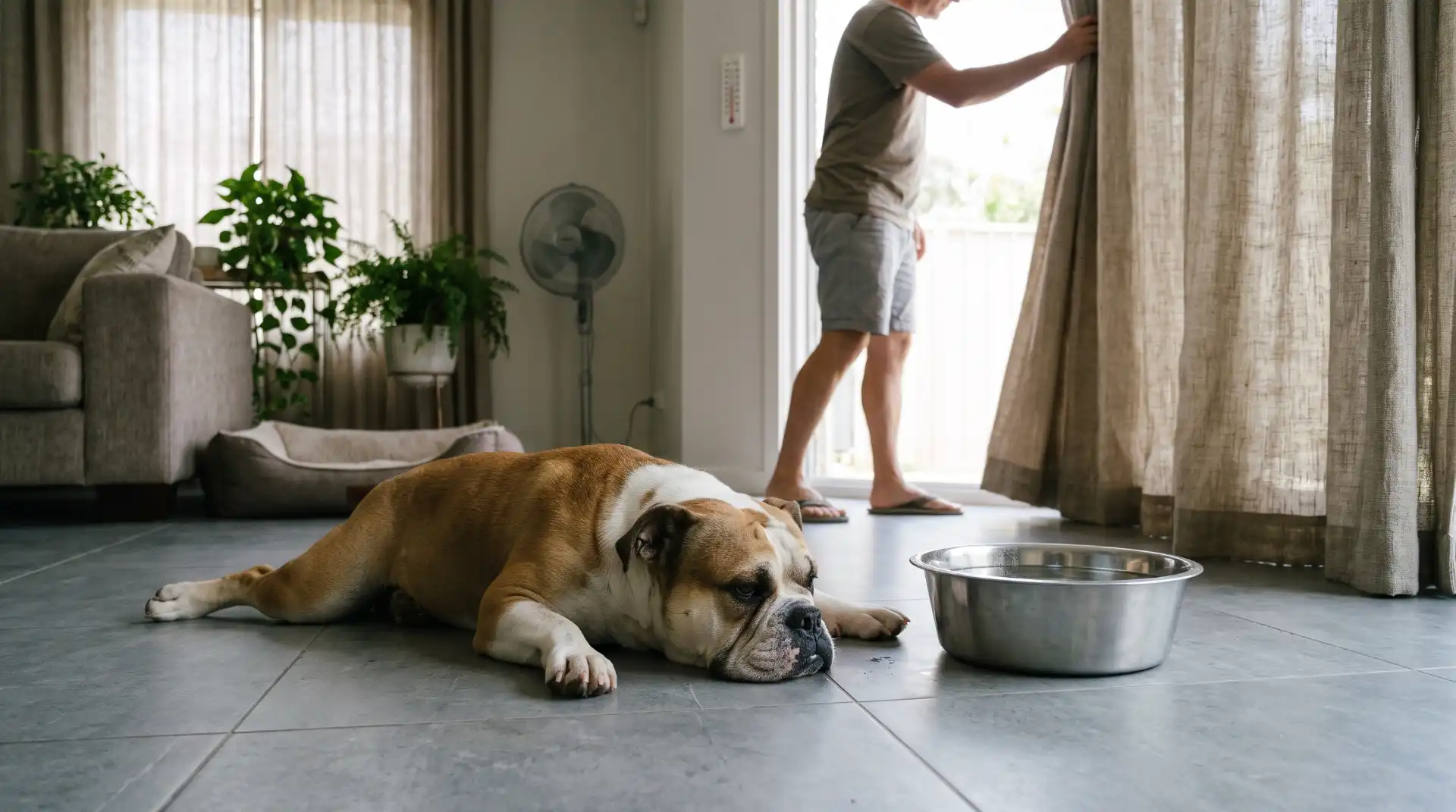
A designated cooling area gives your Continental Bulldog somewhere to rest during the hottest part of the day. Ideally, this space should be indoors, shaded, well ventilated, and away from direct sunlight.
If your home has air conditioning, identify the room that stays coolest and make it comfortable for your dog. Keep fresh water available and make sure your dog can lie down without being disturbed.
If you do not have air conditioning, use the coolest available room and reduce unnecessary heat entering the home. Close curtains or blinds where sunlight falls directly into the room, and avoid operating heat-producing appliances unnecessarily.
Fans can help with air movement, but they may not be enough to protect a dog during extreme heat. Never rely on a fan alone if the indoor temperature is becoming unsafe.
Check Indoor Temperatures
Do not judge safety solely by how comfortable the room feels to you. Dogs differ in their ability to tolerate heat, and humidity can make it harder for them to cool themselves.
Use a thermometer if possible, and pay attention to official heat advisories. If your home becomes excessively hot, consider relocating to a cooler, pet-friendly location before your dog shows signs of distress.
Potential alternatives may include a trusted friend’s air-conditioned home, an approved pet-friendly accommodation, or another location where pets are explicitly permitted.
Never Leave Your Dog in a Parked Vehicle
A parked vehicle can heat up rapidly, even when the weather outside does not seem extreme. Opening the windows slightly does not make a parked car a safe place to leave a dog.
Never leave your Continental Bulldog unattended in a parked vehicle during hot weather. If you need to run errands, leave your dog at home in a safe environment or arrange appropriate supervision.
Use Cooling Methods Carefully
If your dog appears warm after light activity, move it to a cooler area and offer fresh drinking water. Allow it to rest and recover without forcing further exercise.
Dampening the coat with cool or lukewarm water may help in some circumstances, but avoid extreme measures such as ice baths unless a veterinarian specifically directs you to use them. If overheating is suspected, contact a veterinarian promptly and follow professional instructions.
Do not cover your dog with thick, wet towels that may trap heat against the body. The safest approach depends on the dog’s condition, so suspected heatstroke should be treated as a medical emergency rather than managed with home remedies alone.
Recognize the Warning Signs of Heat-Related Illness
Heat-related illness can progress rapidly. Recognizing early warning signs gives owners a better chance of seeking help before the situation becomes critical.
Possible signs include excessive or unusually heavy panting, thick or excessive drooling, restlessness, weakness, and difficulty settling down. A dog may also seek shade, refuse to walk, or seem unusually tired.
More serious signs can include vomiting, diarrhea, confusion, poor coordination, collapse, seizures, or abnormal gum color. These symptoms require urgent veterinary attention.
What to Do if You Suspect Overheating
Move your dog away from direct sunlight and into the coolest available safe location. Stop all activity and contact a veterinarian or emergency veterinary clinic immediately for guidance.
Follow the veterinarian’s instructions about cooling while arranging transport. Do not delay seeking care because the dog appears to improve temporarily. Heat-related illness can cause serious internal complications that are not always obvious from the outside.
Never force water into the mouth of a weak, confused, or unconscious dog. This can create a choking or aspiration risk.
For additional background on recognizing breathing concerns and protecting your dog in warm conditions, read our guide on heat and breathing safety for Continental Bulldogs.
Adjust Outdoor Activities During an El Niño Heat Wave
Outdoor activity remains important for a dog’s physical and mental well-being, but the timing and intensity may need to change when temperatures rise.
Check the local forecast before leaving home. Pay attention to humidity, heat advisories, air quality alerts, and the temperature of the surfaces your dog will walk on.
Early morning or later evening may be cooler than midday, but these periods are not automatically safe. Evaluate the actual conditions rather than relying on the clock alone.
Protect Your Dog’s Paws
Asphalt, concrete, and other exposed surfaces can become much hotter than the surrounding air. Hot pavement can injure paw pads even when the temperature seems manageable.
Choose shaded paths and grassy areas when available. Keep walks brief during hot conditions and avoid forcing your dog to cross a surface that may be painfully hot.
If your dog suddenly lifts its paws, slows down, or refuses to continue walking, stop and move to a safer area. Check the paws for redness, blisters, or visible injuries and contact your veterinarian if you suspect a burn.
Replace Long Walks With Indoor Enrichment
When outdoor exercise is limited, use indoor activities to provide mental stimulation. Short training sessions, scent games, food puzzles, and supervised toy play can help your dog remain engaged.
Spread activities throughout the day instead of scheduling one strenuous session. Allow rest periods between activities and stop if your dog begins panting excessively or seems uncomfortable.
Avoid playing energetic games in a warm, poorly ventilated room. Indoor activity is only safer when the environment itself remains comfortable.
Avoid Overexertion Near Water
Some owners may take their dogs to pools, lakes, or other water areas during hot weather. Water does not eliminate the risk of overheating, and not every dog is a strong or confident swimmer.
Supervise your dog closely near water, use suitable safety equipment when appropriate, and provide easy access to a safe exit. Do not force a dog to swim as a cooling method.
After water activities, provide rest and fresh drinking water. Avoid allowing your dog to drink from potentially contaminated ponds, floodwater, or standing water.
Prepare for Drought and Water Interruptions
Water security is an important part of emergency planning, especially in areas where drought conditions may affect supplies.
Estimate how much clean water your dog normally consumes and prepare a reasonable reserve based on local emergency recommendations and the expected duration of a disruption. Dogs may need more water during hot weather, so do not rely on an amount calculated only for mild conditions.
Keep stored water sealed and protected from contamination. Use clean bowls and refill them regularly. If local authorities issue a drinking-water advisory, follow their instructions about safe water use for people and pets.
Do not assume that water that looks clear is safe to drink. Floodwater and water from unknown sources may contain sewage, chemicals, or disease-causing organisms.
If you are unsure whether your water supply is safe for your dog, ask your local authorities or veterinarian for guidance.
Plan for Storms, Flooding, and Evacuation
Emergency preparedness must account for more than hot weather. Heavy rainfall, thunderstorms, flooding, and other hazards may occur in some locations even during broader periods of unusual heat or drought.
Create an evacuation plan before an emergency develops. Identify where you can take your dog, how you will transport it, and which roads or routes may be affected by local hazards.
Identify Pet-Friendly Destinations
Do not assume that every emergency shelter, hotel, or temporary accommodation accepts pets. Contact potential destinations in advance and ask about their pet policies, size restrictions, documentation requirements, and available facilities.
Keep several options on your list in case the nearest location is full or inaccessible. A friend or relative may be able to help, but confirm the arrangement before an emergency occurs.
If you may need to evacuate, keep your dog’s leash, harness, carrier, food, water, medication, and records in a location that is easy to reach.
Never Walk or Drive Through Floodwater
Floodwater can conceal open drains, sharp debris, damaged roads, strong currents, and electrical hazards. Even shallow-looking water may be dangerous.
Keep your dog away from flooded streets, drainage channels, and moving water. Do not allow it to drink floodwater or explore areas contaminated by sewage or chemicals.
Follow evacuation orders from local authorities. If officials advise leaving an area, do not wait until roads are blocked or conditions become more dangerous.
Reduce Stress During Evacuation
Travel and unfamiliar surroundings can be stressful for dogs. Maintain a secure leash or harness, use a suitable vehicle restraint, and bring familiar bedding or a toy when possible.
Keep your dog with you unless officials or emergency responders provide specific instructions that make another arrangement necessary. Make sure identification remains attached and that a current photograph is available in case you become separated.
When you arrive at a temporary location, establish a quiet resting area and provide water, familiar food, and opportunities for toilet breaks.
Protect Your Dog During Power Outages
Power interruptions can affect air conditioning, fans, refrigeration, water pumps, and communications. Owners should consider how their dog will remain safe if electricity becomes unavailable during hot weather.
Identify the coolest room in your home and determine whether it remains safe without powered cooling. If the indoor temperature rises significantly, make arrangements to relocate your dog before overheating occurs.
Do not use outdoor grills, fuel-burning generators, or combustion heaters inside enclosed spaces to maintain comfort. These devices can create dangerous carbon monoxide exposure and other hazards.
If you use a generator, follow the manufacturer’s safety instructions and keep it outdoors at the required distance from doors, windows, and ventilation openings.
Keep your phone charged when possible and store important veterinary numbers in both digital and written form. If your dog relies on powered medical equipment or refrigerated medication, discuss a backup plan with your veterinarian in advance.
Consider Air Quality and Smoke Exposure
Depending on local conditions, dry weather can coincide with dust, smoke, or wildfire-related air-quality problems. Poor air quality may irritate a dog’s respiratory system and can be especially concerning for dogs with existing breathing difficulties.
Check official air-quality alerts and reduce outdoor activity when authorities advise limiting exposure. Short toilet breaks may be necessary, but avoid strenuous exercise in smoky or dusty conditions.
Keep windows closed when outdoor air quality is poor, provided the indoor environment remains safe and adequately ventilated. If your home becomes too hot while windows are closed, move to a safer location with both comfortable temperatures and cleaner air.
Watch for coughing, unusual breathing effort, eye irritation, weakness, or other changes after exposure to smoke or dust. Contact a veterinarian if symptoms develop or worsen. Severe breathing difficulty requires emergency care.
Keep Your Continental Bulldog Calm During Emergencies
Weather emergencies can disrupt routines and introduce unfamiliar noises, people, and locations. Dogs may react by pacing, hiding, barking, refusing food, or seeking constant reassurance.
Prepare your dog gradually for travel and temporary confinement. If it uses a carrier or crate, help it associate the space with positive experiences well before an emergency occurs.
During a storm or evacuation, use a calm voice and provide a familiar blanket or toy if it is safe to do so. Maintain a predictable feeding and toilet routine as much as circumstances allow.
Do not punish fear-related behavior. Instead, reduce unnecessary stimulation and provide a secure place where your dog can rest.
If your dog has a history of severe anxiety during storms or travel, ask your veterinarian about an appropriate plan before the next emergency. Do not give sedatives or human anxiety medications unless specifically prescribed for your dog.
Build a Practical Household Emergency Routine
Preparedness works best when it becomes part of normal household planning rather than a last-minute response.
Check weather forecasts regularly during periods of unusual heat or severe weather. Review emergency contacts, confirm that pet supplies are available, and make sure family members know who is responsible for the dog if everyone must leave quickly.
Keep the dog’s essential supplies together so they can be collected without searching through multiple rooms. Recheck food, medication, identification, and water supplies periodically.
If you have more than one pet, prepare a separate record and identify any special needs for each animal. Do not assume that one transport carrier, medication supply, or feeding arrangement will be suitable for every pet.
A Simple Weekly Preparedness Check
Once a week during a period of elevated weather risk, review the local forecast and any official alerts. Check that your dog has access to clean drinking water and that the indoor cooling area remains usable.
Inspect the emergency kit for expired medication, damaged containers, missing food, or outdated contact information. Make sure the leash, harness, and carrier are in working condition.
Use this review to identify problems while conditions are still manageable. Replacing an empty water container or confirming a pet-friendly destination is much easier before an emergency begins.
What to Do After the Emergency
When the immediate danger has passed, continue monitoring your dog. Heat exposure, contaminated water, injuries, and stress may cause problems that are not immediately obvious.
Check for limping, paw injuries, cuts, unusual fatigue, coughing, vomiting, diarrhea, and changes in breathing or behavior. Contact a veterinarian if you notice concerning symptoms or if your dog may have been exposed to floodwater, smoke, chemicals, or extreme heat.
Return to normal exercise gradually. Your dog may need additional rest after an evacuation or a period of disrupted sleep and activity.
Clean food bowls, water containers, bedding, and other supplies that may have been exposed to contaminated water or debris. Replace damaged or contaminated items rather than assuming they can be made safe through ordinary rinsing.
Restock used emergency supplies as soon as practical. Review what worked well and what should be improved before the next weather event.
For more general preparedness guidance, keep our resource on pet emergency preparedness kit guide available alongside your emergency kit. First-aid supplies can be useful, but they do not replace veterinary evaluation when a dog is seriously ill or injured.
Frequently Asked Questions
Can El Niño make conditions dangerous for Continental Bulldogs?
El Niño can influence regional weather patterns, but its effects vary by location. If your area experiences extreme heat, water shortages, poor air quality, or severe storms, your dog may face additional risks. Follow local weather alerts and adjust your care routine to the conditions that actually occur.
How can I tell if my Continental Bulldog is overheating?
Warning signs may include excessive panting, heavy drooling, weakness, restlessness, vomiting, confusion, poor coordination, or collapse. Serious symptoms require urgent veterinary attention. Move the dog to a cooler place, stop activity, and contact a veterinarian immediately if overheating is suspected.
Should I walk my dog during a heat wave?
Only if conditions are safe for your individual dog. Choose cooler periods when appropriate, keep walks short, avoid hot pavement, and watch closely for signs of distress. If temperatures or humidity are extreme, use brief toilet breaks and indoor enrichment instead of a normal walk.
How much emergency water should I store for my dog?
The amount depends on your dog’s size, usual water consumption, the weather, and the expected length of the disruption. Prepare a reserve based on local emergency guidance and your dog’s needs, and allow for increased demand during hot conditions. Keep water sealed in clean containers and replace it appropriately.
Can I use a fan to keep my Continental Bulldog cool?
A fan can improve air movement, but it may not be sufficient during extreme heat. If the room becomes dangerously hot, move your dog to a cooler location rather than relying on a fan alone. Monitor your dog’s behavior and breathing closely.
Should I evacuate with my dog during a flood warning?
Follow instructions from local emergency authorities. If evacuation is advised, take your dog if it is safe to do so and use a confirmed pet-friendly destination. Never allow your dog to walk through floodwater, and do not delay leaving until routes become dangerous.
What should I do if my dog shows signs of heatstroke?
Treat suspected heatstroke as an emergency. Move your dog away from the heat, contact a veterinarian immediately, and follow professional instructions for cooling and transport. Do not wait for symptoms to disappear and do not force water into a weak or confused dog.
Final Thoughts: Prepare Early to Protect Your Continental Bulldog
El Niño emergency preparedness is about understanding local risks and taking sensible precautions before weather conditions become dangerous. For Continental Bulldog owners, that means prioritizing safe temperatures, clean drinking water, appropriate exercise, reliable identification, emergency supplies, and a clear evacuation plan.
Pay close attention to your dog’s breathing, energy level, and ability to recover after activity. Change your routine when heat, humidity, air quality, or local warnings make normal activities unsafe. Keep emergency supplies accessible and identify pet-friendly destinations before you need them.
Most importantly, do not wait for your dog to show serious symptoms before taking action. Early planning, careful observation, and timely veterinary care can make a meaningful difference during an emergency.
By preparing your home and household in advance, you can help your Continental Bulldog remain safer and more comfortable through periods of extreme weather and unexpected disruption.