
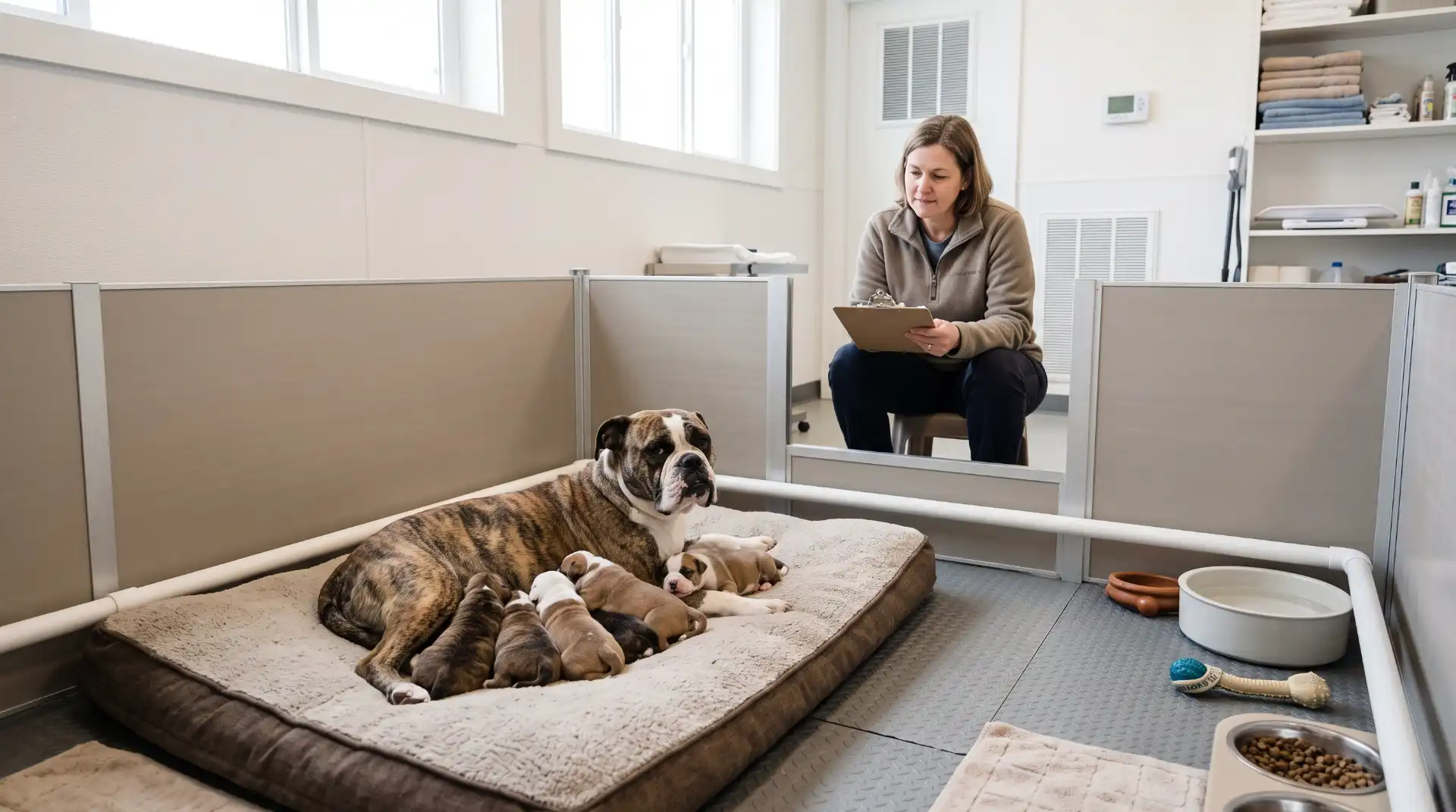
Dog breeding welfare has become an increasingly important subject for breeders, veterinarians, prospective puppy owners, and animal-welfare advocates across the United States. As public expectations about responsible breeding evolve, questions about veterinary care, breeding frequency, exercise, socialization, and living conditions are receiving greater attention.
For Continental Bulldog breeders, these discussions deserve particular consideration. Responsible breeding involves more than producing puppies that match a breed description. It also requires attention to the health of breeding dogs, the physical and behavioral development of puppies, appropriate veterinary care, and the long-term welfare of animals throughout the breeding process.
In 2026, the U.S. Department of Agriculture (USDA), through its Animal and Plant Health Inspection Service (APHIS), sought public input on whether federal dog-welfare regulations should be updated. The review focused on the care of breeding females and the exercise and socialization of dogs covered by the Animal Welfare Act. The USDA subsequently announced on September 21, 2026, that it intends to put forward a regulatory proposal in 2027 following its review of public comments.
These developments have created an important opportunity for breeders to review their current practices and prepare for possible changes. However, it is essential to understand the distinction between a request for public input, a planned regulatory proposal, and a final rule that has taken effect.
This guide explains what the 2026 USDA discussions involve, how federal oversight works, what the potential changes could mean for Continental Bulldog breeding programs, and which practical steps breeders can take to support animal welfare while keeping their operations organized and transparent.
What Is Happening With USDA Dog Breeding Oversight in 2026?
The USDA’s Animal and Plant Health Inspection Service administers federal animal-welfare programs, including enforcement of applicable provisions of the Animal Welfare Act (AWA).
The AWA establishes minimum standards for certain animals and activities covered by federal law. Depending on the circumstances, regulated dog dealers, breeders, exhibitors, and other entities may need to obtain a USDA license or registration and comply with relevant requirements.
The law does not automatically regulate every person who owns a dog or breeds a litter. Whether a particular breeding operation requires a license depends on the activities involved and the applicable statutory and regulatory exceptions. Breeders should therefore determine their obligations based on their specific circumstances rather than assuming that all small breeders are exempt or that every hobby breeder must obtain a federal license.
In February 2026, APHIS requested public comments, scientific information, and stakeholder input concerning potential updates to federal dog-welfare regulations. The agency highlighted the care of breeding females and requirements for exercise and socialization as important subjects for review. The public-comment deadline was extended to April 20, 2026.
The agency’s announcement explained that the standards under review had not undergone a major revision in more than three decades. During that period, veterinary knowledge, animal-behavior research, and common welfare practices have continued to develop.
The review does not mean that every suggested change automatically becomes a legal requirement. Instead, it provides a process for gathering evidence and evaluating whether existing standards should be revised.
On September 21, 2026, USDA announced that it plans to put forward a regulatory proposal in 2027 based on its review of the public input received. That announcement is an important development, but a planned proposal is not the same as a final regulation already in force.
For Continental Bulldog breeders, the practical takeaway is straightforward: understand the rules that apply today, follow official developments, and use this period to identify opportunities to improve animal care.
What Is the Animal Welfare Act, and Why Does It Matter to Dog Breeders?
The Animal Welfare Act is a federal law that establishes standards for the humane handling, care, treatment, and transportation of certain animals in covered activities.
APHIS is responsible for administering relevant regulatory requirements and conducting inspections of regulated facilities. Its oversight may include reviewing animal housing, veterinary-care arrangements, records, husbandry practices, and animal-handling procedures.
Not every breeder falls within the same regulatory category. Some operations may be subject to federal licensing or registration requirements, while others may fall outside the relevant federal coverage or qualify for an applicable exception. State and local laws may impose additional requirements even when federal licensing does not apply.
A breeder who sells puppies directly to families, operates a larger breeding facility, sells through intermediaries, or participates in commercial transactions involving transportation should not assume that the same rules apply to every situation. The details of the business model and the applicable legal definitions matter.
APHIS provides information about licensing and registration, including an online tool to help people determine whether their activities may require authorization. Breeders can consult the agency’s official resource at https://www.aphis.usda.gov/awa/apply.
Understanding the AWA is important because federal standards provide a legal baseline for covered operations. Responsible breeding programs may choose to adopt additional welfare practices beyond that minimum, particularly when veterinary advice or breed-specific needs justify doing so.
Federal oversight is not the same as breed registration
Continental Bulldog breeders should also distinguish animal-welfare regulation from pedigree registration and kennel-club recognition.
A breed organization may maintain pedigrees, publish a breed standard, or establish requirements for participation in its activities. Those functions are different from federal oversight under the Animal Welfare Act.
Likewise, having a registered Continental Bulldog does not automatically demonstrate that a breeding facility meets every applicable welfare requirement. Conversely, federal licensing does not establish that every dog produced by a facility is genetically healthy or ideally suited to a particular breed standard.
Breeders should evaluate registration, animal welfare, veterinary care, and breeding decisions as related but separate responsibilities.
For additional background on the breed’s physical characteristics and intended structure, see The 2026 Continental Bulldog Standard Explained: What the New FCI Recognition Means for U.S. Owners. Understanding the standard can help breeders consider functional structure and temperament alongside broader welfare responsibilities.
Why the Care of Breeding Female Dogs Is Receiving Attention
One of the central topics in the 2026 USDA review is the care of breeding females. A female dog’s health can be affected by nutrition, body condition, pregnancy, nursing, recovery, genetics, age, and the frequency of litters.
Responsible breeding requires breeders to consider the individual dog’s condition rather than treating every female as though she has identical needs. Veterinary advice should guide decisions about whether a dog is suitable for breeding, when she should be bred, how she should be monitored during pregnancy, and when she should retire from a breeding program.
Nutrition and body condition
Pregnancy and lactation can place additional demands on a dog’s body. Nutritional needs may change during these stages, and feeding decisions should reflect the dog’s health, size, activity, and reproductive status.
A breeder should work with a veterinarian to determine an appropriate feeding plan and monitor body condition throughout the reproductive cycle. Simply providing large amounts of food does not guarantee good nutrition. The diet must supply appropriate nutrients in quantities suited to the dog’s needs.
Breeders should also watch for changes in appetite, weight, hydration, energy, and behavior. Significant changes may indicate a problem that requires veterinary attention.
These practices are valuable whether or not a future federal rule introduces additional detail about nutrition. They help breeders make informed decisions and maintain better records of each dog’s health.
Pregnancy, nursing, and recovery
Pregnancy and nursing should not be treated as routine events that require little oversight. A veterinarian can help establish a plan for monitoring the female, preparing for delivery, recognizing warning signs, and providing appropriate postpartum care.
Breeders should also consider the dog’s recovery after a litter. A female may need time to regain body condition, recover from complications, and return to her usual activity level before any further breeding decision is considered.
There is no responsible universal litter schedule that should be applied to every dog without regard to her health. Age, reproductive history, previous complications, body condition, and veterinary findings all matter.
A careful breeding program keeps records of each pregnancy, delivery, nursing period, and recovery. Those records can help breeders recognize patterns and make better decisions about whether a female should be bred again or retired.
Age, litter frequency, and inherited traits
APHIS specifically identified questions about age, litter frequency, and genetics as relevant to the review of breeding-female care.
These issues are connected. A breeding decision should not be based solely on whether a female is physically capable of becoming pregnant. Breeders should consider her overall health, reproductive history, inherited risks, and the likely welfare consequences for both the mother and her puppies.
For Continental Bulldogs, this means looking beyond appearance or pedigree titles. Breeding dogs should be evaluated for health, temperament, functional movement, breathing, and other relevant characteristics. A desirable physical trait does not compensate for an avoidable health risk.
The USDA’s request for information does not, by itself, establish a new mandatory litter limit or a universal retirement age. Breeders should avoid treating proposals or discussion topics as though they are already binding requirements. Instead, they should monitor official updates and seek veterinary guidance when making individual breeding decisions.
Exercise and Socialization: What Could Change?
Exercise and socialization were also central topics in APHIS’s 2026 request for public input. The agency sought information about practices that support dogs’ welfare, including opportunities for exercise and social interaction.
These subjects matter because welfare involves more than food, water, and shelter. Dogs also need appropriate opportunities to move, explore, interact with their surroundings, and develop normal behavior.
Exercise should match the individual dog
Continental Bulldogs are muscular, medium-sized dogs, but individual exercise needs vary according to age, health, body condition, temperament, and environment.
A young puppy needs safe opportunities to explore and play, while a pregnant or recovering female may require an adjusted routine based on veterinary advice. Older dogs and dogs with orthopedic or respiratory concerns may need different activity plans from healthy adults.
Responsible breeders should provide appropriate space and opportunities for movement while preventing exposure to unsafe temperatures, hazardous surfaces, overcrowding, and conditions that may cause injury.
Exercise should never be used as a substitute for appropriate housing, veterinary care, or social interaction. Nor should dogs be pushed into activity that exceeds their physical ability.
For covered facilities, breeders must meet the exercise and housing requirements that currently apply to their operations. If future regulations introduce more specific standards, the details will depend on the final rule and its effective date.
Socialization is a welfare consideration, not just a training technique
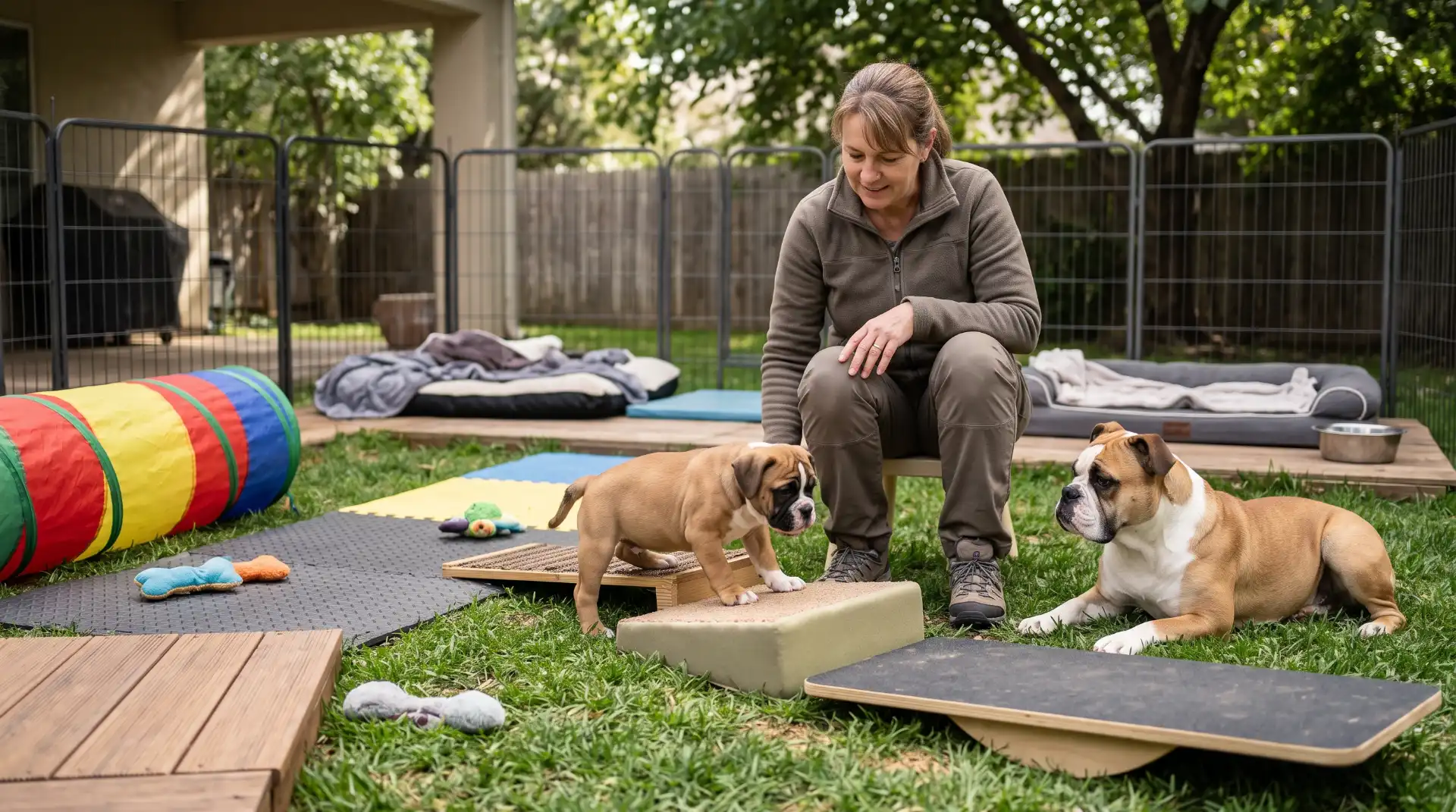
Early experiences can influence how puppies respond to people, everyday sounds, handling, surfaces, and unfamiliar environments.
A thoughtful socialization program introduces puppies to appropriate experiences gradually and safely. It should account for age, health, vaccination guidance, individual temperament, and veterinary recommendations.
Breeders can begin with calm human interaction, gentle handling, exposure to ordinary household sounds, and opportunities to investigate safe environments. Experiences should be positive and manageable rather than overwhelming.
The objective is not to expose puppies to as many things as possible. It is to help them develop confidence without creating unnecessary fear or stress.
Adult breeding dogs also benefit from appropriate social interaction. Their needs may differ from those of puppies, but they should not be deprived of normal contact and behavioral opportunities merely because they are kept for breeding.
Enrichment can support better welfare
Environmental enrichment can include safe toys, opportunities to explore, appropriate chewing activities, scent-based games, varied surfaces, and positive interaction with people.
The specific activities should be suitable for the dogs’ ages, health, and behavior. Objects should be selected carefully to avoid choking hazards, toxic materials, or items that could cause injury.
Breeders should also observe how each dog responds. An activity that helps one dog relax may cause another to become anxious or overly excited.
Keeping notes about enrichment and socialization can help a breeding program evaluate whether its routines are meeting the dogs’ needs. Such records can also make it easier to identify when an individual dog needs a different approach.
Existing Veterinary-Care Requirements Still Matter
While the USDA is reviewing potential changes, current requirements remain important for facilities covered by the Animal Welfare Act.
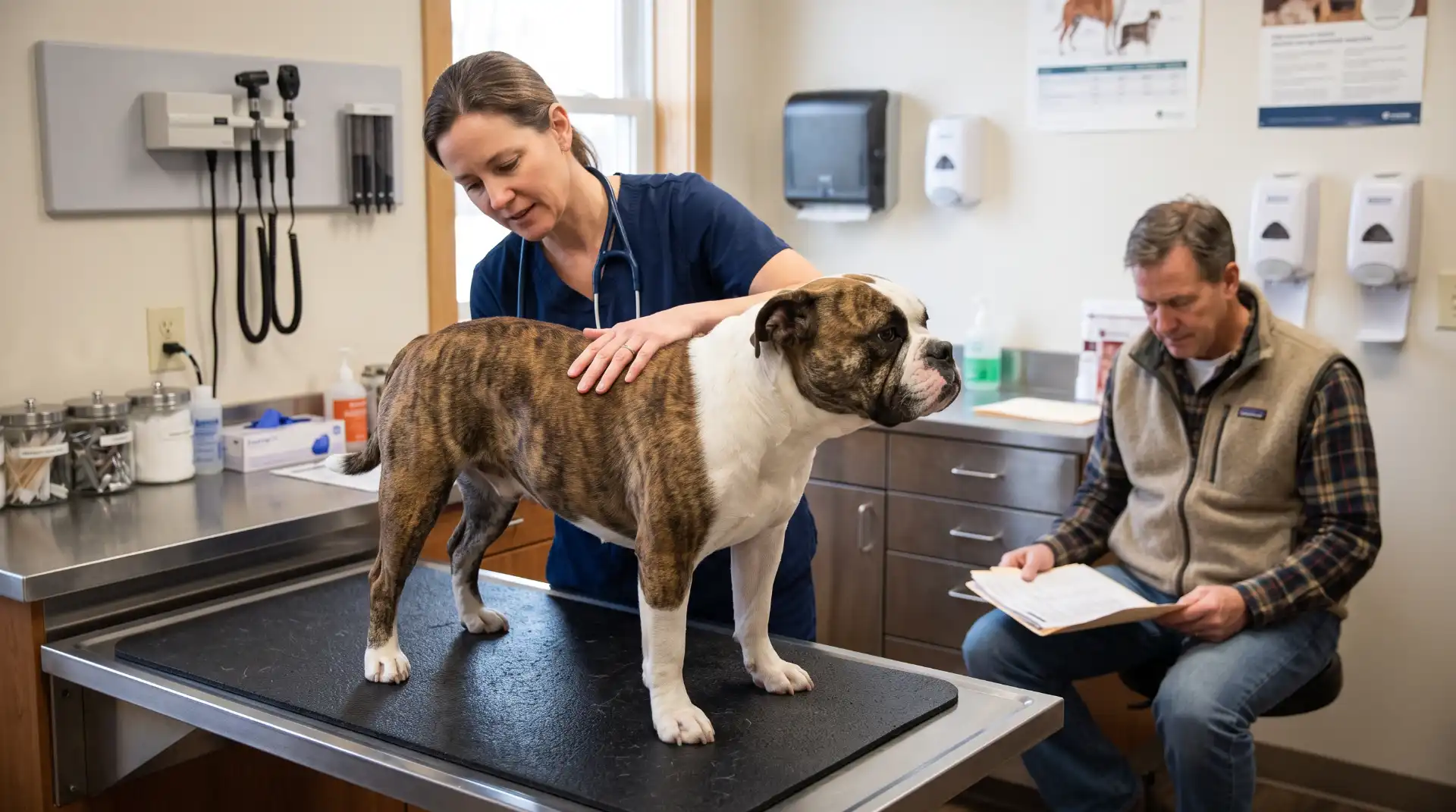
APHIS explains that regulated facilities must work with an attending veterinarian to establish a written Program of Veterinary Care. The relevant federal requirements also include veterinary visits at least every 12 months and annual physical examinations for dogs covered by those provisions.
The written program should reflect the facility’s circumstances and the veterinarian’s guidance. It is not merely a document to keep in a folder; it should inform actual care decisions.
Preventive care and health monitoring
Breeders should maintain a working relationship with a veterinarian who understands the dogs’ health needs and can help develop suitable preventive-care procedures.
Depending on the circumstances, care may involve vaccination, parasite prevention, dental care, skin and ear monitoring, reproductive health, and prompt assessment of illness or injury.
The appropriate plan varies among dogs. Breeders should not assume that a single preventive-care schedule will suit every animal regardless of age, medical history, or living conditions.
Continental Bulldogs deserve particular attention to breathing, skin, mobility, and body condition. Breeders should seek veterinary advice when a dog displays persistent respiratory difficulty, abnormal exercise tolerance, recurrent skin irritation, lameness, or other concerning changes.
A breed’s reputation or intended structure should never be used to dismiss symptoms that may require examination.
Maintain clear veterinary records
Accurate records make it easier to follow treatment plans, monitor health changes, and communicate with veterinary professionals.
A breeding facility can maintain an individual record for each dog, including identification, veterinary visits, test results, medications, vaccinations, reproductive history, and relevant observations. Records should be updated consistently and stored securely.
Where a dog develops a problem, documenting the symptoms, dates, treatment, and follow-up can help the veterinarian assess the case more effectively.
For regulated facilities, records must meet the requirements applicable to their activities. Breeders should consult the current regulations and their veterinarian rather than relying on a generic online checklist.
APHIS publishes practical compliance resources for dog breeders through its Animal Welfare Resources and Guidance page.
Housing, Cleanliness, and Climate Control
A breeding facility’s physical environment can influence dogs’ comfort, health, and behavior. Clean, safe housing helps reduce hazards and supports effective daily care.
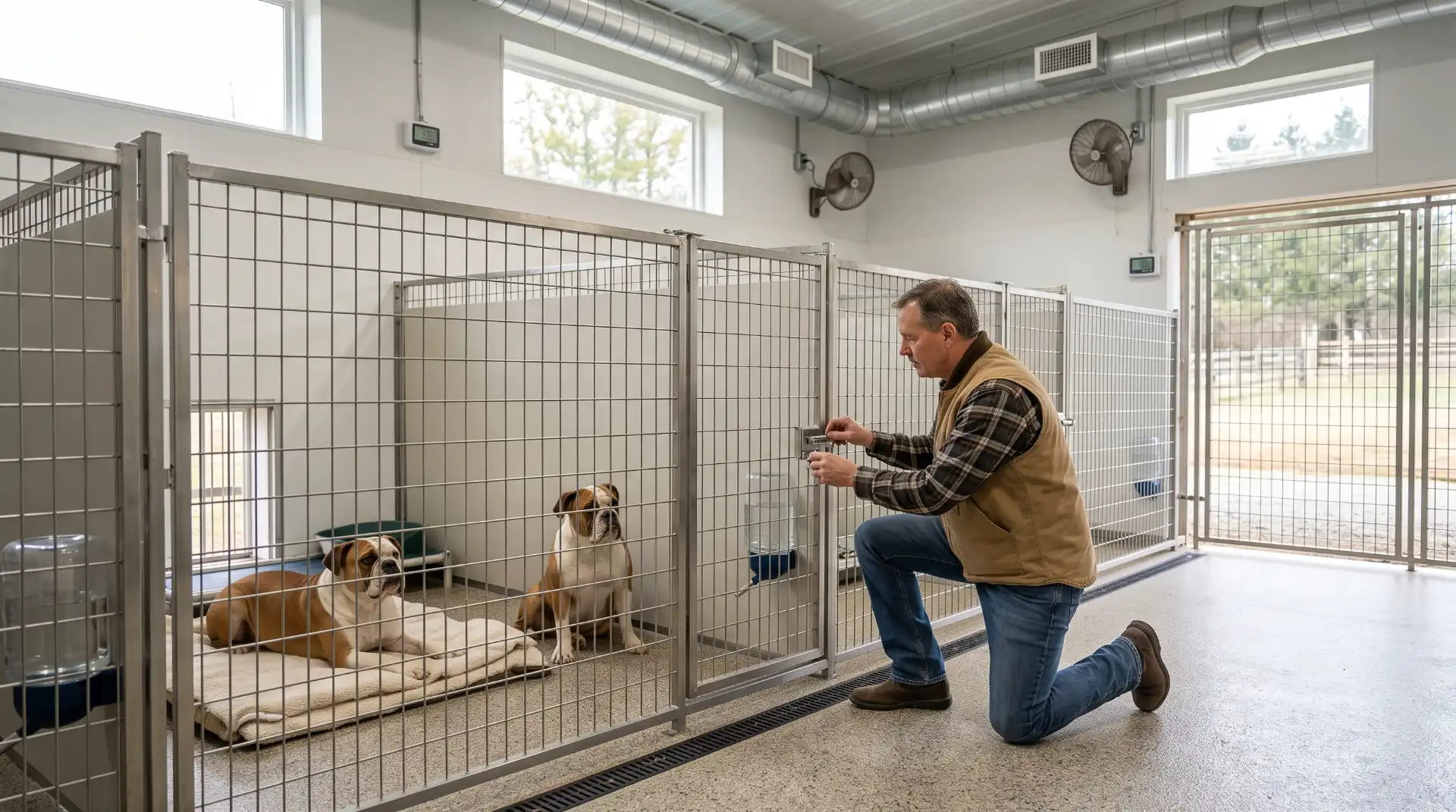
Breeders should provide suitable shelter, maintain secure enclosures, ensure access to fresh water, and manage temperature and ventilation appropriately. Housing should allow dogs to rest comfortably and move according to their needs.
Cleaning routines should remove waste, maintain sanitary surfaces, and reduce avoidable exposure to disease. However, cleanliness should not be evaluated only by whether a facility looks attractive during a visit. Effective sanitation requires consistent routines, appropriate materials, and attention to how dogs actually use the space.
Continental Bulldog-specific considerations
Continental Bulldogs have a muscular build and a relatively short muzzle compared with many other breeds. Individual dogs may differ in their tolerance for heat, exertion, and environmental conditions.
Breeders should therefore take a cautious approach to temperature management and exercise during warm weather. Shade, suitable ventilation, access to water, and the ability to move away from uncomfortable conditions are important considerations.
Dogs should never be left in environments where heat or cold creates a foreseeable danger. Breeders should also watch for signs of distress and seek veterinary assistance when necessary.
The presence of climate-control equipment alone does not prove that conditions are appropriate. Equipment must be maintained, monitored, and used in a way that keeps the dogs comfortable.
Separate welfare practices from appearance
A well-designed breeding facility should prioritize the dogs’ needs rather than the appearance of the kennel to prospective buyers.
Photographs of attractive rooms or spacious outdoor areas can provide useful context, but they do not establish that every dog receives appropriate care. Buyers and regulators may need to consider daily routines, individual housing, veterinary records, sanitation, exercise, and socialization.
For breeders, the most useful approach is to establish consistent care procedures and verify that they work in practice.
How USDA Inspections and Enforcement Work
APHIS conducts inspections of facilities covered by the Animal Welfare Act. The agency describes pre-licensing inspections, routine unannounced compliance inspections, and focused inspections based on complaints or allegations of unlicensed activity.
During inspections, officials may review premises, records, husbandry practices, veterinary-care arrangements, and animal-handling procedures. The exact scope depends on the applicable requirements and the circumstances of the inspection.
What happens when an inspector identifies a problem?
The response depends on the nature and seriousness of the issue, the applicable law, and the facility’s compliance history.
APHIS explains that some deficiencies may be addressed through corrective measures and deadlines. More serious or persistent violations can lead to additional enforcement action, including official warnings, civil penalties, license suspension or revocation, and other measures authorized by law.
An inspection finding should not automatically be interpreted as proof that a facility has committed every alleged violation, and a single deficiency may not carry the same significance as repeated serious failures. The agency’s enforcement process considers the relevant evidence and procedures.
For breeders, the sensible response is to take findings seriously, understand what needs to be corrected, document the corrective work, and seek clarification when requirements are unclear.
Can the public check a breeder’s USDA status?
APHIS provides a public search tool for information about regulated entities, inspection reports, and enforcement actions. The availability and scope of information depend on the records maintained and published by the agency.
A search result should be interpreted carefully. A breeder’s absence from a particular list does not automatically prove misconduct, because not every breeder is required to hold a USDA license. Similarly, a license does not guarantee that every aspect of an operation is ideal or that a puppy is free from inherited health problems.
The most useful approach is to establish whether federal licensing applies, check relevant records where available, and ask the breeder clear questions about health and husbandry.
What the 2027 Regulatory Proposal Could Mean for Continental Bulldog Breeders
USDA’s September 2026 announcement said that APHIS plans to put forward a regulatory proposal in 2027 after reviewing public comments on dog-welfare standards. The agency also described steps intended to strengthen oversight and compliance.
The final details of any future proposal will matter. Until a rule is finalized and becomes effective, breeders should not assume that every discussion topic has become a new legal obligation.
Nevertheless, the subjects under review offer useful clues about the areas breeders should watch.
More specific expectations for breeding-female care
A future proposal could address how regulated facilities should assess and document the care of breeding females. Depending on the eventual language, that could involve greater clarity around veterinary and nutritional care, reproductive history, or the factors considered when deciding whether a dog should be bred again.
These are possibilities, not confirmed requirements. Breeders should wait for the published proposal and review its actual provisions rather than relying on headlines or informal summaries.
In the meantime, documenting veterinary advice, reproductive events, recovery, and individual health concerns is a sensible way to strengthen a breeding program.
Clearer standards for exercise and socialization
A future rule could also clarify expectations for exercise and socialization in facilities covered by the AWA. The scope, definitions, exceptions, and compliance deadlines would depend on the final regulatory language.
Breeders can prepare by reviewing how their current routines support movement, behavioral development, and appropriate human interaction. They can also identify whether existing facilities or procedures need improvement.
The purpose should be better welfare, not simply the creation of paperwork. Documentation is useful when it reflects real care practices and helps identify gaps.
Greater attention to records and compliance
USDA’s 2026 announcement described increased emphasis on compliance communication and enforcement.
Breeders should therefore ensure that current records are accurate, accessible, and consistent with the requirements that apply to their operations. This includes knowing which licenses or registrations are required, keeping veterinary information current, and addressing documented deficiencies promptly.
A well-organized record system can also help breeders respond to legitimate questions from veterinarians, regulators, and prospective buyers.
However, a future regulatory proposal may include different details from those anticipated today. Breeders should check official USDA publications as the rulemaking process develops.
Practical Steps Breeders Can Take Now
Breeders do not need to wait for a new rule to review their welfare practices. A structured internal assessment can identify improvements that benefit dogs and help the business prepare for potential regulatory developments.
Begin by reviewing the written Program of Veterinary Care if one is required for the operation. Confirm that the attending veterinarian’s recommendations remain appropriate, that scheduled examinations occur, and that individual medical records are current.
Next, assess each breeding female’s health and reproductive history. Discuss age, body condition, previous pregnancies, recovery, and future breeding plans with the veterinarian. Avoid making decisions based only on demand for puppies or the availability of a particular pairing.
Review housing, water access, sanitation, ventilation, and temperature management. Observe the dogs throughout normal daily routines rather than relying on an occasional visual check. Make sure the environment supports rest, movement, and appropriate social interaction.
Evaluate puppy socialization and enrichment. The goal is to provide safe, age-appropriate experiences that help puppies become comfortable with ordinary handling and their environment.
Finally, verify the operation’s legal obligations. Determine whether USDA licensing or registration applies, check state and local rules, and monitor official announcements about any future federal proposal.
Keep a practical compliance calendar
A calendar can help breeders track veterinary visits, examinations, vaccinations, preventive care, facility maintenance, and document reviews. The exact schedule should reflect the requirements that apply to the operation and the advice of the attending veterinarian.
A simple system can also record when corrective actions are completed and when follow-up is needed. This helps prevent tasks from being forgotten during busy periods, especially when several litters or adult dogs require attention.
For a larger operation, a designated staff member may be responsible for maintaining the calendar and bringing overdue items to the owner’s attention. Smaller breeders can use the same principle with a straightforward written schedule.
Train anyone who cares for the dogs
Welfare procedures are only effective when the people responsible for daily care understand them.
Anyone feeding, cleaning, handling, exercising, or monitoring dogs should know how to recognize changes in appetite, behavior, breathing, movement, or general condition. They should also know whom to contact when an animal needs veterinary attention.
Written instructions can help keep practices consistent, especially when several people share responsibility. Regular review is useful when procedures change or new information becomes available.
What the USDA Discussions Mean for Prospective Puppy Buyers
The 2026 developments matter to puppy buyers as well as breeders. They highlight the importance of asking how dogs are raised and whether a breeder can explain the care practices used throughout the breeding process.
Prospective owners should ask about the health history of the parents, available veterinary records, socialization, and the breeder’s approach to selecting breeding dogs. They should also look for a seller who is willing to answer questions without relying exclusively on attractive photographs or broad claims about quality.
Buyers should understand that federal oversight is not a guarantee of perfect health or temperament. A regulated facility may meet applicable minimum requirements while individual puppies still inherit health risks or develop medical conditions.
Likewise, the absence of USDA licensing does not automatically indicate that a small breeder is irresponsible. The relevant question is whether the breeder is complying with the laws that apply to their activities and providing appropriate care.
For more information about the breed’s intended characteristics, buyers can consult the Continental Bulldog breed standard in 2026. The standard provides useful background on the breed, but it should be considered alongside health records, veterinary guidance, and the breeder’s actual practices.
Frequently Asked Questions About USDA Dog Breeding Oversight
Does every Continental Bulldog breeder need a USDA license?
No. Federal licensing requirements depend on the activities involved and the applicable provisions and exceptions under the Animal Welfare Act. Some breeders may be covered, while others may not need a federal license. Breeders should use APHIS guidance and, where necessary, qualified legal advice to determine their obligations.
Did the USDA introduce new mandatory breeding rules in February 2026?
February’s action was a request for public input about possible updates to dog-welfare standards, not a final rule establishing every discussed change. The comment period closed on April 20, 2026. USDA announced in September that it plans to put forward a regulatory proposal in 2027.
What topics were included in the 2026 review?
APHIS sought information on the care of breeding females, including veterinary and nutritional needs, age, litter frequency, and genetics. It also requested input on exercise and socialization practices for dogs covered by the Animal Welfare Act.
Could future regulations affect small Continental Bulldog breeders?
Potentially, depending on the activities a breeder conducts, whether the operation is covered by federal law, and what any final rule requires. It is too early to assume that every small breeder will be subject to the same new obligations. Each breeder should determine which federal, state, and local requirements apply.
What veterinary records should a breeder maintain?
The records required depend on the operation and applicable law. For regulated facilities, APHIS requirements include a written Program of Veterinary Care and relevant veterinary records. Breeders should work with their attending veterinarian to establish appropriate records and follow current official guidance.
Will the USDA require a specific number of litters per female?
The 2026 request for information asked about factors such as age, litter frequency, and genetics, but that request did not itself establish a universal mandatory litter limit. Breeders should monitor the eventual proposal and make individual breeding decisions with veterinary guidance.
How can buyers check a breeder’s USDA inspection history?
APHIS provides public resources for searching regulated entities, inspection reports, and enforcement information. Buyers can start with the agency’s inspection and annual reports page. They should remember that not every breeder is required to be federally licensed and that a public search is only one part of evaluating a breeder.
Conclusion: Responsible Breeding Starts Before New Rules Take Effect
The USDA’s 2026 review of dog-welfare standards represents an important development for the U.S. breeding community. Its focus on breeding-female care, exercise, and socialization encourages closer attention to the conditions that influence dogs’ physical health and behavioral well-being.
For Continental Bulldog breeders, these discussions are a reason to examine existing practices, strengthen veterinary relationships, maintain accurate records, and ensure that housing and daily routines meet the dogs’ needs. They also provide an opportunity to distinguish responsible breeding from programs that prioritize puppy production or appearance without giving sufficient attention to animal welfare.
The legal details remain important. A request for public input is not a final rule, and a planned proposal for 2027 does not mean that every possible change is already enforceable. Breeders should follow official APHIS announcements and determine which existing federal, state, and local requirements apply to their operations.
Ultimately, responsible Continental Bulldog breeding is about more than compliance. It involves thoughtful selection of breeding dogs, appropriate veterinary care, healthy reproductive decisions, safe housing, positive socialization, and a commitment to the welfare of every dog in the program.
By making those practices a priority now, breeders can support healthier dogs, build trust with prospective puppy owners, and be better prepared to evaluate future regulatory changes when the official details become available.